Key Highlights
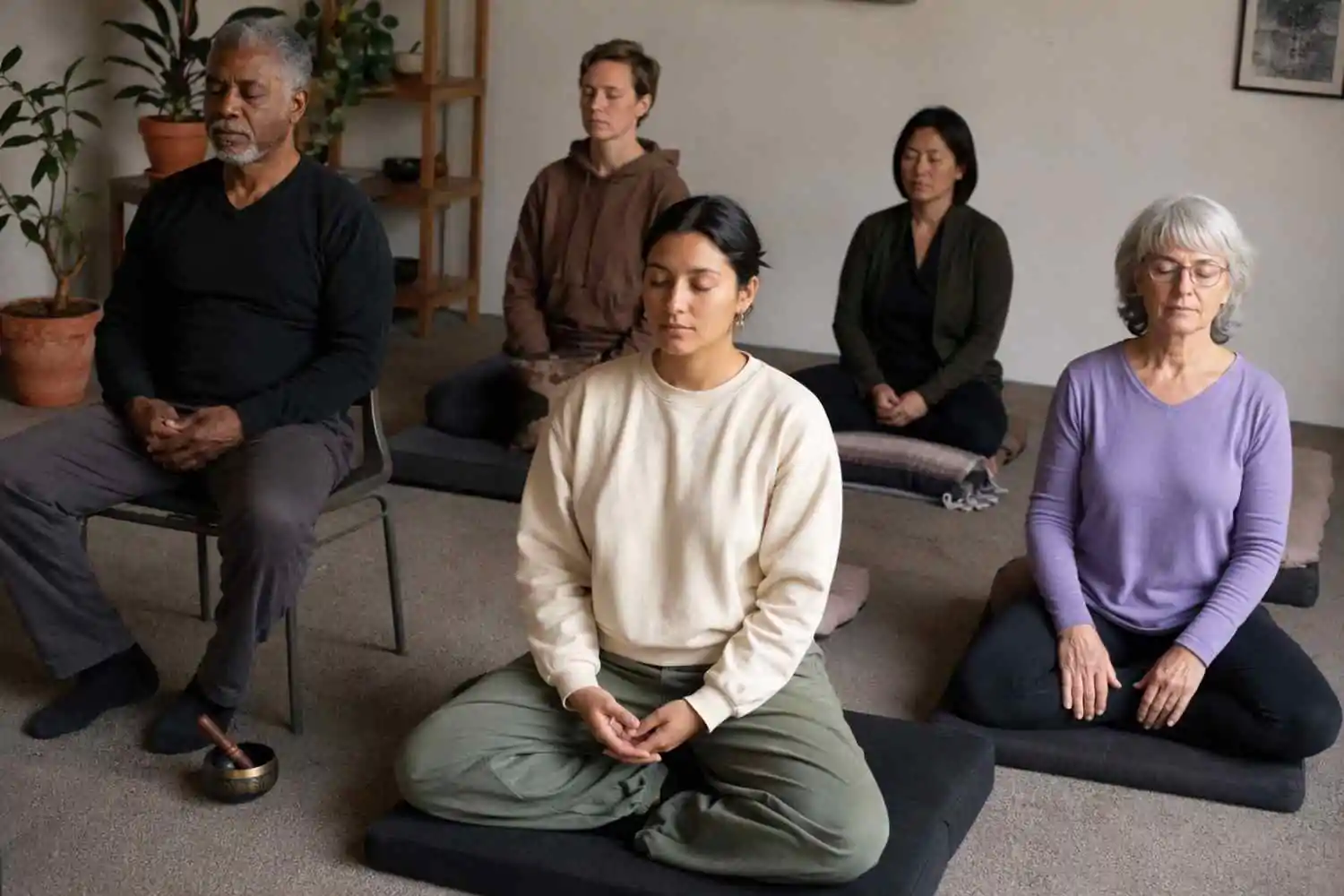
- The best meditation posture is the one that helps you stay steady, alert, and at ease during practice. Your meditation position can be cross-legged, kneeling, seated in a chair, standing, or lying down. While your comfort and stability in a meditation posture are most important, some traditions suggest that facing a particular direction—such as east—may enhance your practice. However, direction is generally considered secondary to finding the best meditation posture for your needs.
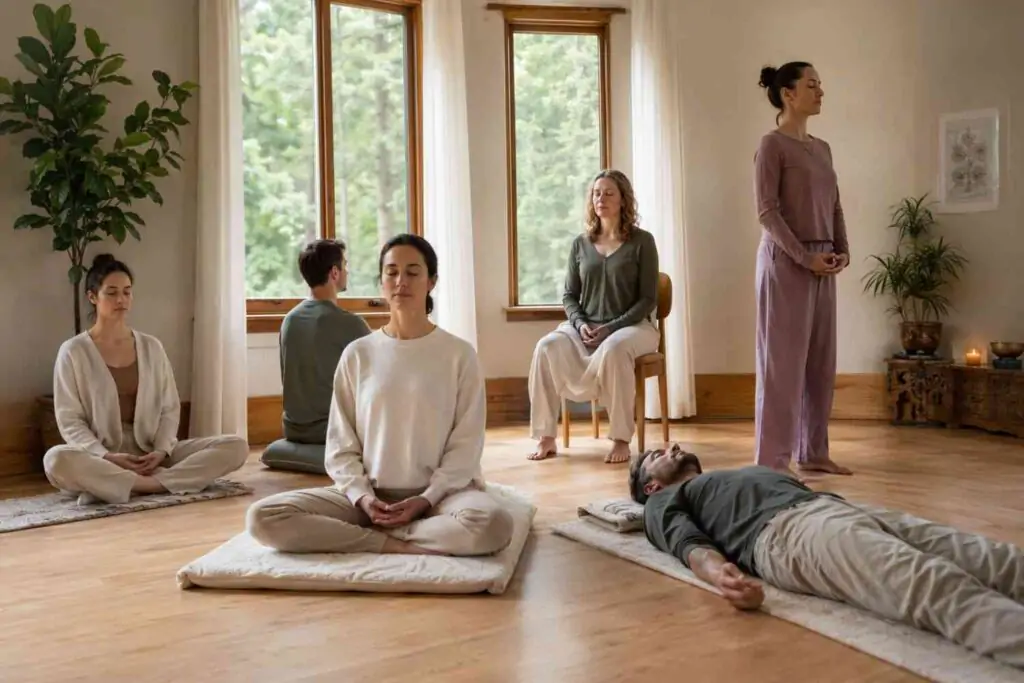
- Your meditation position can be cross-legged, kneeling, seated in a chair, standing, or lying down.
- A meditation cushion often improves sitting posture by lifting your hips and supporting your lower back.
- Lotus position works for some people, but it is not required for an effective session.
- The right best Position for Meditation depends on your body type, flexibility, comfort, and any pain or mobility limits.
- Small adjustments often make a big difference in comfort and focus.
Introduction Of Best Position for Meditation
Many people assume there is one perfect sitting Best Position for Meditation practice. There isn’t. The better question is this: what meditation pose helps you feel calm, stable, and awake? For some, that means sitting cross-legged on the floor. For others, a chair or even a supported recline is the more comfortable position. Your body matters here. When your sitting position supports comfort and attention, meditation becomes easier to maintain and more useful in daily life.
Exploring the Best Positions for Meditation
If you are asking about the Best Position for Meditation, start with a simple idea: the best one is the posture you can hold with little effort while staying attentive. You do not need to force your body into a shape that feels wrong.
In fact, Best Position for Meditation can vary a lot. A floor-based sitting position may work well for one person, while a chair, standing pose, or lying option may suit someone else better. The next sections walk you through each choice so you can find what fits.
1. Easy Pose (Sukhasana)
Easy pose is a gentle cross-legged seat that works well for many beginners. It is often one of the most comfortable seated positions for longer practice because it asks less from the hips than deeper lotus variations. If you want a simple sitting posture, this is a strong place to begin.
A meditation cushion can help a lot here. Sit near the front edge so your hips tilt slightly forward and your sitting bones feel grounded. (Ajna Chakra) That small lift can keep the low back from rounding and make the whole position feel more natural.
- Raise your hips enough so your knees are not higher than your hips.
- Shift slightly forward and back until you feel balanced on your sitting bones.
- Use a wall if needed, with light support at the lower back.
2. Quarter Lotus Position
Quarter lotus is a familiar cross-legged meditation pose. In this position, each foot rests below the opposite knee rather than on the opposite thigh. Many people know it as a simple floor seat, and it can be a solid option for a meditation session if your hips feel open enough.
To make it work better, sit toward the front of a cushion so the pelvis tips forward a bit. Then check whether your weight feels centered on your sitting bones. If you lean too far in any direction, your body may work harder than needed.
- If your knees sit higher than your hips, add more height under your seat.
- Try household props like folded towels or pillows if you do not have a cushion.
3. Half Lotus Position
Half lotus builds on quarter lotus. In this meditation pose, your left foot may rest on the right thigh, or you can switch sides. It offers more structure than a basic cross-legged seat, and some people find that extra symmetry helps them settle more easily.
That said, half lotus asks for good hip mobility. If your body is not ready, the strain may move into the knees or lower back. The best position to sit in for meditation is never the one you have to force. Comfort and steadiness still come first.
- Choose half lotus only if the lifted leg rests easily without pulling or twisting.
- If the shape feels stressful, return to an easier cross-legged position and stay there.
4. Full Lotus Position
Full Lotus Pose is the most demanding version of the lotus position. Each foot rests on the opposite thigh, creating a very stable and symmetrical base. Some people value this Best Position for Meditation because the body feels evenly arranged from side to side.
Still, full lotus is not for everybody. It requires significant flexibility in the hips and lower body. If you have knee or hip issues, or the pose feels like a strain, it is better to skip it. Your body type should guide your choice, not an ideal image of how meditation should look.
- Rest your right hand and left hand on your lap or knees in any balanced way.
- Never force full lotus. Stability matters, but safety matters more.
5. Burmese Position
The burmese position places both legs on the floor in front of the pelvis rather than stacking one over the other. For many people, this creates a more comfortable position than lotus-based shapes. It can also reduce pressure around the knees and ankles during longer sits.
A meditation cushion often improves this pose. Sit near the front so your hips can tilt forward, then gently explore your balance. Lean a little forward, back, left, and right until you feel centered. That sense of equilibrium can ease unnecessary tension and may help prevent back pain caused by slumping.
- Choose Burmese if crossed legs feel too tight or uneven.
- Adjust your seat height until your body feels steady instead of strained.
6. Seiza (Kneeling) Pose
Seiza pose is a kneeling position often linked with Japanese practice. It can be an excellent alternative if cross-legged sitting does not suit your body. Many people find that this sitting posture helps the back fall into a natural upright line with less effort.
A meditation bench is especially useful here, though a cushion or yoga block placed between your legs can also help. The tops of the feet usually rest on the floor. Beginners often do better with extra padding under the knees and feet, especially on hard surfaces.
- Use a meditation bench if kneeling feels unstable or too intense.
- Add cushioning under your knees if the floor feels harsh.
7. Sitting in a Chair
Yes, you can meditate effectively without sitting cross-legged. Sitting in a chair offers the same core benefits when your alignment is sound. For many people, it is the most practical and sustainable option, especially if floor sitting causes discomfort.
Start by placing your feet flat on the ground about shoulder-width apart. Sit near the edge of the chair if possible, since that often makes an upright position easier. If needed, you can use the back of the chair, but try not to collapse into it.
- A pillow or folded support can help tilt the hips forward for better sitting posture.
- If you use the back of the chair, keep your spine active rather than slouched.
8. Standing Meditation
Standing meditation is useful when sitting leads to pain or sleepiness. It lets you practice the same basic skills of attention and awareness while keeping the body active. If your seated sessions end in nodding off, this may be the better fit.
You do not need a perfectly rigid back here. What matters is an upright spine that feels awake, balanced, and sustainable. Keep your knees soft rather than locked. Then bring your attention to the breath, the body, or the present moment just as you would in a seated practice.If still standing feels hard, walking meditation is another helpful option.
9. Lying Down Meditation
Lying down can be a good position for meditating, especially if sitting causes pain. A common setup is corpse pose, where you rest on your back with your arms by your sides and palms facing up. This can make meditation more accessible when upright seats are not realistic.
The challenge is staying awake. Lying down can quickly drift into sleep meditation, particularly if you are already tired. You want ease, but you also want awareness. A few small changes can help keep the mind clearer while protecting the lumbar spine.
- Bend your knees and place your feet flat on the floor to reduce pressure on the low back.
- Add light back support if your lower back feels tense on the floor.
10. Reclining (Supported) Meditation
Reclining meditation is a supported version of lying down. It can be especially helpful if back pain or chronic pain makes flat positions uncomfortable. By elevating parts of the body, you may find a steadier middle ground between ease and alertness.
Simple props can create that support. A yoga bolster behind the back can raise the chest slightly, while a folded blanket can soften pressure points or support the knees. This setup is not about luxury. It is about making practice possible when standard positions do not work well.
- Place a yoga bolster under the upper back for a gentle incline.
- Use a folded blanket under the knees or hips to reduce discomfort.
Key Elements of Proper Position for Meditation
Proper Best Position for Meditation matters because your body and mind affect each other. When your meditation position is stable and comfortable, it becomes easier to stay calm and alert. If you begin in a strained shape, distraction usually follows.
The Best Position for Meditation is not about looking impressive. It is about reducing unnecessary effort so attention can settle. A few core details make the biggest difference, and the next sections break them down into simple, useful steps.
Aligning the Spine for Comfort and Alertness
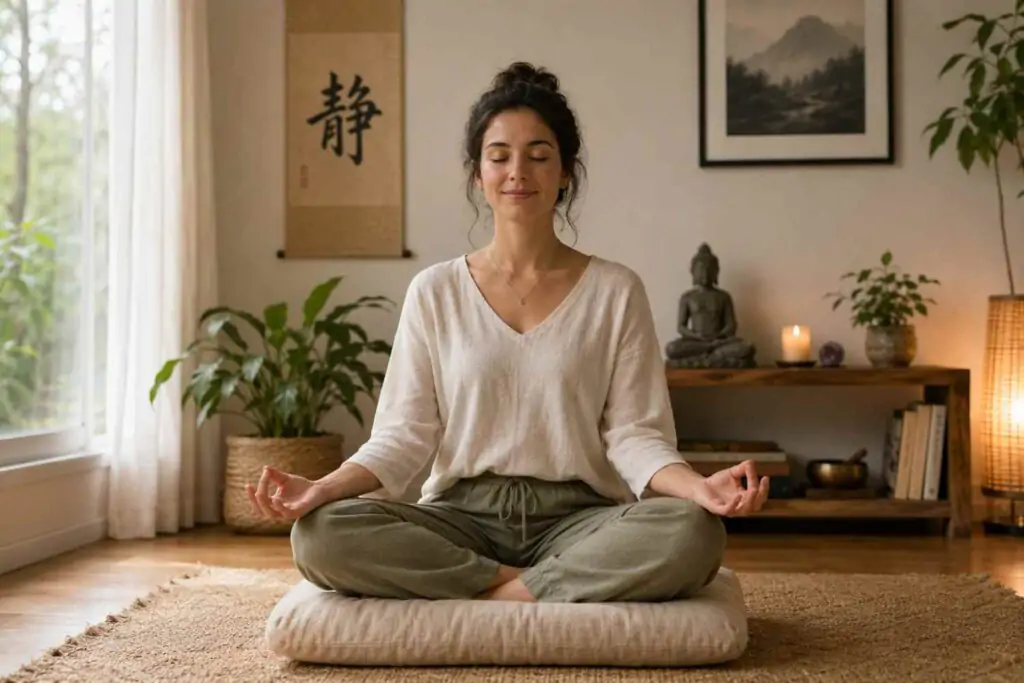
Many people hear “sit with a straight spine” and assume they should hold themselves stiffly. That is not the goal. An upright position works best when it feels natural, not forced. You want length through the back without turning your body into a board.
Keep a slight curve in the lower back rather than flattening it completely. That natural shape supports the lumbar spine and can help reduce tension during a session. Slumping tends to make attention dull, while rigidity can create its own kind of strain.
A helpful image is a gentle string lifting from the crown of your head. Let that image create light length through the torso. Then notice whether the rest of the body can stay relaxed around that support. That is often more useful than trying to be perfectly straight.
Hand Placement and Mudras
Hand positions matter less than many beginners think. During a Best Position for Meditation session, the main goal is balance. Your hands should rest in a way that does not pull your weight forward or backward. If your arms feel strained, your posture may become harder to maintain.
Some traditions use mudras, or symbolic gestures, but simple options work well too. You can rest your hands on your knees, or place the left hand in the right hand with palms up on your lap. Either choice can support a stable seat.
- If your shoulders tense up, lower the hands and let the elbows soften.
- Choose the hand positions that help you feel balanced, not distracted.
Relaxed Shoulders and Jaw
Even when the lower body is arranged well, tension in the upper body can interfere with focus. Relaxed shoulders help open the chest and support an easier breath. A soft jaw also matters more than people expect. If you clench, your whole body often follows.
Try dropping the shoulders gently down and slightly back. Then tuck the chin just a little so the neck lengthens. This does not need to take much work. In fact, good posture usually feels like little effort once the body is stacked well.
- Notice whether you are gripping the jaw without realizing it.
- Let the shoulders settle naturally instead of forcing them into place.
Positioning Legs and Feet for Stability
Your legs and feet form the base of many Best Position for Meditation, so stability starts there. Whether you sit cross-legged, kneel, or use a chair, the position should feel grounded. If the lower body feels wobbly, the mind often keeps reacting to that discomfort.
In cross-legged shapes, notice where your feet land in relation to the opposite knee or shin. In kneeling forms, the tops of the feet may rest on the floor. The exact layout matters less than whether it gives you a comfortable position you can maintain.
- Raise the seat if your hips feel lower than your knees in floor poses.
- Change positions if your legs and feet start going numb or strained.
Tips for Finding the Right Meditation Position for Your Body
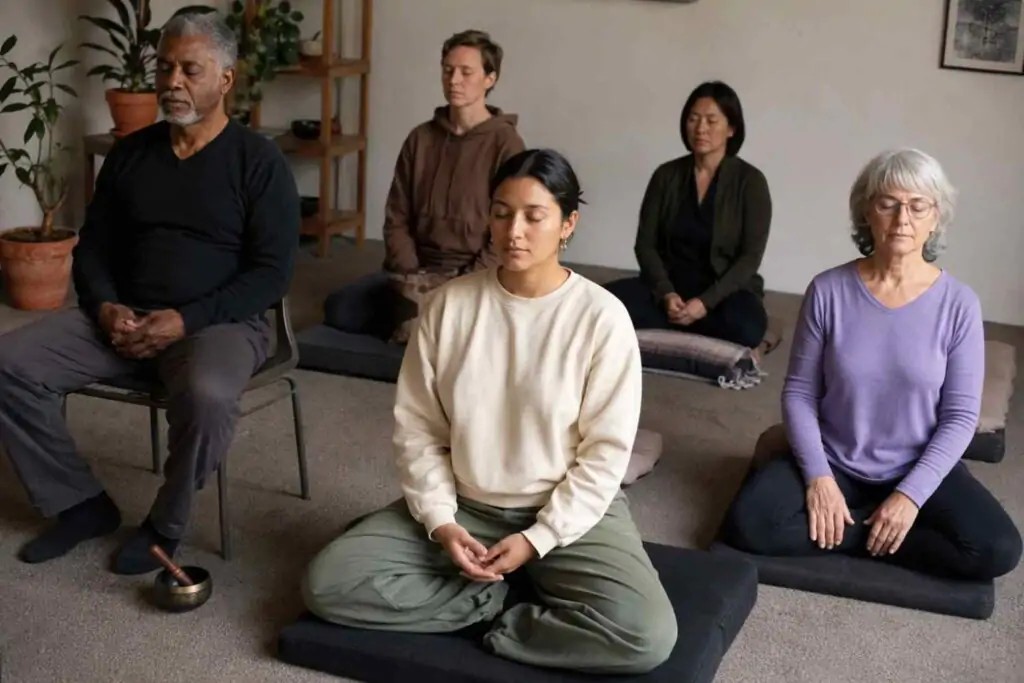
Finding the Best Position for Meditation is a personal process. Different people have different heights, levels of flexibility, and pain patterns. What feels easy for one person may feel impossible for another, and that is not a problem.
Treat each meditation session like a small experiment. Notice which positions help you stay steady, awake, and at ease. Then make practical adjustments instead of chasing an ideal. A few targeted changes can make a big difference, and the next sections show how.
Adapting Poses for Flexibility and Comfort
Your ideal meditation pose depends on what your body can do today, not on what you think it should do. Some people are comfortable on the floor. Others need a chair or kneeling setup. The most flexible position is often the one that can be adjusted without creating stress.
Different styles of meditation can be practiced in more than one shape. You are not limited to a single pose forever. If one setup creates physical discomfort, change it. Meditation is a new skill for many people, and your posture may evolve over time.
- Start with the easiest option you can hold steadily and comfortably.
- If a pose distracts you with pain, treat that as useful feedback and adjust.
Using Props and Supports (Cushions, Benches, Chairs)
Props can make meditation much more workable. A meditation cushion or floor cushion can lift the hips and support better alignment. A meditation bench helps with kneeling, while a chair may be the best answer if floor sitting feels unrealistic. You do not need special gear, though. A thin pillow, towel, or folded item from home may work well.
Back support can also help when used carefully. The goal is not to collapse into it, but to support a more natural shape. A yoga block may help in kneeling positions, and a small cushion can reduce pressure on hard floors.
| Support | How it helps |
|---|---|
| Meditation cushion | Lifts the hips and helps the pelvis tilt forward in seated poses |
| Floor cushion | Adds comfort under the seat, legs, or knees on hard floors |
| Meditation bench | Supports seiza and reduces strain in a kneeling setup |
| Thin pillow | Offers light lift or softness when a full cushion feels too high |
| Yoga block | Can be placed between the legs in kneeling positions |
| Back support | Helps maintain a healthier shape in a chair or near a wall |
Modifications for Back Pain or Mobility Challenges
If you have back pain, chronic pain, or mobility challenges, meditation may need a more customized setup. That is completely fine. A chair, standing posture, lying position, or reclining support may work better than traditional floor poses. The point is to reduce strain, not prove anything.
Hard floors can make seated or kneeling options feel worse very quickly. Softening the contact points often changes the experience. A folded blanket under the knees, hips, or feet can reduce pressure and make practice more sustainable.
- Use a chair if getting down to the floor or rising back up feels difficult.
- Try lying down with bent knees if flat-on-the-floor positions strain your back.
Conclusion
In conclusion, finding the best position for meditation is crucial for cultivating a fulfilling practice. Whether you prefer sitting on the floor, using props, or even lying down, the key is to ensure that your posture supports both comfort and alertness. By aligning your spine, relaxing your shoulders, and being mindful of your hand placement, you can create an environment conducive to mindfulness and focus. Remember that meditation is a personal journey, so take the time to experiment with different positions and modifications to discover what works best for you. If you’re ready to deepen your meditation practice, consider booking a free consultation to explore techniques and tips tailored to your needs.
Frequently Asked Questions
Yes. The best meditation position may be a chair, a meditation bench, or a supported floor seat. Keep a steady sitting posture, place your feet firmly, and use the back of the chair or a meditation cushion if needed. Cross-legged sitting is optional, not required.
No. Aim for an upright spine, not a rigid one. A straight spine still includes a slight curve in the lumbar spine. Imagine gentle lift through the top of your head while keeping the body relaxed. Natural alignment is usually better than forcing yourself into stiffness.
The direction you face is not presented as a big deal here. What matters more is choosing a basic Best Position for Meditation you can maintain during each meditation session. If your setup helps you stay with the present moment and carry that steadiness into daily life, you are on the right track.