Key Highlights
- Yoga Poses for Epilepsy may support seizure control by helping calm the nervous system. A steady yoga practice can offer health benefits such as stress reduction and better mental clarity. Gentle stretch-based movements like child’s pose and seated forward bend may feel especially soothing.
- There are also personal stories of people successfully managing epilepsy with yoga, sharing that regular practice has helped them feel more balanced and experience fewer seizures.
- A steady yoga practice can offer health benefits such as stress reduction and better mental clarity.
- Gentle stretch-based movements like child’s pose and seated forward bend may feel especially soothing.
- Yoga is not a cure for epilepsy, but it may support medical treatment and daily well-being.
- Breathing practices such as alternate nostril breathing can encourage relaxation and balance.
- Over time, yoga may help improve quality of life for some people living with epilepsy.
Introduction of Yoga Poses for Epilepsy
Epilepsy is a neurological disorder that can affect many parts of daily life, from stress levels to confidence and comfort. While yoga practice is not a cure, it may be a helpful part of a supportive wellness routine. With physical postures, breath control, and mindfulness, yoga can encourage calm and body awareness. For many people, that can mean a better quality of life. The key is choosing gentle, practical methods that fit your needs and comfort level.
How Yoga Supports Epilepsy Management and Well-Being
Yoga practice supports epilepsy management by easing stress, improving mental clarity, and promoting steadier body awareness. Since stress can affect seizure frequency, calming methods may play a useful role alongside medical care.
Just as important, yoga may improve overall quality of life for individuals living with epilepsy. It brings together movement, breathing techniques, and mindfulness in one routine. That combination can help you feel more relaxed, more in tune with your body, and better supported in everyday life. The next sections explain why this matters.

The Benefits of Yoga for People Living with Epilepsy
Many people think of yoga as mere physical workouts, but it offers more than stretching. The health benefits can include stress reduction, better mental clarity, and improved physical fitness. For epilepsy patients, those effects may matter because daily tension can place extra strain on the body and mind.
Another reason yoga exercises may help is their influence on the nervous system. Breath control, mindful movement, and quiet focus may create a calming effect. In some cases, that may support seizure control by lowering stress and helping the body settle into a more balanced state.
So, how can yoga help reduce the frequency of epileptic seizures? It may do so indirectly by reducing anxiety symptoms, promoting relaxation, and supporting the functioning of the nervous system. It is best viewed as a supportive practice of yoga, not a replacement for medical treatment.
Scientific Insights: Research on Yoga’s Effects on Epileptic Seizures
Research mentioned in the compiled information suggests that yoga may have a calming effect on the body and mind. The study findings described are simple but meaningful: a well-rounded Hatha or Yin Yoga routine may reduce the likelihood of seizures and help prevent them from becoming severe. That points to a supportive role for yoga postures and breath control.
It is also noted that extended yoga practice could lead to lasting changes in brain function. That idea matters for brain health, especially when a person is managing recurrent seizures. While yoga is not presented as a cure, the usefulness of yoga as an added support appears promising.
| Research area | What the information suggests |
|---|---|
| Calming response | Yoga may calm the nervous system |
| Seizure pattern | Possible significant reduction in likelihood or severity |
| Long-term effect | Regular practice may support lasting brain health changes |
Essential Safety Tips for Practicing Yoga with Epilepsy
Safety comes first. Yoga should be treated as a supportive physical exercise, not a substitute for medical treatment. If your seizure frequency changes or you feel unwell, it makes sense to slow down and keep your routine simple.
You also want to choose practices that feel steady and calming rather than intense. Gentle movements, controlled breathing, and comfortable pacing are usually the safer direction. In the next two sections, you will see which approaches may need caution and how to create a setup that feels secure.
Poses and Practices to Approach with Caution
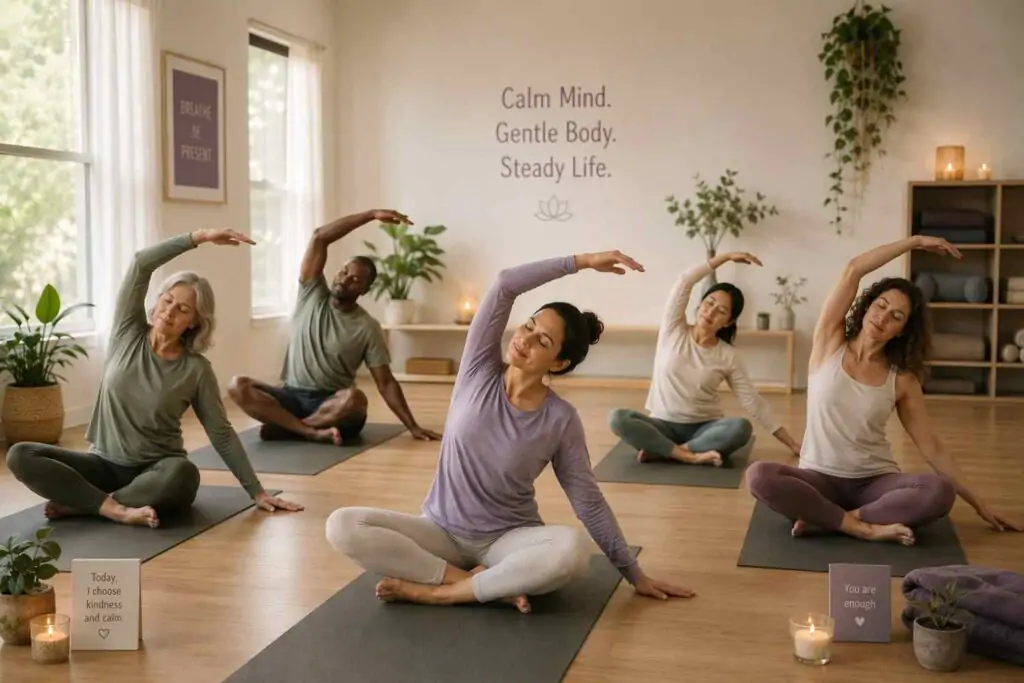
Not every pose will suit every person. If you live with epilepsy or other physical health conditions, the safest choice is often the most stable one. Yoga asanas that feel extreme, rushed, or hard to control may not be the best place to start, especially if you are practicing with minimal resources at home.
The compiled information focuses most strongly on calming, grounded positions and breathing techniques. That suggests a cautious attitude toward stronger options such as salamba sarvangasana, which is a kind of variation of the classical yoga pose and may require extra support and awareness.
- Approach inversions and advanced balancing work carefully.
- Avoid any posture that causes strain, dizziness, or panic.
- Be cautious with sham yoga routines that push intensity over comfort.
A calmer practice usually gives you more control and confidence.
Safe Environments and Preparations for Your Yoga Journey
Yes, beginners with epilepsy can start at home, but the setting matters. A safe environment helps you stay relaxed, focused, and less likely to feel overwhelmed. Since yoga can influence the nervous system, it helps to remove distractions and keep the session quiet and simple.
If you are using online fitness classes, choose slow routines with clear guidance. You do not need special equipment or a complex plan. The compiled information highlights minimal resources and easy practices, which makes home yoga more approachable for numerous people.
- Practice on a stable surface with enough space around you.
- Keep your routine short and gentle at first.
- Choose online fitness sessions that focus on calm pacing and breath control.
That preparation can make your yoga journey feel steadier and more comfortable.
7 Best Yoga Poses for Enhancing Well-Being with Epilepsy
The compiled information highlights seven Yoga Poses for Epilepsy and practices that may support comfort and calm: Anulom Vilom, Balasana, Salamba Sarvangasana with wall support, Paschimottanasana, sleeping pigeon pose, Seal Pose, and Garland Pose. Each one aims to bring a calming effect through movement, breath, or stillness.
What are the best Yoga Poses for Epilepsy recommended for managing epilepsy? The gentler choices often stand out most because they offer a gentle stretch, stress relief, and easier control. Let’s look at several of these in more detail.
Anulom Vilom (Alternate Nostril Breathing)
Anulom Vilom is one of the best-known breathing techniques in yoga. It involves inhaling and exhaling through alternate nostrils in a steady rhythm. This simple method does not require difficult body movements, which makes it approachable for many beginners.
Its main value lies in its calming influence on the nervous system. The compiled information notes that it can reduce stress, refresh the mind, and relax the nerves of the brain. In that way, alternate nostril breathing may support a quieter internal state and help the body shift toward the parasympathetic nervous system.
So, which breathing techniques in yoga are considered safe for epilepsy? Based on the provided material, Anulom Vilom stands out as a gentle option. Keep the pace natural, avoid strain, and use it as part of a steady, comfortable routine.
Balasana (Child’s Pose) and Its Calming Effects
Child’s pose is often linked with rest, surrender, and quiet focus. To do it, you kneel, sit back on your heels, and fold forward gently. This creates a soft shape that can feel protective and grounding, especially on stressful days.
The pose offers a gentle stretch through the spine, hips, thighs, and nearby areas such as the hip flexors. More importantly, it supports stress reduction and relaxation. If you are asking what calms down epilepsy, practices that reduce tension and settle the mind may help support that goal.
Because child’s pose is simple and soothing, it can be a useful part of your yoga practice. It does not demand intense effort. Instead, it gives you space to breathe, slow down, and reset both body and mind.
Paschimottanasana (Seated Forward Bend) for Relaxation
Paschimottanasana, or seated forward bend, is a classic pose for relaxation. You sit with your legs extended and reach forward toward your feet. The movement is simple, but the experience can be deeply calming when done without force.
The compiled information connects this pose with improved flexibility, relief from stress, and support for digestion by massaging the abdominal organs. It also fits well into routines aimed at lower back health because it encourages a long, steady stretch through the back of the body.
Which yoga is best for epilepsy? There is no single answer for everyone, but seated forward bend is one strong option from the provided list. It combines quiet focus, physical comfort, and a relaxing effect, which can make it a helpful part of a gentle daily basis routine.
Supta Baddha Konasana (Reclining Bound Angle Pose) for Stress Relief
Supta Baddha Konasana is widely known as a restful reclining pose, and it fits the same calming spirit found across the compiled information. As one of the more supportive yoga asanas, it encourages stillness and soft breathing rather than effort and speed.
That makes it a useful choice for stress reduction. A reclining position can help you release muscular tension and settle your thoughts, which may also support comfort around blood pressure and general relaxation. For people seeking a gentle stretch, this type of pose can feel safe and manageable.
When people ask about the best Yoga Poses for Epilepsy recommended for managing epilepsy, restful positions often make the most sense. Supta Baddha Konasana aligns with that approach because it supports calm, body awareness, and ease without turning practice into a demanding workout.
The Frequency and Precipitating Factors for Breakthrough Seizures in Children with Epilepsy
Epilepsy is a neurological disorder marked by recurrent seizures, and breakthrough episodes can be affected by many triggers. The compiled information does not list those triggers in detail, but it repeatedly points to stress and tension as important concerns. That matters because stress can affect seizure frequency and make daily life harder for both children and adults.
How can yoga help reduce the frequency of epileptic seizures in that context? It may help by supporting brain health through relaxation, breath control, and a calmer routine. Gentle practice does not replace treatment, but it may reduce pressure on the body and mind. For children, any approach should stay simple, supervised, and focused on comfort rather than performance.
Neuroplasticity and Epilepsy: Why our ever-adapting brain cells are a blessing and sometimes a curse
Neuroplasticity refers to the brain’s ability to adapt and change over time. In epilepsy, that idea can feel hopeful and complicated at once. The compiled information notes that consistent and extended yoga practice may lead to enduring changes in brain function. That suggests that gentle habits may influence the nervous system in meaningful ways.
Is there scientific research supporting the use of yoga for epilepsy management? The information provided points to research that links yoga with a calmer system and possible seizure improvement. In simple terms, that means yoga may support brain health through regular practice.
Yoga Strategies to Improve Balance and Mobility in Epilepsy
When people ask which exercise is best for epilepsy, gentle yoga often deserves attention. The compiled information emphasizes stress relief, body awareness, and physical fitness rather than high-intensity effort. That makes yoga asanas a practical option for improving mobility without creating unnecessary strain.
Yoga Poses for Epilepsy such as child’s pose, seated forward bend, sleeping pigeon pose, and Garland Pose may support flexibility in the hips, spine, and lower body. Those changes can help balance and smoother movement over time. Even supported options like salamba sarvangasana against a wall may offer structure when used carefully. The goal is not to master hard postures. It is to build steadiness, confidence, and controlled movement through simple, repeatable practice.
Injury Prevention Techniques for Epileptics During Yoga and Exercise
Injury prevention starts with a calm mindset. Your yoga practice should improve physical fitness, not test your limits. Slow body movements, steady breathing, and easy transitions can lower the chance of strain. Since epilepsy can make unpredictability a concern, it is smart to keep each session controlled and uncomplicated.
Are there any Yoga Poses for Epilepsy that people with epilepsy should avoid? The safest answer is to be careful with any posture that feels unstable, overly intense, or hard to exit. Gentle floor-based positions usually make more sense than demanding Yoga Poses for Epilepsy. If a movement causes discomfort or anxiety, stop and reset. A supportive routine works best when it protects your body while still giving you the positive impact of movement and relaxation.
Role of Yoga Teachers in Supporting Epileptic Students
Yoga teachers can offer valuable tools by shaping classes around calm pacing, safe options, and clear instruction. For students with epilepsy, that kind of support can make yoga practice feel less intimidating and more personal. Even simple guidance on posture, breath control, and rest can make a big difference.
Can yoga improve the quality of life for individuals living with epilepsy? It may, especially when the practice is guided with care and respect. Good yoga teachers help students focus on comfort rather than pressure. That can build trust, reduce stress, and make it easier to stay consistent. In that sense, the teacher is not just leading movements. They are helping create a steady, supportive experience.
Integrative Approaches: How Other Cultures Use Yoga or Mind-Body Techniques for Epilepsy
Across different settings, the usefulness of yoga often appears as part of broader integrative approaches to well-being. The compiled information presents yoga as more than exercise. It includes breath control, meditation, mindfulness, and physical postures. That blend reflects how mind-body techniques can support both mental and physical comfort.
Cultural variation may shape how these methods are practiced, but the core idea stays similar: calm the body, settle the mind, and improve daily living. Does yoga help address the stigma associated with epilepsy? It may help in a quiet but real way by giving people a sense of agency, routine, and self-care. When someone feels more stable and supported, confidence can grow along with overall quality of life.
Conclusion
In conclusion, incorporating yoga into your routine can be a transformative experience for those living with epilepsy. The carefully chosen Yoga Poses for Epilepsy not only promote relaxation and stress relief but also enhance overall well-being and may contribute to better seizure management. As you embark on this journey, remember to prioritize safety and consult with healthcare professionals if needed. Embracing a holistic approach to your health is essential, and yoga offers a unique pathway to foster balance and inner peace. If you’re curious about how yoga can specifically help you or someone you know with epilepsy, don’t hesitate to get in touch for a free consultation.
Frequently Asked Questions
Yes, beginners can start a yoga practice at home if they create a safe environment and keep sessions gentle. Calm breathing, simple floor Yoga Poses for Epilepsy, and slow pacing may support the nervous system. Done carefully, home practice can offer health benefits and may improve quality of life over time.
A consistent yoga practice matters more than long sessions. Gentle yoga exercises on a daily basis, or several times a week, may be easier to maintain. Over time, that regularity may support seizure control, stress relief, and better overall quality of life when paired with medical care.
The compiled information does not share detailed real life stories from specific epilepsy patients. Still, it strongly describes the health benefits and usefulness of yoga as supportive care. That suggests a positive impact for some people, especially through stress reduction, relaxation, and better daily well-being.
Gentle Yoga Poses for Epilepsy are usually the best place to begin. Child’s pose, seated forward bend, and calming breathing techniques like Anulom Vilom stand out in the provided material. These physical postures offer a gentle stretch and may help settle the nervous system without making practice feel too intense.
Methods that support the nervous system may help calm the body. In the compiled information, breathing techniques, stress reduction, and a steady yoga practice are the main themes. Child’s pose is one simple option because it encourages rest, gentle stretching, and a quieter mental state.
Based on the provided content, gentle yoga exercises are a strong option. They support physical fitness and mobility while keeping effort controlled. A gentle stretch can help reduce tension, and lower stress may be useful when seizure frequency is a concern. The focus should stay on comfort and consistency.
The best Yoga Poses for Epilepsy recommended here include child’s pose, seated forward bend, Garland Pose, sleeping pigeon pose, Seal Pose, and supported shoulderstand, along with alternate nostril breathing. These Yoga Poses for Epilepsy are highlighted for health benefits such as relaxation, stress relief, and support for seizure control.
Yoga may help reduce seizure frequency by calming the nervous system and lowering stress. Gentle yoga asanas, breathing, and mindfulness work together to create a steadier internal state. This practice of yoga is best used as support alongside treatment, not as a replacement for medical care.
The safest precaution is to avoid physical postures that feel unstable, extreme, or hard to control. Gentle yoga asanas are usually a better fit than demanding poses. Yoga should support medical treatment, not replace it, and sham yoga routines that push intensity without care are best avoided.
Yes, the compiled information points to scientific research suggesting yoga may calm the body and support brain health. The study findings described suggest a significant reduction in seizure likelihood or severity for some people. That supports the usefulness of yoga as an added wellness tool for epilepsy management.