
Key Highlights
- Yoga may support yoga for asthma relief by combining gentle yoga poses with mindful breathing techniques.
- Regular yoga practice can help some people manage asthma symptoms and improve quality of life.
- Chest-opening poses may support better breathing and help ease chest tightness.
- Pranayama can build breath awareness and may improve lung capacity over time.
- Stress control matters because stress can trigger symptoms in some asthma patients.
- Yoga works best as a supportive habit, not a replacement for medical care.
Introduction of Yoga for Asthma Relief
If you live with yoga for asthma relief, even simple activity can feel uncertain. That is why many people look for safe ways to support their yoga for asthma relief beyond medicine alone. A steady yoga practice may help by encouraging deep breathing, easing stress, and improving awareness of how your body responds. While yoga is not a cure or a first-line treatment, it can be a helpful part of daily care. The key is to start gently, stay consistent, and choose practices that feel comfortable.
Understanding Asthma and Its Impact on Breathing
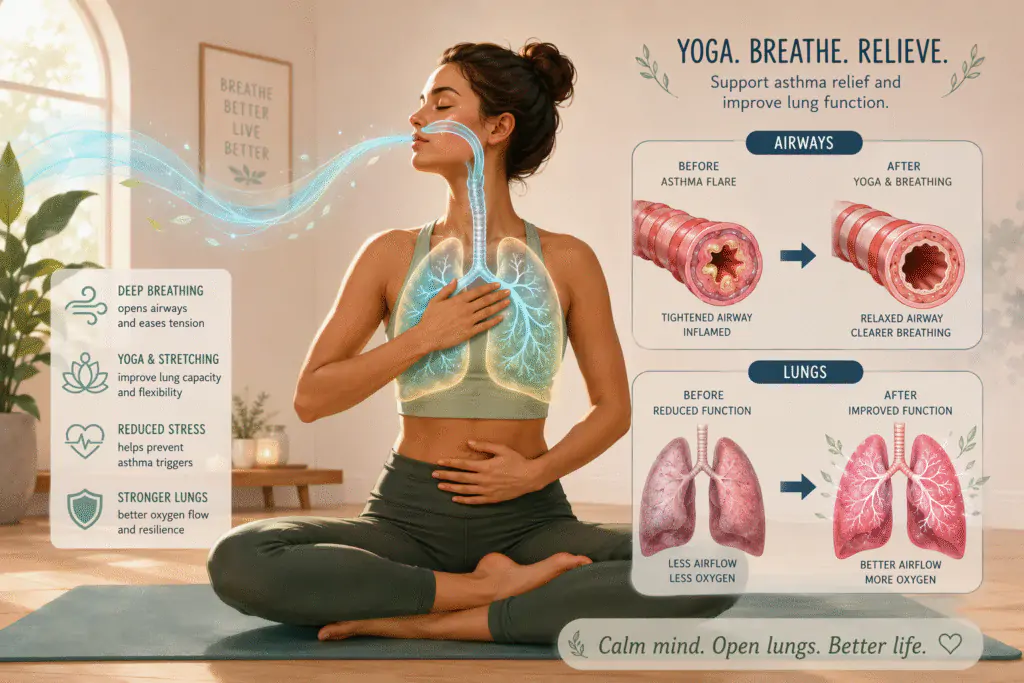
Asthma is a chronic respiratory condition that affects the airways. During flare-ups, those airways can narrow and become inflamed. Muscles around them tighten, which can make each breath feel harder than it should.
That is why asthma symptoms often include shortness of breath, wheezing, and chest tightness. When breathing becomes strained, lung function may feel limited. Regular yoga practice may help some people improve breathing control and feel calmer, which can support better day-to-day symptom management. To understand that better, it helps to look at symptoms, triggers, and lung function.
Common Symptoms and Triggers of Asthma
For many people, asthma symptoms can show up suddenly or build over time. You may notice shortness of breath during exercise, coughing at night, or a feeling of pressure in your chest. In a stronger flare-up, an asthma attack can make breathing feel fast, tight, and frightening.
Common signs include:
- Shortness of breath during activity or rest
- Chest tightness or a squeezed feeling in the chest
- Wheezing or noisy breathing
- Coughing that worsens with irritation or exertion
Triggers vary from person to person. Allergens, toxins, stress, and physical effort can all play a role. Since stress is a known trigger, breathing exercises in yoga may help some asthmatics stay calmer and more aware of their breath patterns. That awareness can be useful when symptoms begin to rise.
The Role of Lung Function in Asthma Management
Healthy lung function supports steady oxygen intake and smoother breathing. With asthma, the respiratory system can become reactive, so air does not move as freely. When that happens, everyday tasks may feel harder than they should.
Improving breathing patterns can help you use your lungs more effectively. Yoga for asthma relief does not change asthma into a nonissue, but it may support better breathing by slowing the breath and helping the body relax. Some research described in the source material suggests yoga may improve lung function, symptoms, and overall comfort in people with mild to moderate asthma.
There is also a practical benefit. During an asthma episode, people often recruit many muscles to breathe, which can create tension through the chest, back, neck, and sides. Gentle stretching and breath work may help those areas stay looser, making breathing feel less strained over time.
How Yoga Supports Asthma Relief
Yoga for asthma relief in a few simple ways. It encourages deep breathing, builds body awareness, and may reduce stress, which is a common trigger. That combination can make it easier for you to notice tension early and respond with calmer breathing.
Just as important, yoga poses and breathing exercises can gently open the chest and stretch the muscles used for breathing. Regular practice may help reduce symptom severity for some people, especially when yoga is added to a broader asthma treatment plan. The next sections explain how this affects the respiratory system and lung capacity.

Yoga’s Effect on the Respiratory System
Your respiratory system works best when breathing is steady, relaxed, and efficient. Asthma can interrupt that rhythm by narrowing the airways and increasing the effort needed to inhale and exhale. This often creates a cycle of tension and faster breathing. Yoga for asthma relief helps by slowing the breath and bringing attention back to the body. Breathing exercises teach you to notice shallow breathing and shift toward fuller, calmer breaths. This may support lung function and help you feel more in control when symptoms begin to build. Yoga for asthma relief also targets posture, chest opening, and muscle release. When the neck, shoulders, back, and side body are less tight, breathing can feel easier. Over time, that may support overall respiratory health and create better daily breathing habits, especially for people with mild to moderate asthma.
Stress Reduction and Improved Lung Capacity
Stress can make asthma harder to manage. When your body feels anxious, breathing often becomes shallow and quick. Yoga can calm the nervous system, (Digestion) which may lower tension and help you return to slower, deeper breathing.
That calmer state may also support lung capacity. Deep breathing practices encourage fuller use of the lungs and better awareness of the diaphragm. While yoga should not replace asthma medication, some people find that regular practice improves comfort and quality of life alongside medical care.
Helpful effects may include:
- A calmer nervous system during stressful moments
- More consistent deep breathing habits
- Better quality of life through reduced tension and improved body awareness
These changes may not remove the need for treatment, but they can support better day-to-day asthma management.
Essential Breathing Techniques (Pranayama) for Asthma
Pranayama focuses on controlled breathing techniques, and it is one of the most useful parts of yoga for asthma relief. Instead of pushing the breath, it teaches you to slow down, notice patterns, and breathe with more control.
That mindful breathing can support relaxation and help you feel less overwhelmed by tight breathing. Some methods are gentle and beginner-friendly, while others need more care. Two commonly discussed options are Nadi Shodhana and deep yogic breathing, with Kapalabhati requiring extra caution. Let’s look at each one more closely.

Nadi Shodhana (Alternate Nostril Breathing)
Nadi Shodhana, or alternate nostril breathing, is often used to calm the mind and reduce stress. For people with asthma, that matters because stress can trigger or worsen symptoms. This practice encourages slow, even breathing without strain.
It is also described as a way to support balance through the body’s energy channels. Whether you think of it in physical or mindful terms, the main benefit is simple: it helps you pause, settle, and breathe more consciously. Gentle, breath-centered yoga styles often suit yoga for asthma relief best for this reason.
A few practical benefits include:
- It promotes deep breathing in a calm, controlled way
- It may help reduce stress before symptoms intensify
Start softly and stop if you feel lightheaded. The goal is comfort, not effort.
Kapalabhati (Skull Shining Breath) and Deep Yogic Breathing
Deep yogic breathing is often the safer starting point for asthma because it teaches you to use the lungs more fully without rushing. It supports diaphragmatic breathing and may help the respiratory muscles work with less tension. You learn to take deep breaths in a more natural, steady pattern.
Kapalabhati is more active. Source material describes it as energizing the nervous system, clearing energy channels, and improving blood circulation. Because it is forceful, it may not suit everyone with asthma, especially during active symptoms. It should be approached carefully and only when comfortable.
| Practice | Main focus | Possible asthma-related value |
|---|---|---|
| Deep yogic breathing | Slow, full diaphragmatic breathing | Encourages deep breaths, supports respiratory muscles, and builds breath awareness |
| Kapalabhati | Active breathing exercise | May energize the body and support circulation, but needs caution for asthma patients |
Yoga Poses That Work Wonders for Asthma
Certain yoga poses may help yoga for asthma relief by opening the chest, improving posture, and reducing stress. They also stretch areas that often tighten during difficult breathing, including the shoulders, back, and side body. A simple session on your yoga mat can support both breath awareness and comfort.
Still, the best poses are the ones you can do without strain. If a position causes lower back discomfort, dizziness, or more chest tightness, modify it. The benefits of yoga come from ease and regularity, not intensity. Below are some of the most helpful options.

Setu Bandhasana (Bridge Pose) and Bhujangasana (Cobra Pose)
Setu Bandhasana, or bridge pose, is often recommended because it opens the chest and lungs. You lie on your back, bend your knees, press into your feet, and lift your hips while drawing the shoulder blades into the mat. This can create more space across the front of the body.
Bhujangasana, or cobra pose, stretches the chest and neck. From lying on your stomach, you gently lift the chest with your hands placed under the shoulders. A milder version, like sphinx, can be easier if full cobra feels too strong.
These poses may help because they:
- Open the chest and front body
- Encourage fuller breathing
- Stretch muscles that tighten during breathing effort
Both should feel smooth and supported. If needed, a chair-based version can make cobra more accessible.
Sukhasana (Easy Pose), Ardha Matsyendrasana (Seated Spinal Twist), and Others
Sukhasana, or easy pose, is simple but valuable. Sitting upright with a relaxed chest gives you a stable place to focus on breath and stress control. If sitting on the floor bothers your hips or lower back, a folded towel or chair can help.
Ardha Matsyendrasana, the sitting half spinal twist, gently rotates the torso and can target the back, diaphragm, neck, and abdominal area. This spinal twist may support better breathing by easing tension through the respiratory muscles. A supine version is another option if seated twisting feels awkward.
Other helpful poses include:
- Forward bend for calming and deeper breathing
- Trikonasana for opening the side body and lungs
- Savasana for relaxation and breath awareness
These poses are most beneficial when practiced gently and without forcing range of motion.
Specific Pose Yoga for Asthma Relief (List and Explanation of Each Pose)
Several yoga poses appear again and again in discussions about asthma support because they either open the chest, encourage deeper breathing, or reduce tension. Gentle, beginner-friendly styles that focus on comfort and breath awareness are usually the best fit. You do not need a complex routine to get started.
| Pose | How it may help |
|---|---|
| Baddha Konasana or butterfly pose or bound angle pose | May improve blood circulation, reduce fatigue, and have a therapeutic effect on asthma |
| Adho Mukha Svanasana | Can calm the mind, relieve stress, and support people with asthma and sinus concerns |
| Forward bend | May open the chest, calm the mind, and support deeper breathing |
| Bridge pose | Opens the chest and lungs and is often recommended for asthma patients |
| Cobra pose | Expands the chest and may improve blood circulation |
Choose poses that feel steady, not demanding.
Guidance on Adding Yoga to an Existing Asthma Treatment Plan
Yoga can be used as a complementary therapy alongside traditional asthma treatment, not as a replacement. Your asthma action plan should still guide what medicines to take, what triggers to avoid, and what to do during an asthma attack. Yoga fits best as one of the supportive home remedies within that larger plan.
Before starting regular yoga practice, speak with a healthcare professional, especially if symptoms are frequent or severe. Beginners should start slowly, choose easy movements, and avoid anything that causes anxiety, strain, or discomfort. The source material is clear on one point: yoga may support symptom control and quality of life, but it is not meant to treat acute symptoms. Keep your prescribed care at the center of asthma management.
Other Health Benefits of Yoga (Physical and Mental)
Yoga offers more than breathing support. The physical benefits mentioned in the source material include improved flexibility, balance, muscle tone, energy, and blood circulation. It may also help with posture, spinal flexibility, and general movement, which can make breathing mechanics feel easier and more natural.
The mental benefits are just as important. Yoga can calm the nervous system, sharpen concentration, and improve body awareness. That matters for asthma because stress can trigger symptoms or make them feel worse. By helping you feel more settled, regular practice may improve quality of life and support better symptom control. Even short daily sessions may create a cumulative effect over time, especially when paired with mindful breathing and medical guidance.
When to Contact a Doctor/Medical Precautions with Yoga and Asthma
If you notice worsening wheezing, ongoing shortness of breath, fast breathing, or chest tightness, follow your care plan and contact a healthcare professional. Severe symptoms need prompt medical attention. Yoga is not appropriate for treating an active asthma attack, and asthma patients should always have access to prescribed asthma medication.
A few medical precautions matter. Start with gentle practices, avoid pushing through discomfort, and stop if a pose makes you dizzy, tight, or more breathless. People with severe asthma should be especially careful and get medical advice before beginning. Yoga can be safe when adapted well, but the safest approach is to treat it as supportive exercise within your medical plan, not as a substitute for professional care or emergency treatment.
Hot Yoga and Asthma – Safety Considerations
Hot yoga is not discussed as a preferred option in the source material, and that matters. For asthma, the safest exercise program is usually one that helps you stay calm, breathe steadily, and avoid extra strain. A heated room may make that harder if it leaves you feeling overwhelmed or short of breath.
Because asthma symptoms can rise quickly, anything intense or uncomfortable should be approached carefully. If heat seems to trigger breathing trouble, hot yoga may not be a good fit. The broader guidance from the source material is to choose accessible practices that do not cause anxiety or discomfort. If you are unsure, talk with your doctor before trying it, and never continue if you feel an asthma attack could be starting.
Yoga Poses and Practices Asthma Patients Should Avoid
Not every yoga practice is right for every body. Asthma patients should avoid yoga poses or breathing methods that create panic, strain, or discomfort. If a movement increases breathlessness, triggers dizziness, or causes lower back pain, it is not helping. The goal is steadiness, not intensity.
As a general rule, be cautious with:
- Forceful breathing practices if they make you feel tight or lightheaded
- Deep bends or backbends that strain the lower back or chest
- Any posture that feels unsafe during active asthma symptoms or near an asthma attack
Beginners should use props, try chair modifications, and take breaks often. Source material emphasizes starting slowly and not pushing into anything uncomfortable. That simple rule can prevent problems and make yoga safer and more useful over time.
Choosing the Best Time of Day for Yoga with Asthma
The source material does not name one perfect hour for yoga practice, so the best time is usually when you can breathe comfortably and stay consistent. A calm part of the day, when you are less rushed and less exposed to triggers, may help you focus on yoga for asthma relief and mindful movement.
Consistency matters more than timing. Even a short daily routine with one or two stretches and a relaxation pose can have a cumulative effect. Beginners may do best with gentle, breath-centered styles and shorter sessions at first. When yoga feels manageable, it is easier to keep going, and that regular habit is what may support better breathing control and quality of life over time.
Tracking Progress – How Long Does Yoga Take to Help Asthma?
Yoga does not work like a quick fix. The source material points to gradual change, with benefits building through regular yoga practice. One study mentioned better control after 13 weeks when yoga was added to usual treatment. That suggests improvement may take time, especially if your goal is steadier breathing and less stress.
What you may notice first includes:
- Better awareness of early asthma symptoms and breathing patterns
- Improved quality of life from feeling calmer and more in control
The timeline will vary from person to person. Some feel calmer after one session, while breathing-related gains may take weeks of consistent practice. The key is to track how you feel, stay realistic, and use yoga as part of a broader asthma plan rather than expecting immediate results.
Integrating Meditation for Asthma Management
Meditation can fit naturally into asthma management because it supports the same calming goals as yoga and pranayama. When you sit quietly and focus on mindful breathing, your nervous system may settle. That can help reduce panic around breathing discomfort and make deep breathing feel more accessible.
Simple benefits of meditation may include:
- A calmer response to stress, which is a common trigger
- Better focus on slow, even breaths during tense moments
It is important to stay clear about expectations. Meditation may support symptom control and comfort, but it should not replace asthma medications or emergency care. Think of it as another tool that helps you feel more grounded, especially when combined with gentle poses, relaxation, and a consistent treatment plan.
The 4 by 4 Rule for Asthma – Yoga Adaptation
The source material does not define a formal 4 by 4 rule for asthma, so any yoga adaptation should stay simple and aligned with your asthma action plan. A practical approach is to use short, gentle breathing exercises and easy poses that do not create strain. Yoga can sit alongside home remedies and standard treatment, but it should never replace prescribed care.
For beginners, a safe adaptation could mean:
- Practicing a few minutes of deep breathing with full attention to comfort
- Pairing one or two easy stretches with a short relaxation pose
That approach follows the main message from the source material: start slowly, stay relaxed, and avoid anything that feels uncomfortable. If symptoms worsen, stop and return to your usual asthma action steps.
Conclusion
In conclusion, incorporating yoga into your asthma management plan can significantly enhance your breathing and overall well-being. Through various poses and breathing techniques, yoga not only strengthens lung function but also reduces stress, which is vital for yoga for asthma relief. Understanding the specific poses that work wonders for asthma, along with maintaining open communication with your healthcare provider, can lead to a more effective treatment strategy. Remember, integrating yoga doesn’t mean replacing your existing medication; it simply adds a layer of support to your health journey. If you’re ready to explore how can benefit you, don’t hesitate to reach out for a free consultation to get started on your path to better breathing and wellness!
Frequently Asked Questions
Yoga practice can be safe for asthma patients and beginners when it is gentle, adapted, and approved by a doctor. Medical precautions matter most if asthma symptoms are severe. Do not use yoga during an asthma attack, and stop any movement or breathing work that makes breathing harder.
Regular yoga practice may support asthma management, improve comfort, and boost quality of life, but it should not replace asthma medication. Yoga poses and breathing work are best used as supportive tools within your care plan. Any medication changes should be made only with medical guidance.
Some people notice relaxation right away, but better control of asthma symptoms usually takes regular yoga practice over time. Source material mentioned benefits after several weeks, including improved quality of life. Think in terms of steady progress, not instant results, and keep your expectations realistic.
Helpful yoga poses for yoga for asthma relief often include bridge pose, cobra pose, and butterfly pose. These positions may open the chest, encourage deeper breathing, and reduce tension. Other useful options from the source material include easy pose, seated twists, forward bend, and relaxation poses.
Yoga may support lung function by encouraging breathing exercises, deep breathing, and better posture. These habits can help respiratory muscles work more efficiently and may improve oxygen intake. It also reduces tension in areas used for breathing, which can make the breath feel steadier.
Yes. Asthma patients should follow medical precautions, keep asthma medication nearby, and avoid yoga practice during an asthma attack. Start slowly, use modifications, and stop if you feel dizzy, tight, or more breathless. Comfort is the sign that a pose or breathing exercise is appropriate.
Yes. Yoga practice can be used alongside an asthma action plan, home remedies, and asthma medication as part of asthma management. It may help with stress control and breathing awareness, but it is not a substitute for treatment. Your doctor should guide the overall plan.
Many people do well with simple yoga poses such as butterfly pose, bound angle pose, spinal twist, and easy pose. These may help by improving posture, easing tension, and encouraging steadier breathing. The best choice is always the one that feels calm, gentle, and sustainable for you.