
If you’ve typed “yoga teacher training course in Rishikesh India” into Google more than once this week, you’re not alone. Rishikesh comes up first in almost every search, every blog, and every Instagram reel about yoga in India. And there’s a reason for that — it earned its reputation. But reputation and the right fit for you aren’t always the same thing.
This article isn’t here to tell you Rishikesh is a bad choice. It genuinely isn’t. What it will do is walk you through what a typical Rishikesh course actually looks like on the ground, and then introduce you to a town that rarely makes the front page of these searches but quietly offers something many students end up wishing they’d known about sooner — Dharamshala.
Why Rishikesh Became the Default Choice
Ask anyone planning their yoga teacher training, and Rishikesh is usually the first name that comes up. It sits along the Ganges, framed by the lower Himalayan range, and it’s been associated with yoga and meditation for generations. Add in the sheer number of Yoga Alliance-certified schools, budget-friendly pricing, and easy access from Delhi, and it’s easy to see why thousands of students choose it every year for a yoga teacher training course in Rishikesh India.
Most schools there follow a fairly similar format:
- 100, 200, 300, and 500-hour certification tracks
- A mix of Hatha and Vinyasa as the core styles, often with Kundalini or Ashtanga add-ons
- Daily classes in asana, pranayama, philosophy, anatomy, and meditation
- Vegetarian Satvik meals and shared or twin accommodation
- Weekend excursions to waterfalls, temples, or river rafting spots
On paper, it checks every box. In practice, a growing number of students have started noticing a gap between what the course brochure promises and what daily life at the school actually feels like.
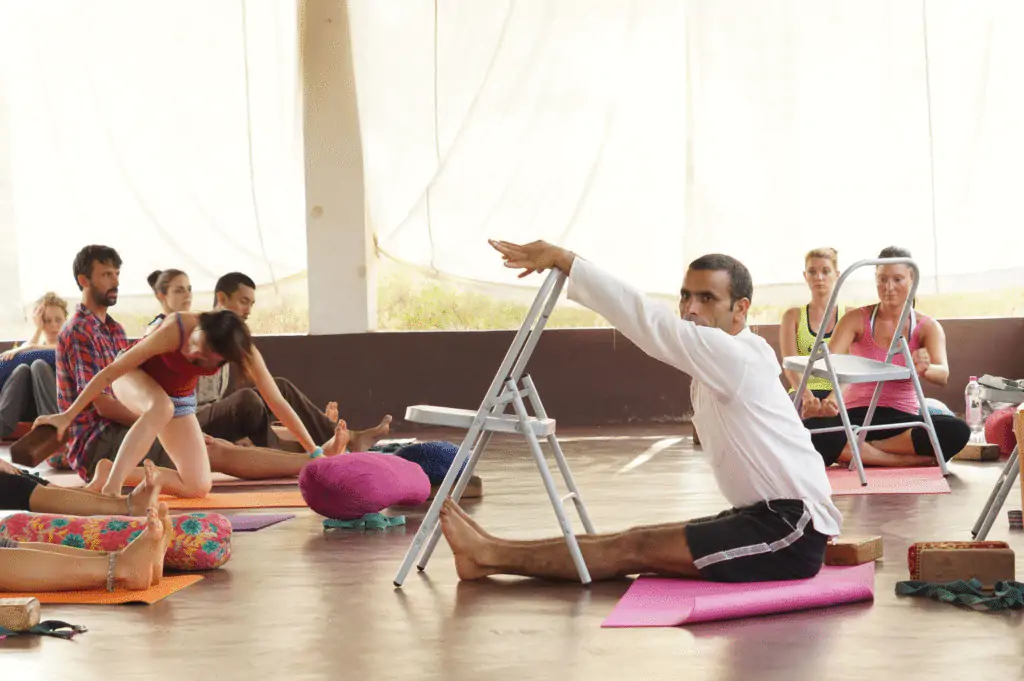
The Part Nobody Puts on the Homepage
Here’s where honesty matters more than marketing.
1. Dorm-style rooms aren’t as private as they look in photos
A lot of programs group four to eight students into a single shared room. That might sound fine for a short retreat, but a teacher training course runs for weeks, sometimes a full month. During that time, you’re processing new philosophy, working through physically demanding asana practice, and often confronting things about yourself you didn’t expect to. That kind of inner work needs quiet, personal space to actually settle. When your only alone time is a shared bunk with seven other people around you, that reflection gets harder to hold onto.
2. The “riverside, forest” setting is rarer than the marketing suggests
Photos of the Ganges and misty mountains are everywhere on these websites, and they’re not fake — but they’re often shot a short walk from campus, not from campus itself. The reality in the busiest parts of Rishikesh, especially around the Laxman Jhula and Tapovan stretch, is closely packed buildings, guesthouses, and shopfronts sitting wall to wall. It’s a lively, colourful part of town, but it’s not the secluded, nature-immersed setting many students picture before they arrive. Genuinely quiet, forest-close, or riverbank campuses do exist, but they’re the exception rather than the rule.
3. Yoga has become a business first, and a tradition second
This one’s harder to quantify but easy to feel once you’re there. Traditionally, a yoga teacher held students to a standard — not out of strictness for its own sake, but because that discipline was part of what you were there to learn. As Rishikesh has scaled into one of the busiest yoga tourism hubs in the world, that guru-shishya dynamic has, in many schools, been replaced by something closer to a hospitality package: nice photos, five-star reviews, and a schedule built for throughput rather than transformation. The depth is still there if you look hard enough, but you have to look.
None of this means Rishikesh is a bad choice. It simply means the experience varies a lot more between schools than the marketing lets on, and it’s worth knowing that before you commit weeks of your life and a fair amount of money.
So Where Does Dharamshala Come In?
Dharamshala sits roughly six to seven hours north of Rishikesh, tucked into the Kangra Valley with the Dhauladhar mountain range rising almost directly behind it. It’s home to the Tibetan government-in-exile and the town of McLeod Ganj, which gives it a layered, contemplative atmosphere that’s quite different from the yoga-tourism energy of Rishikesh.
Here’s what tends to surprise first-time visitors:
| Factor | Rishikesh | Dharamshala |
|---|---|---|
| Altitude & climate | Warmer, humid in summer | Cooler, forested, pine-scented air |
| Crowd levels | Dense tourist and yoga-school district | Quieter, fewer backpacker crowds |
| Surroundings | Mixed built-up streets near the river | Cedar and pine forest, mountain trails |
| Cultural texture | Hindu pilgrimage town | Tibetan Buddhist influence + Himalayan culture |
| Pace of daily life | Busy, commercial | Slow, reflective |
None of this makes Dharamshala automatically “better” for everyone — if you specifically want the energy of a major pilgrimage town on the Ganges, Rishikesh still delivers that in a way nowhere else can. But if what you’re actually looking for is stillness, forest air, fewer distractions, and space to genuinely absorb what you’re learning, Dharamshala quietly checks boxes that Rishikesh’s busier neighborhoods often can’t.
Why Mahiyoga School Is Worth a Look
Among the handful of schools operating in this region, Mahiyoga School has built a name for doing things differently — not by copying the Rishikesh playbook and relocating it, but by leaning into what makes Dharamshala genuinely distinct.
A few things stand out:
- Smaller batch sizes — students get real face-time with senior teachers instead of being one of thirty faces in a hall
- Private and low-occupancy rooms — a deliberate move away from the crowded-dorm model, so students actually get the personal space that deep practice requires
- A forest-adjacent campus — mornings often start with mist still sitting in the pine trees, not with the sound of neighboring construction
- Teaching rooted in the traditional guru-shishya relationship — instructors here still hold students accountable in the older sense, treating the course as a discipline to be earned rather than a package to be sold
If you’re comparing your options for a yoga teacher training course in Rishikesh India, it’s worth putting Dharamshala — and Mahiyoga School specifically — on your shortlist before you book. You can explore the 200 Hour Yoga Teacher Training in Dharamshala or the more advanced 300 Hour Yoga Teacher Training in Dharamshala to see how the curriculum compares. Details on accommodation and daily life at Mahiyoga School and the school’s philosophy and teaching approach are also worth reading before you decide. Students weighing multiple locations often find it useful to check the Dharamshala yoga retreat options as a lower-commitment way to experience the region first.
What This Means for Your Decision
Choosing where to do your yoga teacher training isn’t really about picking the “best” city in India for yoga — there isn’t one single answer to that. It’s about matching the environment to what you actually need out of the experience.
- If you want a lively, social, pilgrimage-town atmosphere with the Ganges close by, Rishikesh remains a strong, legitimate choice — just be selective about the specific school, room-sharing setup, and teaching style before you commit.
- If you’re craving quiet, forest air, smaller groups, and a slower pace that gives your practice room to breathe, Dharamshala — and a school like Mahiyoga — deserves a serious look.
Either way, the goal is the same: walking away not just with a certificate, but with a genuine shift in how you understand your own practice.
Frequently Asked Questions
Yes. Dharamshala offers a cooler climate, forested surroundings, and considerably fewer crowds than Rishikesh, making it a strong option for students who want a quieter, more introspective training environment.
Pricing is broadly similar across both regions and depends more on the individual school, room type, and course length than on the city itself. It’s worth comparing inclusions like meals, excursions, and accommodation privacy rather than price alone.
No. Most 200-hour courses, including those at Mahiyoga School, are designed to take complete beginners through to a certified teaching level, though some prior practice helps you settle into the physical demands faster.
Reputable schools in Dharamshala, including Mahiyoga School, are Yoga Alliance registered, meaning graduates can register as certified teachers (RYT) and teach internationally after completion.
Batch sizes vary by school, but many Dharamshala programs, including Mahiyoga’s, intentionally keep numbers smaller than the average Rishikesh batch to preserve one-on-one attention between teachers and students.