
Key Highlights
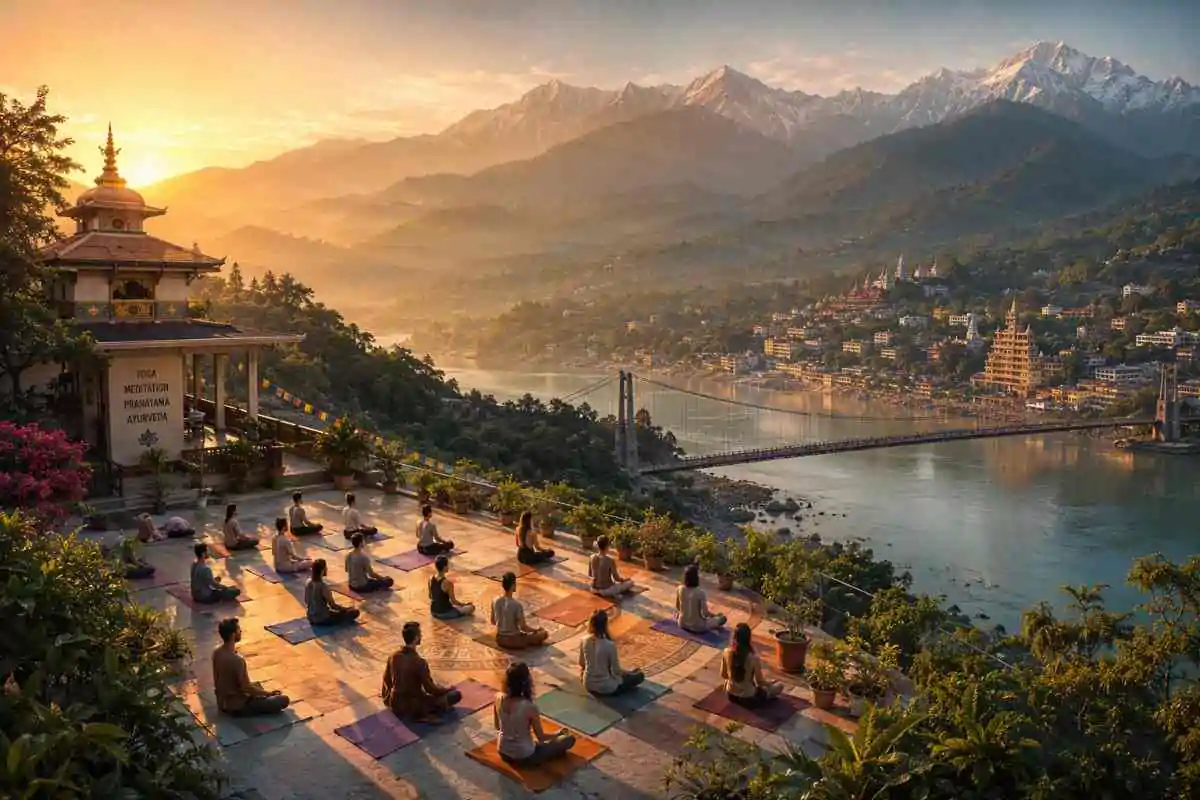
- Rishikesh offers residential yoga teacher training in a traditional ashram setting near Laxman Jhula.
- Many yoga school packages include accommodation, food, classes, materials, and certification in one fee.
- You can usually choose shared or private accommodation based on your comfort and budget.
- Food during your yoga journey is often sattvic, vegetarian, and sometimes vegan-friendly.
- Top schools focus on cleanliness, safety, and student support for a smooth stay in Rishikesh.
- Dharamshala may appeal to some travelers, but Rishikesh remains the stronger choice for teacher training.
Introduction of yoga teacher training rishikesh accommodation food
Planning yoga teacher training in Rishikesh means looking beyond the syllabus. You also need to know where you will sleep, what you will eat, and how your yoga school supports daily life. In this guide, you will get a clear view of accommodation and food during training in Rishikesh. You will also see why many students still choose this city for a serious learning experience, even when places like Dharamshala are part of the conversation.
Overview of Yoga Teacher Training in Rishikesh
Rishikesh is widely known as the yoga capital of the world, and that reputation shapes the full yoga teacher training experience. Students come here for immersion, lineage, and a residential setting that keeps the focus on practice, study, and discipline.
You can find hour yoga teacher training options from 100 to 500 hours, with the 200-hour course being the entry point for Yoga Alliance registration. That range gives you flexible teacher training pathways, whether you want a first certification or an advanced step.

Why Rishikesh is Considered the Yoga Capital
There is a reason Rishikesh is called the yoga capital of the world. It sits where the Ganga leaves the Himalayas and has been a center of yogic study for centuries. When you train here, you are stepping into a place shaped by practice, not just tourism.
Another reason is the strong teacher-student tradition. A good yoga school in Rishikesh is often built around lineage, experienced faculty, and guidance from a guru trained in the Himalayan path. That gives your learning more depth than a short studio-style program elsewhere.
Food and accommodation also differ between schools. Some offer simple residential rooms, while others add balconies, regular housekeeping, filtered water, and WiFi. Meal plans may include three fresh vegetarian meals, herbal teas, and detox juices. Against that backdrop, Dharamshala may be peaceful, but Rishikesh still leads for structured teacher training.
What Makes Yoga Teacher Training in Rishikesh Unique
What makes yoga teacher training here different is the level of immersion. Your day is not broken up by work, commuting, or outside obligations. You wake early, practice, study, eat, and rest in one place. That rhythm helps many yoga students progress faster.
The curriculum also goes beyond posture work. You may study yoga philosophy, anatomy, pranayama, meditation, and teaching methodology in a residential course. Some schools also include sound healing, satsang, or traditional ashram practices that deepen your yoga journey.
As for accommodation, you can usually expect clean residential rooms with a private bathroom, mattress, sheets, blankets, and basic modern comforts. Some schools offer both shared and private options. Selected rooms may include a balcony, and many places provide regular housekeeping and 24/7 connectivity, all set within the calm presence of the Himalayas.
Types of Accommodation Offered by Yoga Schools
Accommodation during yoga teacher training courses in Rishikesh is usually designed to support study, rest, and daily practice. Most schools keep things simple, clean, and functional so you can stay focused on learning rather than logistics.
Depending on the yoga school, you may choose shared or private rooms. Both options aim to offer a comfortable stay with essentials like bedding, bathrooms, and regular cleaning. The right setup often depends on your budget, privacy needs, and how you want to experience life with other students and your yoga instructor community.

Shared Dormitory Rooms for Community Experience
If you enjoy meeting people from different countries, a shared dormitory can be a strong fit. This setup supports community and makes it easier to connect with fellow yoga students from the first day of your yoga teacher training. You share space, routines, and often the small moments that make the stay memorable.
In many programs, the typical room setup is simple and practical rather than fancy. Schools focus on what supports your yoga journey best: rest, hygiene, and ease of daily use.
- Comfortable mattress and pillows
- Clean sheets, blankets, and access to a bathroom
- Regular housekeeping and filtered water access
For some students, shared living becomes a big part of the learning process. You build discipline together, talk after class, and settle into ashram life more naturally. If you want a social training experience, this option can feel more connected than staying alone.
Private Room Options for Personal Comfort
Yes, many schools do offer a private room during your yoga teacher training course in Rishikesh. This option suits you if you value quiet time, need more personal space, or simply rest better on your own. It can make a long residential course feel more balanced.
A private room still keeps you part of the school environment while giving you extra comfort. You stay close to classes, meals, and community life without giving up privacy during your yoga journey.
- Private bathroom with Western-style commode
- In some cases, balcony views and added room upgrades
Keep in mind that private accommodation may cost extra in some packages. Even so, many students find the upgrade worth it, especially during a 200-hour or longer course. If your recovery and reflection matter to you, this can be the better choice for a comfortable stay.
Food Options During Yoga Teacher Training
Food is a central part of yoga teacher training because it supports energy, focus, and recovery. In many Rishikesh schools, meals are prepared to match the rhythm of practice and the principles of a yogic lifestyle.
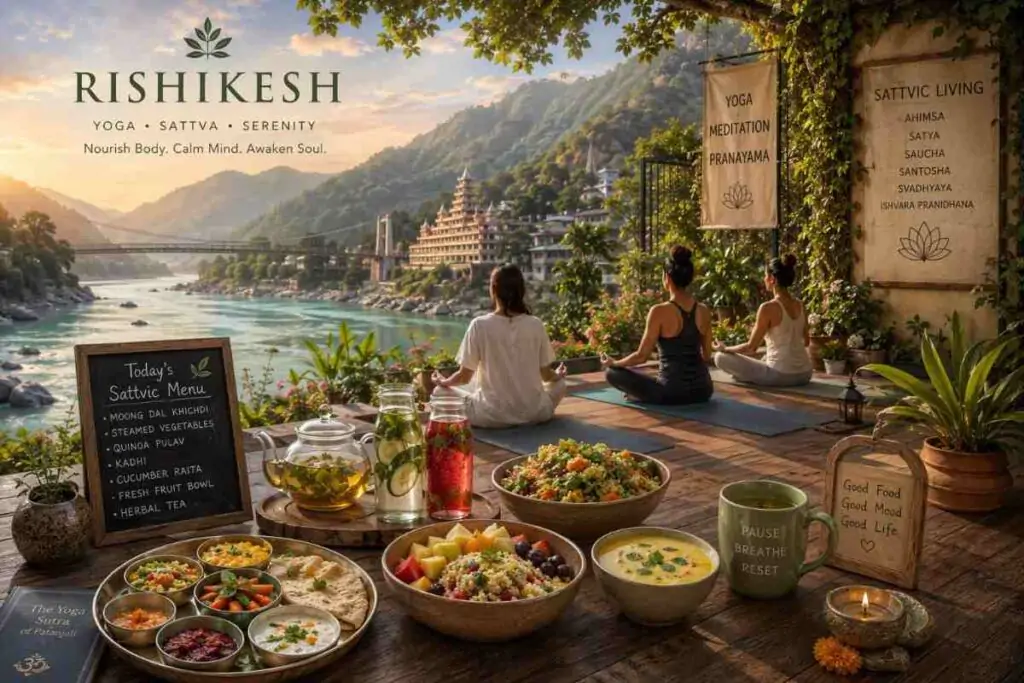
You can usually expect sattvic meals served three times a day, with vegetarian meals as the standard. Some schools also support vegan needs and offer herbal drinks. The goal is not complexity. It is clean nutrition that feels light, nourishing, and steady throughout your training.
Sattvic Meals and Yogic Diet Explained
In most residential programs, meals are included in the package. That is one reason Rishikesh remains attractive for students who want a clear budget and a simple daily routine. Your yoga school usually serves food that matches both practice and ashram discipline.
The diet is commonly based on sattvic meals. In simple terms, that means clean, light, vegetarian food prepared to support meditation, pranayama, and steady energy. This approach is closely connected to yoga philosophy and daily self-discipline.
- Three fresh sattvic meals daily
- Herbal teas and, in some schools, detox juices
- Traditional Indian dishes cooked with care and cleanliness
You are not likely to get heavy restaurant-style food during training. Instead, expect dal, roti, sabzi, and other fresh sattvic meals made to nourish without weighing you down. For many students, this becomes an important and appreciated part of the full learning experience.
Vegetarian, Vegan, and Special Diet Choices
Yes, yoga schools in Rishikesh commonly provide vegetarian meals during teacher training, and some also support vegan preferences. Since the food is usually based on sattvic food principles, plant-based eating already fits naturally into the meal plan.
The menu often includes Indian home-style dishes prepared with balanced spices and simple ingredients. The focus stays on nutrition, digestibility, and freshness rather than variety for its own sake. That works well during intensive study and physical practice.
- 100% vegetarian Indian traditional cuisine is common
- Some schools mention vegan-friendly meals
- Fresh fruits, vegetables, and herbal drinks may be part of the plan
If you have a special diet, it is smart to inform the kitchen manager in advance. Schools that follow ashram rules often ask for prior notice, especially if you are fasting or need meal adjustments. Clear communication makes your stay easier and helps avoid food waste.
Cleanliness, Safety, and Student Well-being
When you join yoga teacher training, cleanliness and safety matter as much as the course itself. A good residential setup should help you feel settled, rested, and able to focus on practice without daily stress.
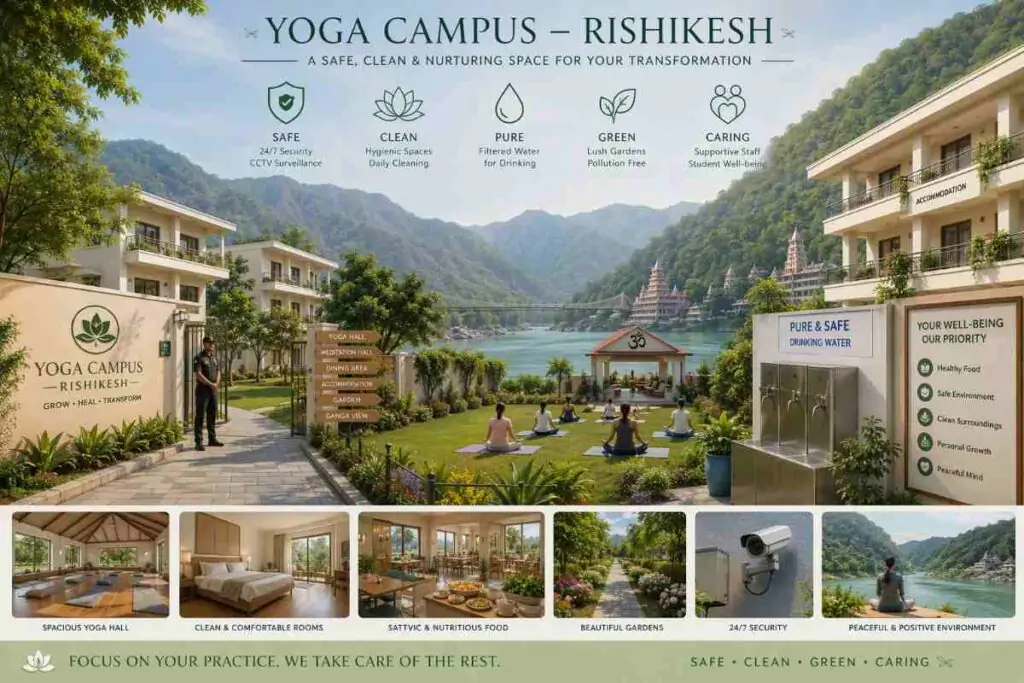
Many schools in Rishikesh highlight hygiene, filtered water, on-site staff, and structured rules that support wellness. Some campuses are gated, and ashram discipline also creates order in shared spaces. These details may seem small at first, but they shape your full training experience in a big way.
Hygiene Practices and Facilities at Yoga Schools
In reliable schools, accommodation is generally clean, safe, and designed for basic comfort rather than luxury. Hygiene standards often include maintained rooms, prepared meals handled with care, and access to filtered hot and cold water. That can make a major difference during an intensive yoga teacher training stay.
Many schools describe their rooms as clean and hygienic, with simple facilities that are easy to manage day to day. This supports your well-being because you are not spending energy solving avoidable problems around food or living conditions.
- Regular housekeeping
- Clean sheets, blankets, and maintained bathrooms
- 24-hour filtered hot and cold water
Safety also comes from routine. Ashram rules around punctuality, attendance, and respectful conduct help keep the environment stable. You should still check reviews and verify standards before booking, but well-run programs in Rishikesh usually place real emphasis on cleanliness and daily order.
Security and Support Services for International Students
If you are traveling from abroad, support services can make your yoga teacher training feel much easier from the start. Good schools often help with arrival planning, airport pickup, and basic pre-travel guidance. That support matters, especially if this is your first trip to India.
Security is also part of the picture. Some residential campuses are gated with staff on site, and schools may be located near known areas such as Laxman Jhula. Rishikesh is often described as one of the more comfortable places in India for solo travelers, including women.
- Enrolment letters for your visa application
- Airport pickup on arrival day at some schools
You still need to take normal precautions, but structured support lowers stress. Before you travel, confirm your visa details, arrival time, and school contact information. For international students, those simple support services can turn a confusing arrival into a smooth beginning.
Amenities at Rishikesh Yoga School Accommodations
Amenities can shape how easy your daily routine feels during yoga teacher training. You may not need a long list of extras, but a few practical features can improve comfort, rest, and connection with home.
Most yoga school accommodation in Rishikesh focuses on useful amenities instead of excess. Think WiFi, water heaters, bathrooms, housekeeping, and laundry support rather than resort-style additions. These basics help you stay organized and keep your attention on study, practice, and recovery.
Wifi, Internet Access, and Connectivity
Yes, WiFi or internet access is available at many accommodations offered through yoga teacher training in Rishikesh. Schools know that students often need basic connectivity for travel updates, family contact, or occasional online tasks during their stay.
That said, connectivity is usually treated as a convenience, not the center of the experience. The main goal of a yoga school is still immersion, practice, and disciplined study. So you can stay connected without losing the ashram atmosphere.
- 24/7 WiFi connectivity is mentioned by some schools
- Internet access may be available in rooms or common areas
- Connectivity helps with travel, communication, and study needs
If stable internet matters a lot to you, ask before booking. Services can vary from one property to another. Still, for most students, the available setup is enough to handle daily communication while keeping the focus on yoga teacher training.
Laundry Facilities, Housekeeping, and Everyday Convenience
Everyday convenience matters more than you may expect during an intensive course. Clean clothes, tidy rooms, and basic support free up time and energy. That is why practical services should be part of your accommodation checklist before booking yoga teacher training.
Regular housekeeping is commonly mentioned by schools, and it helps keep your room manageable during a residential stay. While detailed laundry information is not always listed, students should ask directly whether on-site laundry or nearby options are available.
- Regular housekeeping supports a cleaner living space
- Clean sheets and blankets are typically provided
- Ask in advance about laundry access or nearby services
If you are staying for 24 to 59 days, these details become important fast. A simple setup can still work very well when everyday needs are handled smoothly. The more practical the accommodation feels, the easier it is to stay focused on learning.
Comparing Costs: Affordable Packages in Rishikesh
Cost is one of the biggest reasons students choose Rishikesh for yoga teacher training. Compared with Europe, North America, or Australia, residential training in India often costs far less while still including the essentials.
That matters because food and accommodation are usually part of the package. Instead of paying separately for a room, meals, and classes, you often get one combined fee through a yoga school. This makes planning easier and helps you compare affordable packages more clearly.
All-Inclusive Packages: What’s Typically Included
Yes, there are affordable yoga teacher training courses in Rishikesh that include food and accommodation. This is one of the strongest practical benefits of training in India. Many schools offer residential, all-inclusive packages that combine classes and daily living costs into one fee.
What you get can vary, but the standard package is often generous. It may include accommodation, three meals a day, class materials, certification, and even airport pickup. Some extras, like a private room upgrade, flights, or visa costs, are usually separate.
| Course | Duration | From Price in USD | Typical Inclusions |
|---|---|---|---|
| 100 Hour Yoga Teacher Training | 8-13 days | $550 | Accommodation, meals, classes, materials, residential stay |
| 200 Hour Yoga Teacher Training | 24-25 days | $599 or $990 | Food, accommodation, certification, materials, airport pickup in some schools |
| 300 Hour Yoga Teacher Training | 29 days | $1,290 | Residential course, meals, study support, certification |
| 500 Hour Yoga Teacher Training | 59 days | $2,090 | Full extended stay with accommodation, food, classes, and certification |
Tips for Choosing Accommodation and Meal Plans
Choosing the right accommodation and meal plans starts with knowing your needs. Do you want quiet, or do you prefer living closely with other students? Are you happy with a simple room, or do you need a private bathroom and stronger day-to-day convenience? These answers help narrow your options.
Food and accommodation facilities differ among top-rated schools mostly in room type, housekeeping quality, water access, and the structure of meals. Some schools stay very basic, while others include added comfort like balconies, filtered water all day, and clearer support for vegan preferences.
- Check if meals are fully included three times daily
- Ask whether you can book shared or private accommodation
- Confirm housekeeping, WiFi, and water facilities before paying
The best part is that many Rishikesh programs are still affordable even with these essentials included. Dharamshala may attract people looking for a quieter hill setting, but for established yoga teacher training, Rishikesh usually gives you more complete and proven package options.
Specific Yoga Teacher Training Program Levels (100/200/300/500-Hour)
When it comes to yoga teacher training in Rishikesh, the program levels—100, 200, 300, and 500-hour certifications—each serve unique learning objectives tailored to students’ experience and aspirations. The 100-hour program typically acts as an introductory pathway, allowing beginner practitioners to dive into the essentials of yoga philosophy, teaching methodology, and basic postures. This course is perfect for those looking to deepen their understanding of yoga or figure out if they want to pursue a more extensive teaching journey. Progressing to the 200-hour course, students advance to more comprehensive studies that include a greater emphasis on anatomy, teaching practice, and the nuances of various yoga styles. This level is particularly vital for those aiming to register with Yoga Alliance as it lays the groundwork for more advanced training. For dedicated yogis, the 300-hour level presents a chance to refine their teaching skills further and explore topics such as yoga therapy or specialized techniques, ultimately enhancing their teaching toolkit. Lastly, the 500-hour program combines the 200-hour and 300-hour courses, providing a robust framework for those seeking to deepen their knowledge substantially and elevate their qualifications in the yoga community. The structured progression through these different levels ensures that each stage supports personal growth while catering to the diverse aspirations of students.
Student Testimonials & Experiences
Student testimonials play a vital role in giving prospective yogis a glimpse into the transformative experiences that await them during their yoga teacher training in Rishikesh. Many students highlight the profound personal growth they undergo while immersed in this serene environment surrounded by the Himalayas and the Ganges River. Common themes in testimonials include the supportive community of fellow students and instructors, which fosters a sense of belonging and enhances learning. Participants often share stories of how the combination of rigorous training, nutritious food, and the tranquility of ashram life has not only deepened their yoga practice but also improved their overall well-being. Testimonials frequently mention how shared meals and group activities contribute to lasting friendships, creating bonds that extend far beyond the training program. The positive impacts of daily practices like meditation, chanting, and yoga philosophy discussions resonate deeply with students, making their journeys in Rishikesh unforgettable and life-changing.
Multimedia Content (Video Insights or Visuals of Life at Ashram)
Multimedia content plays a pivotal role in enriching the experience of yoga teacher training in Rishikesh, providing potential students with a vivid glimpse into the life at the ashram. Through engaging video insights, you can see firsthand the daily routines, serene surroundings, and community interactions that define the training atmosphere. Visuals capture everything from early morning practices by the Ganges to shared meals and group discussions that foster connection among students. Many schools produce short documentaries or social media clips that highlight student testimonials, showcasing the transformative journeys others have embarked upon. These multimedia pieces not only serve as promotional tools but also offer an authentic representation of what to expect, painting a comprehensive picture of life in the ashram where mindfulness, learning, and personal growth converge beautifully. Engaging with this content helps prospective students to visualize their future training experience and can be quite inspiring as they prepare for their own yoga journey.
School Location Details
The location of your yoga school in Rishikesh significantly enhances the overall training experience. Nestled in the foothills of the Himalayas and alongside the sacred Ganges River, many schools enjoy a peaceful environment conducive to learning and reflection. Proximity to significant landmarks like Laxman Jhula and Ram Jhula provides students with easy access to shops, cafes, and cultural activities when they seek to unwind outside of their rigorous training schedule. The serene backdrop of the mountains and the flowing river not only offers stunning views but also creates an atmosphere of tranquility that enriches daily practice. The accessibility of various yoga studios that line the banks of the river supports a vibrant community of practitioners, while the spiritual energy of the area inspires individuals to delve deeper into their personal yoga journey. Opting for a school situated in a picturesque yet convenient location allows for a holistic experience, as students can immerse themselves fully in their studies while enjoying the beauty and culture of Rishikesh.
Consultation or Personalized Guidance for Prospective Students
Consultation and personalized guidance are vital components of the journey for prospective students considering yoga teacher training in Rishikesh. Many schools offer one-on-one consultations to help you navigate your choices, ensuring that your specific needs and aspirations are met before committing to a program. During these sessions, you can discuss your experience level, the types of yoga you are most interested in, and what you hope to achieve through teacher training. This tailored approach allows both students and instructors to build a personalized roadmap for your training, confirming that you are on the right path from the very beginning. Furthermore, asking questions about accommodation, dietary preferences, and daily schedules during these consultations can provide clarity and peace of mind, setting you up for a smooth transition into ashram life. Embracing this opportunity for guidance not only helps you feel more prepared but also enhances your overall experience as you embark on this transformative journey.
Packing Essentials and Preparation Tips for Yoga TTC in Rishikesh
When preparing for your Yoga Teacher Training Course (TTC) in Rishikesh, packing the right essentials can make a significant difference in your experience. Start with comfortable, breathable clothing suitable for both practice and the warm climate; think loose-fitting yoga pants, tank tops, and light layers for cooler evenings. Don’t forget a sturdy yoga mat if you prefer your own, along with essential props like a strap and block if needed. Additionally, pack personal items like a refillable water bottle to stay hydrated, skincare products for sun protection, and any medicines you might need during your stay. It’s also wise to include a journal for reflecting on your journey and notes from classes. As for food, Rishikesh’s accommodations typically cater to a variety of dietary needs, so while you won’t need to bring snacks, it’s beneficial to inform your training center about any specific dietary preferences or restrictions you have in advance. This thoughtful preparation will ensure you can fully immerse yourself in the transformative experience of yoga teacher training.
Free or Budget Accommodation and Meal Options in Rishikesh
When it comes to finding free or budget accommodation and meal options in Rishikesh, there are several choices that cater to various preferences without breaking the bank. Many yoga schools and ashrams provide economical lodging facilities, ranging from shared dormitories to private rooms at a fraction of the cost you’d expect elsewhere. These accommodations not only allow you to stay close to your yoga training center but also foster a vibrant community atmosphere. In addition to budget-friendly places to stay, you’ll discover that many local eateries and food stalls serve delicious vegetarian meals at reasonable prices. Street food vendors and small cafés often offer wholesome, locally-sourced meals, ensuring you can nourish your body while supporting the local economy. Opting for these budget accommodations not only enhances your yoga journey but also immerses you in the rich cultural tapestry of Rishikesh.
Seasonal Impacts on Accommodation and Food Experience
When considering yoga teacher training in Rishikesh, the seasonal variations play a significant role in shaping your accommodation and food experience. During the peak months of spring and autumn, you’ll find that many ashrams and retreats offer vibrant meals utilizing fresh, locally-sourced ingredients, which are especially abundant during these seasons. Accommodations also tend to reflect the seasonal ambiance, with tranquil settings and thoughtful design that enhance the overall experience. Conversely, during the monsoon, while the lush landscape transforms Rishikesh into a serene oasis, you might notice a shift in dining options, with menu adaptations focusing on seasonal produce and warm, comforting dishes that cater to the cool, rainy weather. The unique charm of Rishikesh stays present in every season, allowing students to immerse themselves in both the teachings of yoga and the rich culinary traditions that complement their journey.
Navigating Visa, Travel, and Local Safety for International Students
When planning your journey to Rishikesh for yoga teacher training, understanding the visa requirements and travel logistics is crucial for an enjoyable experience. Most international students will need a tourist visa, which can typically be obtained online or at an Indian consulate in your home country. Be sure to apply well in advance, as processing times can vary. Once you arrive, local transportation options like taxis, auto-rickshaws, and buses are readily available, making it easy to navigate the town. Safety is always a priority, so familiarize yourself with local customs and stay informed about areas that may require extra caution. Always secure your belongings and opt for group travel when exploring unfamiliar places. Remember, Rishikesh is a vibrant town known for its welcoming atmosphere; engaging with fellow yogis and locals can provide valuable insights and enhance your experience while ensuring your time here is both safe and fulfilling.
Social Spaces and Community Life in Yoga School Accommodations
A vital aspect of attending yoga teacher training in Rishikesh is the social spaces and community life that accompany the experience. Many yoga school accommodations emphasize creating a sense of belonging and togetherness among students from diverse backgrounds. Common areas, such as shared lounges, open courtyards, and communal kitchens, serve as gathering spots where students exchange ideas, support each other on their journeys, and form lasting friendships. Engaging in group activities and workshops fosters a nurturing environment, allowing participants to deepen their practice while building connections that often extend beyond the training. Furthermore, these interactions enrich the overall experience, as students share meals prepared with fresh, local ingredients, engage in discussions about yoga philosophy, and participate in yoga sessions together, reinforcing the communal spirit that often defines life in Rishikesh.
How Accommodation Choices Impact Certification and Training Outcomes
When selecting accommodation during your yoga teacher training in Rishikesh, it’s essential to consider how your living environment can influence both your certification experience and overall training outcomes. Comfortable, quiet accommodations can provide a restful space to unwind and reflect on your daily learning, fostering deeper integration of your practice. Many training facilities offer options ranging from shared dormitory-style rooms to private accommodations, each catering to different preferences and budgets. The food provided is equally crucial, as a nutritious, balanced diet supports physical and mental well-being, enhancing your ability to absorb teachings and participate actively in classes. Cultivating a supportive living environment with like-minded peers can also enrich your connections throughout the training, creating a community that motivates and inspires the collective journey towards becoming a certified yoga instructor.
Conclusion
In conclusion, choosing the right accommodation and food options is essential for a fulfilling yoga teacher training experience in Rishikesh. The unique blend of community living, personalized comfort, and a focus on healthful eating not only enhances your training but also cultivates a holistic environment conducive to personal growth. By selecting accommodations that prioritize hygiene, safety, and convenient amenities, you set yourself up for success in your journey. Embrace the opportunity to nourish your body with sattvic meals while immersing yourself in the tranquil atmosphere that Rishikesh offers. If you’re ready to take the next step towards your yoga journey, don’t hesitate to reach out and book your free consultation with us today!
Frequently Asked Questions
Most yoga school accommodation options include shared rooms or private rooms. During yoga teacher training courses, yoga students usually get a clean bed, bedding, bathroom access, and basic amenities. The right choice depends on your budget, privacy needs, and how social you want your yoga journey to feel.
Food in a residential yoga school is usually simple, nourishing, and served three times a day. Most yoga teacher training programs provide vegetarian meals based on sattvic meals principles. You can expect traditional Indian dishes, and some schools also offer herbal teas or detox drinks.
Yes, many schools can support vegan preferences alongside standard vegetarian meals. If you follow a special diet, tell the yoga school before your yoga teacher training begins. Advance notice helps the kitchen prepare better and makes your daily meal experience much smoother.
Your accommodation shapes how well you rest, recover, and stay focused. A clean and comfortable stay helps your yoga teacher training feel more stable and organized. Whether you choose shared living or private space, the right yoga school setting can improve your full yoga journey.