
If you’ve ever rolled out your mat and wondered what it would feel like to truly understand yoga — not just the postures, but the philosophy, the breath, the stillness behind it all — then a yoga teacher training course in India might be exactly what you’re looking for.
India isn’t just where yoga began; it’s still where it’s taught with the most depth. Every year, thousands of students from across the world fly into cities like Rishikesh, Dharamshala, Mumbai, and Goa to spend a month (sometimes more) immersing themselves in yoga teacher training courses in India. Some come to become certified instructors. Others come simply to deepen their personal practice. Either way is completely valid.
This guide walks you through everything a beginner or intermediate student needs to know before choosing a course — what the different certification levels mean, where to study, what it costs, and how to avoid picking the wrong school.
Why Do a Yoga Teacher Training in India?
You can technically train to become a yoga teacher almost anywhere — Bali, Thailand, and parts of Europe all run respected programs. So why does India still hold its place as the top destination?
A few reasons come up again and again among students:
- Authenticity of lineage. Many of the teachers running these programs were trained by, or are direct disciples of, well-known yogic gurus. The teaching lines trace back generations.
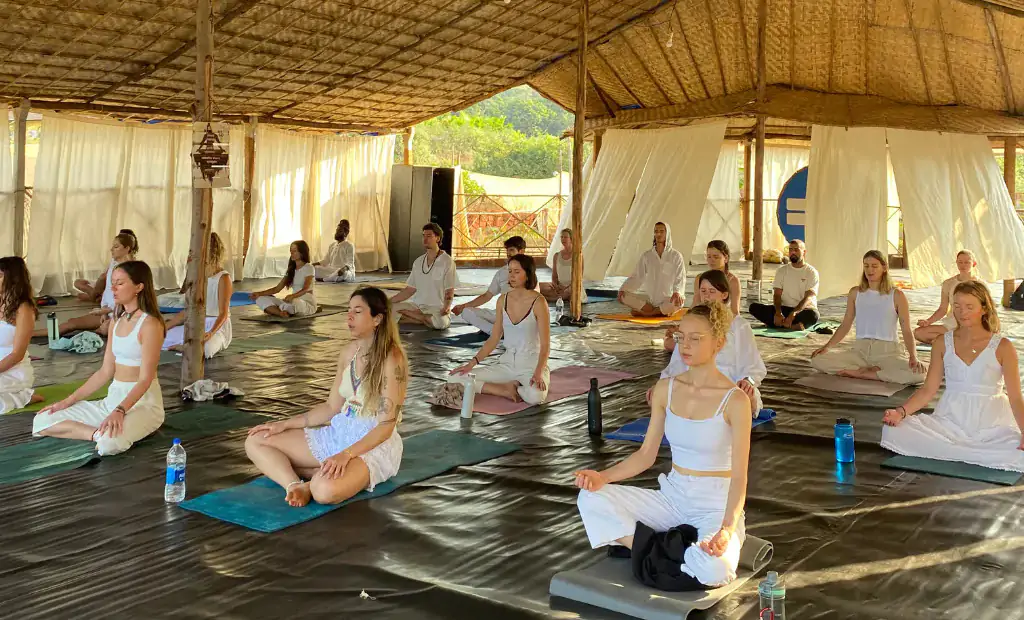
- Ashram-style immersion. Training in India often means living the yogic lifestyle — early mornings, simple vegetarian meals, and a daily rhythm built around practice rather than convenience.
- Affordability. Compared to Western countries, the cost of a full month-long residential course — including food and accommodation — is remarkably lower.
- Variety of styles and locations. From the Himalayan foothills of Rishikesh and Dharamshala to the beaches of Goa and Kerala, you can match your training environment to your personality.
Whatever your reason for training, doing it in India tends to give you something textbooks can’t: context. You see the rituals, the temples, and the daily discipline that yoga actually grew out of, and that shapes how you understand — and eventually teach — the practice.
Understanding Course Levels: 100-Hour, 200-Hour, 300-Hour, and 500-Hour YTTC
Before picking a school, it helps to know what the numbers actually mean, since almost every listing you’ll come across mentions “200-hour” or “300-hour.”
| Course Level | Who It’s For | Typical Duration |
|---|---|---|
| 100-Hour YTTC | Beginners wanting a foundational, shorter introduction | 10–15 days |
| 200-Hour YTTC | The standard entry-level certification most schools require to start teaching | 3–4 weeks |
| 300-Hour YTTC | Advanced training for those who already hold a 200-hour certificate | 3–4 weeks |
| 500-Hour YTTC | Combines 200 + 300 hours; recognized as a master-level qualification | Usually done in two stages |
Most reputable schools follow the standards set by international bodies so that your certification is recognized globally, not just within India. It’s worth checking this before enrolling, since not every school offering a “yoga teacher training courses in India” package is properly accredited.
What to Look For Before Choosing a School
There’s no shortage of yoga schools in India — which is part of the problem. Beginners often get overwhelmed by the sheer number of options. Here’s a simple checklist to filter through them:
- Certification and recognition – Confirm the course is affiliated with a recognized yoga body so your certificate actually holds weight if you plan to teach professionally.
- Teaching styles offered – Hatha, Ashtanga, Vinyasa, and Iyengar all feel quite different. Multistyle programs give you broader exposure if you’re not sure what suits you yet.
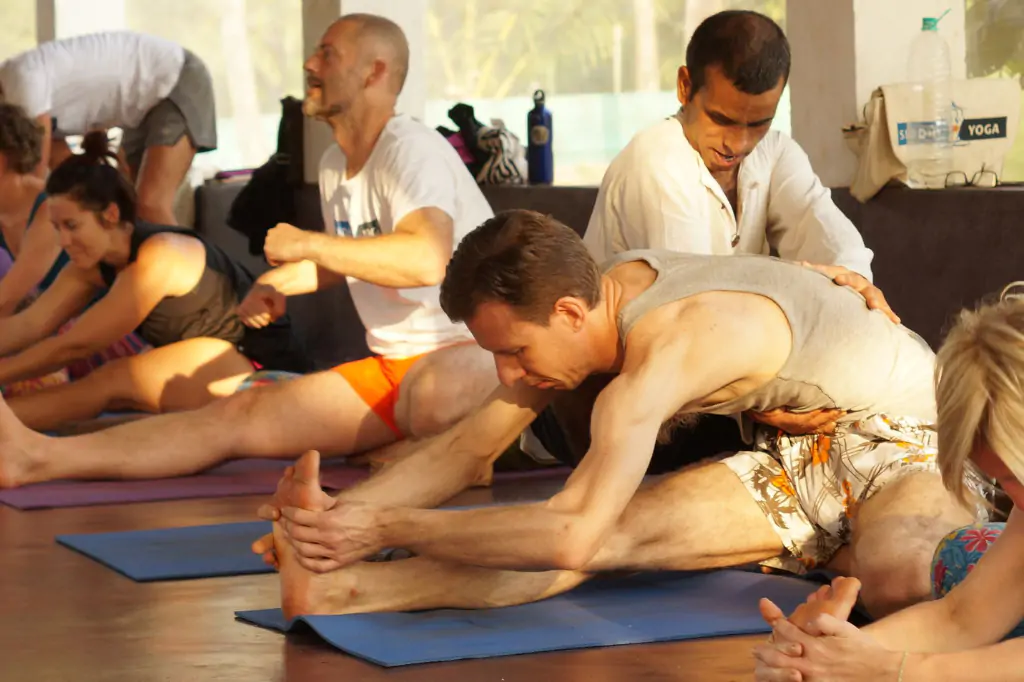
- Group size – Smaller batches usually mean more individual attention and hands-on correction.
- Location and environment – Mountain ashrams, beach towns, and city studios all offer very different experiences. Pick one that matches the kind of immersion you want.
- Reviews from real graduates – Look past the star rating and actually read what past students say about the teaching quality, food, and accommodation.
- What’s included in the price – Some courses bundle food and stay; others charge separately. Always clarify this before booking.
Popular Destinations for Yoga Teacher Training in India
Rishikesh
Often called the “yoga capital of the world,” Rishikesh sits along the Ganges in the foothills of the Himalayas. It has the highest concentration of yoga schools in the country, ranging from large, well-known institutions to small, quiet ashrams tucked away from the main tourist areas.
Dharamshala
Set against the Dhauladhar mountain range, Dharamshala offers a quieter, more contemplative training environment. Many students who want the Himalayan setting without the crowds of Rishikesh choose this region instead. If mountain views, cooler weather, and a slower pace matter to you, this is worth exploring — schools like Mahi Yoga Dharamshala run multistyle 100, 200, and 300-hour programs here.
Mumbai
For students who’d rather stay closer to a major city while training, Mumbai has some of India’s oldest and most established yoga institutes, some of which have been certifying teachers for over a century.
Goa and Varkala
Coastal training appeals to students who want beach access, a laid-back atmosphere, and a good mix of local and international teachers on their days off.
Frequently Asked Questions
No. Most 200-hour programs are designed for beginners, though you should be reasonably comfortable practicing yoga a few times a week before you arrive, since the daily schedule is intensive.
Yes, a 200-hour certification is the standard minimum most studios and gyms require to hire a yoga teacher. A 300-hour or 500-hour certification is generally pursued later, once you have some teaching experience.
Costs vary widely depending on location, duration, and whether accommodation is included — but a 200-hour residential course in India is generally far more affordable than equivalent programs in Europe or North America.
Yes, several established schools now offer online 200-hour and 300-hour programs. However, most students agree that the in-person, residential experience adds a depth that’s hard to replicate remotely.
This depends on the region. Rishikesh and Dharamshala are most comfortable from October to March, while coastal locations like Goa and Varkala also tend to run their main seasons through the cooler winter months.
Final Thoughts
Choosing among the many yoga teacher training courses in India ultimately comes down to what kind of experience you want — mountains or beaches, a large well-known institution or a small intimate ashram, a fast-paced 200-hour intensive or a slower online format. What matters most is picking a school with genuine teaching credibility and a syllabus that matches your goals, rather than just the flashiest marketing.
If you’re specifically drawn to a Himalayan, mountain-based training experience, it’s worth looking into Mahi Yoga’s Dharamshala programs, which run multistyle 100, 200, and 300-hour courses in the Kangra Valley.
Have you already completed a yoga TTC in India, or are you still deciding between schools? Share your experience or questions in the comments — and feel free to pass this guide along to a friend who’s thinking about taking the leap into teacher training.