Imagine lying down, closing your eyes, and waking up 45 minutes later feeling as though you had a three-hour deep sleep — without actually losing consciousness. That’s the quiet magic of Yoga Nidra.
Often called “yogic sleep,” Yoga Nidra is a deeply restorative meditation-based practice that guides you into the borderland between waking and sleep. It requires no flexibility, no special equipment, and no prior yoga experience. You simply lie down and let a guided voice lead you inward.
In today’s overstimulated world, where chronic stress, anxiety, and sleeplessness are increasingly common, Yoga Nidra offers a science-backed path to true rest and mental clarity. Whether you’re a stressed professional, a new meditator, or simply someone looking for a better night’s rest, this guide will walk you through everything you need to know.
What Is Yoga Nidra, Exactly?
The word “nidra” comes from Sanskrit and means sleep. But Yoga Nidra is not ordinary sleep. It is a state of conscious awareness in deep rest — your body relaxes completely while your mind stays gently alert. Think of it as hovering at the threshold between wakefulness and slumber, fully present yet profoundly still.
Rooted in ancient Indian philosophy, references to Yoga Nidra appear in texts as old as the Upanishads and the Mahabharata, where the state is associated with Lord Vishnu resting in cosmic stillness between the cycles of creation. By the medieval era, the practice was linked to samadhi — the deepest state of meditative absorption in both Hatha yoga and Raja yoga traditions.
The modern structured technique was popularized in the 20th century by Swami Satyananda Saraswati and later refined by psychologist Richard Miller, who developed the iRest (Integrative Restoration) protocol now used in clinical and military settings, including PTSD recovery programs for U.S. Army veterans.
Yoga Nidra vs Meditation: What’s the Difference?
Many people wonder how Yoga Nidra vs Meditation compares, since both involve stillness and inner focus. They are related, but they are distinctly different practices.
| Feature | Yoga Nidra | Meditation |
|---|---|---|
| Position | Lying down (Savasana) | Seated (usually) |
| Goal | Reach the delta (deep sleep) state | Reach the theta (relaxed alert) state |
| Awareness | Semi-conscious, guided | Fully conscious, self-directed |
| Structure | Highly structured (stages) | Varies widely |
| Ease for beginners | Very accessible | Can feel effortful at first |
With Meditation, you maintain a waking state of consciousness, observing your thoughts as they arise and pass. The practice targets the theta brainwave state — relaxed but alert. Yoga Nidra, on the other hand, moves deeper into the delta state, the same deep brainwave frequency achieved during the most restorative phase of sleep. In this state, the body heals and the mind rests, yet consciousness remains quietly present.
Put simply: both practices calm the mind, but Yoga Nidra takes you into a deeper, more effortless layer of rest.
The Science-Backed Benefits of Yoga Nidra
Yoga Nidra is not just folklore — it has genuine physiological and psychological effects. Here’s what the research and experts say:
1. Deep Stress Relief and Anxiety Reduction
Yoga Nidra works directly on the autonomic nervous system — the system governing automatic bodily functions like heart rate, digestion, and breathing. By activating the parasympathetic branch (the “rest and digest” system), it counteracts the chronic fight-or-flight state many of us live in.
Research has shown that Yoga Nidra can be more effective than standard meditation at reducing both the mental and physical symptoms of anxiety.
2. Better Sleep Quality
One of the most popular reasons people turn to Yoga Nidra for Sleep is its profound ability to prepare the body and brain for deep rest. A bedtime Yoga Nidra session calms an overactive mind, releases physical tension, and eases you into sleep naturally — without medication.
The practice also triggers the pineal gland to release melatonin, a hormone that regulates sleep cycles and acts as a powerful antioxidant in the body.
3. Improved Immune Function and Hormonal Balance
When melatonin is released during the deep relaxation of Yoga Nidra, it supports immune function, helps regulate blood pressure, and reduces cortisol (the stress hormone). Chronically elevated cortisol is linked to weight gain, inflammation, and burnout — all of which Yoga Nidra may help reverse over time.
4. Enhanced Focus and Emotional Resilience
Because Yoga Nidra trains the mind to observe thoughts and feelings without reacting, regular practitioners often report feeling more emotionally balanced, less reactive, and more focused during daily life. The practice essentially strengthens the connection between your conscious mind and your deeper layers of awareness.
5. Accessible to Everyone
Unlike physically demanding yoga styles, Yoga Nidra can be practiced by anyone — children, elderly individuals, people recovering from illness or injury, and those who are simply too exhausted to sit in formal meditation. You can even practice it lying in bed.
The 8 Stages of a Yoga Nidra Practice
While different teachers and traditions structure sessions slightly differently, most modern Yoga Nidra practices include the following core stages:
Stage 1: Physical Preparation (Settling In)
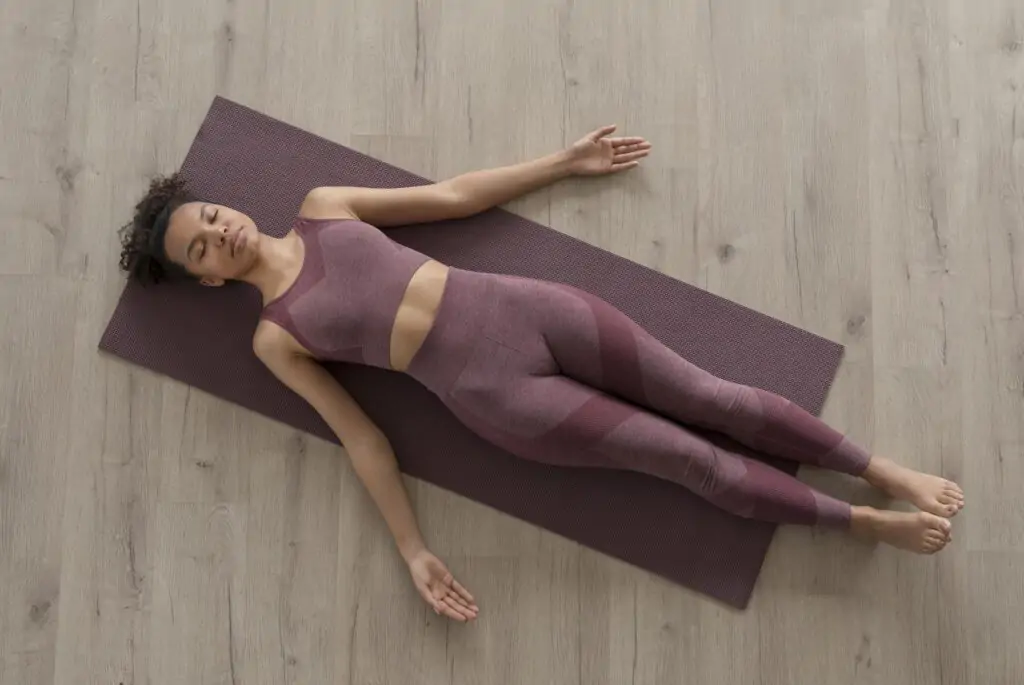
You lie down in Savasana — on your back, arms gently away from the body, eyes closed. Your teacher may guide you to adjust your position, use a bolster under your knees, or cover yourself with a blanket. Comfort is essential; discomfort will pull you out of the practice.
Stage 2: Sankalpa (Setting Your Intention)
A sankalpa is a short, positive resolve or heartfelt intention. It might be something like “I am at peace” or “I am healing.” You plant this seed in the mind at its most receptive state so it can take root at a deep level.
Stage 3: Rotation of Consciousness (Body Scan)
The guide leads you on a rapid journey through each part of the body in a specific sequence — right hand, fingers, palm, wrist, forearm, elbow, upper arm, shoulder, and so on. This quickly withdraws attention from the external world and brings awareness inward, releasing physical tension along the way.
Stage 4: Breath Awareness
You observe the natural rhythm of your breath — the rise of the abdomen, the slight pause at the top of the inhale, the gentle release on the exhale. This stage deepens inner focus and further slows the nervous system.
Stage 5: Pairs of Opposites (Dual Sensations)
You are guided through contrasting sensations or feelings — heaviness and lightness, warmth and cold, joy and sadness. This trains the mind to hold opposites without being destabilized, building emotional resilience.
Stage 6: Visualization (Mental Images)
A series of symbolic images or scenes are presented rapidly to the mind — a candle flame, a golden sunrise, a quiet river. The subconscious mind engages with these images in a way that bypasses the analytical brain, facilitating deep inner work.
Stage 7: Sankalpa (Reinforcing the Intention)
The intention you set at the beginning is revisited here. In this deeply receptive state, the mind absorbs the sankalpa with greater intensity.
Stage 8: Externalization (Return)
Slowly and gently, you are guided back to full waking awareness — first noticing sounds around you, then your body in the room, then gently moving fingers and toes before opening your eyes. This transition is done mindfully; rushing out of Yoga Nidra is not recommended.
How Yoga Nidra Compares to Hypnotherapy
Interestingly, Yoga Nidra shares some surface similarities with Hypnotherapy. Both guide you into a deeply relaxed, suggestible state. Both use voice-led techniques to influence the subconscious mind.
However, they differ in important ways. Hypnotherapy is a clinical tool used by trained therapists to treat specific conditions such as phobias, addiction, or trauma, often involving direct suggestion or regression. Yoga Nidra, by contrast, is a self-directed spiritual and wellness practice. It works by progressively moving consciousness through layers of the self (known in yoga philosophy as the koshas), cultivating awareness rather than implanting suggestions.
Both can be powerful tools for healing, but they work through different mechanisms and serve different purposes.
How to Start Your Yoga Nidra Practice: Practical Tips
Starting Yoga Nidra is wonderfully simple. Here’s how to set yourself up for success:
- Choose a quiet space — reduce distractions as much as possible. Dim the lights or wear a sleep mask.
- Get comfortable — lie on a yoga mat, a blanket, or even your bed. Use a pillow under your head and a bolster under your knees if needed.
- Keep warm — body temperature drops during deep relaxation; cover yourself with a light blanket.
- Use a guide — beginners should use a recorded session (YouTube, a meditation app, or Spotify). Look for sessions by teachers like Richard Miller, Swami Satyananda, or yoga therapists you trust.
- Start short — 15 to 20 minutes is plenty to begin. Gradually work up to 30–45 minute sessions.
- Practice consistently — the benefits compound over time. Even three sessions a week can produce noticeable results.
- Don’t worry about falling asleep — if you drift off, your subconscious mind continues to absorb the practice. Over time, you’ll find the edge between sleep and awareness easier to maintain.
Who Can Benefit from Yoga Nidra?
Yoga Nidra is genuinely inclusive. It can be particularly valuable for:
- People experiencing chronic stress or burnout
- Those struggling with insomnia or disrupted sleep
- Individuals managing anxiety or depression
- People dealing with chronic pain or illness
- Anyone seeking a deeper meditation practice without the physical demands of yoga
- Veterans and trauma survivors (iRest is used in U.S. military hospitals)
- Busy professionals who rarely get enough quality rest
- New meditators who struggle to sit still and quiet the mind
Conclusion: Rest Deeply, Live Fully
Yoga Nidra is one of those rare practices that asks very little of you — just the willingness to lie down and listen. In return, it offers something priceless: genuine rest at a level most of us rarely reach, along with a growing sense of inner calm, clarity, and resilience.
Whether you are drawn to it for better sleep, stress relief, or a deeper inner life, Yoga Nidra meets you exactly where you are. There is no wrong way to do it, no level of ability required, and no special equipment needed.
If you are ready to experience it for yourself, start tonight. Even a 20-minute guided session before bed could transform how you feel tomorrow morning.
👉 Explore more: Read our in-depth article on Yoga Nidra vs Meditation to see which practice suits your goals best, or discover how Yoga Nidra for Sleep can help you finally get the deep rest your body has been craving.
Frequently Asked Questions (FAQ)
Yoga Nidra is a guided meditation practice done lying down that systematically brings you into a deeply relaxed yet conscious state between waking and sleep. It works by guiding awareness through the body, breath, and mind in a structured sequence, activating the parasympathetic nervous system and releasing deep physical and mental tension.
Yoga Nidra is a guided meditation practice done lying down that systematically brings you into a deeply relaxed yet conscious state between waking and sleep. It works by guiding awareness through the body, breath, and mind in a structured sequence, activating the parasympathetic nervous system and releasing deep physical and mental tension.
Yoga Nidra is often said to be deeply restorative, and some practitioners report that a 45-minute session feels as refreshing as several hours of sleep. However, it is not a medical substitute for actual sleep. Think of it as a complement — it supports better sleep quality and replenishes the nervous system, but regular sleep is still essential.
Yoga Nidra is considered safe for most people and is accessible to all ages and fitness levels. However, individuals with severe psychiatric conditions or trauma histories may want to work with a trained yoga therapist before starting, as deep relaxation states can occasionally surface intense emotions or memories.
A body scan is often one component within a Yoga Nidra session, but Yoga Nidra is a much broader and more structured practice. It includes intention setting, breath awareness, visualization, opposite sensations, and guided externalization — all stages designed to systematically move consciousness to progressively deeper states of awareness.