
Have you ever walked into a yoga class and heard a soft, ocean-like sound filling the room — almost like the tide rolling in and out? That sound has a name. It is called Ujjayi Breath, and once you understand it, your entire yoga practice can transform.
Ujjayi Breath, also known as Ujjayi Pranayama, is one of the most foundational breathing techniques in the world of yoga. Pronounced oo-jai-ee, the word comes from Sanskrit — ud (upward, expansive) and jaya (victory) — which together give us “Victorious Breath.” This single technique has the power to anchor your mind, regulate your nervous system, and deepen the quality of every breath you take on and off the mat.
Whether you are brand new to yoga or have been practicing for years, this guide will walk you through everything you need to know about Ujjayi Breath — from its roots in ancient yogic tradition to a clear, step-by-step method you can start using today.
What Is Ujjayi Pranayama?
Ujjayi Breath is a breathing practice that involves a gentle constriction at the back of the throat, creating a slightly audible, rushing sound as air moves in and out through the nose. The mouth stays closed throughout.
Unlike most other Pranayama Techniques that are practiced only in a seated, meditative posture, Ujjayi is unique in that it can be used actively during physical yoga postures. In styles such as Vinyasa and Hatha Yoga, the breath becomes a rhythmic metronome that links movement to awareness.
The technique is prominently featured in the Hatha Yoga Pradipika, one of the most respected classical texts on yoga. It describes Ujjayi as a practice that strengthens the body, calms the mind, and allows vital energy — or Prana — to flow more freely through the body’s subtle channels (nadis).
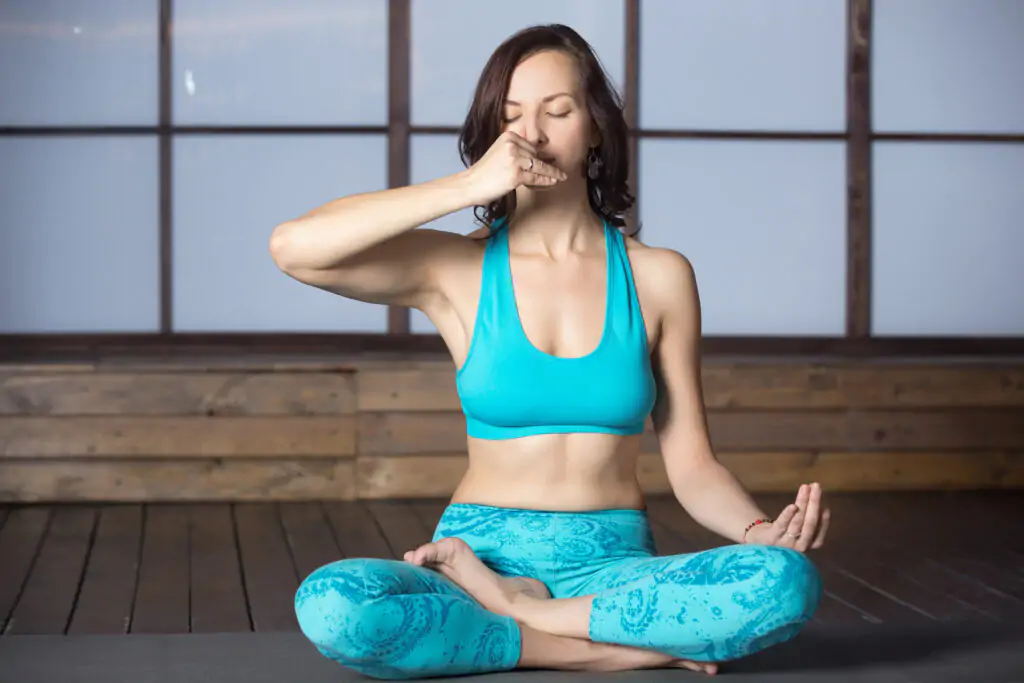
The Science Behind Ujjayi Breath
Modern science is beginning to confirm what ancient yogis discovered thousands of years ago. Here is what happens in your body when you practice Ujjayi:
- Partial glottal constriction lengthens each breath, naturally slowing the respiratory rate.
- A slower breathing rate activates the parasympathetic nervous system — your body’s “rest and digest” mode — reducing stress hormones and calming the mind.
- The gentle vibrations created in the larynx stimulate the vagus nerve, which has a powerful calming influence on the entire body.
- Because the throat is partially narrowed, the lungs must work more fully on both the inhale and exhale, which maximizes lung capacity and oxygen transfer.
- Research published in peer-reviewed journals has found that Ujjayi-style breathing has a balancing influence on both the cardiorespiratory and nervous systems.
In short, this is not just breathing — it is a physiological reset for both body and mind.
How to Practice Ujjayi Breath: Step-by-Step
Step 1: Find a Comfortable Position
Sit comfortably — on the floor, on a cushion, or in a chair. Let your spine lengthen naturally, soften your shoulders, and gently tuck your chin just slightly inward (without forcing it down).
Step 2: Open the Mouth — Fog the Mirror
Begin with your mouth open. Exhale as though you are lightly fogging up a mirror placed just a few centimetres in front of your face. You will hear and feel a soft, breathy sound in the throat. This gentle constriction is the glottis beginning to engage. Take two or three breaths like this, noticing the sensation.
Step 3: Close the Mouth — Keep the Sensation
Now close your mouth and replicate that same gentle throat engagement while breathing through your nose only. The sound will become softer — a low, smooth ocean-like whisper on both the inhale and the exhale. Keep the jaw relaxed, the tongue resting softly in the mouth.
Step 4: Balance the Inhale and Exhale
Let the inhale and exhale become equal in length, smooth, and unforced. There should be no tension in the throat muscles, no gasping, and no strain. If the breath feels forced, ease off — you are constricting the glottis slightly, not clenching it.
Step 5: Practice for 5–10 Minutes
Begin with five minutes of seated Ujjayi practice. With time, gradually extend this to ten or fifteen minutes. Once you feel confident, you can introduce Ujjayi into your asana sequences.
Practical Tip: A good volume reference is the volume of your most relaxed whisper. If people on the other side of the room can hear you, soften the breath. If you cannot hear yourself at all, gently deepen the constriction.
Integrating Ujjayi Breath Into Your Yoga Practice
Ujjayi in Flowing Sequences
Ujjayi naturally complements flowing asana like Surya Namaskar (Sun Salutations). The intention is simple: each inhale rises with an upward movement, and each exhale releases with a downward one. The breath becomes the conductor of the entire sequence.
When you begin practicing Surya Namaskar with Ujjayi, something remarkable happens. The mind stops wandering. It cannot — the soft, continuous sound keeps pulling attention back to the present moment. The sequence becomes less of a physical workout and more of a moving meditation.
Cat-Cow is another wonderful starting point. Take a few rounds of seated Ujjayi first, then carry that same breath into Cat-Cow without breaking the rhythm. This helps you experience firsthand how breath and movement can merge into one unified flow.
Ujjayi in Held Poses
In poses that are held for several breaths, Ujjayi can deepen your internal connection to the posture. Open, expansive shapes like Triangle Pose (Trikonasana) accommodate Ujjayi beautifully, as the torso has room to expand fully. Deep twists, on the other hand, may naturally restrict the breath — in those cases, soften or release the Ujjayi until the body finds ease again.
Benefits of Ujjayi Pranayama
Ujjayi Pranayama offers a wide range of benefits for the body, mind, and energy system. Here is a comprehensive overview:
Physical Benefits
| Benefit | What Happens |
|---|---|
| Improved lung capacity | Full expansion of both lung lobes on every breath |
| Builds internal body heat | Helps muscles warm up and stretch more safely |
| Supports cardiovascular health | Gentle pressure on carotid sinuses helps regulate blood pressure |
| Reduces snoring | Tones the throat muscles over time |
| Boosts immune function | Increased oxygenation and lymphatic flow |
Mental and Emotional Benefits
- Calms an anxious, overstimulated mind
- Improves focus and concentration during practice and daily life
- Reduces feelings of frustration, stress, and emotional reactivity
- Creates a meditative quality even during physical activity
- Serves as an anchor for the wandering mind — much like a mantra does in seated meditation
Energetic Benefits
Yogic philosophy teaches that Prana — the life force that animates all living beings — moves through the body’s subtle energy channels called nadis. Ujjayi breath is said to clear blockages in the central energy channel (Sushumna Nadi) that runs along the spine, allowing Prana to flow upward from the root chakra toward the crown. In this sense, regular Ujjayi practice supports not just physical wellness but deeper spiritual development as well.
Ujjayi Breath and Other Pranayama Techniques
Ujjayi is just one of many powerful Pranayama Techniques available in the yoga tradition. What makes it stand out is its versatility — it can be practiced as a standalone breath exercise or woven seamlessly into asana.
Here is how Ujjayi compares to other common techniques:
| Technique | Practiced | Key Quality |
|---|---|---|
| Ujjayi Pranayama | With or without asana | Grounding, warming, meditative |
| Nadi Shodhana (Alternate Nostril) | Seated only | Balancing, calming |
| Kapalabhati | Seated only | Energizing, cleansing |
| Bhramari (Humming Bee Breath) | Seated only | Deeply calming, inward |
Within the context of Hatha Yoga practice, Ujjayi is particularly prized because it bridges physical effort and meditative awareness in real time. It is the breath that helps practitioners of Hatha Yoga stay present, focused, and connected throughout an entire session.
Ujjayi Breath for Sleep and Stress Relief
One often-overlooked application of Ujjayi is its use as a sleep aid. Lying in bed, simply take ten long, slow Ujjayi breaths with a gentle throat constriction. The sound of the breath, resembling ocean waves, can be deeply soothing to the nervous system. Many practitioners report falling asleep before they even reach the tenth breath.
For stress relief during the day, try this approach: breathe in for a count of four with Ujjayi, hold briefly for a count of four, then exhale for a count of four. Repeat this cycle ten times. The effect on the nervous system can be noticed almost immediately.
Common Mistakes to Avoid
Even experienced practitioners can fall into habits that reduce the effectiveness of Ujjayi or make it uncomfortable. Watch out for these:
- Over-constricting the throat — The glottis should be gently narrowed, not clenched. The breath should still feel full and spacious.
- Forcing the sound — The oceanic sound is a natural byproduct of the throat engagement, not something you need to manufacture. Straining to make noise creates tension.
- Breathing through the mouth — Ujjayi always flows in and out through the nose.
- Forgetting to relax the jaw — A soft jaw is essential. Check in with this regularly during practice.
- Using Ujjayi in every pose regardless of comfort — Certain positions like deep twists may not be well-suited to Ujjayi. Listen to your body and adjust.
- Making it a mindless habit — Ujjayi is most powerful when practiced with conscious awareness. Done mechanically without attention, it loses much of its transformative quality.
Who Should Be Cautious?
Ujjayi is generally a safe and accessible practice for most people. However, you should avoid or modify it if you:
- Have damaged or sensitive vocal cords
- Experience dizziness, headaches, or heightened anxiety when practicing conscious breathing
- Have been advised by a doctor to avoid breath retention or controlled breathing exercises
- Are pregnant (consult a qualified prenatal yoga teacher for guidance)
If Ujjayi ever feels uncomfortable or causes lightheadedness, simply return to your natural breath without judgment. There are many other Pranayama Techniques that may serve you better.
Conclusion
Ujjayi Breath is one of those rare practices that is simple to learn but endlessly deepening. At its most basic level, it is just a slightly audible nose breath with a soft throat constriction. But practiced consistently and mindfully, it becomes a powerful tool for calming the nervous system, sharpening focus, building internal heat, and cultivating the kind of quiet inner presence that is the real goal of yoga.
Whether you are flowing through Surya Namaskar in a morning practice, sitting quietly before meditation, or simply trying to unwind after a long day, Ujjayi Pranayama is a breath worth mastering.
Start with five minutes today. Sit, close your eyes, and listen to the ocean inside you.
Did you find this guide helpful? Explore our related articles on Pranayama Techniques, Hatha Yoga, and Surya Namaskar to continue deepening your practice. We would love to hear about your experience with Ujjayi — drop a comment below or share this article with a fellow yoga enthusiast!
Frequently Asked Questions (FAQ)
Ujjayi Breath is used to calm the mind, build internal body heat, improve focus, and support both the physical and meditative aspects of yoga practice. It also has practical applications for stress relief, better sleep, and emotional regulation outside of formal yoga sessions.
Normal breathing is largely unconscious and unrestricted. Ujjayi involves a deliberate, gentle constriction of the glottis (the space between the vocal cords), which slows the breath, lengthens each inhale and exhale, and creates a soft, audible ocean-like sound. Both inhale and exhale travel through the nose with the mouth closed.
Absolutely. Ujjayi is one of the most beginner-friendly pranayama techniques because it can be learned gradually. Start with the “fogging a mirror” exercise described above to feel the glottal engagement, then gradually refine it. It does not require any breath retention, making it accessible and low-risk for new practitioners.
Even five minutes of seated Ujjayi practice daily can produce noticeable effects on stress and focus over time. As you grow more comfortable, you can extend your seated practice to ten or fifteen minutes, and gradually integrate Ujjayi into your asana sessions.
Yes. “Ocean Breath” is simply the English nickname for Ujjayi Pranayama, named after the wave-like sound the technique produces. Both terms refer to the same practice.