
What is Raja Yoga?
Raja Yoga, often called the “Royal Path” or the “King of Yogas,” represents one of the most profound systems of mental discipline and meditation ever developed. Unlike physical yoga practices that focus primarily on bodily postures, Raja Yoga emphasizes controlling the mind to achieve spiritual awakening and inner tranquility.
The word “Raja” means “royal,” signifying that this path was traditionally taught to kings and highly evolved spiritual seekers. Today, anyone committed to understanding their true nature and developing mental clarity can embark on this transformative journey.
At its core, Raja Yoga teaches us a powerful truth: we possess the freedom to choose our inner state regardless of external circumstances. Through systematic practice, we learn to quiet the restless mind, transcend limiting thoughts, and experience the radiant peace that lies within every human being.
The Philosophy Behind Raja Yoga
Raja Yoga operates on a fundamental principle – our perception of the divine Self becomes obscured by mental disturbances. When waves of thoughts constantly ripple across the surface of our minds, we cannot see clearly into the depths of our true nature.
Think of your mind as a lake. When winds blow and create waves, the water becomes murky and turbulent. You cannot see the bottom clearly. Similarly, when endless thoughts, worries, and desires disturb your mental peace, you lose sight of your authentic self.
Raja Yoga provides the methodology to still this mental lake. When the mind becomes calm and pure, the Self automatically shines forth with brilliant clarity. This isn’t something we create – it’s something we uncover.
The Mind-Body Connection
This yoga system recognizes that we are not merely our bodies or even our thoughts. The physical body, while important, serves as a vehicle for something far greater. Raja Yoga directs our attention inward, helping us distinguish between the temporary fluctuations of the mind and the eternal consciousness that witnesses these changes.
Through dedicated practice, practitioners learn to observe their thoughts without becoming entangled in them. This creates psychological freedom – the ability to respond consciously rather than react automatically.
Patanjali’s Eight Limbs of Raja Yoga
The sage Patanjali systematically organized Raja Yoga into eight progressive stages, known as Ashtanga Yoga or the Eight Limbs. Each limb builds upon the previous one, creating a comprehensive pathway from ethical living to complete spiritual realization.
1. Yama (Ethical Restraints)
Yama consists of five universal moral principles that form the foundation of yogic practice:
- Ahimsa (Non-violence): Cultivating harmlessness in thought, word, and action toward all beings
- Satya (Truthfulness): Living with honesty and integrity
- Asteya (Non-stealing): Respecting others’ possessions and not coveting what isn’t ours
- Brahmacharya (Energy conservation): Channeling our vital energy toward spiritual growth
- Aparigraha (Non-possessiveness): Letting go of greed and unnecessary accumulation
These practices purify our actions and relationships, creating the stable foundation necessary for deeper spiritual work.
2. Niyama (Personal Observances)
Niyama includes five personal disciplines that cultivate positive qualities:
- Saucha (Purity): Maintaining cleanliness of body, environment, and mind
- Santosha (Contentment): Finding peace with present circumstances
- Tapas (Disciplined practice): Developing willpower through sustained spiritual effort
- Svadhyaya (Self-study): Engaging in introspection and studying spiritual texts
- Ishvara Pranidhana (Surrender to the Divine): Dedicating all actions to a higher purpose
Together, Yama and Niyama create the ethical framework that supports advanced practice.
3. Asana (Physical Posture)
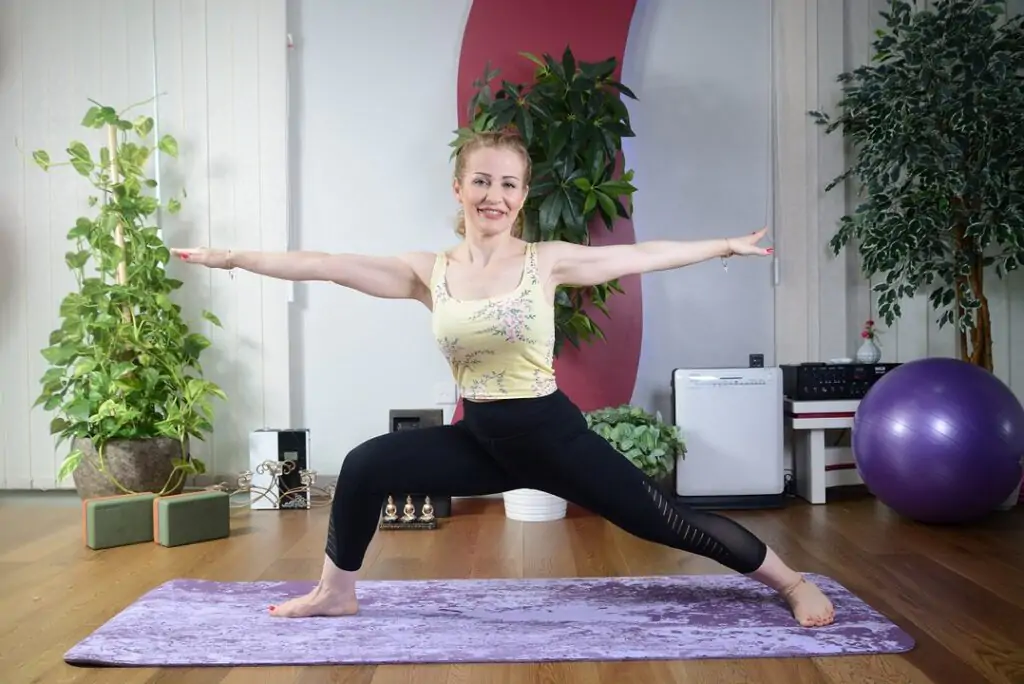
While modern yoga emphasizes numerous postures, Patanjali’s asana refers primarily to establishing a steady, comfortable seat for meditation. The goal is finding a position you can maintain comfortably for extended periods without physical distraction.
A stable posture allows energy to flow freely while keeping the mind alert and focused.
4. Pranayama (Breath Regulation)
Pranayama involves conscious control of the breath to regulate vital life force (prana). Through specific breathing techniques, practitioners:
- Calm the nervous system
- Increase mental clarity
- Balance emotional states
- Prepare the mind for deeper concentration
The breath serves as a bridge between body and mind, making it an invaluable tool for developing awareness.
5. Pratyahara (Withdrawal of Senses)
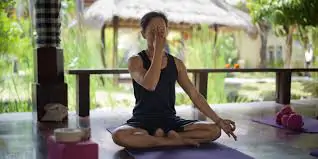
Pratyahara represents the pivotal transition from external to internal practices. Here, we learn to withdraw our attention from sensory distractions and turn awareness inward.
Like a turtle drawing its limbs into its shell, the practitioner consciously detaches from the external world’s constant pull. This doesn’t mean rejecting the world but rather choosing when and how to engage with it.
6. Dharana (Concentration)
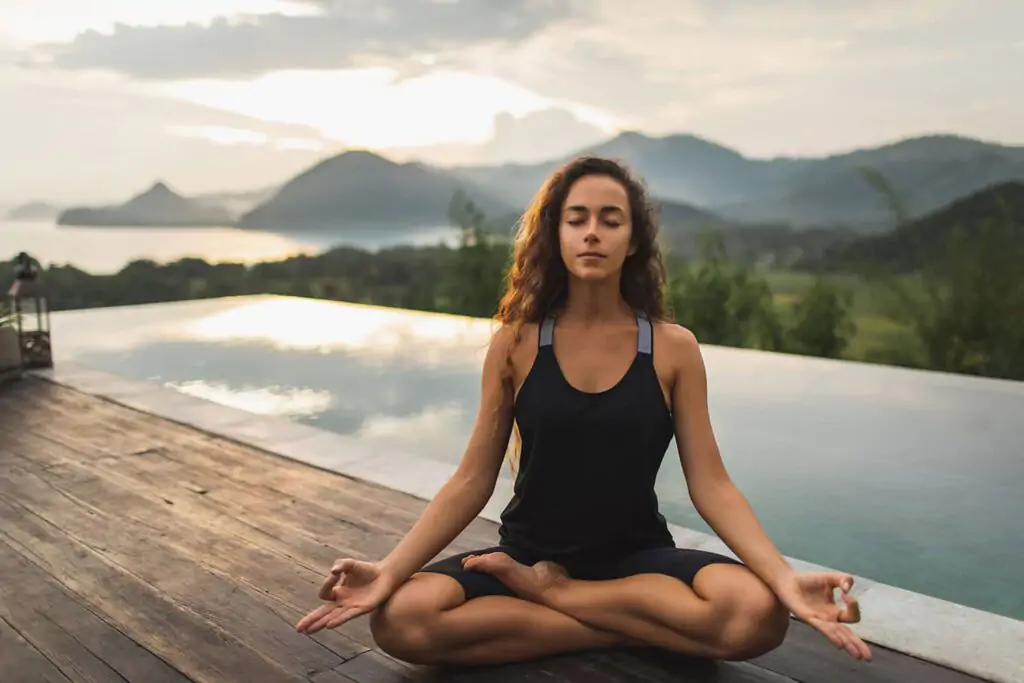
Dharana involves focusing the mind on a single point – perhaps a mantra, image, breath, or energy center. Initially, the mind wanders constantly, but with practice, it learns to remain fixed on the chosen object.
This stage develops the mental muscle necessary for sustained attention and deeper states of awareness.
7. Dhyana (Meditation)
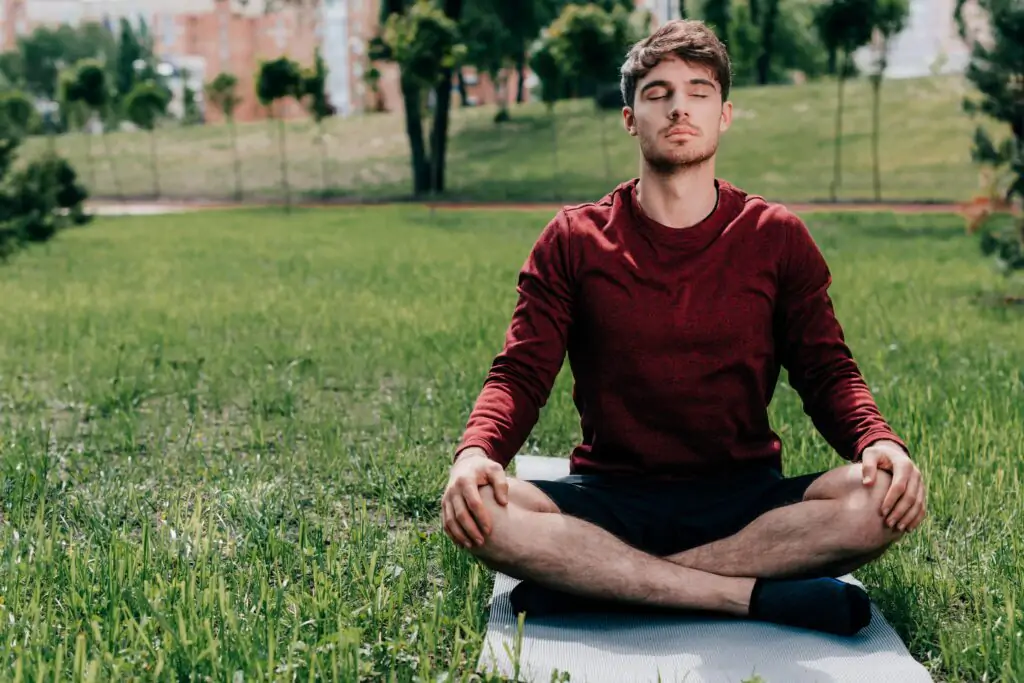
When concentration becomes effortless and unbroken, it transforms into dhyana – continuous flow of awareness toward the object of focus. Here, the separation between observer and observed begins dissolving.
Meditation at this level isn’t something you “do” – it becomes something you naturally experience when conditions align properly.
8. Samadhi (Absorption)
Samadhi represents the culmination of yogic practice – complete absorption where all sense of separate self dissolves. The individual consciousness merges with universal consciousness, experiencing indescribable peace and unity.
Different levels of samadhi exist, with the highest state (Nirvikalpa Samadhi) bringing complete liberation from all mental conditioning and suffering.
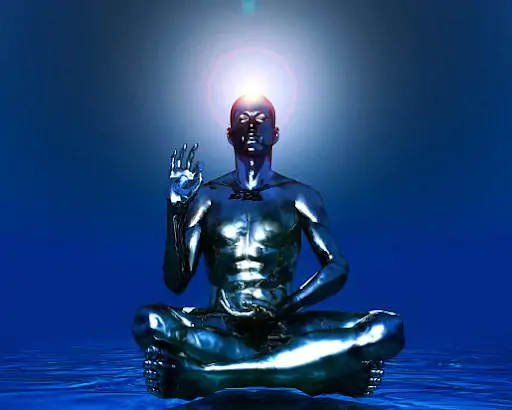
Patanjali’s Mind States and Mental Mastery
Patanjali identified five distinct states of mind, each representing different levels of clarity and distraction:
- Kshipta (Restless): The mind scatters in multiple directions simultaneously, unable to focus
- Mudha (Dull): Characterized by confusion, lethargy, and mental heaviness
- Vikshipta (Occasionally steady): The mind experiences moments of focus interrupted by distraction
- Ekagra (One-pointed): Sustained concentration develops; the mind remains stable
- Niruddha (Controlled): Complete mastery where mental modifications cease entirely
Understanding these states helps practitioners recognize their current condition and work systematically toward greater stability and clarity.
Raja Yoga vs. Other Four Paths of Yoga
Ancient wisdom traditions recognize Four Paths of yoga, each suited to different temperaments:
Karma Yoga (Path of Action)
Karma Yoga emphasizes selfless service and performing duties without attachment to results. Perfect for active, service-oriented individuals who find fulfillment through doing.
Bhakti Yoga (Path of Devotion)
Bhakti Yoga centers on love and devotion toward the Divine. This emotional path suits those with naturally devotional hearts who connect through prayer, chanting, and worship.
Jnana Yoga (Path of Knowledge)
Jnana Yoga employs intellectual discrimination to distinguish reality from illusion. This philosophical approach appeals to analytical minds seeking truth through reasoning.
Raja Yoga (Path of Meditation)
Raja Yoga directly works with the mind itself through systematic meditation practices. While the other paths can be practiced in daily activities, Raja Yoga requires dedicated time for inner work.
Most spiritual seekers benefit from integrating elements of all Four Paths, though one usually resonates most strongly based on individual nature.
Benefits of Practicing Raja Yoga
Regular Raja Yoga practice creates profound transformations across all dimensions of life:
Mental Benefits
- Enhanced concentration and focus
- Reduced anxiety and stress
- Improved emotional regulation
- Greater mental clarity and decision-making ability
- Reduced negative thought patterns
- Increased creativity and problem-solving skills
Physical Benefits
- Lower blood pressure and heart rate
- Improved sleep quality
- Strengthened immune system
- Reduced physical tension and pain
- Better overall energy levels
- Enhanced mind-body coordination
Emotional Benefits
- Deeper sense of inner peace
- Increased emotional resilience
- Greater compassion toward self and others
- Reduced reactivity to challenging situations
- Enhanced ability to process difficult emotions
- More stable, balanced mood
Spiritual Benefits
- Expanded awareness and consciousness
- Direct experience of inner stillness
- Deeper connection with authentic self
- Transcendence of limiting beliefs
- Progressive realization of unity consciousness
- Experience of profound joy independent of circumstances
How to Practice Raja Yoga: Essential Techniques
Beginning a Raja Yoga practice doesn’t require complex preparations or special equipment. Here’s how to start:
Establishing Your Practice
Choose Your Space: Select a quiet, clean area where you won’t be disturbed. This becomes your dedicated practice space.
Set Regular Times: Consistency matters more than duration. Even 10-15 minutes daily proves more beneficial than irregular longer sessions.
Find Comfortable Posture: Sit in a position you can maintain comfortably – cross-legged on the floor, on a cushion, or in a chair with feet flat on the ground.
Basic Meditation Technique
- Settle into stillness: Close your eyes and take several deep breaths
- Observe your breath: Notice the natural rhythm without controlling it
- Witness thoughts: When thoughts arise, acknowledge them without judgment and gently return attention to breath
- Expand awareness: Gradually include body sensations, sounds, and the quality of awareness itself
- Rest in being: Allow yourself to simply be present without effort or expectation
Working with Mental Distractions
Every practitioner faces mental restlessness. When your mind wanders:
- Don’t judge yourself harshly – wandering is normal
- Gently redirect attention without force
- Use the breath as an anchor point
- Remember: noticing distraction shows growing awareness
- Practice patience with yourself
Developing the Four Virtues
Patanjali recommends cultivating four attitudes to create mental peace:
- Maitri (Friendliness): Toward those who are happy
- Karuna (Compassion): Toward those who suffer
- Mudita (Joy): Toward those more fortunate than us
- Upeksha (Equanimity): Toward those whose actions we disagree with
Practicing these transforms how we relate to the world, reducing mental agitation significantly.
Overcoming Common Obstacles in Raja Yoga
Every spiritual aspirant encounters challenges. Understanding common obstacles helps you navigate them skillfully:
Physical Restlessness
Solution: Practice gentle stretching or walking meditation before sitting. Ensure you’re not hungry or overly full.
Mental Agitation
Solution: Accept that some mental activity is normal. Focus on reducing identification with thoughts rather than stopping them entirely.
Drowsiness
Solution: Practice at times when you’re naturally alert. If sleepiness persists, open eyes partially or stand for brief periods.
Doubt and Skepticism
Solution: Approach practice with curious openness rather than blind belief. Personal experience provides the best validation.
Impatience
Solution: Release expectations about rapid progress. Trust the process and enjoy the journey itself.
Spirituality and Raja Yoga in Modern Life
You might wonder how ancient practices apply to contemporary challenges. Raja Yoga’s relevance has only increased in our fast-paced, technology-driven world.
Stress Management
Modern life generates constant stress – work pressures, information overload, social expectations. Raja Yoga provides proven techniques for managing stress by addressing its root in the reactive mind.
Enhancing Performance
Athletes, artists, and professionals increasingly use meditation to improve focus and performance. The mental clarity developed through Raja Yoga enhances every activity.
Building Resilience
Life inevitably includes challenges and setbacks. Raja Yoga cultivates psychological resilience – the ability to maintain inner stability despite external turbulence.
Finding Purpose
Beyond stress relief and performance enhancement, Raja Yoga helps answer deeper questions: Who am I? What is my purpose? What truly matters?
This spirituality isn’t about escaping daily life but bringing greater awareness and meaning to every moment.
Different Approaches to Raja Yoga
While Patanjali’s system provides the classical framework, various traditions have developed distinct interpretations:
Classical Patanjali Raja Yoga
Focuses on the Eight Limbs as a systematic path requiring dedication, discipline, and often guidance from an experienced teacher.
Brahma Kumaris Raja Yoga
Emphasizes open-eyed meditation, accessible to everyone regardless of background. Focuses on transforming consciousness through understanding spiritual knowledge and practicing awareness during daily activities.
Integral Yoga Approach
Integrates Raja Yoga principles with other yogic paths, recognizing that comprehensive development requires attention to body, emotions, intellect, and spirit.
Each approach offers valuable insights while sharing the common goal of mental mastery and spiritual realization.
Creating a Sustainable Practice
Starting enthusiastically only to abandon practice after weeks proves common. Here’s how to build lasting commitment:
Start Small
Begin with achievable goals – even five minutes daily. Success with small commitments builds confidence for larger ones.
Track Progress
Keep a simple journal noting practice duration, experiences, and insights. Reviewing progress provides motivation.
Find Community
Connecting with other practitioners offers support, inspiration, and accountability. Consider joining local groups or online communities.
Integrate Throughout Day
Beyond formal practice, bring awareness to daily activities – eating, walking, working. This extends meditation beyond cushion time.
Be Patient and Kind
Spiritual growth follows its own timeline. Treat yourself with the same compassion you’d offer a dear friend learning something new.
Advanced Practices and Deepening Your Journey
As your practice matures, you might explore:
- Working with specific energy centers (chakras)
- Advanced breathing techniques
- Extended meditation retreats
- Studying classical yoga texts
- Finding a qualified teacher for personalized guidance
Remember that depth matters more than adding complexity. Sometimes the most advanced practice is simply being present with whatever arises.
Frequently Asked Questions (FAQs)
Hatha Yoga primarily focuses on physical postures and breathing exercises to prepare the body for meditation. Raja Yoga emphasizes direct mental discipline and meditation techniques, though it includes all Eight Limbs of practice. Both paths complement each other beautifully.
Many practitioners notice increased calmness and mental clarity within weeks of consistent practice. Deeper transformations unfold over months and years. Benefits accumulate gradually, with regular practice being more important than duration.
Absolutely! While Raja Yoga has spiritual dimensions, it’s essentially a practical system for understanding and training your mind. The techniques work regardless of religious beliefs or lack thereof. Many practitioners approach it purely as mental fitness.
Beginners can start independently using available resources. However, working with an experienced teacher prevents common mistakes and accelerates progress. A teacher provides personalized guidance based on your unique challenges and constitution.
Early morning (before sunrise) is traditionally considered ideal because the mind is naturally quieter and fewer external distractions exist. However, the best time is whenever you can practice consistently. Some people find evening practice helpful for processing the day.
Conclusion: Embracing the Royal Path
Raja Yoga offers something rare in our modern world – a proven system for developing genuine inner freedom and peace. Through its time-tested practices, millions have discovered that happiness doesn’t depend on external circumstances but emerges from within.
Whether you seek stress relief, enhanced performance, spiritual awakening, or simply want to understand your mind better, Raja Yoga provides practical tools for transformation. The journey begins with a single moment of stillness, a conscious breath, a gentle turning inward.
The beauty of this path lies not in distant goals but in each present moment of practice. Every time you choose awareness over distraction, calm over reactivity, you’re already experiencing the fruits of Raja Yoga.
Your mind is your most valuable asset. Why not learn to master it?
Ready to begin your journey? Start today with just five minutes of quiet sitting. Your inner transformation awaits.