
If you’ve ever watched a room full of students exhale into stillness, you already know why restorative yoga has become one of the most requested styles in studios today. Learning how to teach restorative yoga well, however, takes more than knowing a handful of relaxing poses — it requires patience, sensitivity, and a genuine understanding of what your students need from the practice.
This guide walks you through everything from the philosophy behind restorative yoga to the practical details of building a class your students will come back to week after week.
What Is Restorative Yoga?
Restorative yoga is a slow, prop-supported style of practice built around stillness rather than movement. Instead of flowing through a sequence, students hold a small number of poses — often just four to six — for anywhere between five and twenty minutes each. The goal isn’t to stretch harder or build strength; it’s to give the nervous system permission to downshift out of “fight or flight” mode and into genuine rest.
This shift matters more than it might seem. Many students walk into class carrying chronic tension from work, poor sleep, or ongoing stress, and their bodies rarely get the chance to fully relax. Restorative yoga creates that chance, using props for yoga such as bolsters, blankets, and blocks to fully support the body so no muscle has to work at all.
Why Teach Restorative Yoga?
Demand for slower, gentler yoga styles has grown steadily as more people look for ways to manage stress and improve sleep. Teaching restorative classes gives instructors a way to serve that need while also expanding their own skill set. Some of the most commonly reported benefits for students include:
- Deeper, more consistent sleep — many students describe sleeping better the same night after a class.
- Lower stress and anxiety levels, thanks to activation of the parasympathetic nervous system.
- Emotional release, as physical tension often unlocks stored emotion.
- Faster recovery from illness, injury, burnout, or overtraining.
- Greater self-awareness, which tends to carry over into daily life.
For teachers, restorative yoga also opens the door to private sessions, therapeutic workshops, and specialised yoga teacher training tracks that can diversify your income and deepen your expertise.
Core Principles of Teaching Restorative Yoga
Before you build a single class plan, it helps to internalise a few guiding principles. Restorative teaching is less about instruction and more about creating conditions for rest.
1. Less Is More
Resist the urge to fill the hour with poses. A restorative class might include only four or five postures in sixty minutes — and that’s exactly right. Quality of stillness matters far more than quantity of poses.
2. Understand Student Goals
Not every student arrives with the same intention. Some want pain relief, others want a meditative reset, and some are simply exhausted. Take a few minutes before or after early classes to ask what students are hoping to get out of the practice, then let that shape how you cue and sequence.
3. Safety Comes First
Because restorative students are often physically or emotionally vulnerable, safety has to be non-negotiable. Keep these guidelines in mind:
| Situation | What to Do |
|---|---|
| Neck or spine sensitivity | Avoid deep inversions; support the neck with a folded blanket |
| Pregnancy or menstruation | Skip inversions and deep twists; offer supported alternatives |
| Heart conditions | Avoid prolonged inverted poses; check with the student beforehand |
| Recent injury or surgery | Ask for medical clearance before class |
4. Expect Emotional Release
When the body finally lets go of held tension, emotions sometimes surface unexpectedly — a sigh turns into tears, or a student feels suddenly overwhelmed. This is a normal part of the process. Respond with calm, quiet compassion rather than concern, and give the student space rather than pulling focus.
5. Hold Space, Don’t Perform
Your job during a restorative class is closer to a guide than a performer. Speak less than you would in a vinyasa or hatha class, use a soft and steady voice, and resist the temptation to fill silence.
How to Structure a Restorative Yoga Class
A well-structured restorative class usually follows a predictable rhythm that helps students settle quickly and stay relaxed throughout.
- Opening relaxation (10–15 minutes). Begin with breathwork or a body scan to help students transition out of “doing” mode.
- Pose sequence (30–40 minutes). Move through four to six supported poses, holding each for five to twenty minutes.
- Slow transitions. Give students extra time to come out of each pose — rushing undoes the relaxation you just built.
- Extended savasana (10–15 minutes). Never shorten this. It’s often where the deepest release happens.
- Gentle closing. A soft return to seated awareness, optional journaling, or a moment of shared silence works well here.
Because transitions and holds naturally run long, it’s wise to plan fewer poses than you think you’ll need. If you finish with extra time, simply extend the final relaxation rather than adding another pose.
Essential Props for a Restorative Class
Props aren’t optional accessories in restorative yoga — they’re the backbone of the practice. A well-stocked studio typically includes:
- Bolsters – firm, supportive cushions for the spine, chest, and hips
- Blankets – for warmth, padding, and head or knee support
- Blocks – to fill gaps between the body and the floor
- Straps – for gentle, passive stretching
- Eye pillows – to block light and deepen relaxation during savasana
- Chairs or walls – useful substitutes when studio props are limited
As the teacher, it’s your responsibility to place and check props before students settle in — they’re trusting you to create boundaries that keep them safe and comfortable.
Signature Restorative Poses to Teach
While every teacher develops their own favourites, a few yoga poses consistently form the backbone of a restorative sequence:
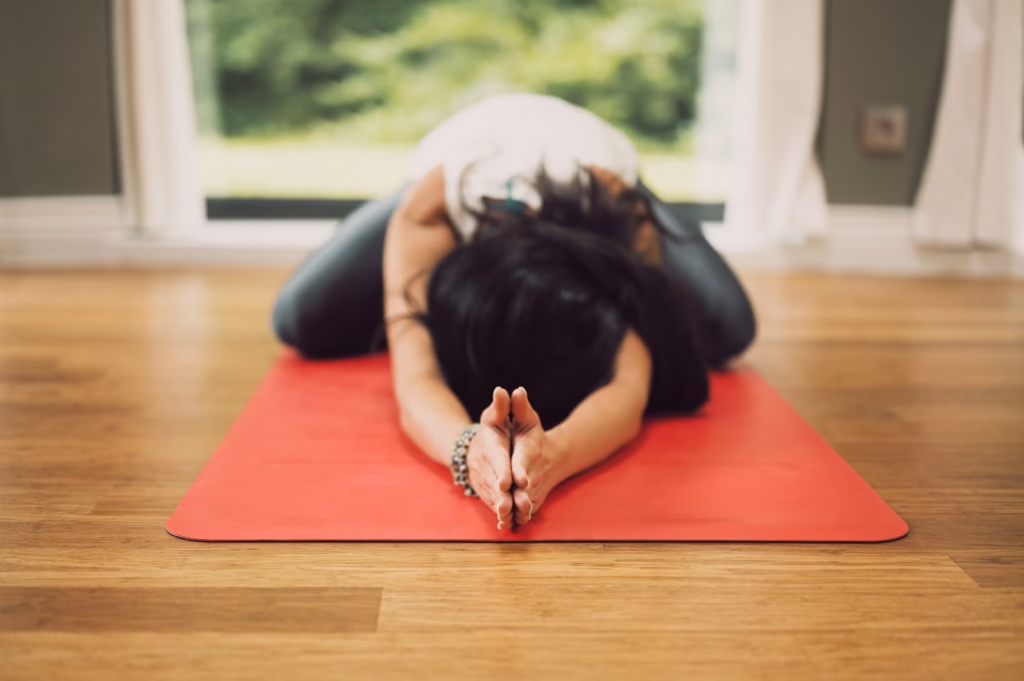
- Child’s Pose (Balasana) – supported with a bolster under the torso, gently stretches the hips and lower back
- Reclined Twist (Supta Matsyendrasana) – supported with blankets between the knees for a relaxing spinal release
- Supported Bridge Pose (Setu Bandha Sarvangasana) – a block under the sacrum eases lower back tension
- Legs-Up-the-Wall Pose (Viparita Karani) – excellent for circulation and calming the nervous system
Common Challenges New Teachers Face
Even experienced instructors can find restorative teaching unfamiliar at first. Here are a few common obstacles and how to work through them:
- Students resist stillness. Ease this by opening with gentle breathwork so students arrive already settling rather than jumping straight into a long hold.
- Fear of “not doing enough.” Remember that your presence and pacing are the offering — you don’t need to fill every silence.
- Managing diverse needs in one room. Offer simple modifications and prop alternatives so every student feels included.
- Teacher fatigue. Holding calm energy for an hour is more tiring than it looks. Build in your own meditation practice to sustain your energy across multiple classes.
Building Your Skills Through Training
Many instructors choose to deepen their expertise through a dedicated yoga teacher training program focused specifically on restorative methods. A strong program should cover:
- Anatomy and physiology relevant to prolonged, passive holds
- Prop placement and alignment techniques
- Class sequencing and pacing
- Trauma-informed and inclusive language
- Supervised practice teaching
Ongoing education — workshops, mentorships, and continuing study — keeps your teaching fresh and helps you respond to a wider range of student needs over time.
Final Thoughts
Teaching restorative yoga is as much about mindset as it is about method. When you understand your students’ goals, prioritise safety, use props thoughtfully, and resist the urge to rush, you create a space where genuine rest becomes possible. That’s a rare gift in today’s fast-paced world — and one your students will keep coming back for.
If you’re ready to take the next step, explore our restorative yoga sequences and consider enrolling in a specialised training program to build your confidence and credentials.
Frequently Asked Questions
Most restorative poses are held between five and twenty minutes, depending on the pose and the student’s comfort level.
While base-level yoga certification (such as a 200-hour RYT) is typically required, many teachers pursue additional restorative-specific training to teach it confidently and safely.
Most classes include only four to six poses across a 60-minute session, since holds and transitions take considerably longer than in other styles.
Bolsters, folded blankets, blocks, straps, and eye pillows are the core props, though household items like chairs and towels can substitute when needed.
Yes. Because poses are fully supported and require no strength or flexibility, restorative yoga is one of the most accessible styles for complete beginners.