
Key Highlights
- A 300 Hour Yoga TTC in Goa helps you build on prior teacher training and move your yoga teacher training to a more advanced level.
- Most programs require a 200-hour background before entry, so you arrive ready for deeper study and practice.
- Goa stands out for beachside campuses, lush greenery, and a safe, supportive environment.
- Training often includes accommodation and meals in the course fee.
- On completion, you receive a teacher training certificate with strong international value.
Introduction
If you are ready to grow beyond the basics, a 300 Hour Yoga TTC in Goa can be a strong next step. This type of yoga teacher training course is designed for students who already have a foundation and want to deepen their yoga practice, teaching confidence, and understanding of yoga as a whole. Goa has become a popular setting for advanced learning because it combines focused study with a calm environment that supports both personal reflection and professional growth.
Understanding the 300 Hour Yoga TTC in Goa
A 300 Hour Yoga TTC in Goa is an advanced program for students who have already completed foundational training. It helps you refine how you teach, practice, and understand yoga in a more complete way. You do not just repeat basics. You build on them with sharper skills and broader knowledge.
As a future yoga instructor, you study class structure, alignment, anatomy, pranayama, meditation, and philosophy in greater depth. At the end, you receive teacher training certification that supports your growth as both a serious practitioner and a more capable teacher. The next sections explain why Goa is such a strong place for this step.
What Makes Goa a Top Destination for Advanced Yoga Training
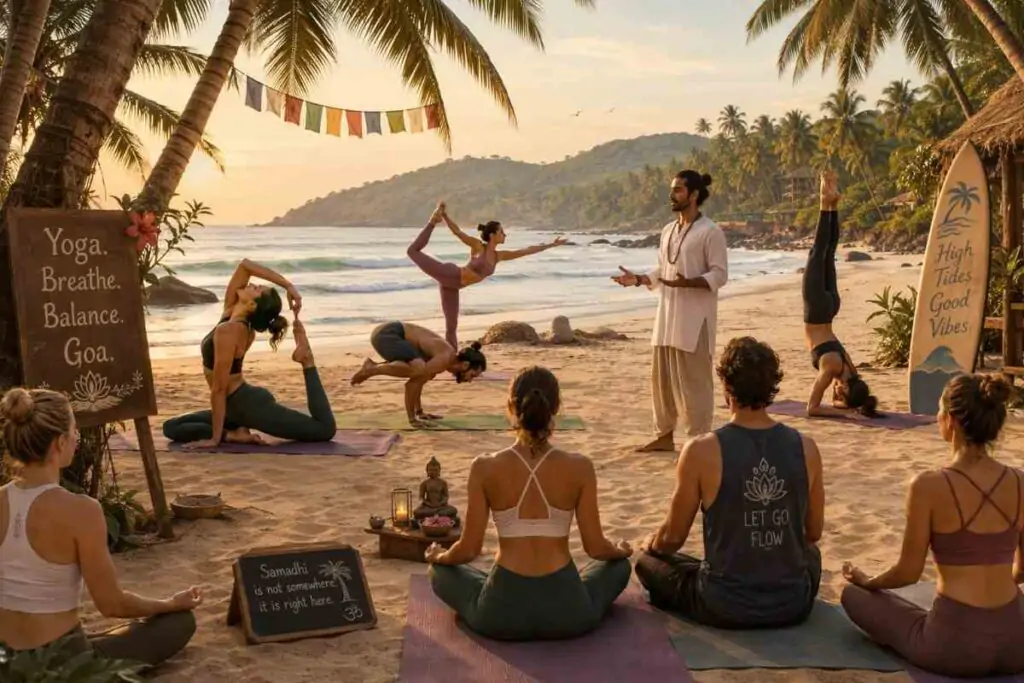
Goa attracts students from around the world because it creates the right mood for focused learning. You get a setting that feels calm but still connected, which matters when your yoga ttc is intensive. Beachside campuses, warm weather, and a slower rhythm can help you stay present during demanding weeks of study and practice.
Another reason is the quality of the yoga school environment. Established schools in Goa often have years of experience, international student groups, and a clear structure for advanced yoga teacher training. That means you are learning in a place that understands how to guide teachers, not just casual students.
There is also the everyday atmosphere. Safe accommodation, healthy meals, supportive teachers, and lush greenery can make long training days easier to handle. When you are studying teaching techniques, adjusting others, and refining your own voice, that kind of steady environment can make a real difference.
Who Is the 300 Hour Yoga TTC in Goa Designed For?
This training is designed for students who already have a basic teaching foundation and want to move to the next level. It is especially useful for yoga teachers who want deeper knowledge, stronger teaching presence, and more confidence with sequencing, anatomy, and hands-on work. The comprehensive curriculum is meant for committed learners, not first-time beginners.
In most cases, the main teacher training requirement is prior completion of a 200-hour course. Some schools accept a 200-hour certificate from any style of yoga, whether it came from the same school or another one.
- You usually need a completed 200-hour teacher training course.
- It suits yoga teachers who want stronger teaching skills.
- It works well for students seeking deeper personal practice.
- It is not meant for absolute beginners with no YTTC background.
If your goal is to refresh what you know and teach with more depth, this course often fits well.
Key Features of 300 Hour Yoga TTC in Goa Programs
What sets a Goa-based yoga teacher training program apart is the balance between intensive practice and practical teaching development. These courses are built for advanced yoga teacher training, so they focus less on introduction and more on refinement. You work on how you move, how you observe, and how you guide others.
Many programs also combine daily asana, philosophy, meditation, anatomy, and teaching labs in one setting. That structure strengthens your teaching skills while helping you grow as a student. To understand the standout elements better, it helps to look at styles, traditions, and certification.
Emphasis on Yogic Styles and Traditions
In many Goa programs, vinyasa flow is a central focus, especially at the advanced level. Students often spend significant time on sequencing, class structure, and safe progression through stronger practices. At the same time, the learning is not limited to one format. You are exposed to several approaches that widen your teaching range.
Traditional study also matters. Schools may ground their philosophy teaching in hatha yoga while using modern class formats to make instruction practical. This gives you a wider view of how different styles serve different students.
- Vinyasa yoga and vinyasa flow often receive major emphasis.
- Hatha yoga supports the philosophy and lifestyle side of training.
- Ashtanga yoga may appear in pre-study or supporting practice material.
- Yin yoga, restorative work, and yoga nidra add balance and recovery.
That variety helps you teach with more flexibility and better judgment.
International Accreditation and Certification Benefits
A strong 300 Hour Yoga TTC in Goa often comes through a school registered with Yoga Alliance. When you complete the training successfully, you receive teacher training certification for the 300-hour level. If your previous 200-hour course also meets the needed standard, you may become eligible to register at the 500-hour level.
This matters because Yoga Alliance certification is widely recognized. For many students, it adds professional credibility and helps with international teaching opportunities. It can also support your profile as a registered yoga teacher when applying for jobs or building your own classes.
There is another practical point. Your hour yoga teacher training certification may still hold value even if you choose not to register right away. Many schools explain that the certificate itself can support teaching internationally, while Yoga Alliance remains an optional extra step.
How 300 Hour Yoga TTC in Goa Differs from 200 Hour Courses
A 200-hour training gives you the base. A 300-hour program builds on that base with more depth, intensity, and responsibility. In an hour yoga teacher training course at this level, you are expected to arrive with some familiarity already in place. That changes the pace and the type of learning.
A 300 Hour Yoga TTC in Goa usually spends more time on teaching techniques, advanced sequencing, adjustments, and deeper theory. You are not simply learning what yoga is. You are learning how to teach it with more precision. The following sections break down the biggest differences.

Advanced Curriculum and Deeper Practice
One of the clearest differences is the depth of study. Advanced yoga teacher training places more attention on how and why things work. Your asana practice becomes more technical, your observation improves, and your understanding of class design gets sharper. It is not just more hours. It is a different level of attention.
You also spend more time with inner and theoretical work. Programs may expand into yoga sutras, the Bhagavad Gita, hatha-based teachings, chakra systems, and lifestyle applications. That gives your teaching more substance beyond the physical side.
- Asana practice usually becomes more detailed and demanding.
- Yoga philosophy is studied with greater depth and practical context.
- You are expected to connect knowledge to teaching, not just memorize it.
This makes the course feel more mature, focused, and professionally useful.
Additional Teaching Methodologies and Techniques
Another major difference is how much time is spent on real teaching. Advanced programs often start student teaching from day one. You may first guide one-on-one work, then gradually move toward larger groups. That steady progression strengthens your teaching skills in a practical, direct way.
You also study teaching methodologies in more detail. This can include demonstration principles, observation, assisting, correcting, voice projection, floor presence, and class planning. These are the tools that help turn knowledge into reliable instruction.
As your yoga teaching skills grow, you usually receive regular feedback from teachers and peers. Many courses also include alignment workshops, hands-on adjustment theory, and safety practices for working with injuries. These teaching techniques are what often make the 300-hour level feel professionally transformative.
What You Will Learn: Main Topics and Modules Covered
A 300 Hour Yoga TTC in Goa course usually covers both practice and theory in a balanced way. You can expect stronger work in advanced movement, breathwork, meditation, and class design, along with more serious study of yoga philosophy. The goal is to help you teach with clarity, not just perform well.
Programs may also include anatomy, alignment, hands-on adjustment, and therapeutic applications for working more safely with different bodies. That broader scope gives you a fuller teaching toolkit. Next, let’s look at the key modules more closely.
Advanced Asana, Pranayama, and Meditation
A major part of the training is strengthening your direct experience. Advanced asana practice usually happens daily, often with a strong focus on vinyasa sequencing, alignment, variations, and safe progression. This helps your yoga practice become more intelligent, not just more intense. At the same time, you keep building the steadiness of your personal practice.
Breathwork and meditation also receive serious attention. You may study how to practice and teach pranayama, along with several meditation methods used in traditional yoga settings.
- Pranayama may include nadi shodhana, kapalbhati, ujjayi, and bhramari.
- Meditation can include chakra work, Kundalini practices, and yoga nidra.
- Asana study often covers modifications, advanced variations, and posture clinics.
- Students may use props to support safer and clearer practice.
Together, these modules train your body, breath, attention, and teaching awareness.
Philosophy, Anatomy, and Yoga Therapy
Beyond movement, many 300-hour programs go deeply into yoga philosophy. Students may study the history of yoga, the Vedas, Upanishads, major paths of yoga, Patanjali, hatha teachings, chakras, nadis, mudras, bandhas, and the Bhagavad Gita. This builds a wider understanding of yoga as a lifestyle rather than only a fitness method.
Yoga anatomy is another major module. Schools often cover the skeletal system, muscular system, connective tissue, major joints, and the nervous system. The purpose is practical. You learn how anatomy applies inside real classes and real bodies.
That is where therapeutic applications become useful. You study healthy movement patterns, limitations, contraindications, and ways to work with injuries more safely in asana settings. For any teacher, this improves judgment and gives your teaching a stronger, more grounded base.
What You Need to Get Started with Your 300 Hour Yoga TTC in Goa
Before you join a teacher training course in Goa, it helps to prepare well. This is an advanced yoga course, so schools usually expect you to arrive with prior training, a basic comfort with English, and the willingness to stay disciplined throughout the program. Preparation makes your first week much smoother.
You should also think about practical details such as documents, study readiness, and what to pack. Knowing the entry requirements early can save you stress and help you focus on the training itself. The next two sections cover exactly what to expect.
Prerequisites and Entry Requirements
The main prerequisites for a 300-hour program in Goa are usually clear. You are generally expected to hold a completed 200-hour certificate before the course start. This can often be from the same school or another school, and sometimes it may be accepted even if it is not Yoga Alliance recognized. Still, registration options later may differ.
Schools may also expect discipline, attendance, and active participation from the first day. Since the training is intensive, it helps if you can understand English and speak at least a little, especially in a mixed international group.
- A prior 200-hour certificate is usually required.
- You should be ready before the course start date with basic documents.
- Full attendance and participation are commonly expected.
- Basic English comprehension can help during class and discussions.
If you meet these entry requirements, you are usually in a good position to apply.
Essential Equipment and Resources to Pack
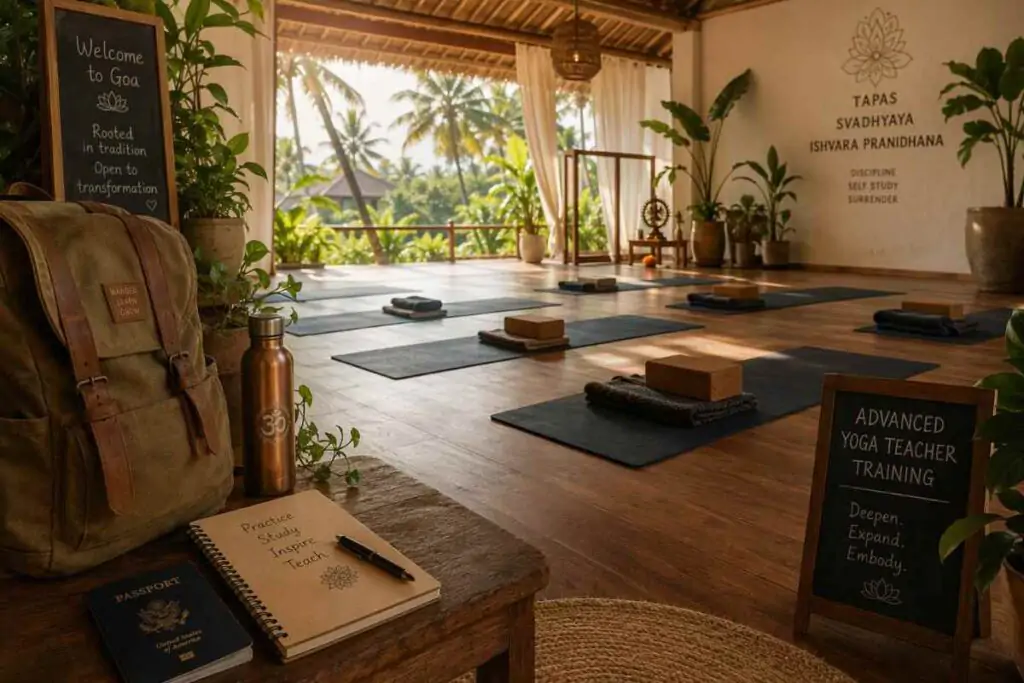
Packing for a Goa training should be simple and practical. Since your days will include yoga asana, lectures, meditation, and recovery practices, bring items that support comfort and consistency. You do not need anything flashy. You need what helps you stay focused over several weeks.
Many schools already provide some yoga props, but it is still smart to check in advance what is available on site. You may also receive pre-study resources and reading suggestions before arrival, so plan time for those too.
- Lightweight clothes for daily movement and warm weather
- A notebook, pens, and any printed joining instructions
- Personal toiletries, medications, and travel documents
- A reusable water bottle and simple daily essentials
- Any small comfort items for rest or yoga nidra periods
Good packing reduces distractions and helps you settle in faster.
Step-by-Step Guide: How to Begin Your 300 Hour Yoga TTC Journey
Starting your yoga journey into advanced training can feel exciting and a little overwhelming. The good news is that the process is usually straightforward when you break it into steps. You first choose the right school, then complete the application form, confirm your place, and prepare for travel and study.
It also helps to understand timelines around payment, the course start, and orientation. When you plan each stage early, you arrive with less stress and more energy for learning. Here is a clear path you can follow.

Step 1: Research and Choose the Right Yoga School in Goa
Start by comparing each yoga school carefully. Look at how long it has been running, what styles it teaches, how large the student groups are, and what kind of support it offers. A school with many years of experience and a clear structure for training programs can give you more confidence.
You should also check what the curriculum emphasizes. Some courses focus strongly on vinyasa yoga teacher training, while others may spread attention across several traditions. Think about what matches your goals. Do you want more sequencing? More philosophy? More hands-on skill?
Past student feedback can also help. Reviews or testimonials often show what daily life feels like, how teachers interact, and whether the environment is supportive. Even simple details like teacher numbers, room types, and meal quality can affect your experience more than you expect.
Step 2: Complete Your Application and Registration
Once you choose a program, the next step is usually to submit an online application form. Schools often review your background, prior training, and readiness for the advanced level. If accepted, you receive confirmation instructions and the next payment details. This part is usually simple, but it is best not to leave it too late.
After approval, many schools ask for a deposit to secure your seat in the teacher training course. This booking payment is commonly adjusted against the final balance due later. Be sure to read whether it is refundable, transferable, or subject to specific conditions.
You may also receive joining instructions, study access, or reading suggestions after registration. These early materials can support your progress toward yoga teacher training certification, so it is worth reviewing them before you travel.
Step 3: Prepare Documentation and Meet Entry Criteria
After registration, focus on the paperwork. Schools may need proof of your previous 200-hour training, identity details, and any forms linked to your booking. Having everything ready well before the course start date makes the check-in process much easier. It also gives you time to fix any missing items without pressure.
You should review all entry requirements again at this point. Check whether your certificate affects future registration options, especially if your earlier course was not Alliance recognized. That does not always block admission, but it may affect later status.
For any hour yoga ttc, staying organized matters. Read your joining instructions, confirm your arrival details, and keep digital and printed copies of important documents. Good preparation supports a smoother start to your teacher training experience.
Step 4: Arrange Travel, Accommodation, and Packing
With your place secured, turn to travel and accommodation planning. Many schools in Goa include accommodation and meals in the course fee, which simplifies a big part of your planning. You still need to budget for travel, insurance, and extras such as airport transfer. Knowing what is and is not included helps you avoid surprises.
Accommodation may vary by room category, but schools often provide air-conditioned rooms with private hot showers. Since the training is intensive, comfortable living arrangements can strengthen the supportive environment you need.
- Confirm your airport and transfer plan before departure
- Recheck what your course fee includes and excludes
- Review room type, check-in time, and check-out rules
- Pack light, breathable clothes and daily essentials
- Keep insurance and emergency information accessible
When logistics are handled early, your mind is freer for the training ahead.
Step 5: Arrive in Goa and Settle into Your Yoga Routine
Arrival day is about landing gently, not rushing. Most schools have a set check-in window and an orientation meeting on the course start date. Use that first day to settle into your room, meet other students, and get familiar with the space. A calm start can help you feel more grounded before classes begin.
As training starts, your routine will likely become structured very quickly. Morning practice, lectures, workshops, meals, and rest periods create a rhythm that shapes your daily life. At first, the schedule may feel full, but most students adapt within a few days.
Give yourself a little patience. New surroundings, yoga classes, and group dynamics take time to adjust to. In a well-run, supportive environment, that transition often becomes part of the learning itself.
Typical Daily Schedule in a 300 Hour Yoga Teacher Training Course
The daily schedule in a 300-hour course is usually full and structured. You can expect a mix of physical practice, theory sessions, workshops, meals, and quiet study. This rhythm shapes your daily life and helps you stay immersed in the training instead of treating it like a casual retreat.
A key part of the experience is the teaching practicum, where you practice guiding others and receive feedback. Some schools also keep Sundays off and shorten Saturdays. To understand how the day flows, let’s look at mornings and afternoons separately.
Morning Practices and Theoretical Sessions
Mornings in a 300-hour course usually begin with active work. You may start with morning practice that includes vinyasa-based movement, breathwork, or meditation. This early session sets the tone for the day and keeps your own practice of yoga alive while you train as a teacher.
After physical practice, many programs shift into theory. This can include philosophy, anatomy, alignment concepts, or meditation instruction. The classroom side is just as important as the mat work because it gives language and structure to what you are experiencing physically.
In a well-designed schedule, these sessions support each other. You might explore yoga asana in the first block, then study why it works in the second. That pattern helps ideas become practical instead of abstract, which is exactly what advanced teacher training should do.
Afternoon Workshops and Teaching Practicum
Afternoons often shift toward hands-on learning. This is where many students spend time in workshops on sequencing, alignment, posture clinics, and adjustments. These sessions make the training feel practical because you are solving real teaching questions, not just listening passively.
The teaching practicum is another major part of the day. You may teach a partner, a small group, or a larger class as the course progresses. Regular feedback from teachers and classmates helps you improve step by step rather than guessing what works.
This is also when teaching techniques become more embodied. You learn how to observe, cue, demonstrate, assist, and maintain safety while staying clear and calm. Over time, these repeated experiences build the teaching skills that turn theory into confident action.
Cost, Fees, and Inclusions for 300 Hour Yoga TTC in Goa
The course fee for a 300-hour program in Goa can vary by room category and school setup. From the available program details, the total course fee is charged in Euros and includes taxes, while the main inclusions are training, accommodation, and meal plans. You should plan separately for travel, insurance, and extra personal costs. Some schools also offer an early bird discount if you book well before the start date.
Here is a simple text table based on the provided fee structure details from one yoga school:
| Fee Item | Typical Detail |
|---|---|
| Tuition | Included in the course fee |
| Accommodation | Included; room category may vary |
| Meal plans | Included |
| Taxes | Included |
| Travel | Not included |
| Insurance | Not included |
| Airport transfer | Extra charge, depending on airport and taxi type |
| Early bird offer | €200 discount if booked 60 days before start |
Tuition, Accommodation, and Meal Plans
When you pay for a 300 Hour Yoga TTC in Goa, tuition usually covers the training itself. That includes the classes, workshops, and guided learning that make up the program. In some cases, pre-study online content is also provided after booking, which adds value before you even arrive.
Accommodation is often part of the package too. Schools may offer different room categories, such as cottages or sea and jungle view rooms, but the key point is that lodging is commonly included. Details can differ, so you should confirm the exact room type linked to your booking.
Meal plans are another common inclusion. For an intensive yoga course, having meals arranged on site can make your daily routine much easier. It removes one major distraction and helps you stay focused on practice, rest, and study throughout the training period.
Payment Options, Scholarships, and Refund Policies
Most schools make the payment process fairly simple. After acceptance, you are often asked to pay a booking deposit to confirm your place. In the provided example, that deposit is non-refundable but transferable and later adjusted against the remaining course fee. The final balance may then be paid on arrival by cash, debit card, or credit card.
Payment options like this can make planning easier, especially if you are traveling internationally. Some schools also offer early bird discounts, which can reduce your total cost when you book in advance. That is worth checking if your dates are fixed.
The provided information does not mention scholarships, so you should not assume they are available. What you should review carefully is the refund policy. Before paying, read the school terms so you understand deposits, transfers, and cancellation conditions clearly.
Personal Experiences and Reviews from Past Students
Personal experiences and reviews from past students of the 300 hour yoga teacher training course in Goa paint a vivid picture of the transformative journey they undertake. Many students speak of how the immersive environment, combined with expert instructors, fostered a deep sense of personal growth both on and off the mat. Common themes in their testimonials include the supportive community atmosphere, where lifelong friendships are formed amidst rigorous training. Graduates often share how the curriculum not only enhanced their understanding of techniques and philosophies but also nurtured their confidence as teachers. Students frequently highlight their favorite aspects, from the serene beachside practice sessions to the intensive hands-on teaching workshops that helped refine their skills. Overall, the shared experiences indicate that completion of this course not only deepens personal practice but also equips budding instructors with the essential tools for teaching in diverse settings.
Facilities, Accommodation, and Food Details
When enrolling in a 300 Hour Yoga TTC in Goa, the facilities, accommodation, and food details play a crucial role in shaping your overall experience. Most yoga schools in Goa provide comfortable, clean, and well-maintained accommodations that cater to the needs of students. Options often range from shared dormitories to private rooms, some of which boast picturesque views of the beach or lush greenery. This variety allows students to choose an option that fits their budget and preference for privacy. Meals are typically included in the course fee, with a focus on nutritious and wholesome vegetarian or vegan cuisine, crafted to sustain energy levels during the physically demanding training sessions. Schools often emphasize the importance of nutrition, ensuring that meals are balanced and made from fresh, locally sourced ingredients. Dining experiences can foster community, as students gather to share meals and stories, further enriching their training journey. Overall, the thoughtful provision of facilities, housing, and meals sets students up for a supportive and immersive educational experience in this beautiful coastal setting.
Best Time of Year / Weather Considerations for Attending TTC in Goa
When planning your 300 Hour Yoga TTC in Goa, understanding the best time of year and the associated weather considerations can greatly enhance your experience. Goa presents a tropical climate that lends itself well to year-round practice, but different seasons bring various conditions. The peak season, from November to March, offers pleasant temperatures and low humidity, making it the ideal backdrop for intensive training. During this time, students can enjoy comfortable warm days and cool nights, perfect for both practice and exploration. Conversely, the monsoon season from June to September can bring heavy rains and higher humidity, which might be challenging for some; however, this period also offers a quieter atmosphere and more affordable rates for accommodation. Ultimately, selecting the right time for your training can impact not only your learning experience but also the overall enjoyment of the beautiful Goan surroundings. It’s advisable to book your course for the winter months to maximize the benefits of favorable weather while immersing yourself in the rich culture that Goa has to offer.
Safety and Support During the Course
Ensuring safety and support during your 300 Hour Yoga TTC in Goa is paramount to creating a nurturing learning environment. Most reputable schools prioritize the wellbeing of their students by implementing thorough safety protocols and providing accessible resources. This includes experienced instructors who are not only skilled in techniques but also trained to address individual needs and manage group dynamics effectively. Support extends beyond the classroom; many schools offer dedicated staff members to assist with any questions or concerns, creating a close-knit community atmosphere. Additionally, comprehensive first aid training is often included to prepare instructors to handle minor injuries that may arise during intensive practice sessions. A focus on mental and emotional health is equally important, with available resources such as counseling and peer support groups designed to help students navigate the challenges of the training while fostering personal growth. Together, these elements create a secure and affirming space for students to deepen their practice and teaching skills, ensuring a transformative and enriching experience.
Giving Back / Community Involvement
Community involvement and giving back are integral parts of the yoga journey, especially within the context of a 300 Hour Yoga TTC in Goa. Many schools emphasize the importance of social responsibility and encourage students to engage with local communities. This can include participating in service projects, wellness workshops, or even fundraising events that support local organizations and causes. Students often have the opportunity to volunteer at local charities, teaching yoga classes to underprivileged groups or leading wellness programs that enhance physical and mental health in the community. Such experiences not only foster a spirit of connection but also enrich the training journey, allowing practitioners to witness firsthand the impact of beyond the mat. By giving back, students cultivate a deeper appreciation for the interconnectedness of all living beings, reinforcing yoga’s foundational principles of compassion and service. Ultimately, this engagement helps to create a meaningful bond between yoga practitioners and the communities they are part of, nurturing a culture of support and shared growth.
Online & Hybrid Yoga Teacher Training Options
In response to the growing demand for flexible learning, many yoga schools in Goa now offer online and hybrid yoga teacher training options. These innovative formats cater to aspiring instructors who may not be able to commit to the traditional in-person setting due to geographical, logistical, or personal constraints. An online teacher training program allows you to engage with comprehensive course materials, attend interactive virtual classes, and participate in guided sessions from the comfort of your home. Conversely, hybrid formats combine the benefits of both online and in-person experiences, enabling students to complete a portion of their training online before attending a condensed, immersive retreat in Goa. This flexibility not only makes advanced training more accessible but also enables you to build a global network of fellow practitioners while honing your skills in a supportive community. Whether you choose to go fully online or blend your learning with hands-on practice, pursuing a 300 Hour Yoga TTC in Goa through these modern approaches can open doors to a fulfilling career, while maintaining the essence of yoga’s transformative journey.
Yoga School Reputation, Accreditation, and Reviews
When selecting a yoga school for your 300 Hour Yoga TTC in Goa, understanding its reputation, accreditation, and student reviews is essential for ensuring a quality educational experience. Reputable schools often have a long-standing history in the yoga community, showcasing a commitment to excellence in teacher training and a solid track record of successful graduates. Accreditation from recognized bodies, such as Alliance, not only adds credibility but also assures that the curriculum meets high standards, which can significantly enhance your employability as a teacher. Additionally, delving into student reviews and testimonials can provide valuable insights into the overall experience, including the quality of instruction, community dynamics, and support systems in place. Look for feedback that highlights the effectiveness of the training, the instructors’ expertise, and how past students have applied their learnings post-certification. By focusing on these aspects, you can make a well-informed decision that aligns with your personal and professional goals in yoga.
Beachside/Retreat-Style Campus Experience
Experiencing a beachside or retreat-style campus during your 300 hour yoga teacher training in Goa adds a unique dimension to your learning journey. Many yoga schools are situated just steps away from the pristine beaches, allowing you to flow seamlessly from your practice on the mat to rejuvenating dips in the ocean, creating a balanced blend of discipline and relaxation. The soothing sounds of the waves serve as a soundtrack to your daily routines, fostering an atmosphere of tranquility that encourages deep introspection and personal growth. These campuses often boast spacious shalas, opened to the natural elements, where you can practice under the warmth of the sun or the expansive Goan skies, instilling a sense of connection with nature that enhances your experience. Additionally, with lush greenery surrounding the premises, you can enjoy walking meditations or quiet moments of reflection, truly embodying the retreat essence. The communal spaces foster friendships and shared experiences, further enriching the impact of your training within this idyllic setting.
Navigating Yoga TTC with Medical Conditions or Pregnancy
Embarking on a 300 Hour Yoga TTC in Goa can be a transformative journey, even for those navigating medical conditions or pregnancy. It is essential to approach the practice with mindfulness and care, as individualized attention plays a vital role in such circumstances. Before enrolling, it’s advisable to consult with healthcare professionals and communicate openly with your instructors about any specific needs or limitations. Many yoga schools in Goa are increasingly accommodating and offer modifications for various conditions, ensuring that the training remains accessible while promoting safety and well-being. Practitioners can benefit from tailored practices that honor their unique experiences, fostering a supportive and nurturing environment that helps you thrive both physically and mentally throughout the training.
Age Diversity and Supporting Different Life Stages
Age diversity in yoga teacher training is a powerful aspect that enriches the learning experience for everyone involved. Participants can range from young adults just embarking on their journeys to seasoned practitioners looking to deepen their understanding. This mix allows for a variety of perspectives, fostering a vibrant community where individuals can share their unique insights and experiences. For younger trainees, the 300 Hour Yoga TTC in Goa may provide a solid foundation in both yoga philosophy and practical teaching skills, while older students can draw upon their life experiences, enhancing discussions around the emotional and spiritual dimensions. Recognizing and honoring these different life stages not only strengthens the bond between participants but also cultivates a supportive environment where everyone feels valued and inspired to grow together. Ultimately, this diversity contributes to a richer curriculum and a more profound understanding of the transformative power of yoga, making the training experience truly holistic.
Pre-Course Preparation and Required Reading
Preparing for your 300 Hour Yoga TTC in Goa is an exciting step that requires some careful consideration. Before diving into the experience, it is essential to familiarize yourself with key concepts and philosophies central to yoga practice. Begin by exploring foundational texts such as the Sutras of Patanjali, which delves into the philosophy underlying your practice, as well as the Bhagavad Gita, which offers profound insights into duty and devotion. Additionally, consider reading contemporary works on yoga that discuss modern approaches and alignment techniques to expand your understanding. Set aside time for personal reflections and journaling; these practices will not only enhance your learning but also foster a deeper connection with your intentions for the course. Engaging in preparatory asanas and meditation will help create a mental and physical foundation, ensuring you arrive ready to absorb the teachings and embark on this transformative journey.
Instructor-to-Student Ratio and Personalized Guidance
When selecting a 300 Hour Yoga TTC in Goa, it’s essential to consider the instructor-to-student ratio, as this significantly affects your learning experience. A lower ratio allows for more personalized guidance, enabling instructors to address individual needs and provide tailored feedback. This kind of attention not only enhances your understanding of complex postures and philosophies but also fosters a supportive environment where you can flourish. With fewer students per instructor, each participant receives ample opportunity to ask questions, receive constructive criticism, and develop a deeper connection with the teachings. As you embark on this transformative journey, look for schools that prioritize a nurturing atmosphere, ensuring that every student feels seen and heard in their pursuit of yoga mastery.
Language Accessibility for International Students
When considering a 300 Hour Yoga TTC in Goa, it’s essential to acknowledge the significance of language accessibility for international students. The prevalence of English as a global lingua franca ensures that most programs are delivered in a manner that non-native speakers can comprehend, but nuances in communication can still pose challenges. Many training centers in Goa recognize this and often provide materials and resources in multiple languages, as well as translators or bilingual instructors, to create an inclusive environment. Moreover, workshops and discussions are designed to be interactive, encouraging all students to engage fully, regardless of their linguistic background. This focus on accessibility not only enhances the learning experience but also fosters a sense of community among trainees from diverse cultural contexts, making the training journey both enriching and memorable.
Yoga Styles Beyond Vinyasa and Ashtanga
While Vinyasa and Ashtanga are widely recognized within the yoga community, there exists a rich tapestry of styles that cater to diverse preferences and experiences. Hatha yoga, often seen as the foundation of many practices, emphasizes physical postures and breath control, making it ideal for beginners. Kundalini yoga delves deeper into the spiritual realm, incorporating breathwork, chanting, and meditation to awaken the dormant energy within. Yin yoga, on the other hand, focuses on passive stretches held for extended periods, promoting deep relaxation and flexibility. For those seeking a blend of physicality and meditation, Iyengar offers meticulous attention to alignment and the use of props, allowing practitioners to explore their postures safely. By experiencing these various styles during your 300 Hour Yoga TTC in Goa, you can enrich your practice and discover what resonates best with your body and spirit.
Guidance for Students Seeking Training Abroad
For those considering embarking on a 300 Hour Yoga TTC in Goa, the journey can be both exhilarating and overwhelming. It’s essential to approach this life-changing decision with careful thought and preparation. Begin by researching various training programs to find one that aligns with your personal goals and values. Look for reputable schools that offer comprehensive curricula, experienced instructors, and positive reviews from previous students. Additionally, immersing yourself in the local culture can enhance your experience, so take the time to explore Goa’s vibrant landscape, from its stunning beaches to its rich heritage. Most importantly, be open to new experiences and embrace the transformative power. This commitment not only benefits your teaching abilities but also enriches your personal growth on and off the mat.
Conclusion
In summary, embarking on a 300 Hour Yoga TTC in Goa is an enriching journey for both aspiring teachers and dedicated practitioners. With its comprehensive curriculum covering advanced asanas, pranayama, meditation, and deep philosophical insights, this course is designed to elevate your practice to new heights. Not only does Goa offer an idyllic backdrop for training, but the international accreditation ensures that your certification holds value globally. Whether you’re looking to deepen your personal practice or teach others, taking this step is a transformative experience. If you’re ready to start your journey, consider reaching out to a reputable yoga school today and take the first step towards a fulfilling career in yoga!
Frequently Asked Questions
A common course duration for an hour yoga ttc in Goa is about three weeks for the in-person intensive format described here. The exact yoga course timeline can vary by yoga school, so always confirm dates, inclusions, and total course fee details before booking.
Yes, some schools provide study materials such as an online module, notes, and a teacher training manual. You may also receive a suggested reading list. These resources support the comprehensive curriculum and help deepen your understanding of yoga before and during the yoga teacher training course.
If the school is registered with Yoga Alliance, your teacher training certificate can have strong international recognition, including in the United States. After completing the required path, you may become a registered yoga teacher, though Yoga Alliance certification and registration are often optional rather than mandatory.
Usually, no. This teacher training course is meant for yoga teachers or committed students who already hold a 200-hour certificate. Since it is a next level program, the usual prerequisites and entry requirements do not fit complete beginners with no prior YTTC background.