
Let’s be honest with each other for a moment.
If you’ve been researching yoga teacher training in India, Rishikesh probably came up in your very first search. And understandably so — it carries decades of reputation, a Himalayan backdrop, the sacred Ganga flowing through it, and the kind of spiritual weight that makes you feel like you’re already halfway to enlightenment just by planning the trip.
But here’s the thing nobody tells you before you book: what Rishikesh was, and what Rishikesh has become, are two very different things.
This isn’t a takedown piece. Rishikesh is genuinely special in many ways, and we’ll talk about that. But if you’re looking for the best yoga teacher training Rishikesh guides consistently recommend — you deserve to know the full picture before you commit three to eight weeks and a significant amount of money.
Because Dharamshala, quietly and consistently, is doing it better.
What Rishikesh Gets Right (And Why It Still Matters)
Before we go further, let’s give credit where it’s due.
Rishikesh has a real and undeniable energy. The Ganga aarti at dusk, the mountain air, the ashrams that have existed for generations — these aren’t marketing inventions. The city has been a home for seekers for centuries, and that history is woven into its streets. If you attend morning sadhana near the river on a quiet day, you’ll feel something shift inside you. That part is real.
The yoga schools that have grown around this tradition — and there are hundreds of them now — largely offer Yoga Alliance USA-certified courses across 100, 200, 300, and 500-hour formats. Courses typically include asana practice, pranayama, meditation, philosophy, anatomy, and teaching methodology. Many teachers are genuinely skilled, deeply trained, and sincerely committed to passing on what they know.
The question isn’t whether Rishikesh has good yoga. The question is whether it’s still the right environment for the kind of deep, personal transformation a yoga teacher training is supposed to be.
And increasingly, the answer is: not for most people.
The Rishikesh Problem Nobody Talks About
1. You Won’t Have the Space You Need to Actually Grow
Here’s something a lot of schools won’t advertise clearly: the accommodation at many Rishikesh yoga schools involves shared rooms with four to eight people. Budget ashram rooms, non-AC, shared bathrooms — the kind of setup that’s perfectly fine for a backpacker hostel, but raises serious questions for a 24-day intensive teacher training.
Personal growth doesn’t happen in a crowd. It happens at 6am when you wake up before class and sit in silence. It happens after a hard practice when you need to cry quietly and process something that came up. It happens in the in-between moments — the ones that require privacy, quiet, and a room you can actually call your own for a few weeks.
When you’re sharing your living space with seven people you just met, those moments become almost impossible to find. You’re constantly adjusting to others, managing social energy, and performing wellness rather than actually experiencing it.
If you’re going to invest in a yoga teacher training, that investment deserves a physical environment that supports the inner work — not one that competes with it.
2. You’ll See Buildings, Not Nature
Here’s the romantic version of Rishikesh you’ll find on most school websites: Himalayan mountains, a sacred river, lush greenery, open skies.
Here’s the more accurate version for many schools: concrete buildings next to concrete buildings, a busy market road outside your window, motorbikes, tourist shops, and the sound of other schools playing their music while yours is trying to hold morning meditation.
The addresses tell the story. Many schools are literally located next to apartment complexes, guesthouses, and market areas. The “Himalayan environment” in a lot of promotional language means: you can see the hills if you lean out the right window.
There are exceptions — a handful of schools genuinely have green, serene settings. But they’re outnumbered by schools that are urban in all but name.
For yoga to work the way it was designed to work, the surrounding environment matters enormously. When you step out of your shala after a two-hour practice and immediately encounter traffic noise and souvenir shops, the continuity is broken. You can’t undo a city with your breath.
3. Yoga Has Become a Product Here — And You Can Feel It
This is the hardest thing to say, because it touches on something real and a little sad.
The teacher-student relationship in traditional yoga — the guru-shishya tradition — was never supposed to be a commercial transaction. The teacher taught because it was their duty. The student came because they were genuinely seeking. There was a discipline involved, a rigour, a transmission that went beyond poses and breathing.
That culture still exists in pockets of India. But in Rishikesh? Increasingly, the schools operate as businesses, and students are treated as clients. The signs are subtle: the pressure to book early, the race to match or beat competitors on price, the addition of trendy course formats like aerial yoga and acro vinyasa to attract a broader market, the expansion into Bali and beyond to grow the brand.
None of that is inherently wrong. Running a school costs money. But when the business logic starts to shape the teaching environment — when classes are capped not at whatever number allows real learning, but at whatever number fills the revenue target — something gets lost.
The strictness, the accountability, the teacher who will actually correct you and push you and expect more from you because they believe in the tradition — that version of yoga school is rarer in Rishikesh than it used to be.
Why Dharamshala Is a Different Experience Entirely
The Environment Does the Work With You
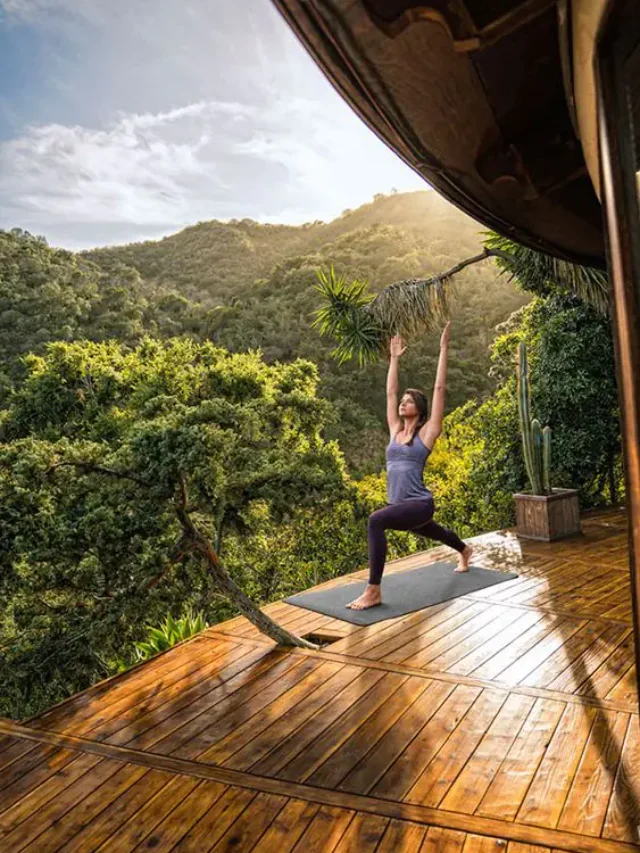
Dharamshala sits in the lower Himalayan ranges of Himachal Pradesh, surrounded by dense pine and deodar forests, with views of the Dhauladhar range rising sharply behind the town. The air is noticeably cleaner and cooler. The pace of life is slower.
Walking outside after a morning practice here means walking into forest trails, mountain silence, and air that actually smells like the hills. That’s not a small thing. The environment becomes part of the practice, not a contrast to it.
The yoga teacher training in Dharamshala experience is shaped by this in ways that are difficult to fully describe until you’ve experienced both. There’s a continuity between what happens on the mat and what happens off it. The mountains hold you. The quiet keeps you in yourself.
Smaller Schools, Smaller Batches, More Real Attention
Because Dharamshala doesn’t carry the same volume of yoga tourism traffic as Rishikesh, the schools operating there tend to be smaller and more selective. Batch sizes are genuinely limited — not because it sounds good on a website, but because the infrastructure doesn’t support otherwise.
What this means for you as a student: your teachers actually know your name. They notice when you’re struggling with a particular asana. They can adjust their approach to how your body moves, how your mind works, what you need to unlock your practice.
The difference between a batch of 20 people and a batch of 8 to 10 isn’t just math — it’s the difference between a yoga training and a yoga transformation.
A Layered Spiritual Atmosphere
Rishikesh is a Hindu pilgrimage town. There’s real devotion there, and it’s worth experiencing. But Dharamshala carries something additional: it’s home to the Tibetan exile community, including the Dalai Lama’s residence, and the influence of Tibetan Buddhist philosophy and practice permeates the town in quiet, steady ways.
This doesn’t mean you’re doing Tibetan yoga — you’re not. But the contemplative energy that surrounds Dharamshala, the monasteries, the monks walking the streets, the prayer flags in the wind, adds another dimension to the kind of inner work a yoga teacher training is supposed to support. It’s a place that has been held by people in serious spiritual practice for a long time. That matters.
The Climate Actuall20y Works In Your Favour
Rishikesh can be punishing. Summers between April and June push temperatures well above 40°C, making outdoor practice physically brutal and energy-draining. Monsoon months bring flooding and disruptions that can affect your training schedule.
Dharamshala’s climate is cooler and more stable across the key training months. Morning practice in fresh mountain air, at a temperature your body can actually work comfortably in, is a meaningfully different experience from sweating through a philosophy lecture in a room with one ceiling fan.
If you’re planning a 200-hour yoga teacher training program or a longer intensive, the climate isn’t a minor logistical detail — it affects your capacity to absorb, to practice, and to recover day after day.
Mahiyoga School — Where It All Comes Together
Among the schools doing things right in Dharamshala, Mahiyoga School stands out for exactly the reasons this article has been building toward.
The setting is genuinely immersed in nature. The batch sizes are intentionally small — you’re never a number here. The teaching doesn’t treat yoga as a product to be delivered on schedule. It honours the tradition without fossilising it, maintaining the rigour and sincerity that the best yoga education has always required.
The teachers at Mahiyoga carry the kind of quiet authority that comes not from marketing credentials, but from years of dedicated practice. They’ll correct you. They’ll challenge you. And they’ll care about who you are becoming through the process — not just whether you can execute the primary series.
For those seeking an authentic yoga teacher training in India that goes beyond the surface, Mahiyoga in Dharamshala offers a genuinely rare combination: solitude, nature, serious teaching, and an environment that holds your transformation rather than just witnessing it.
Rishikesh vs Dharamshala — A Honest Comparison
| Factor | Rishikesh (General) | Dharamshala |
|---|---|---|
| Natural Environment | Urban-adjacent; hills visible but roads are busy | Forested, mountain-surrounded, genuinely immersive |
| Accommodation | Often shared dorms, 4–8 per room, budget ashram style | Smaller schools, more personal space, quieter settings |
| Crowd Levels | High year-round; heavy tourist footfall | Lower; more selective yoga traveller demographic |
| Climate | Hot summers; monsoon disruptions | Cooler, more consistent; comfortable for daily practice |
| Class Sizes | 15–20+ students in many schools | Typically 8–12; more genuine teacher attention |
| Spiritual Atmosphere | Hindu pilgrimage tradition, Ganga-centric | Dual influence: yogic tradition + Tibetan Buddhist energy |
| School Culture | Increasingly commercial in many cases | More intimate; teaching-first culture more preserved |
| Best For | First-time yoga tourist experience; strong Yoga Alliance credential focus | Serious students seeking personal growth and authentic transmission |
Who Should Still Consider Rishikesh
In fairness, Rishikesh is not the wrong choice for everyone. If you’re primarily interested in getting a Yoga Alliance certification in a place with strong infrastructure, plenty of student community, and lots of city conveniences nearby — Rishikesh works fine.
If you want to experience Ganga aarti, visit ancient temples, and get a sense of yoga’s deep cultural roots in India — Rishikesh is genuinely worth the visit.
And there are a small number of schools in quieter pockets of Rishikesh that have managed to preserve something genuine. They exist. They’re just harder to find, and they require careful research to identify.
But for someone asking: “Where will I actually grow the most? Where will I come away having genuinely changed?” — the honest answer, more often than not, points toward Dharamshala.
Final Thoughts — The Question Worth Asking Yourself
Before you book anything, ask yourself this: What do you actually need from this experience?
If the answer involves credentials and convenience — Rishikesh has that covered.
If the answer involves depth, quiet, nature, real teacher attention, and the kind of environment that holds serious inner work — look harder at Dharamshala. Look at Mahiyoga.
The best yoga teacher training in Rishikesh may not be in Rishikesh at all. Sometimes the best version of something is found a few hours north, in the forests, at the foot of mountains that have held seekers long before the certification industry ever arrived.
FAQ — Your Questions Answered
Yes. Several schools in Dharamshala, including Mahiyoga, offer Yoga Alliance USA-registered 200-hour, 300-hour, and 500-hour yoga teacher training programs. The certification is internationally recognised and equivalent to what you would receive from a school in Rishikesh.
The curriculum content is similar — both cover asana, pranayama, meditation, philosophy, anatomy, and teaching methodology. The key differences are in environment, class size, and learning culture. Dharamshala offers smaller batches, more nature immersion, a cooler climate, and schools that tend to operate with a more teaching-centric (rather than commercial) approach.
Yes. Dharamshala, particularly the McLeod Ganj and Dharamkot areas, is well-established as a destination for solo international travellers. The community is welcoming, English is widely understood, and the area has a long history of hosting students, spiritual seekers, and practitioners from around the world.
March to June and September to November are considered ideal. The monsoon months (July–August) bring heavy rain and some disruption, while December to February can be very cold at higher altitudes. Spring and autumn offer the most comfortable conditions for daily practice.
Mahiyoga keeps batch sizes small, maintains a nature-immersed setting, and prioritises the integrity of the teaching relationship over commercial throughput. The teaching draws on traditional yoga lineages with genuine rigour, and the environment — both physical and cultural — supports the kind of sustained inward focus that a real teacher training demands.