Key Highlights
- A yoga block helps you improve proper alignment in many yoga poses without forcing your body.
- Beginners can use blocks to make a deeper stretch feel safer and more controlled during yoga practice.
- Cork and foam options each support different goals, and expert advice often depends on your style.
- Blocks can help with flexibility, balance, and stability in standing and seated shapes.
- Poses like downward dog, triangle, supported bridge, and half moon become more accessible with a yoga block.
- You can also use blocks for core work, restorative support, and advanced variations.
How to Use Yoga Blocks & Poses of Introduction
A yoga block can change how your yoga poses feel from the first session. Instead of reaching, straining, or losing form on your yoga mat, you bring the floor closer to you and move with more ease. That matters whether you are brand new or already comfortable in your routine. In this guide, you will learn how blocks support alignment, balance, and flexibility, plus five practical poses you can try right away to make your practice feel steadier and smarter.
Understanding Yoga Blocks and Their Role in Practice
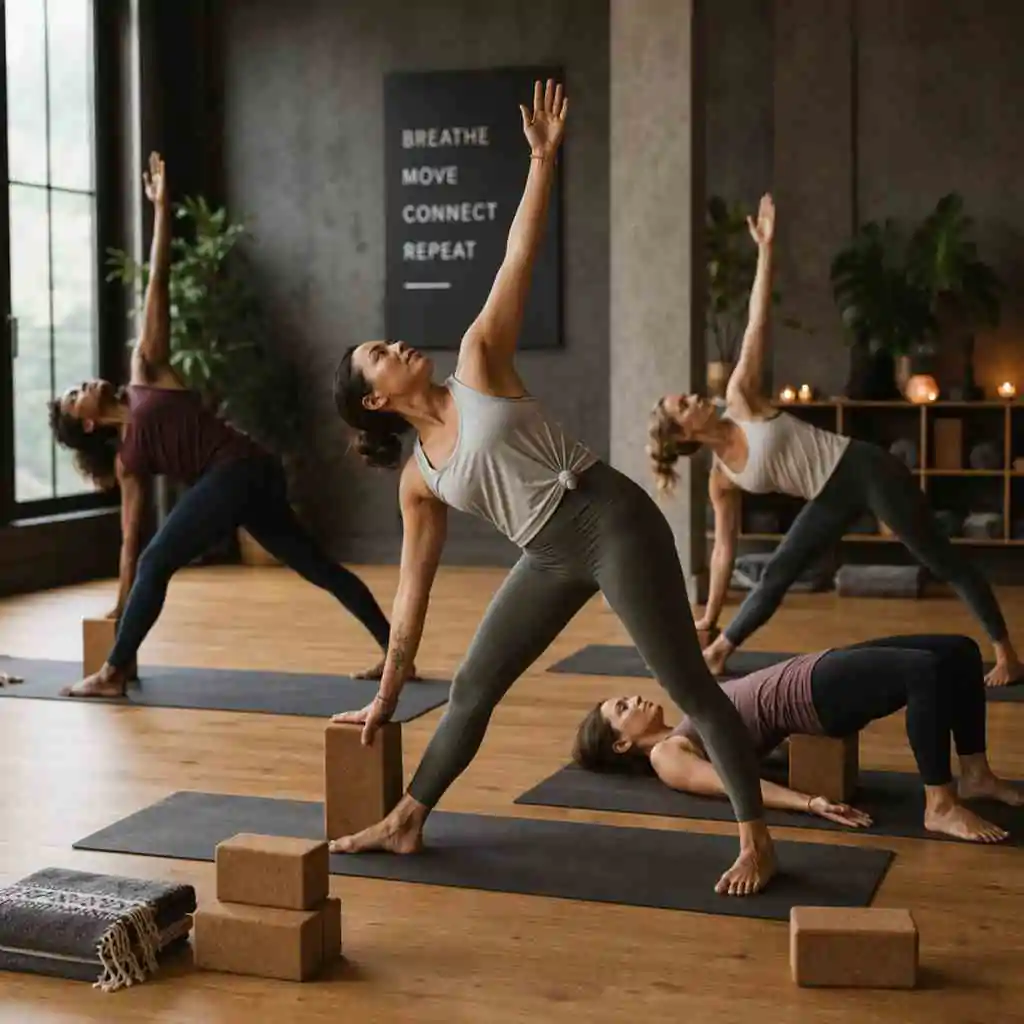
Many people assume a yoga block is only for beginners. That is not the full picture. In a steady yoga practice, blocks help you find proper alignment, support core muscles, and work within your real range of motion on any given day.
They also make beginner-friendly poses easier to learn, including triangle, forward folds, supported bridge, and child’s pose. With the right setup and expert advice, a block becomes less of a shortcut and more of a smart training tool. Let’s start with what blocks are and why they matter.
What Are Yoga Blocks?
A yoga block is a brick-shaped prop used to support, stabilize, and align your body in different poses. You can think of it as an extension of the floor, your hand, or even your yoga mat. It helps you meet the pose where you are instead of forcing a shape your body is not ready for.
You will usually see a cork yoga block, foam blocks, or wood versions. Cork is a firm natural material with very little give. Foam blocks feel lighter and softer, which some people prefer for gentle support. Wood is very stable but much harder and heavier.
Size matters too. Standard blocks work for most people, narrow blocks can be easier to grip, and longer blocks offer extra lift. The right choice depends on your workout, your hands, and the kind of support you want.
Why Use Yoga Blocks in Your Routine?
Using a yoga block is not about making poses easy. It is about making them more effective. When you stop struggling to reach the floor, you can focus on proper alignment, breathing, and the muscles that should actually be working.
That shift is useful in both simple and difficult poses. A block can help you feel a deeper stretch without rounding your spine or collapsing through your chest. It also helps you stay steady while your body builds strength and mobility over time.
- It brings the floor closer so your body can move with better form.
- It supports proper alignment in standing, seated, and restorative shapes.
- It helps you stay in a deeper stretch without unnecessary strain.
- It makes difficult poses more approachable while still challenging you.
Types of Yoga Blocks: Materials and Sizes
Not all blocks feel the same in your hands or under your weight. The main differences come from material and size. That matters because one yoga block may feel perfect for restorative work, while another feels better for balance drills or standing poses.
Cork blocks are firm, heavy, and made from natural material. Foam blocks are softer, lighter, and often easier to carry. Wood blocks are durable and stable, though they can feel too hard for sensitive areas. Most blocks also offer different heights, so you can turn them to change the level of support.
| Type or Size | Best Use |
|---|---|
| Foam blocks | Gentle support, restorative work, and lighter carrying |
| Cork blocks | Balance, strength work, and steady weight-bearing support |
| Wood blocks | Very firm support and long-term durability |
| Standard 4″x6″x9″ | Good all-around fit for most practitioners |
| Narrow 3″x6″x9″ | Easier grip for smaller hands |
| Extra-large 4″x6″x12″ | Extra lift for taller bodies or specific poses |
Benefits of Practicing Yoga with Blocks
A yoga block gives your body support where you need it most. In many yoga poses, that support helps you keep proper alignment instead of compensating with your lower back, shoulders, or knees.
It also helps improve flexibility because you can stay in a deeper stretch with less strain. Over time, that can increase your range of motion in a steady, practical way. The benefits show up in posture, balance, and overall control. Here is how blocks help in specific areas of practice.
Enhancing Flexibility and Range of Motion
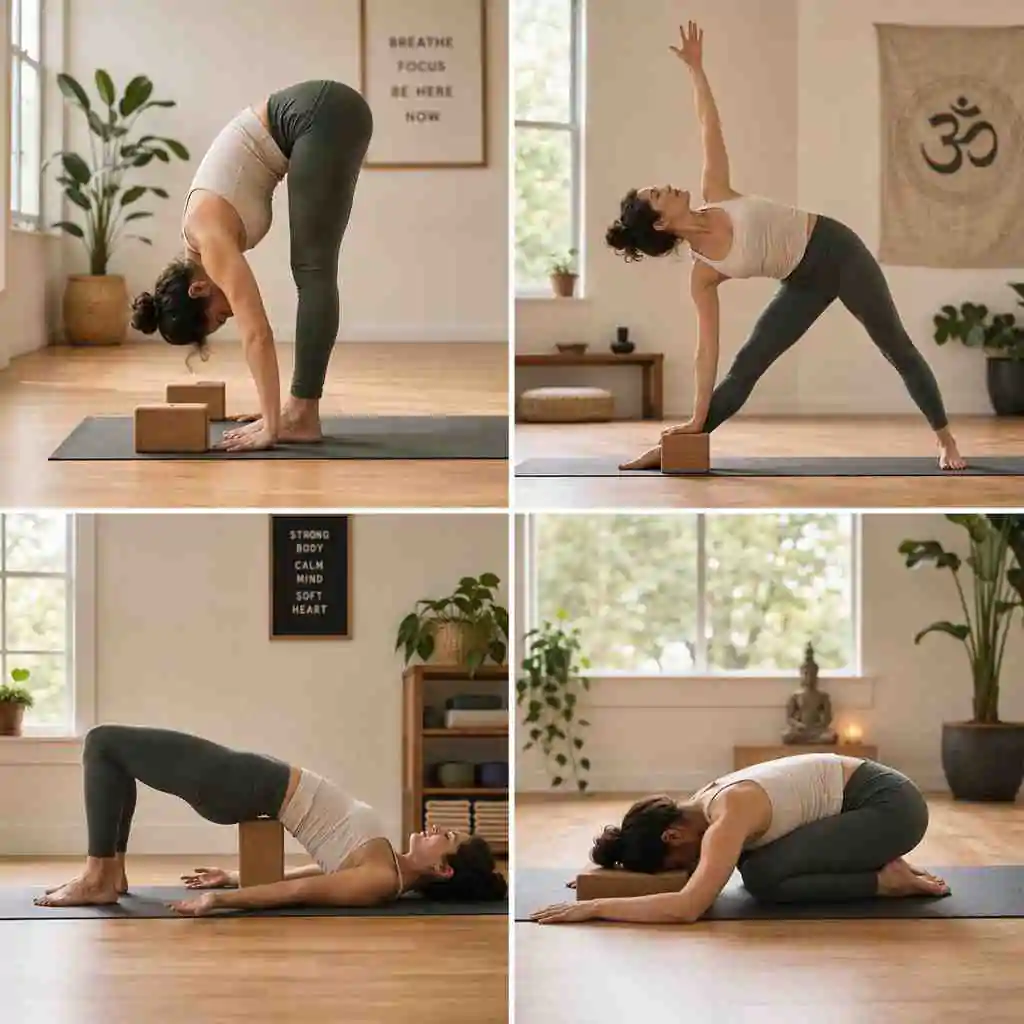
If you have tight hamstrings, a forward fold can quickly turn into a struggle. A yoga block changes that by lifting the floor to a height you can actually reach. That means your stretch goes into the intended area instead of being pulled into the wrong places.
In standing and seated folds, blocks let you hinge more cleanly from the hips. You are not forced to round through the spine just to touch the ground. This helps improve flexibility while keeping the movement honest and sustainable.
Over time, that support can improve your range of motion. As the body opens, you may move the block from the highest height to a lower setting or remove it completely. The progress feels natural because the stretch stays controlled from start to finish.
Supporting Proper Alignment and Posture
One of the biggest reasons to use a yoga block is proper alignment. When the floor feels too far away, your body often cheats. You may round the spine, dump weight into joints, or let the chest collapse. A block helps stop that pattern.
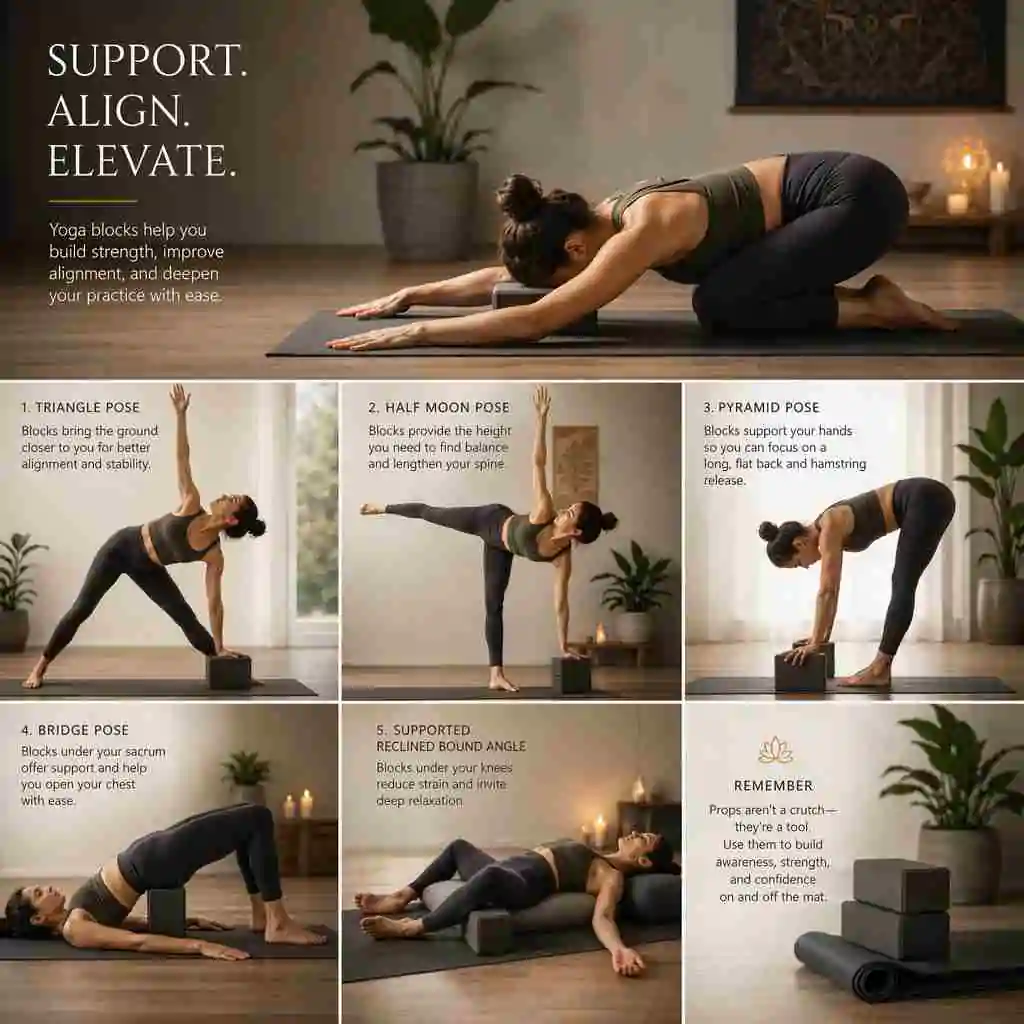
In yoga poses like triangle or low lunge, the block gives your lower hand a stable place to land. That makes it easier to stack the shoulders, open the chest, and engage the back muscles instead of hanging into the pose. Your shoulder blades can settle more naturally too.
Better posture comes from repeating better movement. When your body practices the pose with support, it learns where the shape should come from. That is useful for beginners, but it is just as valuable for experienced students refining their form.
Improving Balance and Stability
Balance gets easier when you remove unnecessary reach. In standing poses, a yoga block acts like a steady base that helps you organize the pose before your body starts wobbling. That support gives you more confidence and better focus.
Take half moon as an example. With a block under your lower hand, you can keep more attention on your standing leg, lifted leg, and center of gravity. You do not have to bend too far just to reach the floor. That makes the shape stronger and more stable.
Blocks can also improve body awareness in simple ways. Squeezing one between the inner thighs in poses like mountain or plank helps you feel more connection through the legs and core. Stability often starts with those small, clear points of feedback.
Making Challenging Poses Accessible
Blocks are useful in difficult poses because they reduce struggle without removing effort. You still do the work, but the support helps you find the pose with more precision. That can matter in balance poses, backbends, and even arm balances.
Advanced practitioners use props too. A yoga block can create a deeper stretch, add height, or give a clear point of contact that improves proper alignment. In poses like crow, half moon, and triangle, the difference can be immediate.
- Use a block under the hand in triangle to keep the chest open.
- Place one under the forehead in crow for a sense of safety.
- Try two blocks under the hands in arm balances for extra lift.
- Set a block under the sacrum in supported bridge for a steady backbend.
Beginner’s Guide to Using Yoga Blocks
If you are a beginner, start simple. A yoga block works best when it helps you feel steadier on your yoga mat, not when it turns into another thing to manage. Good beginner choices include forward folds, triangle, supported bridge, and child’s pose.
The goal is to learn where your body is in space and let your core muscles support the shape. Expert advice is often the same: choose a manageable height, stay patient, and adjust as needed. Before trying the five featured poses, set yourself up the right way.
Essential Equipment and Setup
A simple setup goes a long way. You need a stable yoga mat, one or two blocks, and enough room to move without rushing. Before you begin, place the blocks at the top of the mat or front of your mat so they are easy to reach during transitions.
Start by deciding if the pose needs one block or two. Then choose the height that lets you maintain proper alignment. If the block makes you lean or wobble, adjust it. The right setup should support your center of gravity, not pull it off line.
- Keep your block close before you start so you do not break your flow.
- Use two blocks when both hands need equal support.
- For core exercises, squeeze a block between the thighs to wake up the center.
- Check that the block feels stable before shifting weight onto it.
How to Choose the Right Yoga Block for You
Choosing the right yoga block depends on how you practice. If you want firm support for standing poses and balance work, cork blocks are often a strong option. If you prefer softer support for gentler sessions, foam blocks may feel better.
You should also consider size and grip. Standard blocks fit most people well, narrow versions can be easier to hold, and longer blocks offer extra lift. Since blocks have different heights, one prop can give you several support levels just by turning it.
- Choose cork blocks for weight-bearing support and stability.
- Pick foam blocks for softer contact in restorative work.
- Use the height that lets you move well today, not the one you think you should use.
Common Mistakes Beginners Should Avoid
A common mistake is treating the yoga block like a shortcut to the final version of the pose. That usually leads to leaning, collapsing, or forcing. In a good yoga practice, the block should support the pose, not hide poor mechanics.
Another issue is choosing the wrong height. If you go too low too soon, you may lose proper alignment just to reach farther. Beginners also rush into difficult poses before learning how the block changes balance, pressure, and body position.
- Do not pick a low setting if it makes your spine round or chest drop.
- Do not dump all your weight into the block.
- Do not ignore discomfort in wrists, knees, or lower back.
- Do not assume blocks are only for beginners or only for hard poses.
Step-by-Step Guide: 5 Yoga Poses to Try Using Blocks
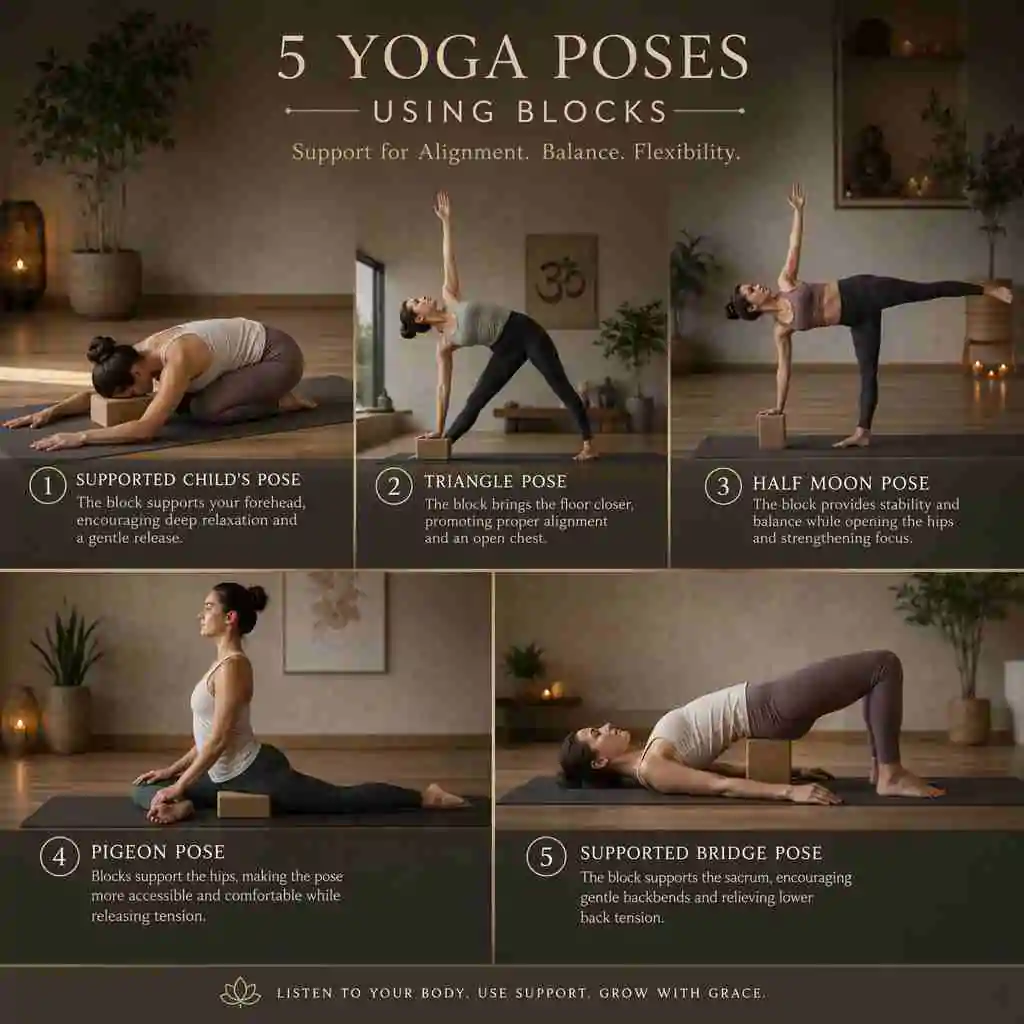
Now for the practical part. These five yoga poses show how a yoga block can support proper alignment, improve balance, and create a deeper stretch without pushing you past your limit. You do not need to be very flexible to benefit.
Each pose uses the block a little differently. Some bring the floor closer. Others add support under the body or improve stability in a balance. Start slowly, use the height that feels right, and let the setup guide the shape rather than forcing it.
Step 1: Downward Facing Dog with Blocks
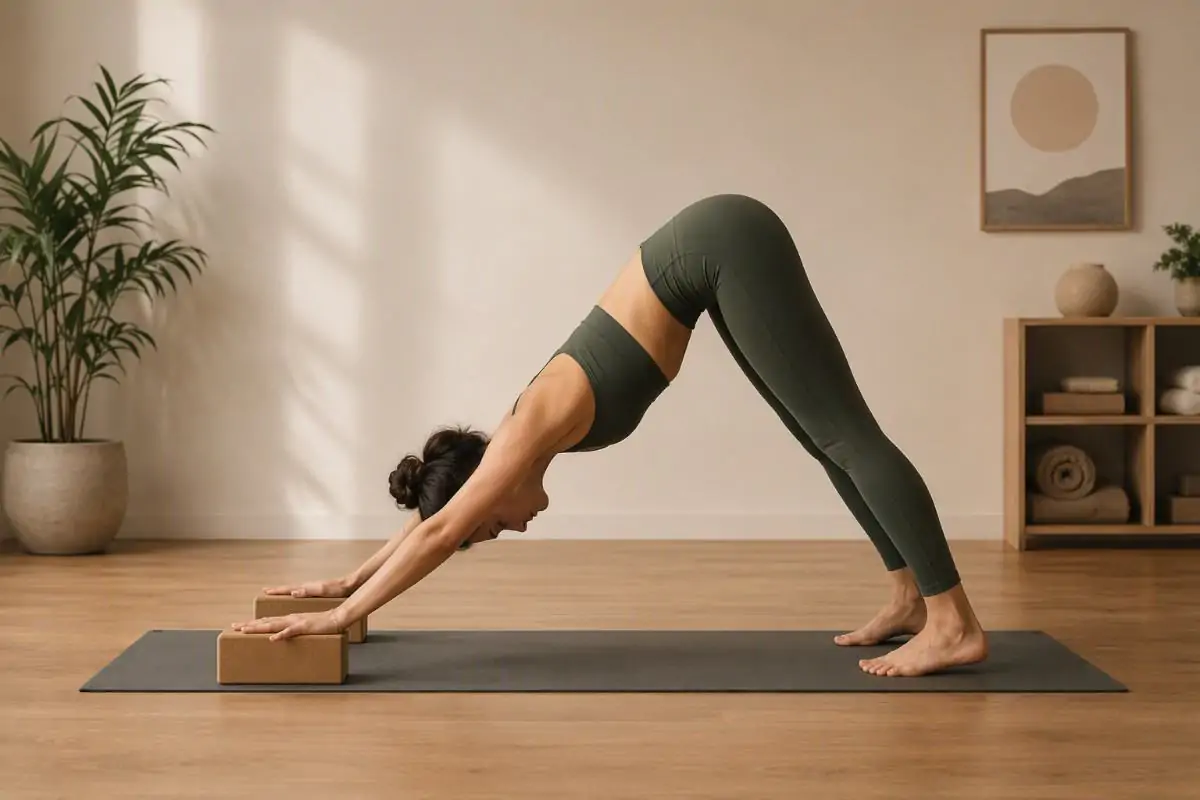
Downward dog can feel crowded if your hamstrings or shoulders are tight. Placing your hands on blocks gives you more space so the pose feels less compressed. It can also help you lengthen through the upper body while keeping better proper alignment.
Set two blocks at the front of your yoga mat, shoulder-width apart, on a stable height. Place one hand on each block, then lift into downward dog. Press back through your hips and keep the back of your neck long. The goal is not to force your heels down.
- Place the blocks evenly at the top of the mat.
- Spread your fingers and press firmly into each yoga block.
- Lift your hips up and back to create a deeper stretch through the side of the body.
- Bend your knees slightly if needed to keep the spine long.
Step 2: Supported Bridge Pose for Gentle Backbends
Supported bridge is one of the most beginner-friendly yoga poses with a block. Instead of holding your hips up with effort, you place the block under the sacrum and let the support do the work. That makes it a gentle way to explore backbends.
Lie on your back with knees bent and feet flat. Lift your hips and slide the yoga block under the bony area just above the tailbone, not the soft lower back. Lower your hips onto the block and let your back muscles release while your chest stays open.
- Keep your feet hip-width apart and steady on the mat.
- Place the block under the sacrum for proper alignment.
- Stay with bent knees, or extend the legs if that feels comfortable.
- If you feel pinching, move the block slightly lower toward the tailbone.
Step 3: Triangle Pose for Enhanced Reach
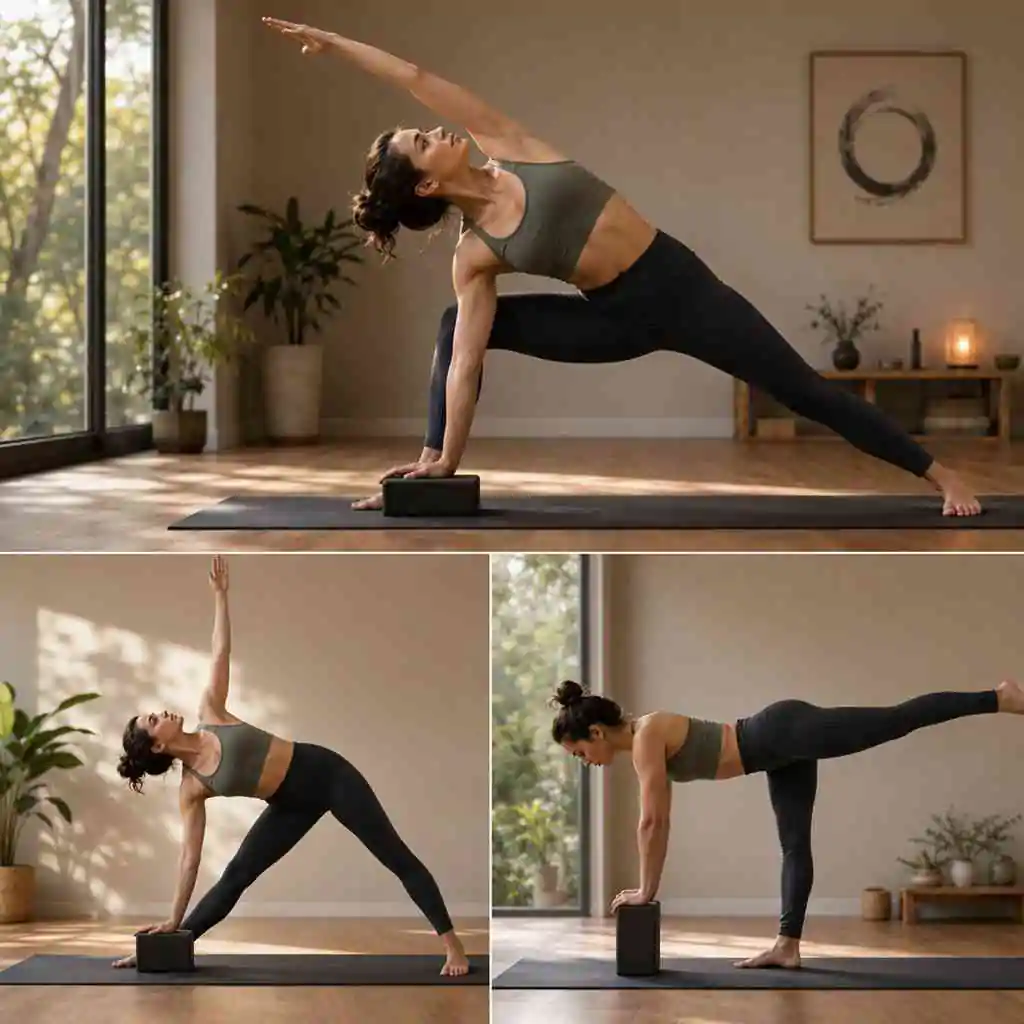
Triangle pose often becomes a race to touch the floor. A yoga block changes the goal. Instead of reaching too low, you support the lower hand so the chest can stay open and the pose can work where it should.
Stand wide, turn your right foot out, and place the block outside your front leg. Reach forward with your right hand, then lower it to the block. Press down lightly so your torso can rotate open. You should feel length through the side body and activation through the inner thighs.
- Begin with the block on the highest height if needed.
- Place your right hand on the block outside the ankle or shin line.
- Keep your chest broad instead of collapsing toward the floor.
- Lower the block over time only if you can keep proper shape.
Step 4: Seated Forward Fold with Block Support
A seated forward fold can feel frustrating when tight hamstrings pull the pelvis backward. Using a yoga block changes the angle of the pose so you can fold from the hips with more ease. It is a simple way to make the stretch more useful.
Start in a seated position with the block under your sit bones or underneath your knees, depending on what feels better in your body. Extend your legs, flex your feet, and hinge forward slowly. The support helps you keep proper alignment instead of rounding deeply through the spine.
- Sit on the edge of the block to tip the pelvis forward.
- Or place the block under the knees to soften the pull of tight hamstrings.
- Reach forward with a long spine instead of forcing your chest down.
- Use your breath to settle into a deeper stretch over time.
Step 5: Half Moon Balance with Blocks
Half moon is a strong example of how blocks help with balance in standing poses. Without support, many people bend too deeply or rush the lift. A yoga block under the lower hand creates a steady base so you can organize the rest of the pose.
From triangle, place the block about a foot in front of your front foot. Shift weight into the standing leg, then lift the back leg until it reaches hip height. If your right leg is standing, your lower hand can rest on the block while the top side opens.
- Set the block slightly ahead of the standing foot.
- Keep a soft bend in the standing leg if needed.
- Lift the back leg with control rather than kicking it up.
- Use your gaze on one point to help maintain balance.
How Yoga Blocks Improve Each Pose
Once you try a few supported shapes, the value of a yoga block becomes clear. It changes how yoga poses feel by helping you move with better proper alignment from the start.
That support also improves flexibility in a practical way. You can stay longer, breathe better, and explore a deeper stretch without collapsing into weak positions. Blocks do not replace effort. They guide it. The next sections explain how they deepen, modify, and activate each pose more effectively.
Deepening Stretches Safely
A deeper stretch only helps if your body can stay supported while you hold it. That is where a yoga block makes a big difference. In yoga poses like forward folds, lunges, and supported bridge, the block helps target the intended tissues without forcing extra strain.
For example, blocks can support the hands in a lunge so the hip flexors open with less collapse through the chest. In downward dog, lifting the hands can create more length through the spine and reduce the urge to jam the shoulders. You can also keep the back of your neck longer.
Safe depth comes from control, not intensity. When the pose fits your body, your breath stays steady and the stretch becomes clearer. That is how blocks help flexibility improve over time instead of turning each session into a fight.
Modifying Poses for All Levels
One of the best things about a yoga block is how easily it modifies poses for different bodies and different days. In a long yoga practice, your energy, mobility, and balance can shift. A block lets you adjust without losing the purpose of the shape.
That is why blocks work for all levels. A beginner may use the highest height in triangle. A more experienced student may use the same prop to refine difficult poses or explore a more active variation. The tool stays the same, but the purpose changes.
- Use the highest height first when learning a new shape.
- Lower the height only if proper alignment stays intact.
- Add two blocks under the hands for extra lift in arm balances.
- Skip blocks if they make a pose less stable or create sharp discomfort.
Encouraging Muscle Activation and Engagement
Blocks do more than support passive stretching. They also help switch on muscles that are easy to ignore. Squeezing a yoga block between the legs creates immediate feedback, which is why it works well in core-focused yoga poses.
In boat pose, placing a block between the knees encourages the inner legs and core muscles to work together. In plank or bridge variations, a block between the thighs helps engage the thigh muscles and center more clearly. That can reduce compensation elsewhere in the body.
The best way to use yoga blocks for core exercises is simple: place the block where it helps you maintain pressure and awareness without losing breath or form. You do not need big movement. Often the light squeeze is enough to wake up the right muscles.
How Yoga Blocks Improve Each Pose
Once you try a few supported shapes, the value of a yoga block becomes clear. It changes how yoga poses feel by helping you move with better proper alignment from the start.
That support also improves flexibility in a practical way. You can stay longer, breathe better, and explore a deeper stretch without collapsing into weak positions. Blocks do not replace effort. They guide it. The next sections explain how they deepen, modify, and activate each pose more effectively.
Deepening Stretches Safely
A deeper stretch only helps if your body can stay supported while you hold it. That is where a yoga block makes a big difference. In yoga poses like forward folds, lunges, and supported bridge, the block helps target the intended tissues without forcing extra strain.
For example, blocks can support the hands in a lunge so the hip flexors open with less collapse through the chest. In downward dog, lifting the hands can create more length through the spine and reduce the urge to jam the shoulders. You can also keep the back of your neck longer.
Safe depth comes from control, not intensity. When the pose fits your body, your breath stays steady and the stretch becomes clearer. That is how blocks help flexibility improve over time instead of turning each session into a fight.
Modifying Poses for All Levels
One of the best things about a yoga block is how easily it modifies poses for different bodies and different days. In a long yoga practice, your energy, mobility, and balance can shift. A block lets you adjust without losing the purpose of the shape.
That is why blocks work for all levels. A beginner may use the highest height in triangle. A more experienced student may use the same prop to refine difficult poses or explore a more active variation. The tool stays the same, but the purpose changes.
- Use the highest height first when learning a new shape.
- Lower the height only if proper alignment stays intact.
- Add two blocks under the hands for extra lift in arm balances.
- Skip blocks if they make a pose less stable or create sharp discomfort.
Encouraging Muscle Activation and Engagement
Blocks do more than support passive stretching. They also help switch on muscles that are easy to ignore. Squeezing a yoga block between the legs creates immediate feedback, which is why it works well in core-focused yoga poses.
In boat pose, placing a block between the knees encourages the inner legs and core muscles to work together. In plank or bridge variations, a block between the thighs helps engage the thigh muscles and center more clearly. That can reduce compensation elsewhere in the body.
The best way to use yoga blocks for core exercises is simple: place the block where it helps you maintain pressure and awareness without losing breath or form. You do not need big movement. Often the light squeeze is enough to wake up the right muscles.
Creative Ways to Use Yoga Blocks Beyond the Basics
A yoga block is more versatile than many people expect. Beyond standard yoga poses, it can be used for strength work, restorative support, and skill-building in advanced transitions. That gives your yoga practice a wider variety of options without adding much equipment.
Expert advice often points to experimenting with placement, height, and pressure. You can hold a block, squeeze it, sit on it, or rest on it. The right setup changes the whole feel of a pose. Here are a few creative directions worth trying.
Core Strengthening Exercises with Blocks
If you want more from your core work, a yoga block is a great way to add feedback. It gives your body something to press into, which helps core muscles and the lower body organize together. That often makes basic shapes feel much more focused.
Boat pose is a classic example. Hold the block between your knees to encourage inner leg engagement and a stronger center. In plank pose, placing a block between the thighs can help reduce sagging through the middle and remind you to stay active from head to heels.
- Squeeze a block in boat pose to connect the core and inner thighs.
- Use one in plank pose to keep the lower body switched on.
- Try bridge lifts with a block between the thighs for gentle core work.
- Add light twisting crunches with a block as a contact point on the thigh.
Restorative and Relaxation Techniques
Blocks work beautifully in restorative poses because they support the body and reduce effort. When your muscles feel held, relaxation comes more easily. That is why they are common in beginner-friendly shapes and long, quiet holds.
In child’s pose, a block under the sit bones, forehead, or sternum can make the position more comfortable. Supported bridge is another strong option, especially when you want a gentle release through the front body and lower back. These setups allow the breath to settle.
- Place a block under the forehead in child’s pose if the head does not reach the mat.
- Support the sit bones in child’s pose if the hips stay high.
- Rest on a block in supported bridge for calm, passive opening.
Incorporating Blocks for Advanced Variations
Blocks can also help advanced poses feel clearer and more trainable. In a mature yoga practice, props are often used to create more height, increase challenge, or improve entry into arm balances and deep standing work. They are not just for scaling down.
Crow is a good example. A block under the forehead can build confidence while you learn to shift forward. Two blocks under the hands can also give you more lift in poses like crow, scale pose, or dangling variations. Expert advice here is simple: use the setup that teaches the action best.
- Put a block under the forehead in crow to create a safer learning space.
- Use blocks under the hands for extra lift in advanced poses.
- Start at the highest level of support before reducing it.
Conclusion
In conclusion, integrating yoga blocks into your practice can transform your experience on the mat. These versatile tools not only enhance flexibility and alignment but also make challenging poses more accessible for all levels. By using blocks, you can deepen your stretches safely and encourage proper muscle engagement, paving the way for a more rewarding yoga journey. Whether you’re a beginner or looking to elevate your existing routine, exploring the numerous benefits of yoga blocks is a step worth taking. So, roll out your mat, grab those blocks, and start exploring new possibilities in your practice! To further enhance your journey, don’t hesitate to reach out for a free trial or consultation to discover how yoga can work best for you!
Frequently Asked Questions
Wipe your yoga block with a damp cloth and mild soap after practice. Cork blocks usually resist odor well because cork is a natural material. Foam blocks also clean easily but may wear faster. Let both dry fully before storing them so they stay fresh for your yoga practice.
Yes, a yoga block can help by improving proper alignment in yoga poses where reaching the floor causes strain. Bringing the floor closer on your yoga mat may reduce pressure on wrists or knees. It can also help you find a deeper stretch without forcing the joints into awkward positions.
It depends on the pose. One yoga block often works for triangle or half moon, while two can be better for folds, lunges, or downward dog. Expert advice is to use the number that supports proper alignment and keeps you steady on your yoga mat without making the setup feel awkward.
Yes. Skip a yoga block if it makes yoga poses less stable, creates sharp discomfort, or causes you to lose proper alignment. In some difficult poses, the prop may add more confusion than support. Expert advice is simple: if the block disrupts the pose, change the setup or leave it out.