Key Highlights
You can start simply at home or in a yoga class with beginner-friendly sequences.
Yoga poses can improve flexibility while also challenging your body weight in useful ways.
A steady yoga practice helps wake up core muscles, legs, shoulders, and the upper body.
Poses like plank pose and chair pose are a great way to support building strength.
Stretch-focused moves such as downward dog and forward bend improve range of motion.
Good form, warm-up work, and proper alignment help lower the risk of injury.
Introduction
If you want a form of exercise that helps you feel stronger and less stiff, Yoga for Strength and Flexibility poses are a smart place to start. A regular yoga class or home routine can support better movement, improved posture, and a wider range of motion in your joints and muscles. You do not need to be naturally flexible to begin. In fact, a lot of people start yoga because they feel tight, tired, or weak and want a simple way to move better.
Understanding Yoga for Strength and Flexibility
A common misconception is that yoga is only about stretching. In reality, a steady Yoga for Strength and Flexibility practice can improve muscle strength and flexibility at the same time. Many of the best yoga poses ask you to hold your body weight in ways that challenge your arms, legs, back muscles, and core.
Yes, Yoga for Strength and Flexibility can help you build functional strength while increasing mobility. That matters in daily life, not just on the yoga mat. As you move through different poses, you train support muscles, improve control, and help your body move with more ease. The next sections explain how this dual benefit works.
How Yoga Simultaneously Builds Strength and Flexibility
Yoga works on strength because many poses ask you to support your body weight without outside equipment. Think about plank pose, chair pose, or boat pose. These positions light up core muscles, shoulders, legs, and the entire body. That kind of effort helps with building strength in a controlled, practical way.
At the same time, Yoga for Strength and Flexibility improves range of motion by taking joints and muscles through safe, repeated movement. Poses like downward facing dog, low lunge, and seated forward bend stretch tight areas such as the hips, calves, hamstrings, and lower back. Over time, your body starts to move with less tension.
So can yoga help with both muscle strength and flexibility? Yes. It may not work like heavy strength training for maximum muscle mass, but it can develop useful strength, better control, and easier movement across the whole body.
Why Balance Both Through Your Practice?
Focusing only on flexibility can leave your joints without enough support. On the other hand, working only on muscle strength can make your body feel tight and restricted. A balanced Yoga for Strength and Flexibility practice helps you avoid both extremes. You gain support and space at the same time.
This matters because better range of motion paired with building strength can lower your risk of injury. Strong muscles help stabilize your body in motion. Flexible muscles and joints help you move with less strain. That combination supports better posture, easier daily movement, and less stiffness.
Why balance both through your practice? Because real progress is not just about touching your toes or holding hard poses longer. It is about moving well, feeling steady, and using your Yoga for Strength and Flexibility practice to build a body that works better in everyday life.
Essential Principles for Safe Yoga Practice
Before you focus on advanced shapes, focus on safety. Moving too fast or forcing a stretch can increase your risk of injury. Yoga should challenge you, but it should not feel sharp, painful, or unstable. Listening to your body is part of the practice.
That is where good guidance matters. Certified yoga teachers can help you learn proper alignment and smart modifications from the start. Even if you practice at home, slow progress, steady breathing, and careful setup make each pose safer and more effective. Next, let’s look at warm-ups and alignment basics.
Warm-Up Techniques to Prevent Injury
Your body responds better when it has time to prepare. A short warm-up increases blood flow, wakes up stiff muscles, and lowers the chance of injury. If you are a beginner, this is also the easiest way to ease into a specific Yoga for Strength and Flexibility sequence for strength and flexibility.
Start simple and move with deep breaths. Gentle motion helps your joints feel ready before you ask more from them. You do not need a long routine. A few steady minutes can make a real difference.
- Begin in tabletop position with easy cat-cow movement for the spine.
- Add mountain pose and light bends through the knees and hips.
- Move into child’s pose, then shift forward slowly to warm the shoulders.
- Try a soft downward facing dog with bent knees to open the back line.
Once your body feels warm, your practice becomes smoother, safer, and more comfortable.
Understanding Proper Alignment in Each Pose
Flexibility poses without forcing anything. It helps you place effort in the right muscles instead of dumping pressure into joints. Good setup also makes strength work feel clearer and stretches feel more effective.
Small details matter. In standing poses, your right foot and left leg should support you evenly. In lunges, keep the front knee stacked well instead of pushing too far forward. In seated shapes, lengthen through the spine before reaching deeper. These basics help you move with more control.
- In plank pose, stack the shoulder over the wrist and keep a long line through the body.
- In low lunge, track the front knee over the ankle and keep the back knee supported.
- In forward folds, hinge from the hips before reaching with the hands.
The best Yoga for Strength and Flexibility poses work even better when your form supports the pose instead of fighting it.
Top Yoga Poses for Full-Body Strength
Some yoga poses stand out when your goal is building strength through the whole body. They train the upper body, legs, back, and core muscles while teaching control. Better yet, they use your own body weight, so you do not need machines or a gym.
Among the best choices, plank pose and chair pose are especially useful. Both teach stability, effort, and focus. They also prepare you for other Yoga for Strength and Flexibility poses that demand endurance and balance. Let’s break down how each one supports strength and how you can adapt them.
Plank Pose (Phalakasana) Benefits and Variations
Plank pose is one of the clearest strength builders. It works core muscles, arms, glutes, and legs while teaching you to organize the entire body in one strong line. If you want a great way to build steady support, this pose belongs in your routine.
Set up from all fours, then step both feet back. Keep the shoulder stacked over the wrist, press the floor away, and avoid letting the hips sag. Even a short hold can feel intense when your form is solid.
| Variation | How it helps |
|---|---|
| Full plank pose | Builds strength through the entire body, especially the core and shoulder area |
| Knees-down plank | Reduces load while keeping the same alignment pattern |
| Short holds, repeated | Helps beginners build control without losing form |
Practice it for 20 to 60 seconds with smooth breathing. Quality matters more than time.
Chair Pose (Utkatasana) for Lower Body Power
Chair pose is often described as a yoga squat, and that makes sense the moment you hold it. It targets the lower body, especially the quads and glutes, while also asking your core and back muscles to stay active. It is a strong tool for building strength through the legs.
Stand tall, lift the arms, then bend the knees as if sitting back into a chair. Keep your chest lifted and weight moving into the heels. Watch that the right knee and left knee track forward in line rather than collapsing inward.
Although chair pose is not designed for maximum muscle mass like heavy lifting, it does build useful power and endurance. Start with shorter holds and repeat. Over time, your legs feel steadier, your posture improves, and standing poses become easier.
Best Yoga Poses to Promote Flexibility
When your goal is flexibility, the best yoga poses are the ones that open several areas at once. That means not just one muscle group, but the whole chain of movement. Good examples include poses that target the hips, calves, hamstrings, shoulders, and spine together.
This is where classics like downward dog and a seated forward bend shine. They improve range of motion while helping release tension from common tight spots. If you have ever wondered which yoga stretches are most effective for full-body flexibility, start with these two dependable options.
Downward-Facing Dog (Adho Mukha Svanasana) for Total Stretch
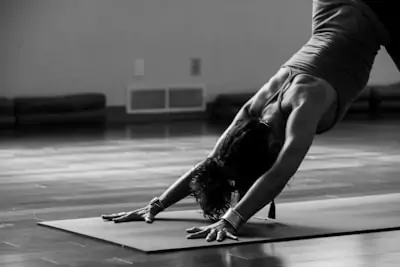
Downward dog, or adho mukha svanasana, is one of the most useful poses for full-body flexibility. It stretches the calves, hamstrings, hips, shoulders, and upper body all at once. With regular practice, it can even start to feel like a resting shape between stronger movements.
Begin on hands and knees, tuck the toes, and lift the hips up and back. Aim for a long spine before worrying about straight legs or heels touching the floor. Many beginners benefit from bending the knees first to create more space through the back.
If you want a little extra ease, pedal the feet one at a time. That can gradually wake up tight calves and hamstrings. For many people, downward dog is one of the best yoga poses for improving everyday movement with less stiffness.
Seated Forward Bend (Paschimottanasana) to Lengthen the Spine
Seated forward bend is a classic stretch for the whole back line of the body. It targets the hamstrings while encouraging length through the spine. It can also feel calming, which makes it useful when your body feels tight and your mind feels busy.
Sit with your legs extended in front of you. Inhale to lift and lengthen, then exhale as you hinge from the hips into the forward bend. Reach only as far as you can without collapsing your chest or rounding hard through the lower back.
This pose is not about forcing your head to your knees. It is about creating space through the back of the body over time. A steady seated forward bend practice can help your hamstrings loosen and your spine feel longer and less compressed.
Combined Yoga Sequences for Strength and Flexibility
If you want both strength and mobility, a balanced yoga sequence makes more sense than isolating one goal. Moving from active poses into stretches helps you build functional strength first, then use that warmth to improve range of motion more comfortably. It is efficient and easier to stick with.
This approach also matches what a lot of beginners need: simple structure. You do not need a complicated plan or a systematic review to know that consistency and smart order matter. The next two sections give you a beginner-friendly flow and easy modifications.
Beginner-Friendly Flow You Can Try at Home
If you are asking whether there is a specific yoga sequence for strength and flexibility that beginners can follow, yes, there is. Keep it short, repeatable, and comfortable. You do not need to copy a full yoga class to make progress at home.
Start with grounding, move into strength, then finish with slower stretches. That order helps your body feel ready and keeps the session manageable. Practice the flow at your own pace and pause when needed.
- Begin in mountain pose with slow breaths.
- Move to table top position, then child’s pose.
- Shift into plank pose and hold briefly.
- Finish with downward facing dog and a seated fold.
This kind of yoga practice gives you a little of everything without overwhelming you. Repeat it several times per week and adjust the hold times as your confidence grows.
Modifications and Props for Every Skill Level
You do not need much equipment to begin. A yoga mat is helpful for comfort and grip, but many poses can be adapted with simple props around your home. These supports make poses more accessible, not easier in a bad way. They help you practice with better form.
A lot of people think props are only for beginners. That is not true. Experienced yoga teachers use them too because they support proper alignment and allow your body to open gradually. This can be especially useful when your hips, shoulders, or low back feel tight.
- Place a folded blanket under the knees for comfort.
- Use the seat of a chair for balance in standing poses.
- Rest the forehead on support in child’s pose.
- Bring the floor closer with cushions or sturdy blocks.
Props help meet your body where it is today, which is exactly what good practice should do.
Choosing the Right Yoga Style for Strength and Flexibility Goals
Not every yoga style feels the same, so choosing the right one can help you stay consistent. If your goal is to develop both strength and flexibility, look at how active or slow the class feels. The best fit depends on what your body needs right now.
Power yoga and vinyasa yoga often feel more active, while hatha yoga gives you time to learn positions with care. Yin yoga is slower and stretch-focused. Each yoga style can help, but some place more emphasis on effort and others on longer holds.
Power Yoga vs. Hatha Yoga: What’s the Difference?
Power yoga usually moves faster and asks more from your stamina. It tends to feel higher in intensity, with stronger transitions and more time supporting your own body weight. If your main goal is building strength and improving muscle strength, it can be a solid option.
Hatha yoga is often slower and more instructional. That makes it useful for learning setup, breath, and proper alignment. It still helps with strength and flexibility, but the pace gives you more time to feel each pose and make adjustments.
| Style | Main focus |
|---|---|
| Power yoga | Higher intensity, more continuous effort, helpful for building strength |
| Hatha yoga | Slower pace, clearer learning, helpful for alignment and steady stretching |
So how does power differ from regular yoga for strength and flexibility? Mostly through pace and intensity, not because one is better for everyone.
Vinyasa Yoga for Dynamic Strength and Stretch
Vinyasa links breath with dynamic movement, which makes it a useful middle ground for many people. In one class, you may move through standing poses, plank work, lunges, and stretches that challenge both mobility and control. That blend supports strength and flexibility together.
Because you shift from pose to pose, your body weight becomes the main source of resistance. This helps build practical strength while keeping the session active and engaging. It can also help you explore range of motion in a warmer body, which often feels more comfortable.
If you want a style that does a little of both, vinyasa is a strong choice. It may feel more fluid than hatha and less static than yin, which works well for people who enjoy movement.
Building an Effective Yoga Practice Routine
A strong Yoga for Strength and Flexibility practice routine does not need to be long. It needs to be effective and realistic. Short sessions done regularly often work better than one long workout once in a while. Roll out your mat, keep your sequence simple, and focus on showing up.
That is a great way to build momentum without burning out. Your body responds well to repetition, especially when you mix strength poses with flexibility work. The big question, then, is how often you should practice to notice real changes. Let’s answer that next.
How Often Should You Practice for Noticeable Results?
Most people begin to notice improved flexibility and less stress within a few weeks of consistent practice. Visible gains in muscle strength often take a little longer. The key is frequency. You do not need daily long sessions. You need regular effort over time.
A practical goal is 3 to 5 days per week. That gives your body enough repetition to adapt without making the routine hard to maintain. Even short sessions matter when you use your body weight well and move with attention.
- Practice 3 days per week if you are just starting.
- Aim for 4 to 5 days per week for faster progress.
- Keep sessions short if needed, but stay consistent.
- Track changes in mobility, energy, and even blood pressure if relevant to you.
Results build gradually, but they do come when your routine becomes steady.
Conclusion
In summary, incorporating into your fitness routine is a powerful way to enhance both strength and flexibility. By understanding key poses and sequences, you can create a balanced practice that supports your physical goals while promoting overall well-being. Whether you’re looking to master the Plank Pose for core strength or the Seated Forward Bend for deeper flexibility, the journey of discovery in yoga can be incredibly rewarding. Remember to listen to your body, prioritize proper alignment, and adapt your practice as needed. If you’re eager to explore how can transform your fitness journey, don’t hesitate to reach out for a free trial or consultation to get started on the right path.
Frequently Asked Questions
Poses can build functional strength with body weight and improve control through the whole body. Still, it may not replace traditional strength training if your main goal is maximum muscle mass. For many people, yoga works best as a strong support or complement to other training.
You only need a yoga mat to get started, and even that is mostly for comfort and grip. Helpful props include a folded blanket, cushions, or the seat of a chair for support. These tools make poses more accessible and can improve your alignment.
A good beginner practice routine includes mountain pose, plank pose, chair pose, downward facing dog, child’s pose, and a seated forward fold. These are some of the best yoga poses for flexibility and building strength. Aim for short sessions three times a week to start.