
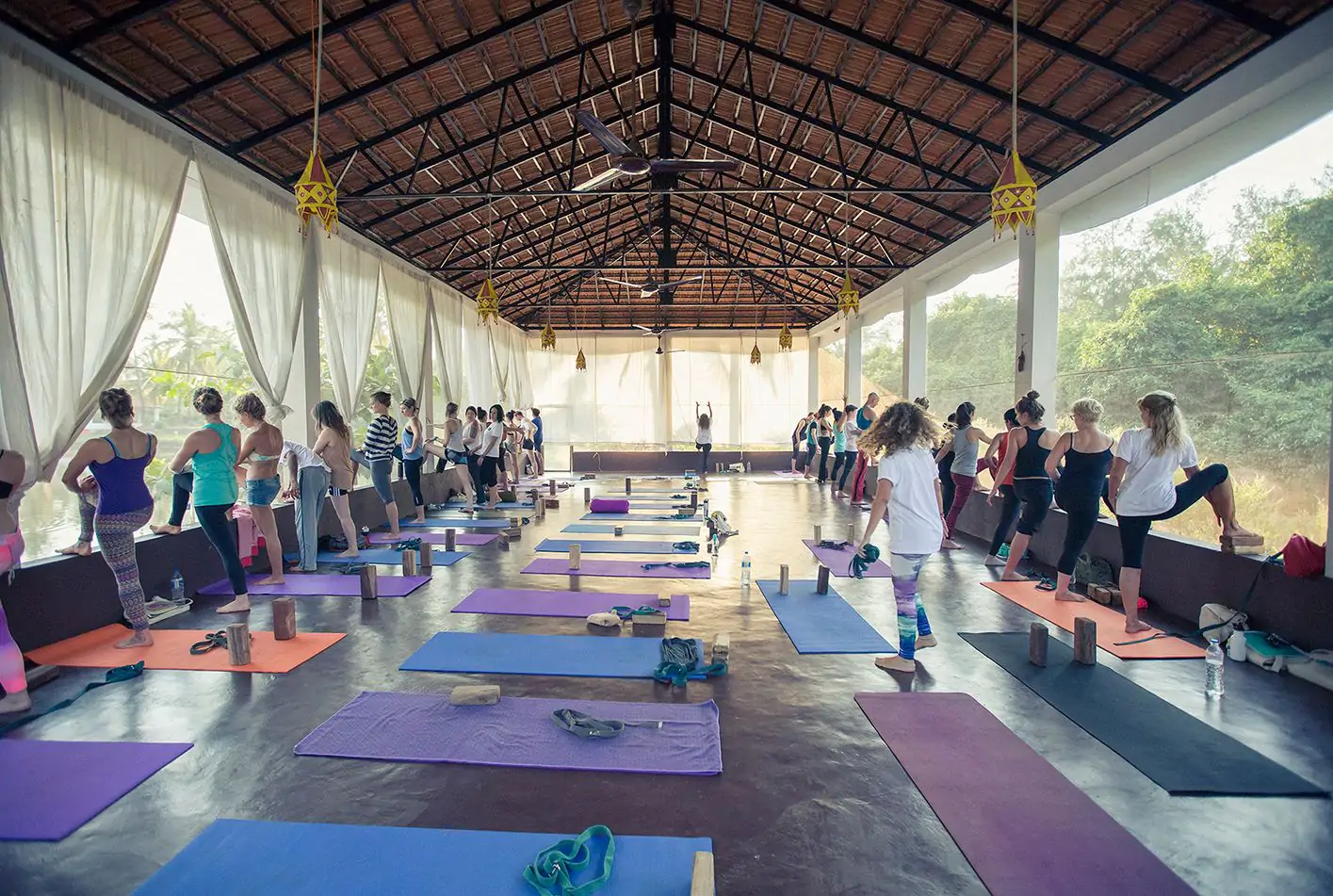
If you’ve spent any time researching a 500 hour yoga teacher training in Rishikesh, India, you already know the drill. Every second website calls itself the “most authentic,” every brochure has a photo of someone meditating by the Ganga at sunrise, and every school insists their lineage goes back centuries. It’s not that these claims are false — Rishikesh genuinely has deep yogic roots. It’s that the town has grown so fast, and so commercially, that a lot of what made it special is now competing with traffic jams, packed guesthouses, and a yoga scene that sometimes feels more like an industry than a practice.
This article isn’t here to tear Rishikesh down. It’s a real place with real teachers and real value. But if you’re seriously comparing where to spend five hundred hours of your life deepening your practice, it’s worth putting Rishikesh next to a quieter alternative: Dharamshala, in the Himalayan foothills of Himachal Pradesh. Specifically, we’ll look at why a smaller, mountain-based school like Mahiyoga School might give you something Rishikesh increasingly struggles to offer — space, stillness, and a teacher-student relationship that hasn’t been diluted by volume.
What a 500 Hournnnnnnn Yoga Teacher Training Actually Involves
Before comparing locations, it helps to know what you’re signing up for. A 500 hour YTTC is usually structured as two certifications back to back — a 200 hour foundational course followed by a 300 hour advanced course — combining into the Yoga Alliance’s RYT-500 credential. Across most reputable programs, the curriculum covers:
- Asana practice, alignment, and sequencing (Vinyasa Krama)
- Applied anatomy and physiology, both Eastern and Western models
- Pranayama, mudra, bandha, and kriya practices
- Yogic philosophy — the Yoga Sutras, Bhagavad Gita, Hatha Yoga Pradipika
- Meditation and mantra practice
- Teaching methodology and supervised practicum
- Homework, seva (selfless service), and personal sadhana logs
This is fairly standard across schools, whether they’re based in Rishikesh, Goa, or the Himalayan hill towns. What actually differs — and what matters far more than most people realize before they arrive — is the environment the training happens in, and how much individual attention you actually get.
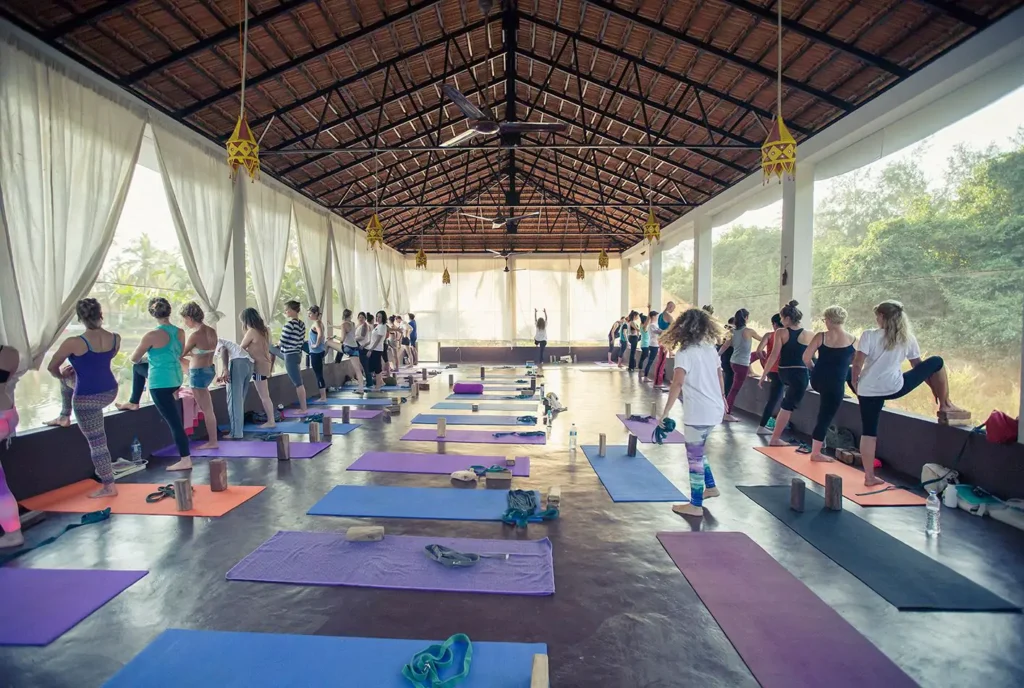
Why Rishikesh Isn’t Automatically the Best Choice Anymore
Rishikesh earned its “Yoga Capital of the World” reputation honestly. But a title earned decades ago doesn’t always reflect what a town looks like today, especially one that now hosts hundreds of schools competing for the same pool of international students.
1. Crowded Dorms Aren’t Great for Inner Work
Walk into many of the well-known Rishikesh schools and you’ll find shared rooms housing anywhere from four to eight students. That might be fine for a short holiday, but a 500 hour training is a deep, often emotionally intense process. You’re doing shadow work, sitting with your own thoughts, journaling, processing. Having zero privacy while trying to do that isn’t a minor inconvenience — it can genuinely get in the way of the personal growth the course is supposed to deliver.
2. Buildings Next to Buildings, Not Forest Next to River
A lot of marketing photos show the Ganga and the mountains in the background, but the reality on the ground in much of Rishikesh’s yoga district is dense construction — guesthouses, cafés, and ashrams packed shoulder to shoulder. Very few schools are actually positioned in quiet forest settings or right along the riverbank anymore. The spiritual backdrop is still there in spirit, but you often have to go looking for it rather than being immersed in it every day.
3. The Business Model Has Outgrown the Spiritual Model
Perhaps the biggest shift is cultural. Traditionally, a yoga teacher’s role wasn’t just to teach postures — it was to hold students to a certain discipline and help them understand why the practice matters, sometimes with a firmness that pushed students toward real transformation. As Rishikesh has scaled into a tourism economy, that strict, relationship-based teaching style has, in many places, been replaced by a more transactional experience: bigger batches, faster turnover, and marketing language doing the work that a dedicated teacher used to do in person.
None of this means every Rishikesh school is like this — some genuinely maintain high standards. But it’s common enough that it’s worth factoring into your decision.
Why Dharamshala Deserves a Serious Look
Dharamshala, and the McLeod Ganj–Dharamkot belt above it, offers a different rhythm entirely. It’s the seat of the Tibetan government-in-exile and the long-time home of the Dalai Lama, which gives the whole region a contemplative undertone that has nothing to do with tourism marketing — it’s just how the place is.
Here’s how it stacks up:
| Factor | Rishikesh | Dharamshala |
|---|---|---|
| Climate | Hot, humid, dusty in peak training season | Cooler mountain air, pine forest, comfortable year-round |
| Crowd levels | Heavy tourist and pilgrim traffic | Quieter, smaller-town pace, especially away from the main bazaar |
| Setting | Dense guesthouse and ashram strip | Forested hillsides, terraced valleys, mountain trails |
| School sizes | Often large batches | Frequently smaller, more intimate cohorts |
| Cultural texture | Yoga-tourism economy | Yogic and Tibetan Buddhist contemplative culture layered together |
The cooler climate alone is worth pausing on. Training six days a week, multiple sessions a day, in Rishikesh’s late-spring heat is genuinely draining. Dharamshala’s elevation keeps temperatures far more manageable, which matters more than people expect once they’re a few weeks into an intensive schedule.
Where Mahiyoga School Fits In
This is where Mahiyoga School in Dharamshala stands out. Rather than trying to replicate the scale of the bigger Rishikesh institutions, it leans into everything Dharamshala does well:
- Smaller batch sizes, so teachers can actually notice how you’re doing, not just count attendance
- Nature-immersed campus setting, away from heavy traffic and commercial noise
- Traditional teacher-student dynamic, where discipline and mentorship are part of the process, not an afterthought
- A calmer daily rhythm that still covers the full 500 hour Yoga Alliance–aligned curriculum — asana, pranayama, philosophy, anatomy, meditation, and teaching practicum
If you’re drawn to the idea of a 500 hour yoga teacher training in Rishikesh, India because of the tradition and depth associated with it, it’s worth knowing that same depth is very much available in Dharamshala — often with fewer distractions standing between you and the actual practice.
For readers comparing course lengths, it’s also worth exploring the 200 hour yoga teacher training in Dharamshala as a starting point if you’re not ready to commit to the full 500 hours right away, or the 300 hour yoga teacher training in Dharamshala if you’ve already completed your foundational certification elsewhere and want to build on it. Those considering the full immersive path can read more about the Mahiyoga 500 hour teacher training program directly.
A Fair Word on Rishikesh
To be clear: Rishikesh isn’t a bad choice. It has genuine lineage, a huge number of experienced teachers, an active spiritual community, and the convenience of being one of the most accessible yoga destinations in India. Some students thrive in its energy and enjoy being part of a larger, more social training environment. If a bigger, more bustling atmosphere with easy access to cafés, shops, and a large expat community appeals to you, it can absolutely be the right fit.
The point isn’t that Rishikesh is wrong — it’s that it’s no longer the automatic best answer just because it’s the most famous name. Dharamshala offers a legitimate, often better-suited alternative for students who want more space, a slower pace, and a closer relationship with their teachers.
How to Choose the Right Fit for You
A few honest questions can help you decide:
- Do you want personal attention or a bigger community feel? Smaller schools in Dharamshala tend to offer more one-on-one guidance.
- How do you handle heat? If you’re sensitive to humidity, Dharamshala’s cooler climate will make a noticeable difference over 200–500 hours of training.
- Do you want a purely yogic environment, or one layered with Tibetan Buddhist culture too? Dharamshala offers both simultaneously.
- How important is privacy to you during an intensive, emotionally demanding course? Ask any school directly about room sizes before booking.
Frequently Asked Questions
It can be, especially if you value being in India’s most well-known yoga hub with access to a large teacher community. Just go in with realistic expectations about crowd levels and shared accommodation, and ask specific questions about class sizes before enrolling.
Yes. Dharamshala offers a cooler climate, a quieter mountain setting, and often smaller, more personalized training batches, while still delivering Yoga Alliance–aligned 200, 300, and 500 hour curriculums.
Most programs combine a 200 hour and a 300 hour course, typically totaling seven to nine weeks of contact hours, plus homework submitted after the in-person portion ends.
A consistent personal practice is recommended, but most schools accept dedicated beginners into the 200 hour portion as long as you’re prepared for a physically and mentally demanding schedule.
Check batch sizes, room-sharing arrangements, how close the campus actually is to nature, teacher-to-student ratios, and whether the certification is properly registered with Yoga Alliance or an equivalent body.
Final Thoughts
Choosing where to spend 500 hours training as a yoga teacher is a bigger decision than it looks on paper. It’s not just about curriculum — every serious school covers similar ground there — it’s about the environment you’ll be living and growing in for two months straight. Rishikesh will always have its place in yoga history, but if you want more room to breathe, a genuinely quiet natural setting, and teachers who still treat this as a sacred relationship rather than a transaction, Dharamshala — and schools like Mahiyoga — deserve a real place on your shortlist.
If this comparison was helpful, explore our detailed breakdowns of the 200 hour and 300 hour programs at Mahiyoga School, or reach out directly with any questions about which training length is right for where you are in your practice.