If you have ever rolled out your mat at sunrise, felt the warm Goan breeze move through a beachside shala, and wondered “could I actually teach this?” — you are not alone. Every year, thousands of practitioners from across the world travel to India’s western coastline to complete a 200 hour yoga teacher training in Goa, and turn a personal practice into a recognised, teachable skill.
Goa has quietly become one of the most sought-after destinations for yoga certification, and it is easy to see why. Between the palm-lined beaches, affordable living, warm hospitality, and a genuine concentration of experienced teachers, it offers a rare combination of authenticity and comfort. This guide walks you through everything you need to know before signing up — from curriculum and daily schedule to fees, certification, and how to choose a school that actually fits you.
Why Choose Goa for Your Yoga Teacher Training?
India is the birthplace of yoga, and training here means learning the practice close to its roots rather than through a diluted, studio-adapted version. Goa specifically stands out among Indian training destinations for a few practical reasons:
- Beach-side learning environment – Most schools are located minutes from the coast, so your mornings often begin with practice against the sound of waves.
- Established yoga infrastructure – Unlike newer yoga hubs, Goa has schools that have been running certified programmes for over a decade, with structured curriculums and experienced faculty.
- Easier travel logistics – Goa has an international airport with direct connections from the Middle East, Europe, and major Indian cities, making it more accessible than remote Himalayan towns.
- Comfortable climate and lifestyle – Warm weather year-round, good food options, and a relaxed local culture make the month-long commitment easier for first-time visitors to India.
- A built-in community – Because so many trainees arrive from Europe, the UK, and beyond, you’re rarely the only newcomer navigating both yoga philosophy and a new country at once.
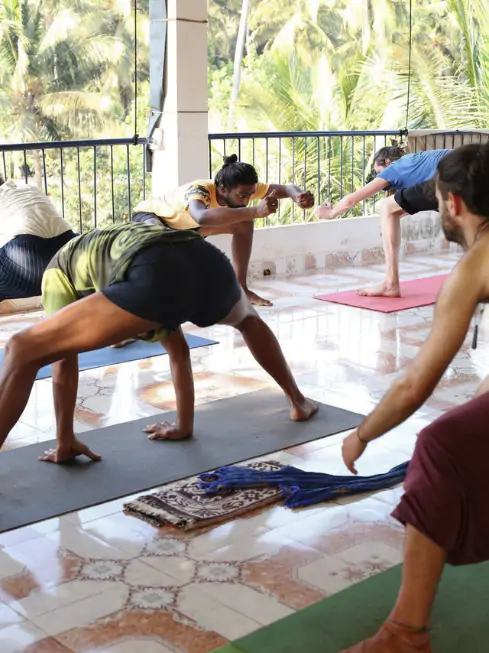
What Does a 200 Hour Yoga Teacher Training in Goa Actually Cover?
Yoga Alliance sets the baseline structure for any RYS-200 programme, but every school in Goa adds its own flavour. Broadly, a well-rounded 200 hour yoga teacher training in Goa includes the following components.
1. Asana Practice
Daily practice typically blends Ashtanga Vinyasa and Hatha yoga, with some schools also weaving in Yin yoga sessions to balance the more dynamic classes. You will study the traditional Primary Series alongside vinyasa flow principles, learning not just how to move through postures but why each one is sequenced the way it is.
2. Pranayama and Breathwork
Breath control is treated as a discipline in its own right. Expect structured lessons on techniques such as Nadi Shodhana, Kapalbhati, Bhastrika, and Ujjayi, along with an explanation of the physiological and energetic effects of each.
3. Meditation
Most programmes introduce several meditation styles — mantra-based, mindfulness, and traditional chakra or Kundalini approaches — so you leave with more than one technique to draw from, both personally and when guiding future students.
4. Yoga Philosophy
This is where the “teacher” part of teacher training really takes shape. Courses generally cover Patanjali’s Yoga Sutras, the eight limbs of Ashtanga yoga, and the yogic lifestyle beyond the mat, giving your future classes depth instead of just physical instruction.
5. Anatomy and Physiology
Functional anatomy classes focus on how joints, muscles, and the skeletal system behave during asana practice. This portion is critical for teaching safely and is often supplemented with pre-recorded online modules before you even land in Goa.
6. Teaching Methodology and Practicum
Reputable schools start practice-teaching from the very first few days rather than saving it for the final week. You’ll typically progress from one-on-one instruction to leading small groups, receiving structured feedback along the way to build genuine confidence before you graduate.
Sample Daily Schedule
While exact timings vary by school, most 200-hour programmes in Goa follow a similar rhythm:
| Time | Activity |
|---|---|
| 6:30 – 8:00 AM | Pranayama and meditation |
| 8:00 – 9:30 AM | Asana practice (Ashtanga/Hatha) |
| 9:30 – 10:30 AM | Breakfast |
| 11:00 AM – 12:30 PM | Philosophy or anatomy lecture |
| 12:30 – 2:30 PM | Lunch and rest |
| 3:00 – 4:30 PM | Alignment, adjustments, or teaching practicum |
| 4:30 – 6:00 PM | Evening asana or Yin session |
| 7:00 PM | Dinner |
Sundays are usually kept free, giving trainees time to rest, explore local markets, or simply integrate what they’ve learned during the week.
How Much Does It Cost?
Course fees for a 200 hour yoga teacher training in Goa generally range between €1,200 and €2,800, depending on the school’s reputation, accommodation type, and inclusions. A few pricing patterns to know before you compare options:
- Shared rooms are almost always cheaper than private rooms, sometimes by €300–€600 for the full course.
- Meals are usually included — typically three sattvic (vegetarian) meals a day.
- Airport transfers are sometimes included, sometimes charged separately.
- Booking deposits (commonly €300–€400) are usually non-refundable but transferable to a future batch.
- Early bird discounts are common if you book 60–90 days ahead.
Rather than choosing the cheapest option outright, it’s worth comparing what’s actually included — accommodation quality, meal plan, teacher-to-student ratio, and whether anatomy and other pre-study modules are bundled into the fee.
Certification: What You Actually Walk Away With
Upon successful completion, you receive a 200-hour teacher training certificate, which allows you to register as an RYT-200 (Registered Yoga Teacher) with Yoga Alliance — a step that is optional but widely recognised by studios and insurers internationally. This single certificate typically qualifies you to teach in most countries, whether or not you complete the Yoga Alliance registration.
If you already hold a 200-hour certificate and are considering the next step, many trainees later pursue advanced yoga teacher training courses to specialise further in areas like Vinyasa sequencing or Yin yoga instruction.
Who Should Take This Course?
You don’t need years of practice or exceptional flexibility to join. Most schools welcome:
- Complete beginners looking to build a strong foundation
- Intermediate practitioners wanting to deepen technical knowledge
- Working professionals seeking a structured break for personal growth (many opt for intensive 24-day accelerated formats designed around limited annual leave)
- Aspiring teachers ready to start guiding classes professionally
If you’re unsure whether you’re “ready,” most training schools will tell you the same thing: the course itself builds the readiness. Flexibility and experience develop through the month, not before it.
How to Choose the Right School
With dozens of certified schools operating across North and South Goa, the decision can feel overwhelming. Here’s a simple checklist to narrow it down:
- Confirm Yoga Alliance registration (RYS-200 status) directly on the Yoga Alliance website.
- Check teacher-to-student ratio — smaller batches generally mean more personalised feedback.
- Read recent testimonials, not just curated ones on the homepage.
- Compare curriculum depth, especially in anatomy and teaching methodology, since these vary significantly between schools.
- Visit or research the accommodation — a peaceful, clean environment matters more than people expect over a full month.
- Ask about batch size and daily hours to gauge how intensive the schedule really is.
For those weighing destinations more broadly, it’s also worth reading up on how yoga retreats in India compare across regions like dharamshala, and Goa, since each offers a distinctly different training atmosphere.
Final Thoughts
A 200 hour yoga teacher training in Goa is more than a certification — it’s a month of disciplined practice, honest self-reflection, and community that often leaves a longer impression than the certificate itself. Whether your goal is to teach professionally or simply deepen your own practice, Goa offers a rare blend of authenticity, comfort, and accessibility that makes the journey worthwhile.
If you’re ready to take the next step, start by shortlisting two or three certified schools, comparing their curriculums and included amenities side by side, and reaching out with your questions before committing to a batch. Have you already completed a YTTC, or are you researching your first one? Share your questions in the comments — we’re happy to help you compare options.
Frequently Asked Questions
Yes. Most programmes are designed to accommodate all experience levels, with foundational asana and alignment instruction built into the first week.
Most programmes run for 21–26 days, structured as an intensive, residential course with six-day teaching weeks.
Yes, provided the school is Yoga Alliance registered (RYS-200). You can register as an RYT-200 afterward, though this step is optional in most countries.
The main training season runs from October to May, when the weather is cooler and more comfortable for intensive daily practice.
Yes. Several schools now offer condensed, intensive formats (around 24 days) specifically designed for professionals who can’t take a full month away from work.