
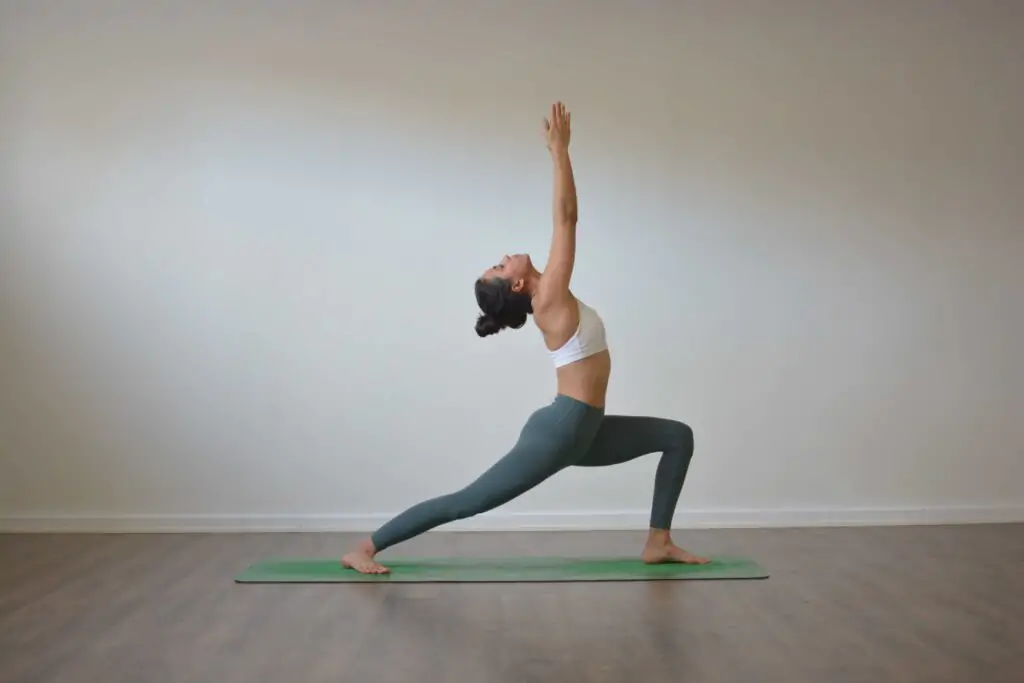
The warrior pose, known as Virabhadrasana in Sanskrit, stands as one of the most powerful and transformative postures in yoga practice. This foundational standing pose combines physical strength with mental fortitude, creating a practice that challenges both body and mind. Whether you’re new to yoga or looking to refine your practice, understanding the warrior pose will deepen your connection to this ancient discipline.
Named after the fierce warrior Virabhadra from Hindu mythology, these poses embody courage, determination, and inner strength. The term Virabhadrasana comes from “Vira” (hero or warrior) and “Bhadra” (Yoga Anatomy friend or auspicious), representing the spiritual warrior within each practitioner who fights against ego, ignorance, and self-doubt.
In modern yoga classes, warrior poses appear frequently in both flowing Vinyasa sequences and static Hatha practices. They serve as building blocks for more advanced postures and offer practitioners a chance to cultivate stability, focus, and confidence on the mat.
Introduction to the Warrior Pose
The warrior pose, known as Virabhadrasana in Sanskrit, stands as one of the most powerful and transformative postures in yoga practice. This foundational standing pose combines physical strength with mental fortitude, creating a practice that challenges both body and mind. Whether you’re new to yoga or looking to refine your practice, understanding the warrior pose will deepen your connection to this ancient discipline.
Named after the fierce warrior Virabhadra from Hindu mythology, these poses embody courage, determination, and inner strength. The term Virabhadrasana comes from “Vira” (hero or warrior) and “Bhadra” (friend or auspicious), representing the spiritual warrior within each practitioner who fights against ego, ignorance, and self-doubt.
In modern yoga classes, warrior poses appear frequently in both flowing Vinyasa sequences and static Hatha practices. They serve as building blocks for more advanced postures and offer practitioners a chance to cultivate stability, focus, and confidence on the mat.
The Mythology Behind Virabhadrasana
Understanding the story behind the warrior pose adds depth and meaning to your practice. According to Hindu mythology, Lord Shiva’s wife Sati attended her father Daksha’s ceremonial gathering, where Daksha publicly insulted Shiva. Overwhelmed by humiliation and anger, Sati entered a deep meditative state and immolated herself through her inner yogic fire.
When Shiva learned of his beloved’s death, grief and rage consumed him. From a lock of his matted hair, he created Virabhadra—a fierce warrior with a thousand arms, three burning eyes, and a body dark as storm clouds. Shiva commanded this mighty warrior to avenge Sati’s death.
The three primary warrior poses represent Virabhadra’s arrival at the ceremony. Warrior I depicts him rising powerfully from the earth with his sword held high. Warrior II shows him standing ready, surveying the scene with focused intensity. Warrior III captures the decisive moment when he swiftly beheads Daksha.
However, the story doesn’t end with destruction. Shiva’s anger transformed into compassion, and he restored Daksha to life with a goat’s head. This tale reminds us that warrior poses aren’t about aggression but about channeling our inner strength to overcome personal obstacles with grace and wisdom.
Benefits of Practicing Warrior Poses
Incorporating warrior poses into your regular practice delivers remarkable physical and mental benefits:
Physical Benefits
- Builds Lower Body Strength – Warrior poses engage and strengthen the quadriceps, hamstrings, glutes, and calves. Research has shown that both Warrior I and II effectively activate leg muscles, potentially offering therapeutic benefits for conditions like runner’s knee.
- Enhances Hip Flexibility – The deep lunging action opens tight hip flexors and stretches the inner thighs, counteracting the effects of prolonged sitting that many people experience in modern life.
- Improves Core Stability – Maintaining proper alignment in warrior poses requires continuous core engagement, building abdominal and back strength over time.
- Strengthens Upper Body – The arm positions in various warrior poses tone the shoulders, arms, and upper back muscles while improving posture.
- Increases Stamina and Endurance – Holding these challenging positions trains your muscles to work efficiently for extended periods, building both physical and mental endurance.
Mental and Energetic Benefits
- Develops Focus and Concentration – The steady gaze (drishti) and sustained holds required in warrior poses sharpen mental clarity and present-moment awareness.
- Cultivates Confidence – Standing firm in these strong poses builds self-assurance that extends beyond the yoga mat into daily life.
- Balances Energy Centers – Warrior poses activate the Root Chakra (Muladhara), grounding practitioners and creating feelings of security and stability.
- Relieves Stress – The combination of deep breathing and physical challenge activates the parasympathetic nervous system, promoting relaxation and stress relief.
- Improves Balance and Coordination – These poses enhance proprioception—your body’s awareness of its position in space—which is essential for movement coordination and injury prevention.
Understanding Yoga Anatomy in Warrior Poses
To practice warrior poses safely and effectively, it’s helpful to understand the anatomical principles at work. The foundation of Yoga Anatomy teaches us how different muscle groups interact during asana practice.
In warrior poses, you create a dynamic balance between opposing forces. Your front leg bends deeply while your back leg remains strong and straight. Your upper body lifts skyward while your lower body roots downward. This interplay of expansion and grounding mirrors one of the Eight Limbs of yoga—asana (physical posture)—which aims to create steadiness and ease simultaneously.
The hip flexors, particularly the psoas muscle, undergo significant stretching in the back leg, while the quadriceps of the front leg work hard to maintain the bend. Your gluteal muscles stabilize the pelvis, and your core muscles prevent excessive arching or rounding of the spine. Understanding these mechanisms helps you practice with greater awareness and safety.
The Five Primary Warrior Poses: Step-by-Step Guide
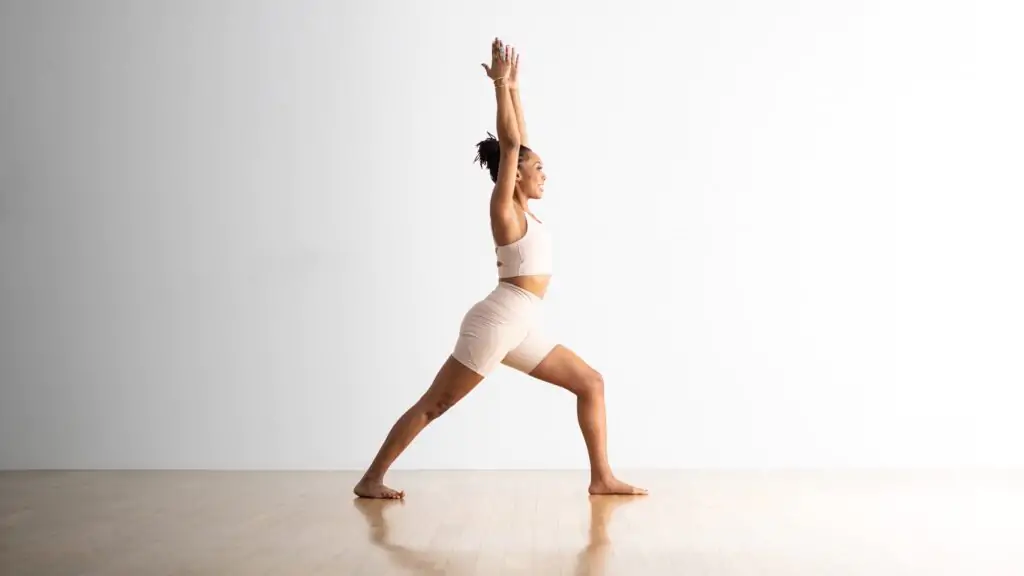
Warrior I (Virabhadrasana I)
Warrior I creates a powerful upward energy while maintaining a strong foundation.
Step-by-Step Instructions:
- Begin standing with your feet hip-width apart, then step your left foot back approximately three to four feet.
- Angle your back (left) foot at 45-60 degrees, pointing your front (right) foot straight ahead. Ensure your right heel aligns with your left heel or arch.
- Square your hips forward as much as possible, turning your entire torso to face the front of your mat.
- On an inhalation, raise both arms overhead, keeping them shoulder-width apart or bringing palms together.
- As you exhale, bend your front knee until it’s directly over your ankle, aiming to bring your thigh parallel to the floor.
- Ground firmly through your back heel, keeping your back leg completely straight and strong.
- Draw your shoulder blades down your back, lengthen through your spine, and gaze forward or up at your thumbs.
- Hold for five to ten breaths, then repeat on the opposite side.
Key Alignment Points:
- Keep your front knee tracking over your ankle, never extending past it
- Press firmly through the outer edge of your back foot
- Engage your core to support your lower back
- Maintain length in your spine rather than collapsing forward
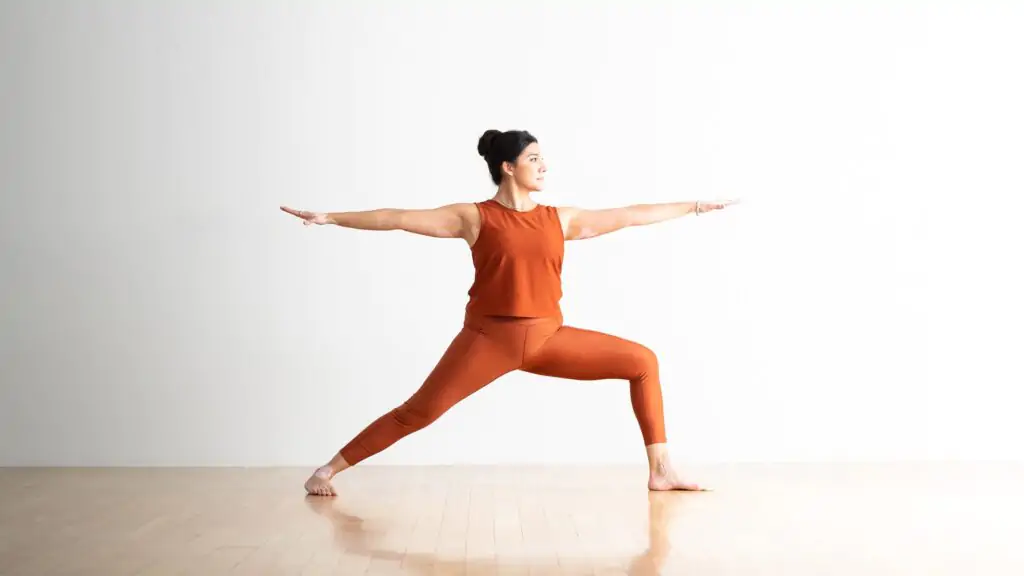
Warrior II (Virabhadrasana II)
Warrior II opens the hips and creates a strong, steady stance with arms extended horizontally.
Step-by-Step Instructions:
- Stand with your feet wide apart, approximately in line with your extended arms when spread to the sides.
- Turn your right foot out 90 degrees and your left foot slightly inward. Align your right heel with the arch of your left foot.
- Extend your arms parallel to the ground at shoulder height, palms facing down.
- Keep your torso centered between both legs, with your hips open to the side rather than squared forward.
- Exhale and bend your front knee to 90 degrees, ensuring it stays directly above your ankle.
- Turn your head to gaze over your front middle finger, maintaining a soft but focused drishti.
- Keep your shoulders relaxed and stacked over your hips, with your arms extending equally in both directions.
- Hold for five to ten breaths, feeling the warrior’s determination and focus, then switch sides.
Key Alignment Points:
- Keep both hips level and open to the side of your mat
- Ensure your front shin remains perpendicular to the floor
- Press down through the outer edge of your back foot
- Distribute your weight evenly between both legs
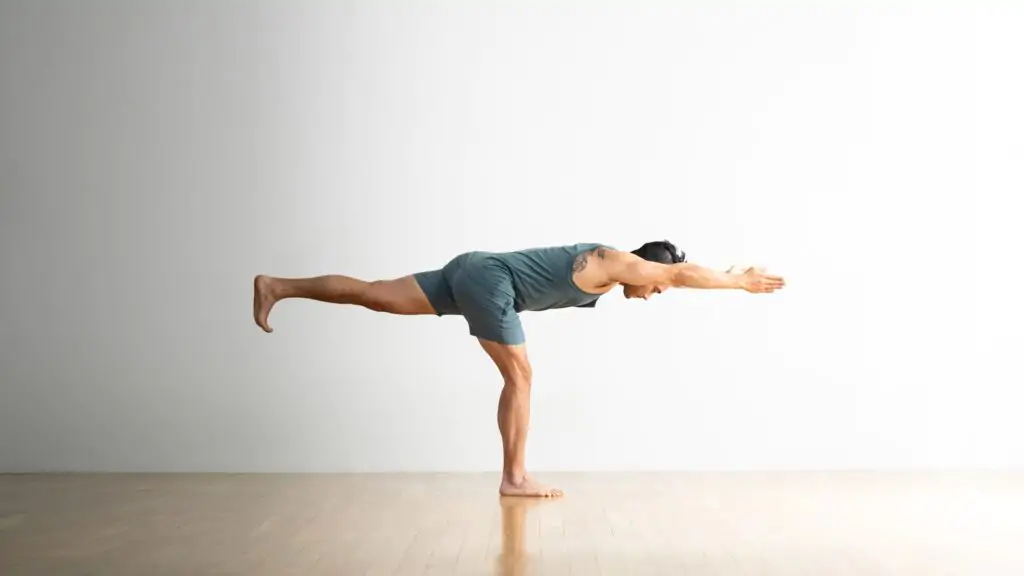
Warrior III (Virabhadrasana III)
Warrior III challenges your balance and builds incredible core strength as you balance on one leg.
Step-by-Step Instructions:
- Begin in a standing position, then step your left foot back about two feet.
- Shift your weight onto your right foot, ensuring it’s firmly planted and engaged.
- Bring your palms together overhead, interlocking fingers and pointing index fingers upward, or extend arms forward parallel to each other.
- As you exhale, hinge forward from your hips while simultaneously lifting your back leg.
- Continue until your torso and back leg are parallel to the floor, creating one long line from fingertips to back heel.
- Keep your hips level and squared toward the floor, engaging your core strongly to maintain balance.
- Gaze down at the floor or slightly forward to keep your neck in neutral alignment.
- Hold for several breaths, then carefully lower your back leg and return to standing before repeating on the other side.
Key Alignment Points:
- Flex your lifted foot and engage the entire leg
- Keep your hips level rather than opening the lifted hip skyward
- Extend energy in opposite directions—reaching forward and back
- Maintain a neutral spine rather than rounding or arching
This pose shares similar balance challenges with other Balance Poses in yoga and helps prepare practitioners for more advanced inversions like Headstand.
Humble Warrior (Baddha Virabhadrasana I)
Humble Warrior combines strength with surrender, creating an introspective variation of Warrior I.
Step-by-Step Instructions:
- Begin in Warrior I position with your right leg forward and arms raised overhead.
- Clasp your hands together behind your back, interlacing your fingers.
- Roll your shoulders back and lift your chest, opening across your collarbones.
- On an exhale, hinge forward from your hips, bringing your torso toward your front thigh.
- Allow your clasped hands to lift away from your back, drawing your arms overhead as you fold.
- Guide your nose toward your shin or ankle, keeping length in your spine.
- Continue to ground through both feet, especially your back heel.
- Hold for five to eight breaths, then slowly rise back up on an inhale and repeat on the second side.
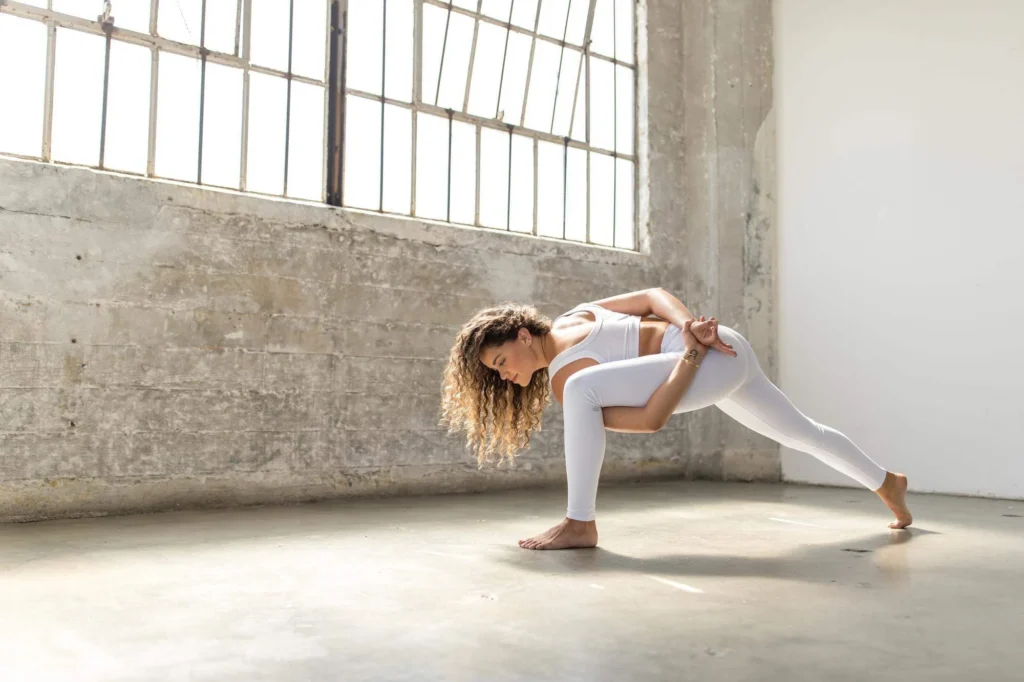
Key Alignment Points:
- Maintain a long spine rather than rounding your back
- Keep your front knee bent and stable throughout
- Open your shoulders as your hands lift overhead
- Balance your weight between both feet
Reverse Warrior (Viparita Virabhadrasana II)
Reverse Warrior creates a graceful backbend while maintaining the strong foundation of Warrior II.
Step-by-Step Instructions:
- Begin in Warrior II with your right leg forward.
- On an inhale, flip your front palm to face the ceiling.
- Reach your right arm up and back, creating a gentle arc with your body.
- Allow your left hand to gently rest on your back leg for support.
- Keep your front knee bent and stable as you arch backward.
- Gaze up toward your raised hand or straight ahead if your neck feels strained.
- Continue to ground through both feet, especially the outer edge of your back foot.
- Hold for three to five breaths, then return to Warrior II and switch sides.
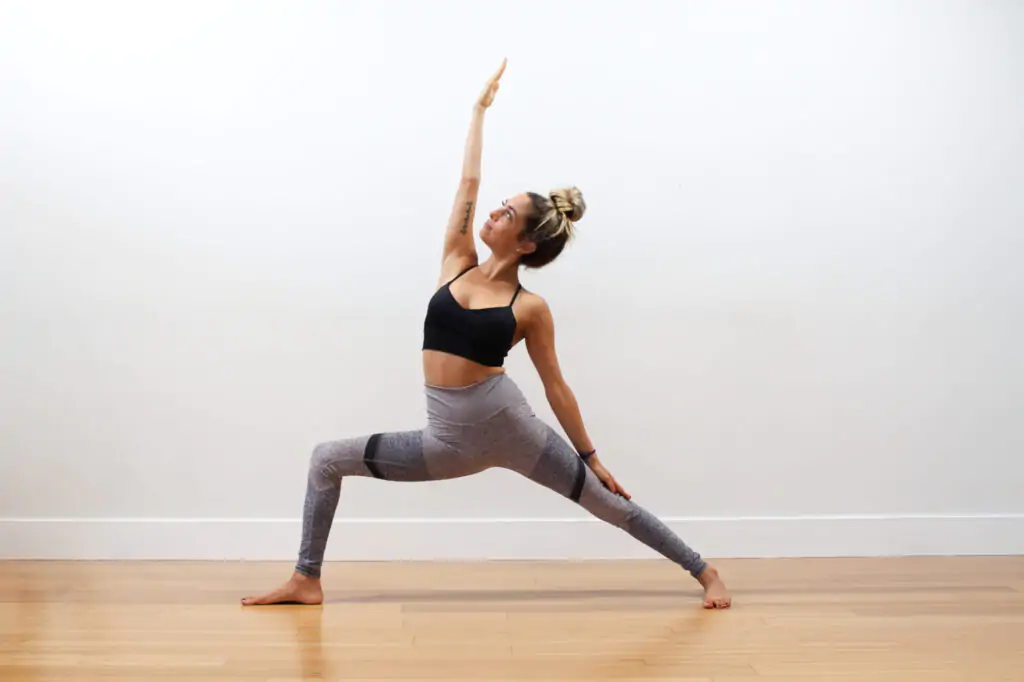
Key Alignment Points:
- Keep your front knee tracking over your ankle
- Maintain open hips facing the side of your mat
- Create a smooth arc through your spine rather than hinging at your waist
- Keep your chest lifted and shoulders relaxed
Common Mistakes and How to Correct Them
Front Knee Extending Past Ankle
The Problem: Allowing your front knee to move beyond your toes puts excessive stress on the knee joint.
The Solution: Widen your stance by stepping your back foot further away. Focus on pressing firmly through your back foot to prevent your front knee from drifting forward.
Collapsing Through the Back Foot
The Problem: Lifting your back heel or rolling onto the inner edge of your back foot destabilizes the pose.
The Solution: Actively press through the outer edge of your back foot, especially the outer heel. Imagine screwing your back foot into the mat.
Lifting Shoulders Toward Ears
The Problem: Tension in the shoulders and neck creates discomfort and limits breathing.
The Solution: Consciously draw your shoulder blades down your back. Create space between your shoulders and ears, allowing your neck to remain long.
Misaligned Hips in Warrior I
The Problem: Many practitioners struggle to square their hips forward in Warrior I.
The Solution: Rather than forcing your hips completely square, which can strain your back knee, allow them to remain slightly open. Alternatively, create a wider lateral stance (more distance between your heels) for easier hip alignment.
Leaning Too Far Forward or Back
The Problem: Losing your center of gravity by tilting excessively in any direction.
The Solution: Engage your core muscles to maintain an upright torso. Imagine a string pulling the crown of your head toward the ceiling while your tailbone grounds down.
FAQ: Common Questions About Warrior Poses
Beginners should aim for 5-8 breaths (approximately 30-60 seconds) in each pose. As you build strength and endurance, gradually increase to 10-15 breaths or longer. Listen to your body and rest when needed.
While warrior poses aren’t primarily cardio exercises, they build lean muscle mass and boost metabolism. When practiced as part of a dynamic flow sequence, they can contribute to calorie burning and weight management as part of an overall healthy lifestyle.
The main differences are hip and torso orientation. In Warrior I, your hips face forward and arms reach overhead, creating an upward energy. In Warrior II, your hips open to the side and arms extend horizontally, creating a grounded, expansive feeling.
Warrior I and II can be practiced during pregnancy with modifications. Use wall support for balance, avoid deep lunges, and don’t hold poses for extended periods. Always consult your healthcare provider and work with a prenatal yoga instructor.
Shaking is completely normal and indicates your muscles are working hard to build strength. It’s your body’s natural response to challenge. Continue practicing, rest when needed, and your strength will improve over time.
Conclusion: Embrace Your Inner Warrior
The yoga warrior pose offers far more than physical benefits. These powerful postures teach us to stand firm in the face of life’s challenges, to find strength in vulnerability, and to balance fierce determination with grace and compassion. Whether you’re holding Warrior I with arms raised high or testing your balance in Warrior III, you’re connecting to an ancient tradition that honors both the warrior’s courage and the sage’s wisdom.
As you continue your yoga journey, let the warrior poses remind you of your own inner strength. Each time you step onto your mat and sink into a lunge, you’re training not just your body but your mind and spirit to face whatever lies ahead with confidence and poise.
Remember that mastery doesn’t come overnight. Be patient with yourself, celebrate small victories, and honor where you are in your practice today. The true warrior knows that the greatest battle is often the one within—against doubt, fear, and self-limitation.
Ready to deepen your practice? Explore our related articles on the Root Chakra for grounding techniques, discover the philosophy behind the Eight Limbs of yoga, or challenge yourself with advanced Balance Poses and inversions like Headstand. Share this guide with fellow yogis and let us know in the comments which warrior pose speaks to your spirit!