If you’ve ever felt like your yoga practice was pushing you harder and harder without actually letting you recover, you’re not alone. Modern life already runs at a relentless pace — and a lot of popular yoga styles match that energy perfectly. What many practitioners eventually discover is that the missing piece isn’t more intensity. It’s the art of slowing down completely. That’s precisely where Yin Yoga enters the picture.
This guide is a thorough introduction to Yin Yoga for anyone curious about the practice — whether you’ve never stepped on a mat or you already hold a regular yoga routine and want to understand what this quieter, deeper style actually involves. We’ll cover what it is, where it came from, what it does for your body and mind, how it compares to other styles, and how to get started today.
What Is Yin Yoga?
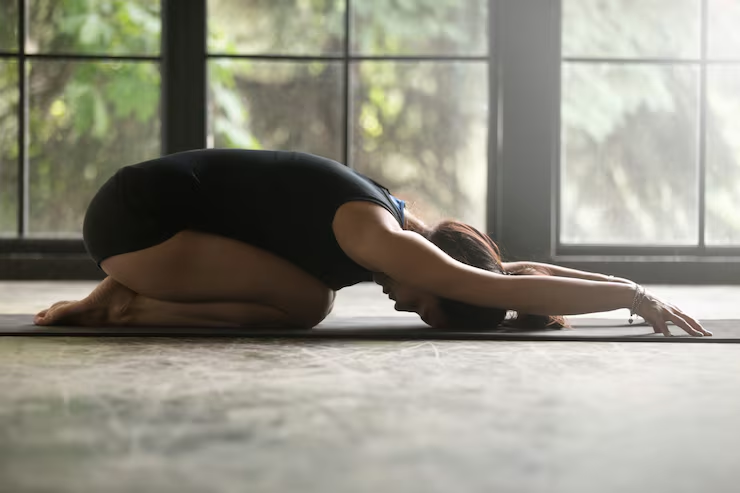
Yin Yoga is a slow, meditative style of yoga in which postures — mostly seated or lying on the floor — are held passively for extended periods of time, typically between two and ten minutes. Unlike more dynamic styles such as Vinyasa or Ashtanga, which focus on engaging and strengthening the muscles, Yin Yoga deliberately targets the body’s deeper, denser tissues: the fascia, ligaments, joint capsules, tendons, and cartilage.
The fundamental principle that distinguishes Yin from most other yoga styles is this: muscles are elastic — they contract and release relatively quickly. Connective tissues are plastic — they respond slowly, and they need sustained, gentle pressure over time to lengthen and remodel. Yin Yoga is designed precisely for that slower process.
In practice, this means students settle into a shape, use props to support themselves as needed, relax the surrounding muscles intentionally, and simply stay — breathing, observing, and allowing the deeper tissues to respond at their own pace.
A Brief History of Yin Yoga
The roots of Yin Yoga stretch back to both ancient Indian and Chinese traditions. Long-held seated postures appear in classical Hatha Yoga texts, and Taoist teachers in China have used still, passive postures for thousands of years to cultivate internal energy and prepare students for meditation.
In its modern form, Yin Yoga was pioneered by martial arts expert and Taoist yoga teacher Paulie Zink in the late 1970s. Zink’s approach emphasized balancing yin and yang energies through both stillness and animalistic movement forms drawn from Taoist practice.
Teacher Paul Grilley later studied Zink’s yin postures, combined them with insights from anatomy and the meridian research of Japanese scientist Dr. Hiroshi Motoyama, and began teaching a more anatomically grounded version of the practice. One of Grilley’s students, Sarah Powers, further refined the approach by weaving in Buddhist psychology and a systematic focus on the body’s meridian pathways. Together, these three teachers shaped the Yin Yoga that students worldwide practice today.
Yin & Yang: The Philosophy Behind the Practice
To understand Yin Yoga, it helps to understand the yin-yang concept at its core. Yin and yang are complementary forces rather than opposites — each one contains the seed of the other, and genuine wellbeing requires both in balance.
| Yin Qualities | Yang Qualities |
|---|---|
| Passive, still, receptive | Active, dynamic, forceful |
| Cool, yielding | Warm, assertive |
| Connective tissue (fascia, ligaments) | Muscle tissue |
| Long, slow holds | Brief, energetic movements |
| Introspection, meditation | Strength, endurance |
In the context of yoga, yin tissues are the denser, less elastic structures of the body — the connective tissues — while yang tissues are the muscles and blood, which are more fluid and responsive. Most exercise, including the majority of yoga styles, works the yang tissues. Yin Yoga is designed to nourish what is almost universally neglected.
What Yin Yoga Does for Your Body
Connective Tissue & Joint Health
When poses are held passively for several minutes, a process of gentle, sustained compression and traction takes place in the joints and surrounding tissues. This stimulates the production of hyaluronic acid — a molecule critical for joint lubrication and cellular hydration. Over time, this steady stress encourages connective tissue to become more supple and resilient, improving range of motion in ways that shorter stretching cannot match.
Hip Openers are among the most celebrated postures in Yin Yoga for exactly this reason. The hips hold some of the body’s densest connective tissue, and long-held hip opening shapes — like Butterfly, Sleeping Swan, or Frog — allow a depth of release that muscles alone don’t hold.
Fascia — The Tissue Yin Yoga is Named For
Fascia is a continuous web of connective tissue that wraps around every muscle, bone, nerve, and organ in your body. When healthy, it is supple and gliding; when dehydrated or chronically stressed, it becomes stiff and restrictive. Yin Yoga, with its long, passive holds, gently stresses and stretches the fascial network in a way that encourages it to rehydrate and realign over time.
Nervous System Regulation
Holding still for several minutes — especially when mild discomfort is present — trains the nervous system to shift out of the fight-or-flight response and into a more parasympathetic, rest-and-digest state. Regular Yin practitioners often report lower baseline stress levels, improved sleep, and a greater capacity to stay calm under pressure.
Yin Yoga and the Body’s Energy System
Beyond the physical, Yin Yoga draws deeply from Traditional Chinese Medicine (TCM) and its understanding of the body’s meridian system. Meridians are the invisible channels through which life-force energy — called Qi (pronounced “chee”) — flows throughout the body, connecting organs, tissues, and emotional states.
When Qi flows freely, the body and mind feel vital and balanced. When it becomes blocked or stagnant, physical discomfort and emotional imbalance can follow. By holding Yin postures for extended periods, practitioners gently compress and stretch the connective tissues along these meridian pathways, encouraging the flow of Qi in a way that parallels the intention behind acupuncture — but using posture and breath rather than needles.
Key Meridians Targeted in Yin Yoga
- Kidney & Bladder meridians — stimulated by forward folds and hip openers; associated with fear, will, and vitality
- Liver & Gallbladder meridians — targeted by hip and inner-groin poses; linked to anger, vision, and decision-making
- Spleen & Stomach meridians — activated through twists and the front of the body; connected to worry and nourishment
- Lung & Large Intestine meridians — worked through chest and shoulder shapes; tied to grief and release
You don’t need to be an expert in TCM to benefit from Yin Yoga. Many practitioners simply notice that certain postures evoke unexpected emotional responses — a wave of calm, or a sudden release of long-held tension — and this is often understood as movement through these energetic pathways.
The Three Core Principles of Yin Yoga Practice
Regardless of which posture you’re in, these three principles guide every Yin Yoga session:
- Come to your appropriate edge. This is not about maximum stretch. It’s about finding a place of meaningful sensation — noticeable but never sharp or painful. The edge is different for every body.
- Resolve to be still. Once you’ve settled into the shape, stop adjusting. Stillness is the mechanism; it allows the connective tissue time to respond. Fidgeting interrupts the process.
- Hold for time. Beginners aim for one to three minutes per pose. Experienced practitioners often stay for three to five minutes or longer. The duration is what distinguishes Yin from a regular stretch.
Yin Yoga vs. Restorative Yoga: Understanding the Difference
These two styles are often confused because both are slow, floor-based, and deeply calming. However, their intentions are quite different. Exploring Yin vs Restorative in depth is worthwhile — but here is the essential distinction:
| Feature | Yin Yoga | Restorative Yoga |
|---|---|---|
| Primary target | Connective tissue (stress applied) | Nervous system (zero stress) |
| Use of props | Optional support | Full body support (essential) |
| Sensation in pose | Mild, intentional discomfort | Complete comfort and ease |
| Goal | Tissue remodelling, energy flow | Deep nervous system rest |
| Hold duration | 2–10 minutes | 5–20 minutes |
Both practices are valuable, and many experienced students weave both into their weekly routine. If you’re exhausted, depleted, or recovering from illness, Restorative Yoga may be the more appropriate choice. If you’re looking to improve flexibility, joint health, and energy flow, Yin is your practice.
Common Yin Yoga Poses for Beginners
A typical Yin class involves around a dozen poses at most — far fewer than yang-style classes. Quality and duration matter far more than variety. Yin Sequences are thoughtfully built around a central theme, such as the spine, the hips, or a particular meridian pathway. Here are some of the most commonly practised beginner-friendly postures:
- Butterfly — seated, soles of feet together, folding gently forward; targets inner groins, hips, and lower spine
- Dragon / Low Lunge — deep hip flexor stretch; one of the most powerful Hip Openers in the practice
- Caterpillar — a yin forward fold with rounded spine; releases the entire back line of the body
- Sphinx / Seal — gentle backbend targeting the lumbar spine and sacrum
- Sleeping Swan (Yin Pigeon) — deep external hip rotation; intense but highly effective for hip and glute release
- Reclined Twist (Supine) — releases the thoracic spine and nourishes digestive organs
- Shoelace — seated hip opener that targets the outer hip and iliotibial band
In yin tradition, poses often carry different names from their yang counterparts — a deliberate reminder that the intention is fundamentally different, even when two shapes look similar on the surface.
How to Start Your Yin Yoga Practice
When and Where to Practice
Yin Yoga works best when the muscles are cool and relatively relaxed — early morning before activity, or in the evening after the day’s yang energy has wound down. Avoid practicing immediately after intense physical exercise, when warmed muscles may mask the sensation in the deeper tissues you’re trying to target.
What You’ll Need
Minimal equipment is required. A yoga mat, two blocks, a bolster or firm pillow, and one or two blankets cover the majority of pose variations. Loose, comfortable clothing that allows you to move freely is all you need to wear.
Starting Duration
If you’re new, begin with one to two minutes per pose. This is genuinely enough to begin stimulating connective tissue. As the weeks pass and your nervous system becomes more familiar with stillness, extend holds gradually toward three to five minutes.
Breath as an Anchor
In Yin Yoga, the breath is both a tool and a guide. A slow, deliberate exhalation signals the nervous system to soften. Some practitioners visualize breath moving along the spine — inhaling into areas of tension, exhaling to release. The breath keeps the mind from wandering and deepens the physiological response to each pose.
Practical Tips for Your First Yin Session
- Set a timer — this removes the temptation to keep checking the clock
- Use props generously; comfort allows you to stay still longer
- Expect mental resistance — stillness is harder than movement at first
- Move slowly into and out of each pose; the transitions matter
- Rest for 30–60 seconds in a neutral position between postures (this is called a rebound)
- Practice 2–3 times per week for lasting results
Who Is Yin Yoga For?
Yin Yoga is genuinely one of the most inclusive yoga styles available. Because postures are passive and props are encouraged, the practice adapts to nearly every body type and fitness level. You’ll find Yin Yoga practiced by:
- Complete beginners with no prior yoga experience
- Athletes and runners who need to counterbalance high-impact training with deep tissue recovery
- Office workers whose hips, lower backs, and shoulders suffer from prolonged sitting
- Experienced meditators using Yin to prepare the body for long sits
- Seniors and those with limited mobility, using props to access every posture safely
- Yang yoga practitioners seeking a complementary, balancing practice
The only caveat is that if you have recent injuries, hypermobility, or are pregnant, consult a healthcare professional before beginning, and inform your teacher so they can offer appropriate modifications.
Taking Yin Yoga Further: Teaching and Deepening Your Practice
Once Yin Yoga has taken root in your life, many practitioners find themselves wanting to share it. Teaching Yin Yoga is a deeply rewarding path that requires a solid foundation in anatomy, TCM meridian theory, the art of guiding stillness, and the ability to offer skilled modifications for diverse bodies. Formal teacher training programs now exist worldwide and increasingly online, covering these areas in depth for those ready to take that step.
Even if teaching isn’t your goal, deepening your personal practice through study — reading Bernie Clark’s foundational texts, exploring Yin Sequences organised around seasonal themes or specific meridians, or attending immersions and workshops — enriches every session you spend on the mat.
Conclusion: Why Yin Yoga Matters Right Now
In an era that glorifies busyness, speed, and constant output, Yin Yoga offers something genuinely radical: the invitation to stop, settle, and stay. Not because nothing else matters, but because the body’s deeper layers — the connective tissues, the energy channels, the quiet nervous system — cannot be reached any other way.
Whether you’re drawn to Yin for the physical benefits of improved flexibility and joint health, the emotional release that long holds can produce, or the meditative stillness that the practice cultivates, you’ll find that it rewards patience like few other disciplines do. The changes happen slowly — and they last.
Start simple. One session a week. Three poses. Two minutes each. And pay attention to what your body tells you when you finally give it permission to be still.
Frequently Asked Questions
Yin Yoga is excellent for improving joint flexibility, releasing deep connective tissue tension, calming the nervous system, and supporting emotional balance through its long-held, meditative postures. It is particularly beneficial for people who are tight in the hips, lower back, or inner thighs.
Beginners typically hold poses for 1–3 minutes. More experienced practitioners often stay in postures for 3–5 minutes or longer to access deeper layers of connective tissue and fully engage the meridian pathways.
Absolutely. Yin Yoga is one of the most beginner-friendly yoga styles available. It requires no prior flexibility, strength, or yoga experience. Props like blocks, bolsters, and blankets make every posture accessible regardless of body type or fitness level.
Yin Yoga intentionally applies mild stress to connective tissue to create gradual change over time. Restorative Yoga uses props to fully support the body with zero stress — its goal is complete nervous system relaxation with no tissue challenge. Both are valuable and serve different purposes.
Practicing Yin Yoga 2–3 times per week is a healthy and sustainable frequency for most people. Even a single weekly session delivers meaningful benefits over time, particularly when it complements a more active movement practice.