Have you ever wondered why yogis around the world begin their practice by greeting the sun? Surya Namaskar, commonly known as Sun Salutations, is far more than just a warm-up routine. This ancient yoga sequence represents a complete mind-body practice that has transformed millions of lives across centuries.
In Sanskrit, “Surya” means sun, while “Namaskar” translates to salut Ujjayi Breathation or greeting. Together, they form a powerful practice that honors the sun as the source of all life and energy on Earth. Whether you’re a complete beginner or an experienced practitioner, this comprehensive Surya Namaskar guide will help you understand, practice, and benefit from this transformative sequence.
The beauty of Sun Salutations lies in their accessibility. You don’t need expensive equipment, a large space, or years of experience to begin. Just a yoga mat, an open mind, and a willingness to connect with your breath are enough to start your journey.
The Rich History and Spiritual Significance
Ancient Origins
The roots of Surya Namaskar stretch back thousands of years to ancient India, where sun worship formed an integral part of daily spiritual practice. The Vedic texts mention the sun deity, Surya, as a symbol of consciousness, vitality, and divine wisdom. Early yogis recognized that the sun’s energy directly influences our physical and mental well-being.
While the exact origins remain debated among yoga scholars, many believe that Surya Namaskar evolved from ancient Hindu rituals of sun worship combined with prostrations performed by devotees. The practice gained widespread popularity in the early 20th century, particularly through the teachings of yoga masters who recognized its profound benefits for modern practitioners.
Connection to Hatha Yoga
Surya Namaskar holds a special place within Hatha Yoga, one of the most widely practiced yoga traditions. Hatha Yoga focuses on physical postures (asanas) and breath control (pranayama) to prepare the body and mind for deeper meditation practices. Sun Salutations perfectly embody these principles by combining dynamic movement with conscious breathing.
The sequence activates the solar plexus chakra (Manipura), which governs personal power, confidence, and transformation. By practicing Surya Namaskar regularly, you’re not just exercising your body—you’re awakening dormant energy and aligning yourself with the natural rhythms of the universe.
The 12 Sacred Poses: A Step-by-Step Breakdown
Each round of Surya Namaskar consists of 12 distinct poses performed in a flowing sequence. These positions work together to stretch, strengthen, and energize every part of your body. Let’s explore each pose in detail:
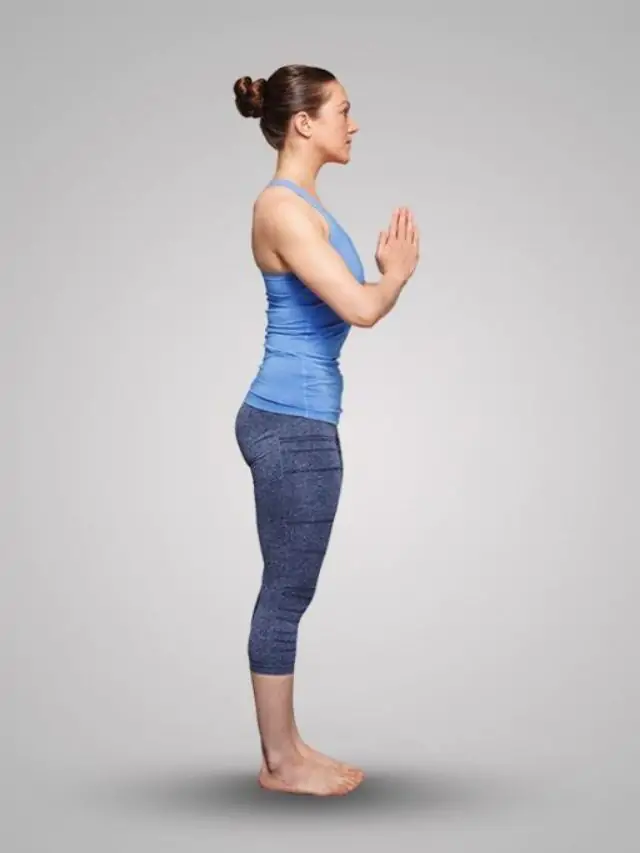
1. Pranamasana (Prayer Pose)
How to perform:
- Stand tall at the front of your mat with feet together
- Bring your palms together at your heart center
- Close your eyes and take a moment to set your intention
- Relax your shoulders and lengthen through your spine
Benefits: Establishes mental focus, promotes calmness, and centers your awareness before beginning the sequence.
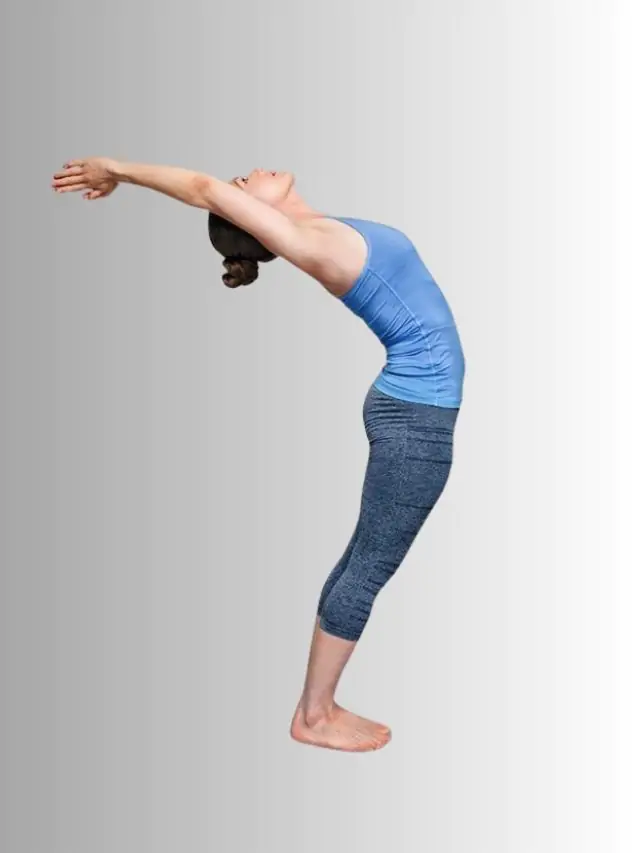
2. Hastauttanasana (Raised Arms Pose)
How to perform:
- Inhale deeply and raise both arms overhead
- Keep your biceps close to your ears
- Gently arch backward, extending through your upper back
- Push your pelvis slightly forward while maintaining length in your spine
Benefits: Opens the chest, stretches the abdomen, improves posture, and energizes the entire body.
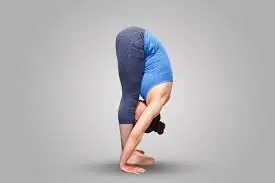
3. Hastapadasana (Standing Forward Bend)
How to perform:
- Exhale and fold forward from your hips
- Keep your spine elongated as you descend
- Place your hands beside or behind your feet
- Bend your knees slightly if needed to protect your lower back
Benefits: Stretches the hamstrings, calves, and spine while promoting blood flow to the brain and calming the nervous system.
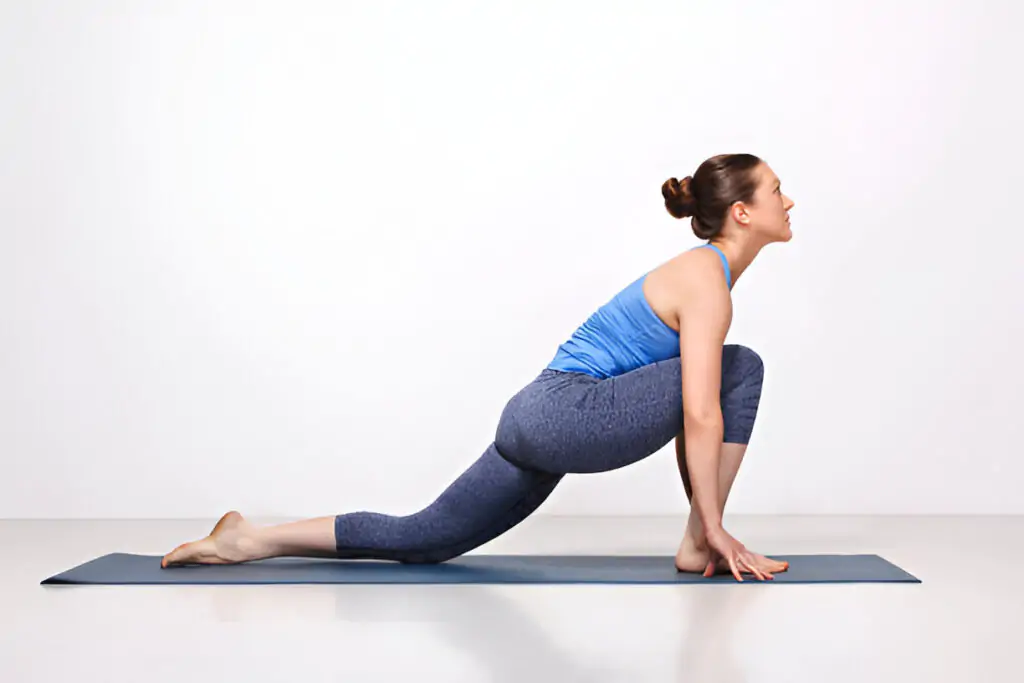
4. Ashwa Sanchalanasana (Equestrian Pose)
How to perform:
- Inhale and step your right leg back into a lunge
- Lower your right knee to the mat
- Keep your left knee directly over your left ankle
- Lift your chest and gaze forward
- Push your hips down and forward to deepen the stretch
Benefits: Stretches hip flexors, strengthens legs, improves balance, and opens the chest.
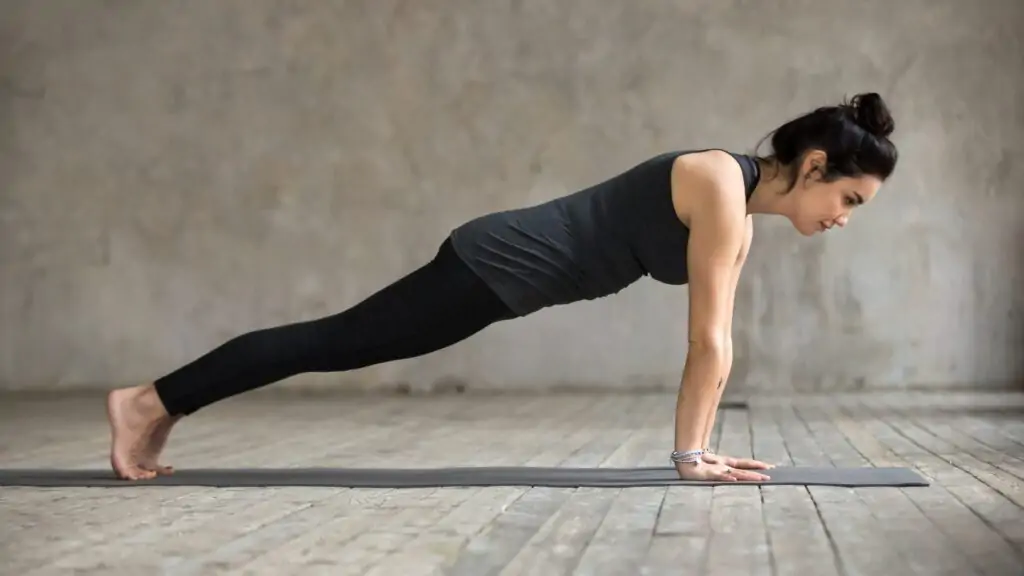
5. Dandasana (Plank Pose)
How to perform:
- Hold your breath and step your left leg back
- Align your body in a straight line from head to heels
- Engage your core muscles
- Keep your hands directly under your shoulders
- Maintain a neutral spine without sagging or lifting your hips
Benefits: Builds core strength, tones arms and shoulders, improves overall stability and endurance.
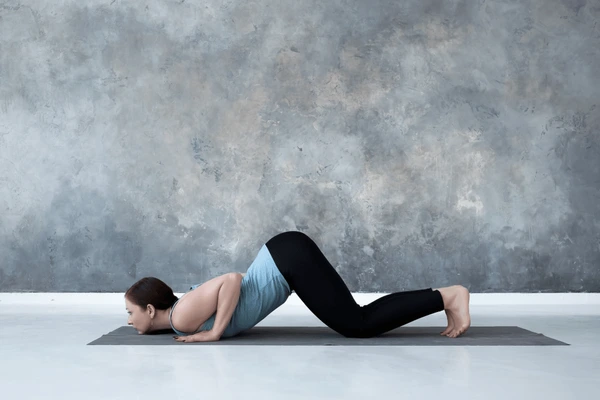
6. Ashtanga Namaskara (Eight-Limbed Pose)
How to perform:
- Exhale and lower your knees, chest, and chin to the floor
- Keep your hips elevated
- Only eight body parts touch the floor: two feet, two knees, two hands, chest, and chin
- Slide forward slightly to position yourself properly
Benefits: Strengthens arms and chest, increases spine flexibility, and prepares the body for backbends.
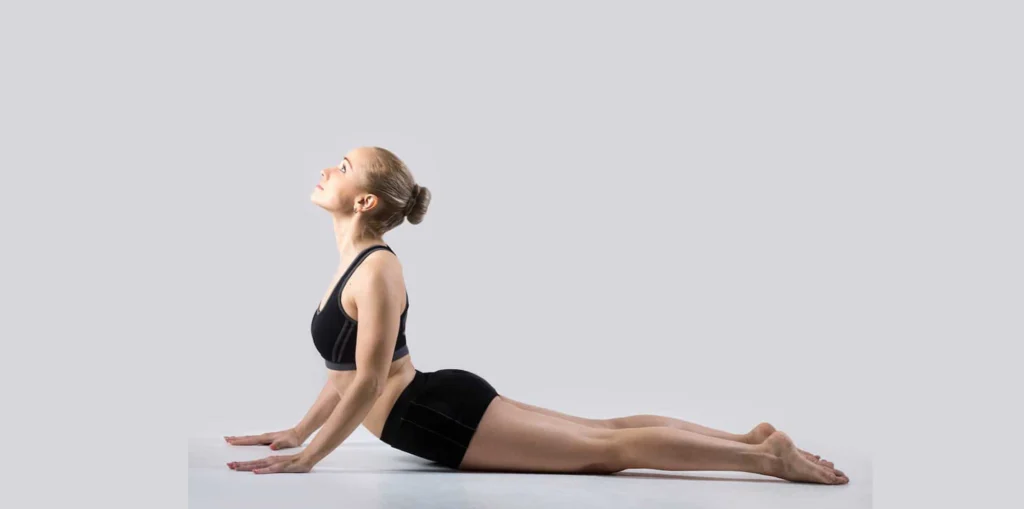
7. Bhujangasana (Cobra Pose)
How to perform:
- Inhale and slide forward, lifting your chest
- Straighten your arms partially while keeping elbows slightly bent
- Pull your shoulders back and down
- Engage your back muscles rather than relying solely on arm strength
- Gaze upward without straining your neck
Benefits: Strengthens the spine, opens the heart center, improves posture, stimulates abdominal organs, and enhances flexibility. This powerful backbend energizes the entire body.
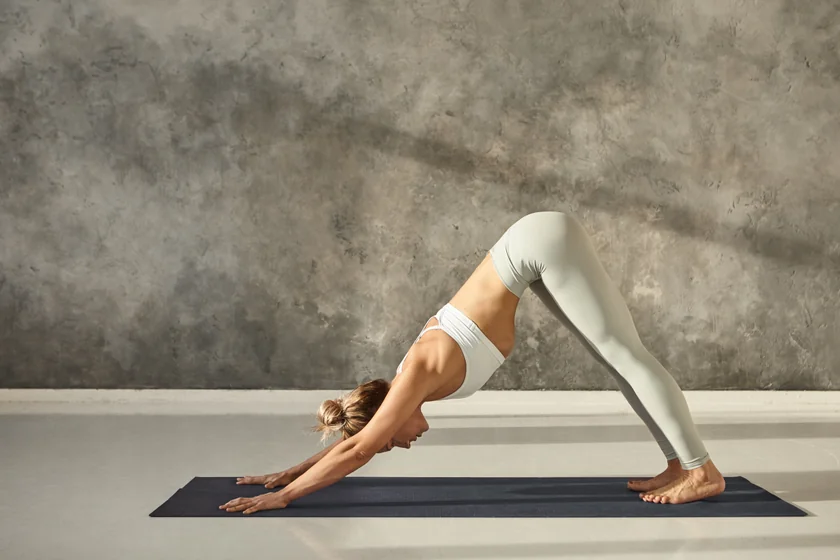
8. Adho Mukha Svanasana (Downward-Facing Dog)
How to perform:
- Exhale and lift your hips toward the ceiling
- Form an inverted V-shape with your body
- Press your hands firmly into the mat
- Lengthen through your spine
- Work toward bringing your heels down to the floor
- Relax your head between your arms
Benefits: Stretches hamstrings, calves, and shoulders while strengthening arms and legs. This pose also improves circulation, energizes the body, and calms the mind.
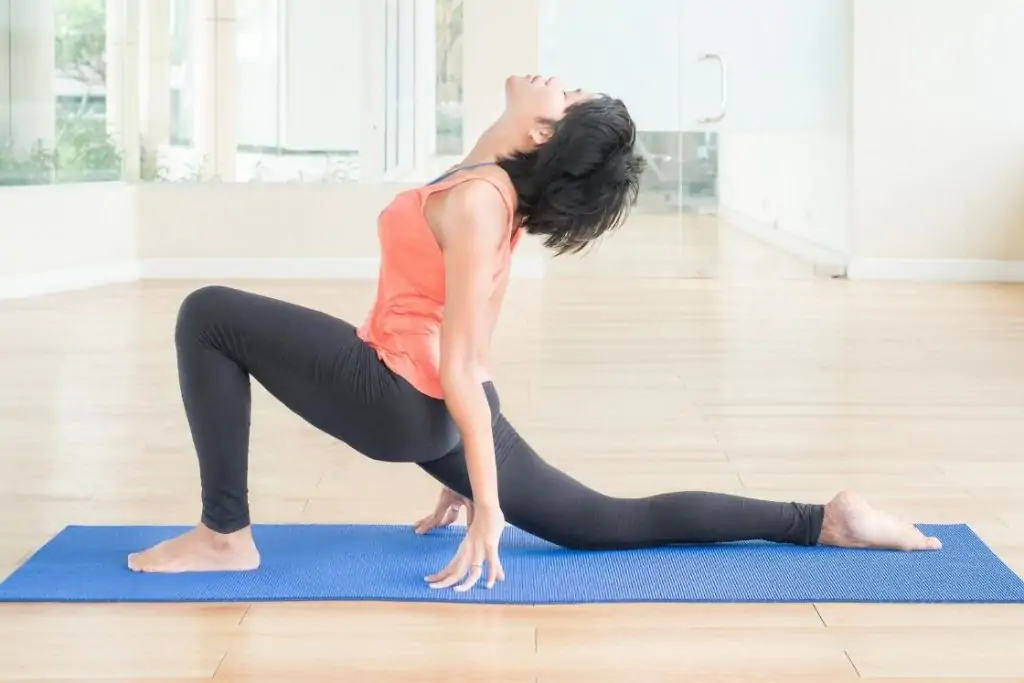
9. Ashwa Sanchalanasana (Equestrian Pose – Return)
How to perform:
- Inhale and step your right foot forward between your hands
- Drop your left knee to the mat
- Lift your chest and look forward
- Ensure your right knee stays aligned over your ankle
Benefits: Same as position 4, creating symmetry and balance in the practice.
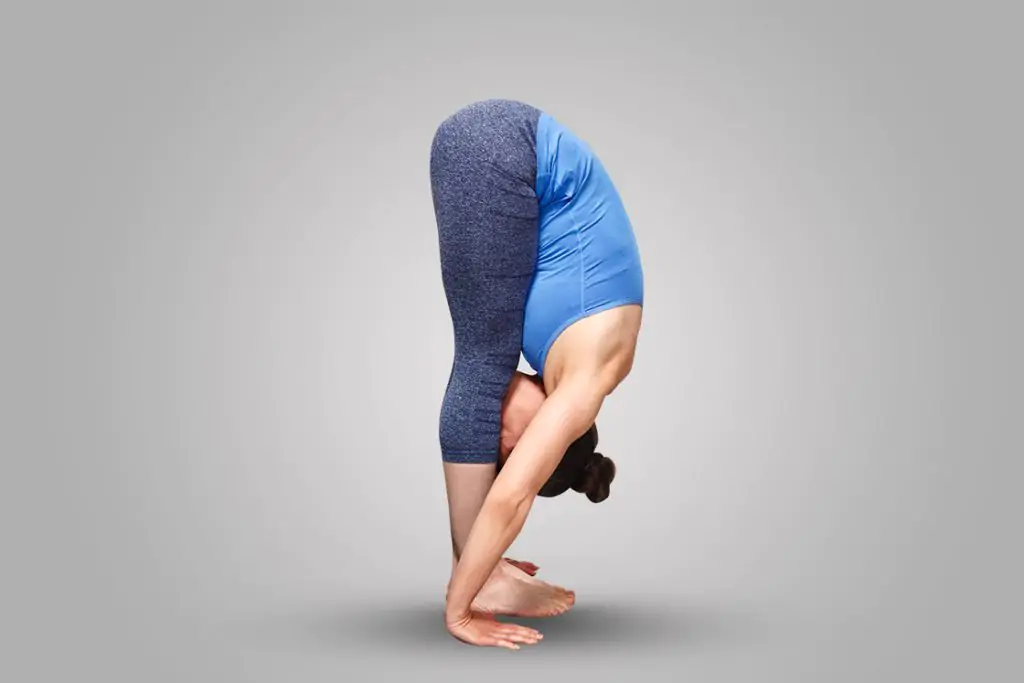
10. Hastapadasana (Standing Forward Bend – Return)
How to perform:
- Exhale and step your left foot forward to meet the right
- Straighten your legs as much as comfortable
- Fold deeper into the forward bend
- Relax your neck and shoulders
Benefits: Repeats the benefits of position 3 while allowing the body to transition smoothly.
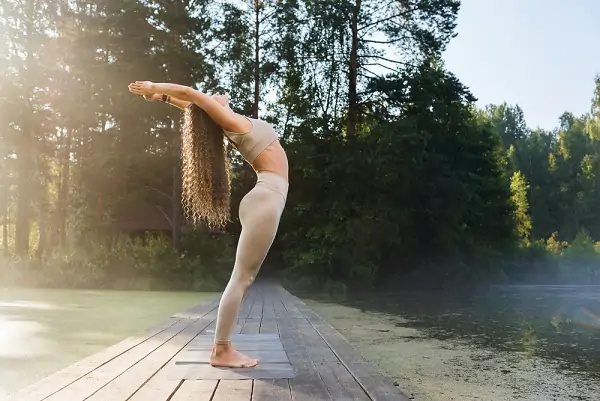
11. Hastauttanasana (Raised Arms Pose – Return)
How to perform:
- Inhale and rise up with arms overhead
- Arch gently backward
- Keep your arms alongside your ears
- Engage your core to protect your lower back
Benefits: Re-energizes the body, opens the chest, and prepares for the final grounding pose.
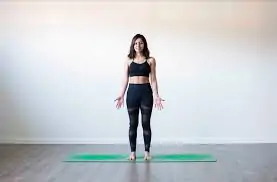
12. Tadasana (Mountain Pose)
How to perform:
- Exhale and return to standing position
- Bring your arms down to your sides or palms together at heart center
- Stand tall with feet together
- Take a moment to observe the effects of the sequence
Benefits: Grounds energy, centers awareness, and completes one half-round of Surya Namaskar.
Important Note: To complete one full round, repeat the entire sequence with your left leg leading in positions 4 and 9.
The Breath: Your Most Important Guide
One of the most crucial aspects often overlooked in Sun Salutations is the breath. Proper breathing, known as Ujjayi Breath in many yoga traditions, transforms this sequenc’e from mere exercise into a moving meditation
Breathing Pattern for Surya Namaskar
- Exhale: Prayer Pose (centering breath)
- Inhale: Raised Arms Pose
- Exhale: Forward Bend
- Inhale: Equestrian Pose
- Hold: Plank Pose
- Exhale: Eight-Limbed Pose
- Inhale: Cobra Pose
- Exhale: Downward-Facing Dog
- Inhale: Equestrian Pose (return)
- Exhale: Forward Bend (return)
- Inhale: Raised Arms Pose (return)
- Exhale: Mountain Pose
Why Breath Matters
When you synchronize movement with breath, several remarkable things happen:
- Enhanced oxygen flow reaches your muscles and organs
- Mental clarity improves as your mind focuses on the present moment
- Energy circulation increases throughout your body
- Stress reduction occurs naturally through rhythmic breathing
- Mind-body connection deepens with each conscious breath
The Ujjayi Breath technique creates a gentle oceanic sound at the back of your throat, helping maintain focus and regulate energy throughout the practice. This conscious breathing separates yoga from simple exercise and connects you to the meditative aspects of the practice.
Profound Benefits of Regular Practice
Physical Transformation
- Cardiovascular Health: Research shows that practicing Surya Namaskar at a moderate to vigorous pace significantly improves cardiovascular endurance. Your heart rate increases, blood circulation enhances, and overall cardiac function strengthens.
- Flexibility and Strength: The sequence works every major muscle group, progressively increasing flexibility in your spine, hips, shoulders, and legs. Simultaneously, it builds functional strength without requiring heavy weights or gym equipment.
- Weight Management: A dynamic practice of Sun Salutations burns calories efficiently. Performing 12 rounds can burn approximately 150-200 calories, making it an excellent component of any weight loss program.
- Digestive Enhancement: The compression and extension movements massage internal organs, stimulating digestive function and promoting detoxification. Regular practice can alleviate constipation and improve overall gut health.
- Hormonal Balance: The various forward bends, backbends, and inversions stimulate different endocrine glands, helping regulate hormone production and balance.
Mental and Emotional Wellness
- Stress Reduction: The meditative quality of synchronized breath and movement activates the parasympathetic nervous system, naturally reducing stress hormones like cortisol.
- Improved Focus: The concentration required to coordinate breath with movement sharpens mental clarity and enhances your ability to focus on tasks throughout the day.
- Emotional Stability: Regular practice helps regulate mood by releasing endorphins and balancing neurotransmitters. Many practitioners report decreased anxiety and improved emotional resilience.
- Better Sleep Quality: The physical exertion combined with stress reduction leads to deeper, more restorative sleep patterns.
Spiritual Growth
Beyond physical and mental benefits, Surya Namaskar offers a pathway to spiritual development:
- Cultivates gratitude toward life-giving forces
- Deepens self-awareness through mindful movement
- Connects you to ancient wisdom traditions
- Opens your heart to compassion and loving-kindness
- Awakens inner energy (prana) for transformation
How Many Rounds Should You Practice?
The ideal number of Surya Namaskar rounds varies based on your experience level, fitness, and available time:
For Beginners (First 1-2 Months)
- Start with: 3-5 rounds daily
- Focus on: Proper form and breath coordination
- Build slowly to avoid injury and burnout
- Listen to your body and rest when needed
For Intermediate Practitioners (3-6 Months)
- Practice: 8-12 rounds daily
- Experiment with: Different paces and variations
- Add complexity by holding certain poses longer
- Maintain consistency for best results
For Advanced Yogis (6+ Months)
- Perform: 12-108 rounds
- Challenge yourself with faster speeds or variations
- Include modifications like holding Plank or Downward Dog longer
- Practice twice daily if desired (morning and evening)
Common Mistakes and How to Avoid Them
1. Rushing Through the Sequence
The Problem: Moving too quickly disconnects breath from movement and increases injury risk.
The Solution: Start slowly, count your breaths, and gradually build speed only after mastering proper form.
2. Improper Alignment
The Problem: Poor alignment in poses like Plank or Downward Dog can strain joints and muscles.
The Solution: Work with a qualified instructor initially, use mirrors to check alignment, and focus on quality over quantity.
3. Holding Your Breath
The Problem: Forgetting to breathe or breathing irregularly diminishes benefits and creates tension.
The Solution: Make breath your priority. If you lose track of breathing, slow down until you can comfortably coordinate movement with breath.
4. Ignoring Body Signals
The Problem: Pushing through pain or discomfort can lead to injury.
The Solution: Modify poses as needed, take breaks between rounds, and distinguish between healthy challenge and harmful strain.
5. Neglecting Warm-Up
The Problem: Starting Surya Namaskar with a cold body increases injury risk.
The Solution: Begin with gentle stretches, joint rotations, and a few deep breaths before your first round.
Variations for Different Needs
Gentle Surya Namaskar (For Beginners or Recovery)
- Keep knees bent in Forward Bend
- Lower both knees in Plank Pose
- Skip the Eight-Limbed Pose
- Use props like blocks for support
- Move more slowly with extended holds
Power Surya Namaskar (For Advanced Practice)
- Add a jump instead of stepping between poses
- Hold Plank and Downward Dog for 5-10 breaths
- Include Chaturanga Dandasana (Four-Limbed Staff Pose)
- Incorporate Headstand or advanced balances
- Increase speed for cardiovascular challenge
Pregnancy-Safe Modification
- Widen stance for stability
- Avoid deep backbends
- Support yourself with blocks or a chair
- Skip Eight-Limbed Pose
- Listen carefully to your body and consult your healthcare provider
Integration with Other Yoga Practices
Surya Namaskar beautifully complements other aspects of yoga philosophy and practice:
Connection to the Eight Limbs of Yoga
The Eight Limbs of Yoga, as outlined by sage Patanjali, provide a comprehensive framework for yogic living. Sun Salutations primarily engage:
- Asana (Physical Postures): The 12 poses constitute the third limb
- Pranayama (Breath Control): Synchronized breathing represents the fourth limb
- Pratyahara (Sense Withdrawal): Internal focus during practice
- Dharana (Concentration): Mindful attention to movement and breath
By practicing Surya Namaskar with awareness, you’re not just exercising—you’re engaging in a holistic spiritual discipline.
Creating Your Perfect Practice Schedule
Morning Practice (Recommended)
Best time: Sunrise or within 2 hours of waking
Benefits:
- Energizes body for the day ahead
- Sets positive mental tone
- Traditionally most auspicious time
- Empty stomach aids practice
Routine:
- Drink warm water upon waking
- Use the bathroom
- Perform gentle warm-up stretches (5 minutes)
- Practice 6-12 rounds of Surya Namaskar
- Follow with other yoga poses
- End with meditation or relaxation (5-10 minutes)
Evening Practice (Alternative)
Best time: 2-3 hours before bedtime
Benefits:
- Releases daily stress and tension
- Promotes better sleep
- Completes the day mindfully
- Flexible for those with busy mornings
Routine:
- Allow 2-3 hours after eating
- Begin with relaxation or meditation (5 minutes)
- Warm up gently (5 minutes)
- Practice 6-12 rounds at a slower pace
- End with restorative poses and deep relaxation
Equipment and Space Requirements
The beauty of Surya Namaskar lies in its simplicity. You need very little to begin:
Essential Items
- Yoga mat: Provides cushioning and grip
- Comfortable clothing: Allows free movement
- Quiet space: Large enough to extend arms and legs
- Open mind: Willingness to learn and grow
Optional Enhancements
- Yoga blocks: For support in Forward Bend
- Strap: To assist with flexibility
- Bolster: For modifications
- Timer or app: To track practice
- Peaceful music: For ambiance (optional)
Contraindications and Safety Considerations
While Surya Namaskar offers immense benefits, certain conditions require modification or avoidance:
Practice with Caution if You Have:
- High blood pressure (avoid deep backbends)
- Heart conditions (consult physician first)
- Herniated discs (modify forward bends)
- Recent surgery (wait for complete healing)
- Severe arthritis (use gentler variations)
- Pregnancy (especially after first trimester)
- Wrist or shoulder injuries (modify weight-bearing poses)
When to Avoid Practice:
- During menstruation (traditional recommendation, though many women continue modified practice)
- Immediately after eating (wait 2-3 hours)
- During fever or acute illness
- With severe fatigue
- If experiencing sharp pain
Always consult a healthcare provider before beginning any new exercise program, especially if you have existing health conditions.
Tips for Deepening Your Practice
1. Establish Consistency
Commitment beats intensity. Practicing 6 rounds daily for a year yields far greater benefits than sporadic 108-round sessions.
2. Study with a Teacher
While online resources help, nothing replaces personalized instruction from a qualified yoga teacher who can correct alignment and offer modifications.
3. Maintain a Practice Journal
Track your:
- Number of rounds completed
- Energy levels before and after
- Physical sensations
- Mental state
- Insights or breakthroughs
4. Explore Different Speeds
Alternate between:
- Slow practice (30-45 seconds per pose) for meditation
- Moderate pace (15-20 seconds per pose) for balance
- Dynamic flow (5-10 seconds per pose) for cardiovascular benefit
5. Integrate Mantra Chanting
Traditional practice includes reciting specific mantras for each pose, adding a devotional dimension. Each mantra honors different aspects of the sun deity.
6. Practice Outdoors When Possible
Connecting with nature and practicing in natural sunlight enhances the spiritual and physical benefits of Sun Salutations.
Conclusion: Your Journey Begins with the Sun
Surya Namaskar represents far more than a series of yoga poses. It’s a complete practice that harmonizes body, breath, and consciousness while honoring the life-giving energy of the sun. Whether you’re seeking physical fitness, mental clarity, emotional balance, or spiritual growth, this ancient sequence offers a pathway to transformation.
The journey of a thousand miles begins with a single step—or in this case, a single Sun Salutation. Start today with just three rounds, focusing on proper form and conscious breathing. As days turn into weeks and weeks into months, you’ll discover the profound changes this practice brings to every aspect of your life.
Remember, yoga is not about perfection; it’s about practice, patience, and presence. Honor your body, respect your limitations, and celebrate your progress. Each time you step onto your mat and greet the sun, you’re investing in your well-being and connecting with a tradition that has transformed lives for millennia.
The sun rises every day without fail, offering us another opportunity to begin again. Let your Surya Namaskar practice remind you of this eternal truth: every moment is a chance for renewal, every breath is a gift, and every sunrise brings hope for transformation.
Ready to deepen your yoga journey? Explore our articles on Hatha Yoga, master the Headstand, and learn about the Eight Limbs of yoga to expand your practice beyond Sun Salutations. Share your experiences in the comments below, and join our growing community of dedicated practitioners!
Frequently Asked Questions (FAQs)
The ideal time for practicing Surya Namaskar is during sunrise, on an empty stomach. This traditional timing allows you to absorb the sun’s energy while it’s most potent. However, you can practice at any time of day that fits your schedule. Morning practice energizes you for the day ahead, while evening practice (2-3 hours after eating) helps release accumulated stress. Consistency matters more than timing—choose a time you can maintain regularly.
Beginners should start with 3-5 rounds of Surya Namaskar daily, focusing primarily on proper form and breath coordination rather than quantity. As your strength, flexibility, and stamina improve over 4-6 weeks, gradually increase to 8-12 rounds. Remember, one complete round involves performing the sequence twice (once with each leg leading). Quality always trumps quantity—it’s better to do fewer rounds with excellent form than many rounds with poor alignment.
Beginners should start with 3-5 rounds of Surya Namaskar daily, focusing primarily on proper form and breath coordination rather than quantity. As your strength, flexibility, and stamina improve over 4-6 weeks, gradually increase to 8-12 rounds. Remember, one complete round involves performing the sequence twice (once with each leg leading). Quality always trumps quantity—it’s better to do fewer rounds with excellent form than many rounds with poor alignment.
Classical Surya Namaskar (from Hatha Yoga) emphasizes spine flexibility with rounded forward bends, the Eight-Limbed Pose, and Cobra Pose. Modern variations (like Ashtanga Vinyasa’s Sun Salutation A) include straight-legged forward bends, Chaturanga Dandasana (Four-Limbed Staff Pose), and Upward-Facing Dog instead of Cobra. Classical practice focuses on warming the spine and promoting flexibility, while modern versions provide more cardiovascular challenge and strength building. Both offer tremendous benefits; choose based on your goals and experience level.
While Surya Namaskar is generally safe, certain conditions require modification or medical clearance. Avoid or modify practice if you have: uncontrolled high blood pressure, heart disease, herniated discs, recent surgery, severe arthritis, or are in late-stage pregnancy. Those with wrist, shoulder, or lower back injuries should use modifications. Always practice on an empty stomach and avoid during fever or acute illness. Menstruation is traditionally considered a rest period, though many women continue with gentle modifications. Consult your healthcare provider before starting if you have any health concerns.