If you’re exploring wellness practices to reduce stress and cultivate inner peace, you’ve likely encountered both Yoga Nidra and meditation. While these ancient techniques share some common ground, they’re distinctly different practices with unique benefits. Understanding the difference between Yoga Nidra vs meditation can help you choose the right approach for your wellness journey.
In this comprehensive guide, we’ll explore what makes each practice unique, their respective benefits, and how to integrate them into your daily routine for maximum well-being.
What Is Meditation?
Meditation is an ancient practice that encompasses various techniques designed to heighten awareness and cultivate present-moment consciousness. At its core, meditation trains your mind to focus, observe thoughts without judgment, and achieve mental clarity.
The most widely practiced forms include mindfulness meditation and concentration meditation. Through focused attention on the breath, a mantra, or a specific object, practitioners learn to quiet mental chatter and access deeper states of awareness. The Meditation Benefits extend far beyond relaxation, supporting mental health, emotional balance, and even physical well-being.
According to traditional yogic philosophy outlined in Patanjali’s Yoga Sutras, meditation represents the seventh limb of the eight-limbed path. The ultimate goal is samadhi—a state where individual consciousness merges with universal consciousness, leading to Spirituality and self-realization.
Common Types of Meditation
Meditation comes in many forms, each with its own approach:
- Mindfulness Meditation: Observing thoughts and sensations without judgment
- Concentration Meditation: Focusing attention on a single point (breath, mantra, or object)
- Loving-Kindness Meditation: Cultivating compassion toward yourself and others
- Transcendental Meditation: Using specific mantras for deep relaxation
- Body Scan Meditation: Systematically bringing awareness to different body parts
What Is Yoga Nidra?
Yoga Nidra, often called “yogic sleep,” is a systematic guided meditation that induces complete physical, mental, and emotional relaxation. During practice, you enter a state between waking and sleeping—a unique consciousness where profound healing and transformation occur.
This ancient technique involves lying down in a comfortable position while a teacher guides you through various stages. These include body awareness, breath observation, visualization, and the setting of a sankalpa (personal intention or resolve). The practice allows you to access the subconscious mind, making it particularly effective for releasing deep-seated patterns and beliefs.
Unlike meditation where you work to maintain alertness, Yoga Nidra encourages a state of conscious relaxation. Your body rests deeply while your mind remains aware, creating ideal conditions for healing and rejuvenation.
The Stages of Yoga Nidra
A typical Yoga Nidra session follows a structured progression:
Return to Waking: Gradually transitioning back to full awareness
Initial Relaxation: Settling into a comfortable position
Sankalpa Setting: Establishing your personal intention
Body Scan: Systematically bringing awareness to each body part
Breath Awareness: Observing natural breathing patterns
Opposite Sensations: Experiencing contrasting feelings (warmth/coolness, heaviness/lightness)
Visualization: Guided imagery and symbolic journeys
Sankalpa Repetition: Reinforcing your intention
Yoga Nidra vs Meditation: 7 Key Differences
While both practices promote relaxation and self-awareness, several fundamental differences distinguish Yoga Nidra vs meditation:
1. Posture and Physical Position
Meditation is traditionally practiced in an upright seated position with the spine erect. This posture promotes alertness and helps prevent falling asleep during practice. Common positions include cross-legged sitting, kneeling, or sitting in a chair with feet flat on the floor.
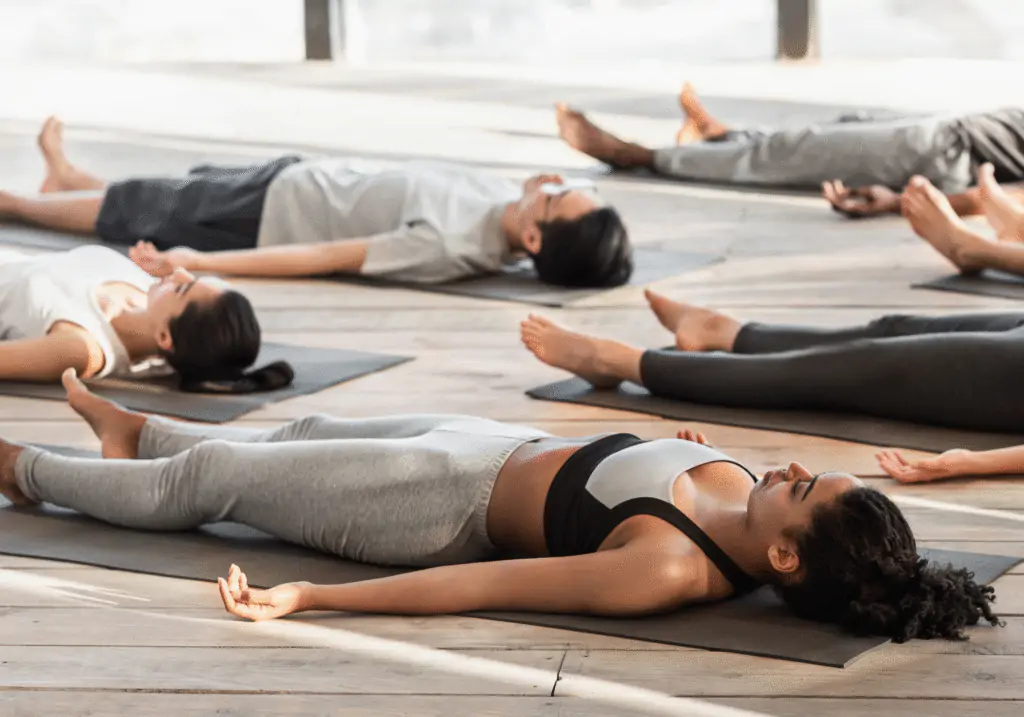
Yoga Nidra is practiced lying down in Savasana (Corpse Pose). This horizontal position facilitates complete physical relaxation and makes the practice accessible to people with mobility challenges or those who find seated meditation uncomfortable.
2. Level of Difficulty
Meditation can be challenging for beginners. Maintaining focus, quieting the mind, and sitting still for extended periods requires practice and patience. Many people struggle with racing thoughts or physical discomfort when starting a meditation practice.
Yoga Nidra is generally more accessible to beginners. The guided nature of the practice makes it easier to follow, and the lying-down position reduces physical strain. The systematic approach gently leads practitioners into relaxation without requiring intense concentration skills.
3. Guided vs Self-Directed Practice
Meditation can be practiced solo or with guidance, though experienced practitioners often meditate independently. You direct your own attention and navigate your inner landscape using techniques you’ve learned.
Yoga Nidra is almost always guided, especially for beginners and intermediate practitioners. A teacher (either live or recorded) leads you through each stage, making it easier to achieve deep relaxation without extensive training.
4. Active vs Passive Approach
Meditation requires active engagement. You consciously direct your attention, observe your thoughts, and continuously bring your focus back when the mind wanders. This active training of awareness is fundamental to the practice.
Yoga Nidra takes a more passive approach. While your awareness remains present, you surrender to the guidance and allow relaxation to unfold naturally. There’s less effort involved in maintaining focus.
5. Primary Intention
Meditation aims to cultivate heightened awareness, mental clarity, and spiritual growth. The practice develops concentration, insight, and eventually leads to transcendent states of consciousness.
Yoga Nidra primarily focuses on deep relaxation and healing. While it also promotes self-awareness, its main purpose is to release tension, restore energy, and access the subconscious for transformation.
6. State of Consciousness
Meditation keeps you in a fully wakeful state with heightened alertness. You remain consciously present, observing your mental activity with clarity.
Yoga Nidra brings you to a state between waking and sleeping—a hypnagogic state where brain waves slow down significantly. You maintain awareness while experiencing the deep rest typically associated with sleep.
7. Duration and Time Commitment
Meditation sessions can range from just a few minutes to several hours, depending on your practice level and tradition. Beginners might start with 5-10 minutes daily.
Yoga Nidra sessions typically last 20-45 minutes. Research suggests that a 30-minute session can provide the restorative benefits equivalent to 2-4 hours of regular sleep.
The Health Benefits: Yoga Nidra vs Meditation
Both practices offer remarkable health benefits, though they affect the mind and body in slightly different ways.
Meditation Benefits
The Meditation Benefits are extensive and well-documented by scientific research:
- Reduces stress and anxiety levels
- Improves focus and concentration
- Enhances emotional regulation
- Lowers blood pressure and heart rate
- Strengthens immune system function
- Increases self-awareness and personal insight
- Promotes neuroplasticity and brain health
- Cultivates compassion and empathy
- Supports addiction recovery
- Improves sleep quality over time
Yoga Nidra Benefits
Yoga Nidra offers its own unique advantages:
- Provides deep physical and mental relaxation
- Reduces chronic stress and cortisol levels
- Improves Yoga Nidra for Sleep quality and treats insomnia
- Alleviates symptoms of anxiety and depression
- Supports pain management and chronic pain relief
- Enhances creativity and problem-solving abilities
- Releases emotional blockages and trauma
- Balances the autonomic nervous system
- Boosts immune function
- Improves digestion and metabolic function
- Increases body-mind connection
- Supports PTSD recovery and healing
Interestingly, research comparing the two practices found that Yoga Nidra may be particularly effective for reducing anxiety. A study examining college professors showed that Yoga Nidra produced more significant reductions in anxiety symptoms compared to traditional seated meditation.
Can You Practice Both Yoga Nidra and Meditation?
Absolutely! In fact, combining both practices can create a comprehensive wellness routine that addresses different aspects of your well-being.
Many practitioners find that Yoga Nidra and meditation complement each other beautifully. You might practice Yoga Nidra in the evening to unwind and Yoga Nidra for Sleep preparation, while maintaining a morning meditation practice to set an intentional tone for your day.
How to Combine Both Practices
Here are some effective ways to integrate both into your routine:
Sequential Practice: Begin with Yoga Nidra to release physical tension and calm your nervous system, then transition to seated meditation. This progression makes it easier to settle into deeper meditative states.
Alternating Days: Practice meditation on some days and Yoga Nidra on others, depending on what you need. Choose meditation when you want mental clarity and Yoga Nidra when you need deep restoration.
Complementary Timing: Meditate in the morning to cultivate awareness for the day ahead, and practice Yoga Nidra in the evening to process the day’s experiences and prepare for restful sleep.
Targeted Application: Use meditation for spiritual development and mindfulness training, while turning to Yoga Nidra for stress relief, healing, and subconscious transformation.
Which Practice Is Right for You?
Choosing between Yoga Nidra vs meditation depends on your current needs, goals, and personal preferences.
Choose Meditation If You Want To:
- Develop sustained concentration and mental discipline
- Cultivate spiritual awareness and growth
- Practice independently without guidance
- Build mindfulness skills for daily life
- Explore traditional Spirituality practices
Choose Yoga Nidra If You Want To:
- Experience deep relaxation and stress relief
- Improve sleep quality and overcome insomnia
- Access and heal subconscious patterns
- Practice lying down due to physical limitations
- Have guidance throughout your session
- Work with visualization and intention-setting
Try Both If You Want To:
- Create a comprehensive wellness practice
- Address multiple aspects of well-being
- Experience different states of consciousness
- Build both relaxation and concentration skills
- Maximize the therapeutic benefits of contemplative practices
Getting Started with Your Practice
Whether you choose Yoga Nidra, meditation, or both, here are some practical tips for beginning your journey:
For Meditation Beginners:
- Start small with just 5 minutes daily
- Find a quiet, comfortable space
- Use guided meditations until you build confidence
- Be patient with your wandering mind
- Establish a consistent time for practice
- Consider joining a meditation class or group
For Yoga Nidra Beginners:
- Find a high-quality guided recording or teacher
- Practice in a warm, comfortable space
- Use blankets and props for support
- Allow 20-30 minutes for a session
- Practice at the same time daily when possible
- Set a clear sankalpa aligned with your intentions
Connection to Related Practices
Both Yoga Nidra and meditation connect to other wellness modalities. For example, Hypnotherapy shares some similarities with Yoga Nidra in accessing the subconscious mind for healing and transformation. While hypnotherapy typically has a therapeutic focus with a trained practitioner, Yoga Nidra can be self-practiced with guided recordings once you understand the technique.
Similarly, both practices enhance your overall Spirituality journey by developing greater self-awareness and connection to your inner wisdom.
Frequently Asked Questions
Yes, falling asleep during Yoga Nidra is common, especially when you’re very tired or new to the practice. While you’ll still benefit from physical rest, staying awake allows you to fully experience the practice’s transformative potential. If you consistently fall asleep, try practicing at a different time of day or sitting up slightly.
Start with just 5-10 minutes daily. Consistency matters more than duration. As meditation becomes more comfortable, gradually extend your sessions to 15-20 minutes or longer. The key is building a sustainable habit rather than forcing lengthy sessions that feel overwhelming.
Yoga Nidra is generally safe for most people. However, individuals with severe mental health conditions like psychosis, severe depression, or PTSD should consult a healthcare provider before beginning. A qualified teacher or therapist can help adapt the practice to individual needs.
While meditation offers significant mental health benefits, it’s not a replacement for professional therapy. Meditation can complement therapeutic work, but serious mental health conditions require proper professional treatment. Consider meditation as part of a holistic approach to well-being.
Many people notice some immediate benefits like relaxation after their first session. However, the deeper transformative effects typically emerge with consistent practice over weeks or months. Research suggests that 8 weeks of daily practice can produce measurable changes in brain structure and stress response.
Conclusion: Embracing Your Journey
Understanding the differences between Yoga Nidra vs meditation empowers you to choose the practice that best serves your current needs. Both offer profound pathways to well-being, peace, and self-discovery.
Remember that these practices aren’t competitive—they’re complementary tools in your wellness toolkit. Whether you’re drawn to the alert awareness of meditation, the deep rest of Yoga Nidra, or a combination of both, you’re taking meaningful steps toward greater health and happiness.
The most important thing is to begin. Start where you are, use what you have, and trust the process. Your journey toward inner peace begins with a single breath, a moment of stillness, or a guided relaxation. The practice you need will reveal itself as you explore.
Ready to deepen your practice? Explore more about Meditation Benefits, discover Yoga Nidra for Sleep, or learn how these practices support your Spirituality journey. Your path to transformation awaits.