
Key Highlights
- Goa offers a supportive setting for your yoga journey, with beachside campuses, lush greenery, and ocean air.
- A 300 hour yoga teacher training Goa builds on prior teacher training and deepens your yoga practice in focused ways.
- Leading yoga school options in South Goa include Yoga Alliance registered programs with experienced teachers.
- Training often includes vinyasa flow, ashtanga, hatha, pranayama, meditation, and philosophy.
- Many ttc programs include accommodation, meals, and strong student teaching practice.
Introduction
If you already have a 200-hour certification and want the next step, a 300 hour yoga teacher training Goa can be a strong fit. This kind of teacher training course is designed to deepen your practice, sharpen your teaching, and expand your understanding beyond physical postures. In Goa, you also study in a calm coastal setting that supports focus and rest. That mix of serious learning and supportive surroundings is why many students choose 300 hour yoga teacher training Goa here.
Why Choose Goa for Your 300 Hour Yoga Teacher Training Goa Experience
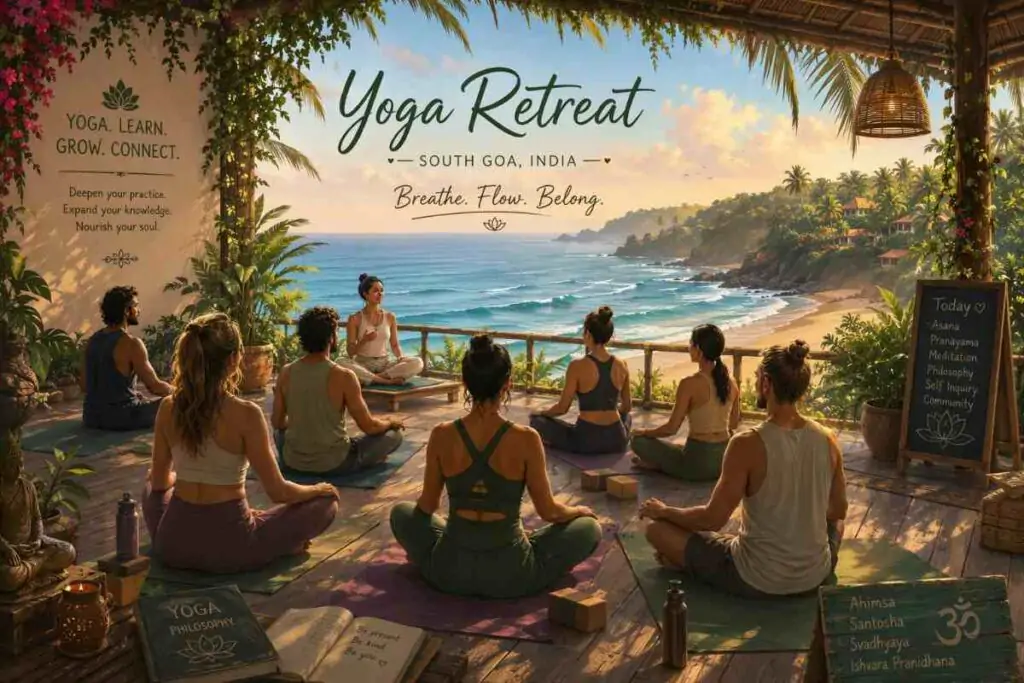
Goa gives your training a setting that feels both grounded and open. Many students look for a yoga retreat atmosphere, and South Goa offers exactly that with quiet beaches, lush greenery, and steady ocean air.
Just as important is the location of the school. Some campuses are close to the sea but still peaceful enough for study. When you compare options, look at the teaching team, the daily structure, and whether the school feels supportive. Great yoga teachers and a clear curriculum matter as much as the place itself.
The Unique Appeal of Goa for Yoga Enthusiasts
Goa has a special pull for people on a deeper yoga journey. It offers a calm pace, natural beauty, and a setting that makes it easier to listen inward. When you join 300 hour yoga teacher training Goa here, the environment supports study without feeling harsh or closed off.
For many students, that matters more than they expect. A beachside or village-based retreat space can help you stay steady through a demanding schedule. You get room for personal growth while still being held inside a structured program with regular practice, philosophy, and teaching work.
There is also value in what happens outside class. Your free time may include quiet walks, rest, reflection, or simple moments with other trainees. If you arrive with an open heart, Goa can support not only your learning as a teacher, but also your relationship with yourself.
Climate, Beaches, and Local Culture
Daily life during training in Goa often feels balanced. You spend much of the day in classes, but the surroundings soften the intensity. Ocean air, warm weather, and lush greenery create a setting where practice and rest can sit side by side.
At the same time, many schools are placed so you can enjoy a peaceful local rhythm. Some are near beaches like Patnem, Palolem, or Agonda, while still tucked away enough to support mindful living. That helps your school experience feel immersive rather than rushed.
- You may be a short walk from the beach, which makes breaks feel restorative.
- Village settings often support quieter evenings and a more settled daily pace.
- Nature-based campuses can make your training feel less crowded and more focused.
Goa’s Reputation in the Global Yoga Community
Goa is well known in the international yoga world because it hosts established schools that welcome students from many countries. Some programs are Yoga Alliance registered and have trained thousands of graduates over many years of experience. That history gives students added confidence.
You can also find teaching teams with a long track record in training yoga teachers, not just leading drop-in classes. That difference matters. A strong program helps you develop into an authentic teacher with a clear voice, practical skill, and broader understanding of the path.
After completing a qualified 300-hour course, you generally receive a teacher training certificate. If your previous 200-hour training and current school meet Yoga Alliance requirements, you may become eligible to register as an RYT-500. For many students, that is a meaningful milestone in the journey.
Introduction to 300 Hour Yoga Teacher Training Goa Programs
A 300 hour yoga teacher training Goa is an advanced step for students who already hold a 200-hour certification. It is not about starting from zero. It is about refining what you know and building more confidence in practice, teaching, and self-study.
In Goa, many hour yoga teacher training programs place strong focus on sequencing, alignment, anatomy, pranayama, meditation, and philosophy. By the end, you usually receive a teacher training certificate and a clearer foundation for advanced 300 hour yoga teacher training Goa in real teaching spaces. The next sections explain what that looks like in practice.
What Is a 300 Hour Yoga Teacher Training Goa?
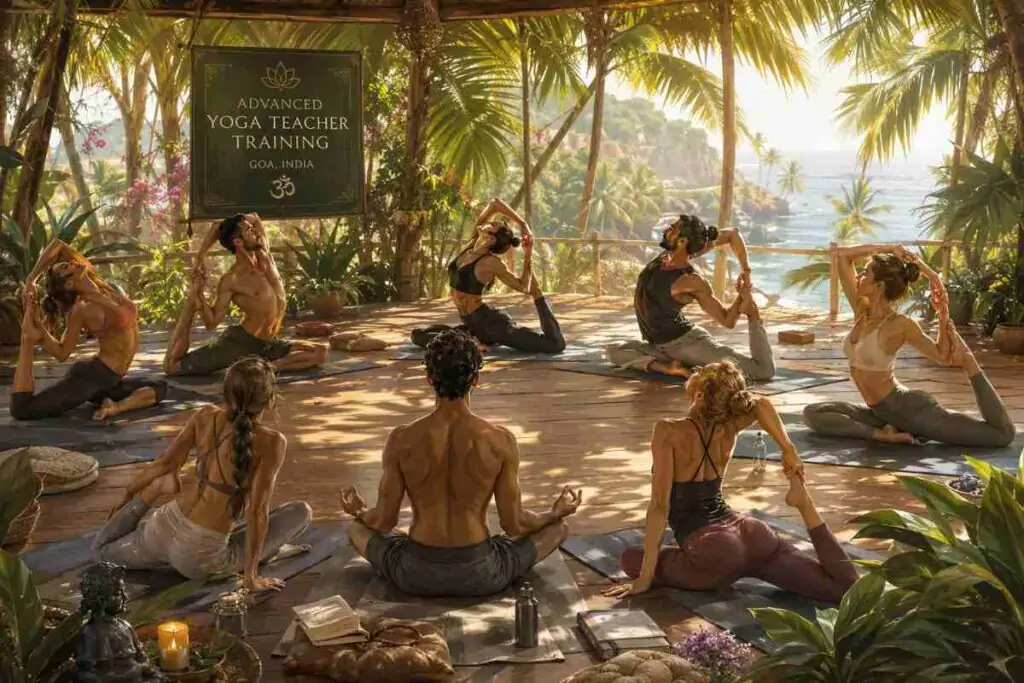
A 300 hour yoga teacher training Goa is a follow-on program for students who have already completed a 200-hour course. In simple terms, it is the advanced part of your ttc path. It helps you move past basics and work with more depth, precision, and confidence.
Compared with an entry-level course, this training usually gives more time to teaching practice, class planning, hands-on work, anatomy, and deeper philosophy. You are expected to arrive with prior experience, so the pace can be more focused. That is the main difference between this and a 200-hour program.
If the school is registered with Yoga Alliance and your previous training also qualifies, the combined pathway can support your next registration step. For an hour yoga teacher who wants stronger tools and a more mature teaching voice, this training often feels like a natural progression.
Core Objectives and Learning Outcomes
A strong 300 hour yoga teacher training Goa course in Goa aims to deepen both knowledge and application. You are not only doing more yoga practice. You are learning how to understand movement, structure classes, communicate clearly, and teach with more steadiness.
Many programs also widen your view through yoga philosophy and practical study. You may cover Hatha-based philosophy, the eight limbs, chakra and nadi systems, meditation, pranayama, and yoga anatomy that connects directly to asana work. This helps the teacher training course feel useful in real class settings.
- Refined teaching skills, including demonstration, observation, feedback, and class sequencing
- Better understanding of yoga anatomy, alignment, modifications, and safety
- Deeper grounding in yoga philosophy, meditation, and breath-based practices
Who Should Consider a 300 Hour YTT in Goa
This training is best for someone who has already completed a 200-hour course and wants to grow further. If you are a certified yoga teacher, or you finished your first training and still feel there is more to understand, this can be the right next step.
It also suits yoga teachers who want stronger teaching methods, better alignment knowledge, and more experience leading classes. Some students join because they want to refresh their practice. Others come because they are already teaching as a yoga instructor and want to improve.
The main prerequisite is prior training. Many schools ask for a 200-hour certificate first. In some cases, you may still join with a non–Yoga Alliance 200-hour background, but registration outcomes can differ. So before booking any hour yoga ttc, check eligibility and certification details carefully.
Popular Yoga Schools in Goa Offering 300 Hour Teacher Training
If you are comparing options, Goa has well-known schools offering advanced yoga teacher training in peaceful coastal settings. Two names that stand out from the available information are mahiyoga Yoga in South Goa.
Each yoga school offers a different atmosphere, but both position their programs around immersive learning and supportive community. When reviewing any 300 hour yoga teacher training Goa, look beyond the website. Pay attention to registration status, teacher background, curriculum depth, accommodation, and how clearly the school explains its process.
Top-Rated Yoga Institutes and Their Credentials
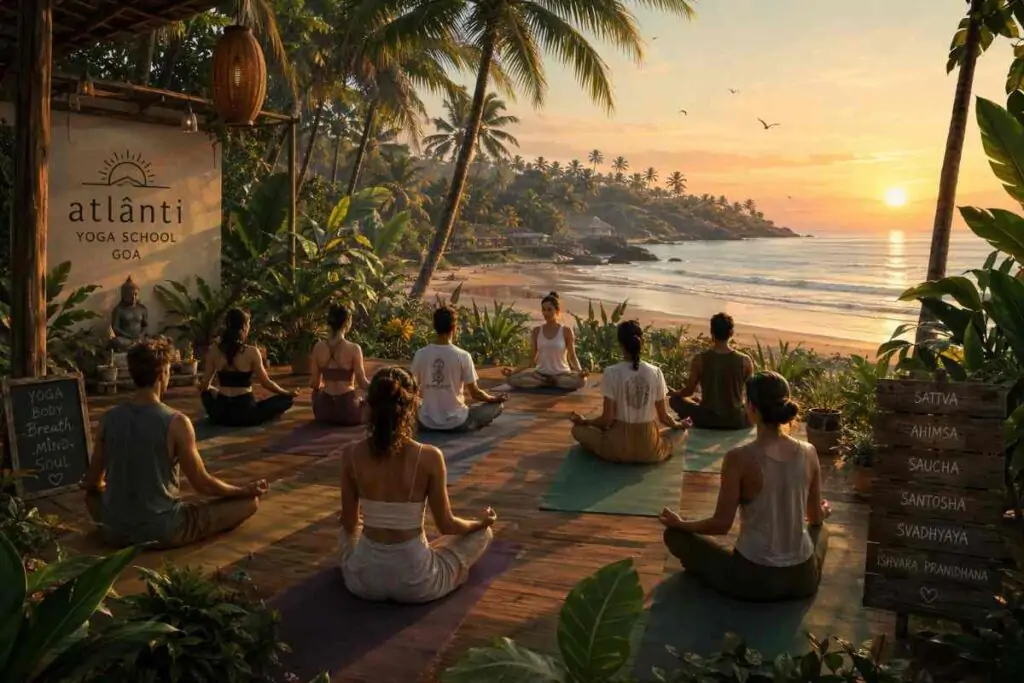
Two featured schools from the compiled information show why Goa remains a strong choice for advanced study. Both present themselves as places for immersive teacher training, with clear emphasis on environment, support, and experienced yoga teachers.
Sampoorna Yoga highlights a long history, large graduate base, and Alliance registration across several levels. Earth Yoga Village presents a quieter eco-village setting in South Goa with a heart-centered approach, personalized guidance, and a strong review profile. These details can help you compare each registered school more clearly.
Features That Set Goa Schools Apart
What makes Goa schools stand out is the blend of serious study and a softer setting. You are not removed from daily reality, yet the environment makes focused yoga training easier. That can be important when the course is intensive and emotionally demanding.
Another key point is teaching culture. Schools in the compiled material emphasize experienced faculty, close guidance, and a lot of heart. Some highlight beachside learning, others eco-village community. In both cases, the aim seems to be real teacher training rather than a casual wellness stay.
- Programs may be registered with Alliance USA, which supports wider recognition
- Great teachers often combine structure, feedback, and space for your authentic voice
- The setting itself can support reflection, community, and steady practice
How to Evaluate School Accreditation and Standards
Start with school accreditation. If Yoga Alliance recognition matters to you, confirm that the program and the school are currently registered. This
affects what kind of teacher training certificate you receive and whether it supports future registration pathways.
Then look at the structure behind the promise. A good school should clearly explain prerequisites, curriculum, teachers, assessment, attendance rules, and what happens after completion. For example, some courses require full participation plus written and practical exams before issuing a certificate.
Finally, ask whether the standards match your goals. Do you want stronger teaching practice, more anatomy, or deeper philosophy? The best fit is not just the most famous name. It is the school that aligns with your level, your intentions, and the kind of teacher you want to become.
Styles of Yoga Included in 300 Hour Programs
Many 300-hour programs in Goa center on vinyasa yoga while also drawing from hatha and related practices. In the compiled material, one course places major emphasis on vinyasa flow sequencing, adjustments, and advanced asana practice.
That said, students are not limited to one style. Some programs also include ashtanga yoga elements, restorative work, Yin, meditation, pranayama, and philosophy. The mix depends on the yoga school, but the goal is usually the same: broaden your skills across classes while deepening the quality of your own practice.

Hatha, Vinyasa, and Ashtanga Yoga Focus
In many Goa trainings, vinyasa yoga receives the strongest practical focus. You may spend a lot of time learning how to build and teach flowing sequences, understand transitions, and organize classes with more structure. That makes sense for students wanting stronger teaching confidence.
At the same time, hatha yoga often shapes the philosophical side of the yoga course. In the compiled information, Hatha-based philosophy supports study of lifestyle, inner practice, chakras, nadis, and the broader science behind. This creates depth beyond movement.
Ashtanga yoga may also appear in the wider learning process. Some schools include Ashtanga classes in study materials or pre-course modules. So while your daily asana practice may focus on flow, your overall learning can still be informed by hatha, ashtanga, and other complementary methods.
Specialized Modules and Advanced Practices
A strong advanced yoga course usually includes more than regular posture classes. In the compiled material, students work with sequencing workshops, posture clinics, hands-on adjustments, themed sessions, and deeper study of teaching methods. That makes the yoga ttc practical as well as reflective.
These modules are useful because they push you beyond repetition. Instead of only doing postures, you learn how to assess, adapt, and teach them. In an hour advanced 300 hour yoga teacher training Goa, that kind of repetition with purpose can sharpen your confidence very quickly.
- Sequencing workshops for building coherent classes around pace, theme, and level
- Adjustment and alignment training to support safer teaching and clearer observation
- Study of the limbs, meditative methods, and practices that may connect with breath-led movement such as surya namaskar
Incorporating Meditation, Pranayama, and Philosophy
Yes, meditation and pranayama are often central parts of a 300-hour training in Goa. The compiled information describes broad pranayama study, including breathing methods, teaching approaches, and more advanced techniques using mudras and bandhas. This deepens your practice beyond movement.
Meditation study can also be wide-ranging. Programs may include chakra meditation, Kundalini meditation, nidra, vipassana-related methods, tratak, and inner silence practices. Learning how to practice and teach these methods gives you a more complete toolkit.
Philosophy ties it all together. Through yoga philosophy, you begin to see as a lifestyle rather than only asana classes. This kind of study supports mindful living, self-inquiry, and a fuller understanding that can shape how you teach, rest, speak, and relate to others.
Beginner’s Guide: Getting Started with 300 Hour Yoga Teacher Training Goa
Getting started is simpler when you know one key fact: a 300 hour yoga teacher training Goa is not for complete beginners. Most schools expect previous teacher training, usually a 200-hour certificate, before you join.
Once that is in place, your job is to choose the right school and prepare well for the experience. That means checking eligibility, understanding the curriculum, and planning for travel and study. The next sections break the process into clear steps so your hour teacher training feels manageable from the start.
Essential Requirements and Prerequisites for Enrollment
Before you apply, confirm that you meet the entry requirements. For most schools in the compiled information, the main prerequisite for 300 hour yoga teacher training Goa is a completed 200-hour certification. This shows that you already have a base in practice and teaching.
Some programs accept a prior course even if it was not registered with Alliance. Still, that can affect what happens after graduation. You may receive the school’s teacher training certificate but not be eligible for certain registration steps. So it is worth checking the fine details before choosing your next step.
- A completed 200-hour teacher training course is usually required
- You may need to submit your previous teacher training certificate
- Full attendance, discipline, and participation may be required to pass the course
What You’ll Need: Packing List, Equipment, and Preparation
The compiled information does not give a full packing list, but it does show that this yoga ttc is immersive and practical. You will be studying, moving, resting, and living on site for weeks. That means you should prepare for both training and daily residential life.
Since many campuses are near beaches or in lush village settings, pack for warm weather and simple living. Think about what helps your yoga journey feel steady. Comfort matters because you will spend long hours in asana practice, philosophy sessions, and group life.
- Comfortable practice clothes for repeated daily movement
- Personal basics for residential living and travel days
- Simple study items to support reading, notes, and course preparation
Step-by-Step Guide to Enrolling and Preparing for Your Course
A smooth application starts with clarity. First, identify a school that matches your goals, level, and preferred learning style. Then review the teacher training course page carefully so you understand the prerequisites, schedule, fee structure, and certification pathway.
Next, submit the application and any requested documents. In the compiled information, one school uses an online form and confirms your place only after acceptance and payment of a booking fee. That kind of process is common because spaces can be limited.
After your place is confirmed, focus on prepping for ttc. Complete any pre-study modules, review the reading list, and settle your travel plans early. This stage is not just logistics. It also prepares your mind for deeper study, stronger teaching skills, and a more meaningful learning experience.
Step 1: Research and Select the Right School
Begin by getting honest about what you want from teacher training. Are you looking for a strong vinyasa-based program, more philosophy, or a quieter community setting? Once you know that, comparing schools becomes easier and more practical.
The location of the school also matters. Some students prefer a beachside campus like Agonda. Others may want an eco-village near Patnem and Palolem. Your surroundings shape your daily rhythm, so choose a place that supports your focus during training.
- Compare curriculum, teachers, registration status, and teaching opportunities
- Check whether the school environment feels structured, supportive, and right for your level
Step 2: Complete Application and Submit Documents
Once you choose a program, the next step is the formal application. In the compiled material, one school asks students to complete an online application form and then wait for acceptance before paying a deposit. That keeps the process clear and organized.
You should also be ready to share proof of prior study. Because this is an advanced 300 hour yoga teacher training Goa course, schools may ask for your earlier teacher training certificate or related training details. This helps them confirm that you meet the entry requirements.
After acceptance, secure your place quickly if the school requests a booking fee. Then keep records of all confirmations, policies, and joining instructions. This part may feel administrative, but it is an important bridge between choosing the course and actually beginning it.
Step 3: Prepare Physically and Mentally for Intensive Training
A 300-hour program is usually intensive, so preparation helps. You do not need perfect flexibility, and the compiled information is clear about that. What matters more is openness, commitment, and willingness to show up fully for the work.
Physical readiness means keeping a steady practice before arrival. Mental readiness means making space for routine, feedback, and long study days. Since the course goes beyond physical postures, it also helps to enter with a mindset of mindful living and real curiosity.
- Maintain regular practice before the course begins
- Set realistic expectations about energy, rest, and learning pace
- Arrive willing to participate fully in both movement and self-study
Step 4: Arrange Travel, Accommodation, and Visa
After your admission is confirmed, sort out your travel plans early. The compiled information lists airport options in Goa, possible taxi transfers, check-in times, and orientation details. Handling this in advance makes your arrival smoother and lowers stress.
Accommodation is usually part of the experience in residential teacher training. One school includes room categories with air conditioning and private hot showers. Another describes an eco-village setting close to beaches. In both cases, accommodation is part of how the training supports focused study.
- Confirm airport, transfer, check-in, and orientation timing
- Review your accommodation type and what is included in the fee
- Plan for insurance and other travel needs not covered by the course
What to Expect: Daily Life and Curriculum Structure
Daily life in an hour 300 hour yoga teacher training Goa is usually full, structured, and immersive. Your course may include morning practice, philosophy, anatomy, teaching work, workshops, and evening sessions, with Sundays off in at least one featured program.
Campus life adds another layer. Because many students live on site, learning continues between classes through conversation, rest, meals, and observation. By the end, that steady rhythm often helps you earn not just a teacher training certificate, but also stronger habits around study, practice, and community.
Typical Daily Schedule and Class Breakdown
A typical day is built around immersion. In the compiled material, students practice regularly each morning and move through a full schedule of yoga classes, workshops, anatomy, philosophy, pranayama, meditation, and teaching practice. Saturdays may end earlier, and Sundays can be off.
That means daily life is active but not chaotic. You know where to be, what to study, and how the day is paced. Much of your time goes toward asana practice, sequencing, adjustments, and feedback, which helps your learning become practical instead of abstract.
You will likely have some free time, though not huge amounts of it. Schools often suggest using those hours for rest, reading, beach walks, or completing pre-study work. In a well-run school, even the spaces between formal lessons support your growth.
Accommodation, Meals, and Campus Life in Goa
Living arrangements can shape your whole experience. The compiled information shows that some schools include accommodation and meals in the course fee, which makes planning easier. You may stay in air-conditioned rooms with private showers or in eco-style shared spaces close to the beach.
Meals are also a major part of campus life. One school highlights delicious meals, while another emphasizes fresh vegan food and conscious living. This can make the training feel more like a supportive retreat than a simple course, even though the schedule remains serious.
- Accommodation may be residential and included in the program fee
- Meals can be provided daily, often with a focus on fresh, nourishing food
- Thoughtful communal living may support connection, simplicity, and lower food waste
Personal Experiences & Testimonials from Previous Students
The journey through a 300 hour yoga teacher training Goa is often marked by transformative personal experiences that resonate deeply with each student. Many past participants describe their time in Goa as not just an educational opportunity, but a life-altering adventure. For instance, testimonials often highlight the breathtaking natural beauty of Goa, which serves as a constant source of inspiration and reflection. Students share stories of early morning yoga sessions on the beach, the sound of the waves creating a harmonious backdrop for their practice. As one graduate recounted, “The tranquil environment allowed me to connect with my inner self in a way I never thought possible.” Others emphasize the sense of community fostered among trainees, forming lifelong friendships and a supportive network that extends far beyond the training. Empowered by experienced teachers, students also find that the rigorous curriculum pushes them toward personal growth, helping them develop not only as practitioners but also as confident leaders. This blend of profound self-discovery and camaraderie is a common theme echoed throughout the testimonials, illustrating why many look back on their 300 hour yoga teacher training Goa experience with gratitude and fondness.
Instructor/Teacher Profiles & Credentials
When considering a 300 hour yoga teacher training Goa, it is vital to understand the profiles and credentials of the instructors leading the program. Typically, you will find that successful yoga schools emphasize not only the experience but also the unique teaching styles and areas of expertise of their teachers. For instance, many instructors possess advanced certifications, including E-RYT 500 status, which signifies extensive teaching hours and a solid foundation in yoga pedagogy. In addition to traditional methods, instructors often bring in knowledge from various yoga styles, ensuring a diversified and comprehensive curriculum. Furthermore, it’s common for teachers to have backgrounds in areas like anatomy, movement science, and mindfulness, which enhances their capacity to guide students through complex topics effectively. By exploring instructor profiles and understanding their credentials, you can better gauge the quality of training and ensure alignment with your educational goals.
Best Time to Attend 300 Hour Yoga Teacher Training in Goa (Seasonality)
Choosing the best time to attend a 300 hour yoga teacher training Goa can significantly enhance your experience, primarily influenced by the local climate and seasonal variations. The most favorable months are typically from October to March, when Goa enjoys its peak season with pleasant weather characterized by warm days and cool evenings, perfect for both indoor and outdoor yoga practices. During this period, you can bask in the beautiful natural surroundings, indulge in beach activities during your downtime, and participate in vibrant local culture. Conversely, attending during the off-peak season, which runs from April to September, can also have its advantages, such as fewer crowds and potentially lower costs for accommodation; however, be prepared for the humidity and occasional rain, which can influence outdoor sessions. Ultimately, aligning your training schedule with your personal comfort preferences and learning goals will ensure a truly enriching 300 hour yoga teacher training Goa experience.
Course Duration and Options (Comparison of 25 Day vs 30 Day Trainings)
When considering a 300 hour yoga teacher training Goa, one crucial aspect to evaluate is the course duration and the options available to you. Most programs typically run for either 25 or 30 days, each offering distinct advantages that cater to different learning needs and schedules. A 25-day training often emphasizes an intensive, focused learning experience, allowing participants to dive deep into their practice and teaching methodologies within a shorter timeframe. This can be particularly appealing for those with time constraints or who want to expedite their journey into teaching. On the other hand, a 30-day training allows for a more gradual pace, providing ample time to absorb the material and engage in personal reflection and community-building activities. With this extended duration, students often find they can explore subjects with more depth—like yoga philosophy and anatomy—while also incorporating valuable practice time. This comparison invites potential participants to consider their individual goals, learning preferences, and lifestyle as they choose the program that best aligns with their aspirations for personal and professional growth in their yoga journey.
Energy Exchange/Cost & Payment Information
Understanding the energy exchange and cost of a 300 hour yoga teacher training Goa program is essential for potential students as they navigate their decision. Typically, these programs are structured to provide value through a comprehensive curriculum, experienced instructors, and inclusive accommodations and meals. Course fees can vary widely depending on the school, location, and included amenities, with most ranges falling between $2,500 to $4,000. It is important to consider what the total package offers; for instance, some schools might include accommodation, meals, and additional workshops within their pricing, which enhances the overall experience. Payment plans are often available, allowing students to ease financial burdens by spreading costs over several months, while some programs may offer early bird discounts or scholarships to attract dedicated yogis. As you evaluate the financial commitments, think about the potential return on investment in terms of both personal growth and professional opportunities that arise from completing a well-structured and immersive training program.
Types of Accommodation Options Detailed (Dormitory, Twin Sharing, Amenities)
When considering a 300 hour yoga teacher training Goa, the types of accommodation options can significantly enhance your overall experience, providing a sense of comfort and community during your intensive training. Many schools offer a variety of accommodations that cater to different preferences and budgets. Dormitory-style living is a popular choice, providing students with the opportunity to connect with fellow trainees in a shared environment that fosters camaraderie. Typically, dorm rooms are equipped with bunk beds, lockers for personal belongings, and communal bathrooms, making it an affordable and social living option. For those who prefer more privacy, twin-sharing rooms are often available, allowing two students to share a more intimate space while still enjoying the benefits of companionship. These rooms usually come with basic amenities such as air conditioning, en-suite bathrooms, and adequate storage. Regardless of the accommodation type, schools often ensure that living areas are clean, welcoming, and conducive to study and relaxation. Additionally, communal areas may feature lounges, kitchens, and outdoor spaces, encouraging students to gather for meals or unwind after a long day of training. Overall, the variety of accommodation options—whether in dormitories or twin-sharing setups—creates a supportive environment that complements the depth of learning during your 300 hour yoga teacher training Goa experience.
Food/Nutrition—What You Will Eat During the Training
During your 300 hour yoga teacher training Goa, the food and nutrition provided play a vital role in supporting your overall wellness and energy levels throughout the program. Most yoga schools in Goa emphasize healthy and nourishing meals, often inspired by local cuisine that aligns with yogic principles. Expect a mix of vegetarian or vegan options that focus on fresh, organic ingredients including fruits, vegetables, whole grains, legumes, and pulses. Many schools also accommodate dietary restrictions and preferences, ensuring that you feel satisfied and energized for your daily practices. Meals are typically served in communal settings, fostering connections among students while allowing you to share experiences and build community. Breakfast may include options like oatmeal, smoothies, or local fruits, while lunch and dinner could feature flavorful curries, salads, and protein sources that nourish both body and mind. The intentionality behind food choices during your training maximizes your learning experience, ensuring you maintain the physical and mental strength needed to engage fully in this transformative journey.
Integrating Ayurveda Principles in Advanced Yoga Training
Integrating Ayurveda principles into advanced yoga training enhances practitioners’ understanding of their own bodies and the holistic nature of wellness. At the core of Ayurveda is the belief that every individual is unique, which aligns seamlessly with the personalized approach encouraged in yoga. Through the lens of Ayurveda, practitioners can learn about their doshas—Vata, Pitta, and Kapha—and how these energies influence their practice. This knowledge allows for tailored yoga sequences that address specific needs, whether it’s calming an overactive mind or invigorating a sluggish body. By incorporating Ayurvedic concepts such as seasonal practices and dietary recommendations, yoga teachers can guide their students towards achieving optimal balance and health, making the training not just a physical journey, but a complete transformation for mind, body, and spirit.
Earning Potential and Professional Advancement After 300hr Training
Completing a 300-hour yoga teacher training in Goa not only enriches your knowledge and enhances your teaching skills, but it also opens up various avenues for professional advancement and earning potential. With the increasing global demand for certified yoga instructors, particularly those with advanced training, graduates of 300-hour programs often find themselves in a strong position to command higher salaries. Many yoga studios and wellness centers are willing to pay a premium for teachers who have undergone advanced training, as they bring not just teaching capabilities but also a deeper understanding of the practice, philosophy, and anatomy of yoga. Additionally, graduates can broaden their careers beyond teaching by venturing into areas such as yoga therapy, workshops, and retreats, or even starting their own studios. The comprehensive skills acquired during this training can empower you to network effectively and establish a committed student base, thus enhancing both your influence and your income in the ever-evolving wellness industry.
Adapting Yoga Teacher Training for Pregnant or Injured Participants
When it comes to adapting yoga teacher training for pregnant or injured participants, it is crucial to approach the curriculum with sensitivity and care. In a 300 hour yoga teacher training in Goa, instructors learn specialized techniques that empower them to support students with unique needs. Modifications play a key role in ensuring safety and comfort; for instance, using props or suggesting alternative poses can make all the difference. Additionally, including discussions on anatomy and physiology related to pregnancy or injury fosters a deeper understanding among teacher trainees, allowing them to tailor their classes more effectively. Ultimately, the goal is to create a nurturing environment where all participants feel included and confident in their practice, acknowledging that yoga is a personal journey that can be adapted to fit anyone’s circumstances.
Student Demographics and Age Group Insights
In the vibrant landscape of 300-hour yoga teacher training programs in Goa, student demographics are as diverse as the techniques taught. Participants hail from all corners of the globe, blending various cultural backgrounds and life experiences, which enriches the training environment. Age-wise, the spectrum ranges from individuals in their early twenties to seasoned practitioners in their sixties, each bringing unique perspectives and aspirations to the mat. This wide range not only fosters a rich sharing of knowledge and wisdom but also creates a sense of community that transcends age barriers. Many younger students seek advanced qualifications to jumpstart their careers in yoga, while older participants often aim to deepen their practice and explore the philosophical underpinnings of yoga. This mix creates an energetic and supportive atmosphere, encouraging personal growth and collective learning, and ensuring that every trainee leaves with not just enhanced skills, but a sense of belonging.
Study Materials, Pre-Reading, and Academic Preparation
When preparing for a 300 hour yoga teacher training in Goa, it’s essential to arm yourself with the right study materials and academic resources to deepen your understanding of yoga. Start by familiarizing yourself with foundational texts such as the Bhagavad Gita and Patanjali’s Yoga Sutras, which offer profound insights into the philosophy and ethics of yoga practice. Additionally, consider pre-reading materials that cover various asanas, pranayama techniques, and meditation practices, as these will be integral to your training experience. Supplement your studies with reputable online courses and guided video content that illustrate the practical application of theoretical concepts. Engaging with fellow students or joining online forums can also enrich your preparation, allowing you to exchange knowledge and experiences that can prove invaluable as you embark on this transformative journey.
International Recognition and Post-Course Opportunities
Choosing a 300 hour yoga teacher training in Goa not only equips you with advanced teachings and practices but also opens doors to a myriad of post-course opportunities. The internationally recognized certification received upon completion allows you to teach yoga not just in India, but around the globe. This recognition enhances your employability in studios, wellness centers, and retreats, making you a sought-after instructor in various environments. Additionally, many graduates find avenues in holistic therapy, yoga therapy, or even entrepreneurship, establishing their own studios or wellness retreats. The community you become a part of during the training also serves as a valuable network, providing support and collaboration opportunities long after the course ends. With the growing demand for certified yoga instructors worldwide, enrolling in a respected program in Goa positions you at the forefront of the yoga teaching profession.
Conclusion
Embarking on a 300-hour yoga teacher training in Goa is not just about deepening your practice; it’s an immersive experience that connects you with the beauty of nature and the rich culture of the region. With stunning beaches, a welcoming community, and renowned schools, Goa provides the perfect backdrop to elevate your teaching skills and personal growth. You’ll engage with diverse styles, learn from experienced instructors, and foster friendships that last a lifetime. As you prepare for this transformative journey, remember that the rewards extend beyond certification; they encompass a holistic understanding of wellness and mindfulness. Ready to take the plunge? Book your free consultation today and start your adventure towards becoming a certified teacher!
Frequently Asked Questions
A 300-hour program usually includes advanced yoga practice, sequencing, teaching practice, pranayama, meditation, philosophy, and anatomy. Many schools also cover alignment, adjustments, and class planning. After successful completion, you typically receive a teacher training certificate, with some programs supporting further registration pathways.
A 300-hour yoga teacher training course builds on the basics learned in earlier teacher training. It goes deeper into sequencing, anatomy, philosophy, and teaching skills. Because it is an hour teacher training at a more advanced level, it expects prior certification and greater readiness for intensive study.
You can often expect a strong focus on vinyasa yoga, along with hatha philosophy and some ashtanga elements. Depending on the school, classes may also include restorative or Yin sessions. The aim is to broaden your practice while improving how you understand and teach different approaches.
Yes, many programs include accommodation as part of a residential yoga teacher training experience. Depending on the school, you may stay in private or shared rooms near the beach or in an eco-village setting. This supports focused campus life and gives the course a retreat-like atmosphere.
For a ttc in Goa, keep your packing list simple and practical. Bring comfortable clothes for yoga asana practice, personal daily essentials, and a few study items. Since the teacher training course is immersive, pack for warm weather, repeated practice, and comfortable residential living.