Key Highlights
- Attracts yoga teacher training tapovan rishikesh students who want mountain views, access to the Ganga, and a strong spiritual setting.
- A good yoga school here often offers residential learning, sattvic meals, and support for spiritual growth and daily discipline.
- Many schools provide Yoga Alliance pathways, helping students work toward recognized certification after structured study.
- You can find beginner to advanced courses, retreats, and focused training in a peaceful area slightly away from heavy tourist noise.
- The best programs balance practice, philosophy, anatomy, meditation, and community living.
Introduction
If you are looking into yoga teacher training Tapovan Rishikesh often comes up first. That makes sense. It sits close to the heart of the yoga capital of the world and draws spiritual seekers from many countries. Still, not every part of this area feels the same. Some stretches are busy and tourist-heavy. Others feel calmer and better suited to focused learning. This guide helps you understand what Tapovan offers and why a quieter setting nearby may support your journey even more.
Introducing Yoga Teacher Training Tapovan Rishikesh
Popular for yoga teacher training Tapovan Rishikesh because it places you in a well-known spiritual atmosphere near the Himalayan foothills and the river Ganga. Students are drawn by the area’s long connection with yoga, meditation, and ashram life.
At the same time, your experience depends on the exact yoga school you choose. Some schools sit near the livelier market zone, while others are set a short walk away in greener, quieter surroundings. That difference can shape how deeply you settle into a teacher training program.
Why Tapovan Rishikesh Stands Out for Yoga Education
Tapovan stands out because it connects yoga education with place. You are not learning in a random town. You are studying in Rishikesh, widely known as the yoga capital of the world and closely tied to the birthplace of yoga in India. For many students, that matters.
Then there is the atmosphere itself. The area brings together teachers, seekers, residential schools, and daily practice in one small zone. That creates a kind of shared spiritual energy that supports yoga teacher training tapovan rishikesh beyond the classroom. You are surrounded by people living the same rhythm.
Yet there is an important detail. Busy Tapovan can feel crowded in parts, especially near cafes and tourist routes. A school just outside the hectic center often gives you the best mix: access to Tapovan’s yoga culture, with a setting that feels better for concentration, rest, and real absorption.
The Spiritual Atmosphere of Tapovan
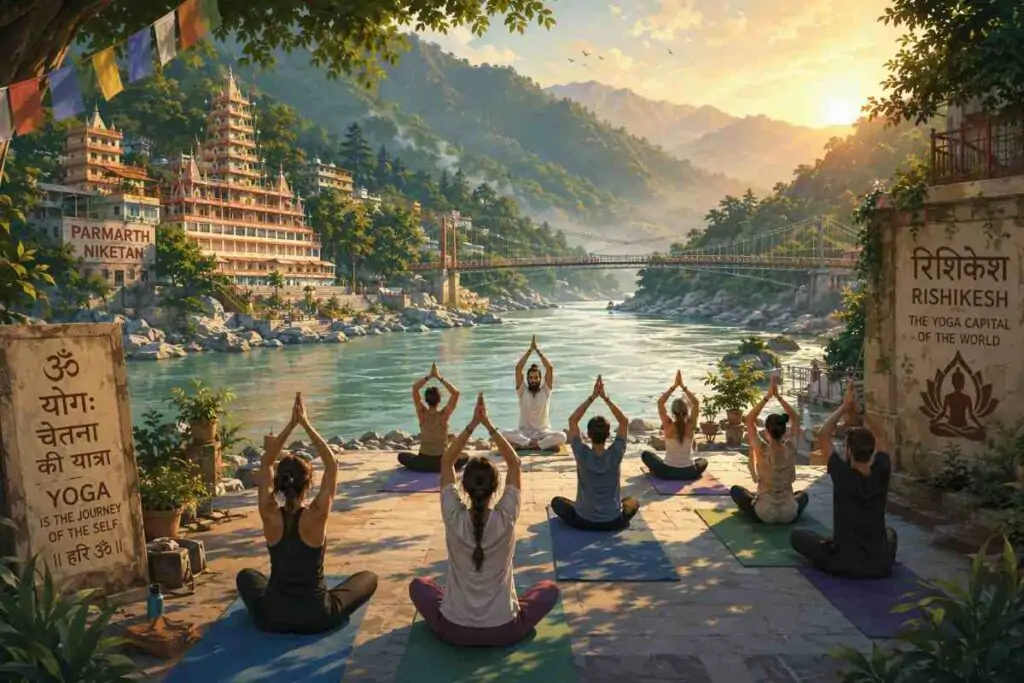
Many spiritual seekers choose this area because the setting naturally supports spiritual growth. You wake up near the foothills of the Himalayas, hear temple sounds in the distance, and remain close to the sacred Ganges river. That changes the mood of your day.
What does that mean for you in practice? It often means meditation feels easier, your routine becomes steadier, and your focus shifts inward. Even simple acts like walking to class, sitting quietly after meals, or attending Ganga Aarti can support inner peace.
Still, peace is not equal in every lane of Tapovan. Some parts are active, loud, and commercial. Schools located a little away from the main tourist flow often create a calmer container for training. If your goal is sincere study, that quieter environment can make a clear difference.
Tapovan vs Other Areas in Rishikesh for Yoga Teacher Training
Tapovan is often the first choice for yoga teacher training Tapovan Rishikesh because it combines access, reputation, and community. You can reach cafes, markets, and the Ganga fairly easily, and many students enjoy that balance. Still, some areas of central Tapovan feel noisy and heavily touristed.
By contrast, a yoga school on the edge of Tapovan or slightly uphill can offer a very different daily experience. You stay close to the action but return to peaceful surroundings, greenery, and fewer distractions. That can support your yoga journey in a stronger way.
| Area | What it feels like for training |
|---|---|
| Central Tapovan | Convenient, social, busy, more tourist movement |
| Edge of Tapovan | Quieter, greener, better for routine and rest |
| Other parts of Rishikesh | Can be traditional or remote, but less connected to Tapovan’s student hub |
If you want the best yoga school feel, calm often matters as much as location.
An Overview of Yoga Schools in Tapovan
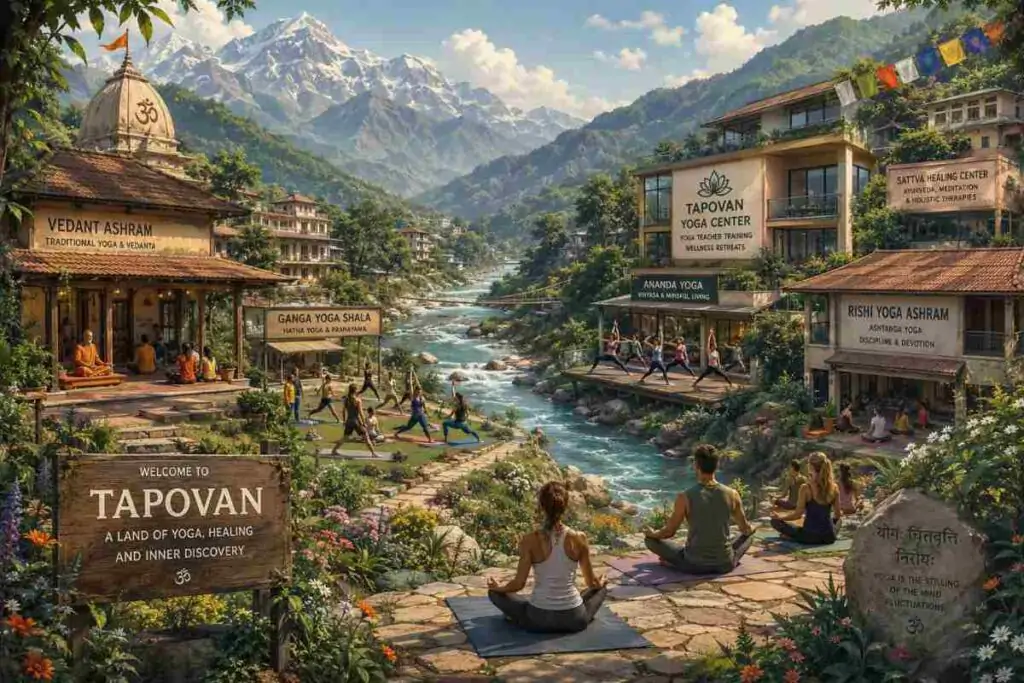
Tapovan offers a wide mix of yoga school options, from traditional ashram-style spaces to modern residential centers. Many focus on yoga training that includes asana, meditation, pranayama, philosophy, and community living. Some schools are better suited to beginners, while others serve students seeking advanced study.
When comparing teacher training, look at whether the school is a registered yoga school and how clearly it presents its course structure. In this space, trust, teaching quality, and proper standards matter more than appearance or marketing.
Types of Yoga Schools Available
Not every yoga school in Tapovan teaches in the same way. Some are built around full residential yoga teacher training tapovan rishikesh, while others focus more on yoga retreats or short workshops. Your choice should match your goal. Do you want certification, deeper self-practice, or a gentle first step?
In many cases, schools blend structured yoga classes with daily living, meals, and group support. That creates a more immersive yoga ttc experience. You are not just attending a few sessions. You are living the process from morning to evening.
- Residential schools for full yoga teacher training tapovan rishikesh
- Retreat-based centers with shorter yoga classes and rest
- Traditional schools focused on philosophy and disciplined practice
- Modern programs blending ancient methods with accessible teaching
- Specialty schools offering Yin, Aerial, or Prenatal formats
School Accreditation and Certification Standards
Accreditation matters because it gives structure to your teacher training course. In Tapovan, many students look first for Yoga Alliance registration. That tells you the school is following a recognized standard for curriculum hours and teaching areas.
A registered yoga school usually explains its course level clearly, such as 200, 300, or 500 hours. It should also state what is required for yoga certification, including attendance, conduct, and course completion. That helps you know what you are committing to before you arrive.
You may also see references to Indian registration or institutional standing, but the most visible international benchmark in this space is Yoga Alliance. If you want a certificate that is easier to use globally, choosing a school with clear standards is a smart move.
Internationally Recognized Yoga Alliance Certifications
Yes, many Tapovan schools offer internationally recognized Yoga Alliance pathways. This is one reason the area remains popular with global students. When a yoga teacher training tapovan rishikesh course is registered properly, your yoga certification can support teaching opportunities in many countries.
Schools highlighted in this space often offer RYS 200, RYS 300, and RYS 500 programs through Yoga Alliance USA. These levels help students begin, deepen, or complete a larger training track. If your goal is to become a working teacher, this framework is useful.
Still, certification should not be the only reason you enroll. The stronger schools also stress personal practice, discipline, and deeper understanding. A certificate opens doors, but your confidence, teaching skill, and lived experience are what truly shape your next step.
Main Styles of Yoga Taught in Tapovan Rishikesh
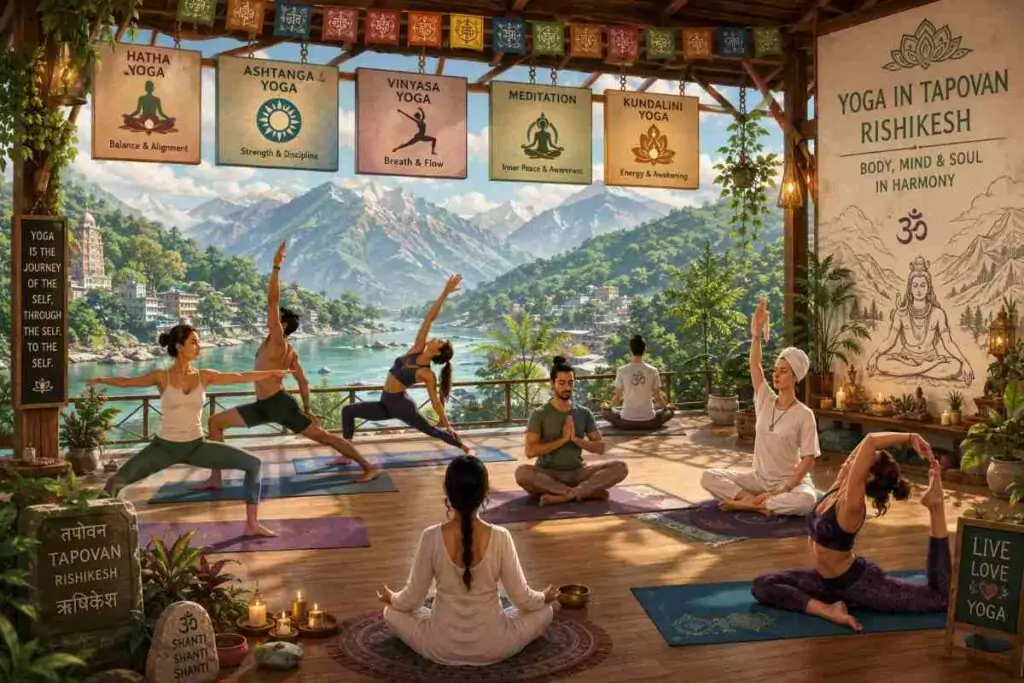
The main styles commonly taught in Tapovan include hatha yoga, ashtanga yoga, vinyasa-based methods, meditation work, and in some schools, kundalini yoga or restorative approaches. This gives students a broad yoga practice foundation instead of just one physical method.
That variety helps because not every body, goal, or teaching path is the same. Some students want disciplined sequencing. Others want slower alignment work or more spiritual depth. The next sections show how these approaches differ and what each one can offer you.
Hatha Yoga
Hatha yoga is often where students build their foundation. In many hour yoga teacher training tapovan rishikesh courses, it introduces you to physical postures, breath awareness, steadiness, and safe alignment. That makes it especially useful if you are still shaping your personal yoga practice.
The value of hatha yoga is not speed. It is clarity. You spend more time understanding how a pose works, how breath supports it, and how to stay present inside it. This slower approach often helps students who want stronger fundamentals before teaching others.
It also carries the feel of ancient teachings made practical. In a Tapovan setting, hatha yoga usually sits alongside philosophy, meditation, and discipline, which keeps the method connected to a wider yogic way of life rather than treating it as exercise alone.
Ashtanga Vinyasa Yoga
Ashtanga vinyasa is a major draw for many students in Rishikesh. Schools with this focus teach linked movement, breath-led pacing, stamina, and concentration. If you enjoy structure with intensity, this style can become the backbone of your yoga training.
In practice, you may study the Ashtanga Primary Series, guided sequences, and vinyasa flow transitions that build heat and focus. This can improve strength, flexibility, and teaching confidence. It also helps you understand how to organize a dynamic class in a clear, teachable way.
For students considering ashtanga yoga teacher training tapovan rishikesh, the quality of instruction matters a lot. The best yoga teacher is not only skilled in movement but also strong in adjustment, observation, and method. A supportive school helps you develop all three, not just copy a sequence.
Kundalini Yoga
Kundalini yoga is often associated with energy work, mantra, breath, and inward focus. While it is not the main emphasis in every Tapovan school, some programs introduce it as part of a broader yoga journey. For certain students, that can open a new dimension of practice.
Its appeal lies less in athletic challenge and more in spiritual growth and inner peace. You may find it meaningful if you are drawn to meditation, subtle awareness, or the deeper emotional side of practice. It can feel powerful, especially in a retreat or immersive setting.
Because of its intensity, some schools present it more carefully or at an advanced level. If this style interests you, ask how it is taught and whether it is integrated into the curriculum or offered as a separate module within the training experience.
Iyengar and Restorative Yoga Approaches
Iyengar yoga and restorative yoga bring a different pace to the training space. Where flow styles build rhythm and heat, these methods help you slow down, refine alignment, and understand support. That makes them useful for students who want precision and recovery in one path.
In yoga classes with an Iyengar or restorative influence, you usually pay close attention to position, breath, props, and how the body responds. This can deepen awareness and reduce the habit of rushing through postures. It also supports students managing fatigue during intensive training.
Some schools pair these softer methods with sound healing or Yoga Nidra sessions. That creates a more holistic approach, balancing effort with rest. If your body needs space, or if you want to teach a wider range of students later, these approaches add real value.
Course Levels and Programs Offered
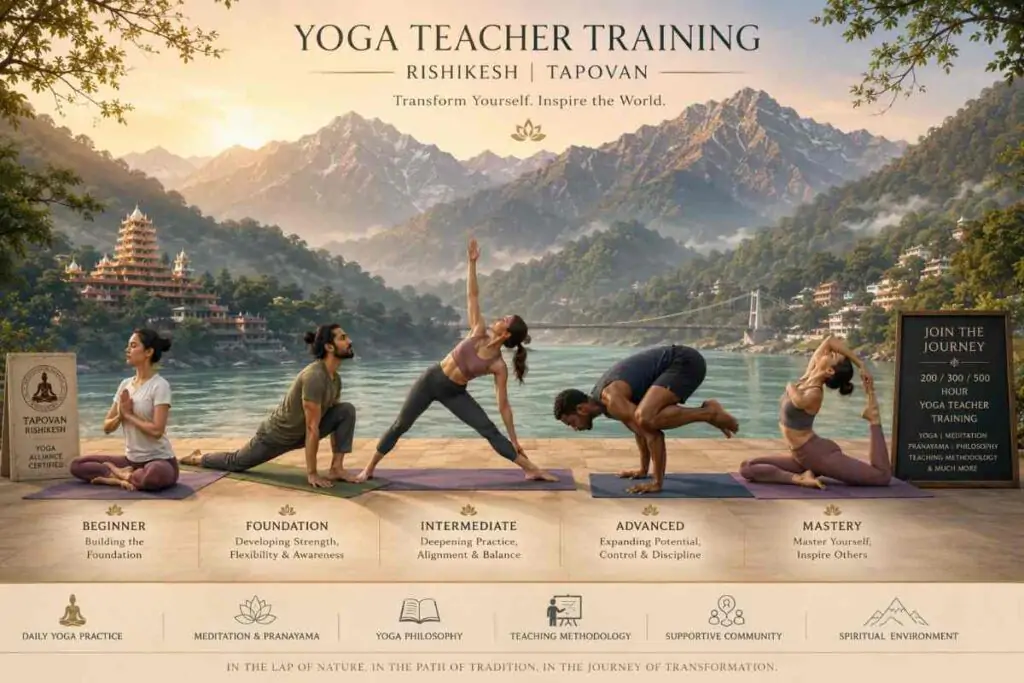
Tapovan schools usually offer yoga courses across different levels, so you do not need to arrive as an expert. You can begin with short programs, move into a 200-hour foundation, and later continue into more advanced study if that feels right.
This step-by-step structure helps students choose teacher training programs that match their background, time, and goals. Some want a short immersion for personal change. Others want a full professional path. The sections below break down the most common formats you will see.
100-Hour Yoga Teacher Training Courses
A 100-hour yoga teacher training tapovan rishikesh is often the gentlest entry point for beginners and curious travelers. It gives you a short but meaningful yoga ttc experience without the longer commitment of a full month. For many spiritual seekers, that feels more manageable.
These short-term courses usually focus on core asana, simple philosophy, pranayama, meditation, and routine building. The aim is often personal growth more than immediate teaching readiness. You get a taste of disciplined practice while still keeping the workload realistic.
This level can work well if you are unsure about going straight into a 200-hour course. It lets you test the environment, your energy, and your motivation. In a calm setting near Tapovan, it can be a strong first step toward deeper training later on.
200-Hour Yoga Teacher Training Courses
The 200-hour yoga teacher training tapovan rishikesh is the standard foundation for most students. It is designed for those who want a complete introduction to teaching, personal discipline, and broader yogic study. If you are serious about starting your yoga journey, this is usually the key program.
Schools in this area often describe the 200-hour course as beginner-friendly, with training in Ashtanga, Vinyasa Flow, alignment, pranayama, meditation, anatomy, and philosophy. When completed through a recognized school, it can support Yoga Alliance registration and formal yoga certification.
That matters if you want to become a certified yoga teacher. Still, the course is also valuable for students who do not plan to teach right away. Many join to strengthen their own practice, gain clarity, and experience immersive learning in Rishikesh’s spiritual environment.
300-Hour and Advanced Yoga Teacher Training
A 300-hour yoga teacher training tapovan rishikesh is meant for students who have already completed their 200 hours. This advanced level builds on your foundation with deeper study, stronger teaching skills, and more mature self-practice. It is not usually the place to start from zero.
In a good yoga school, this stage includes advanced sequencing, more detailed anatomy, richer philosophy, and broader professional preparation. Some schools also connect it to progression toward higher registration standards through Yoga Alliance USA, which supports your development as a working teacher.
Yet the value is not only professional. Many students choose this level for spiritual growth and depth. The quieter your environment, the better this kind of training tends to land. Advanced work asks for focus, recovery, and a setting that helps you stay steady.
Short-Term Workshops and Specialized Retreats
Shorter offerings are popular in and around Tapovan because not everyone is ready for a long teacher training program. These formats can give you focused study, rest, or skill-building in just a few days. They also work well before or after a longer course.
Many schools include yoga retreats that combine movement, meditation, nature, and cultural experiences. Others offer specialty trainings that let you study one area in more detail. This is useful if you want to expand your skills without committing to a full certification right away.
- Yin yoga intensives for slower, meditative bodywork
- Sound healing sessions that support rest and inner balance
- Meditation retreats for breath, stillness, and mental clarity
- Specialized short courses like Aerial or Prenatal training
Curriculum and What You Will Learn
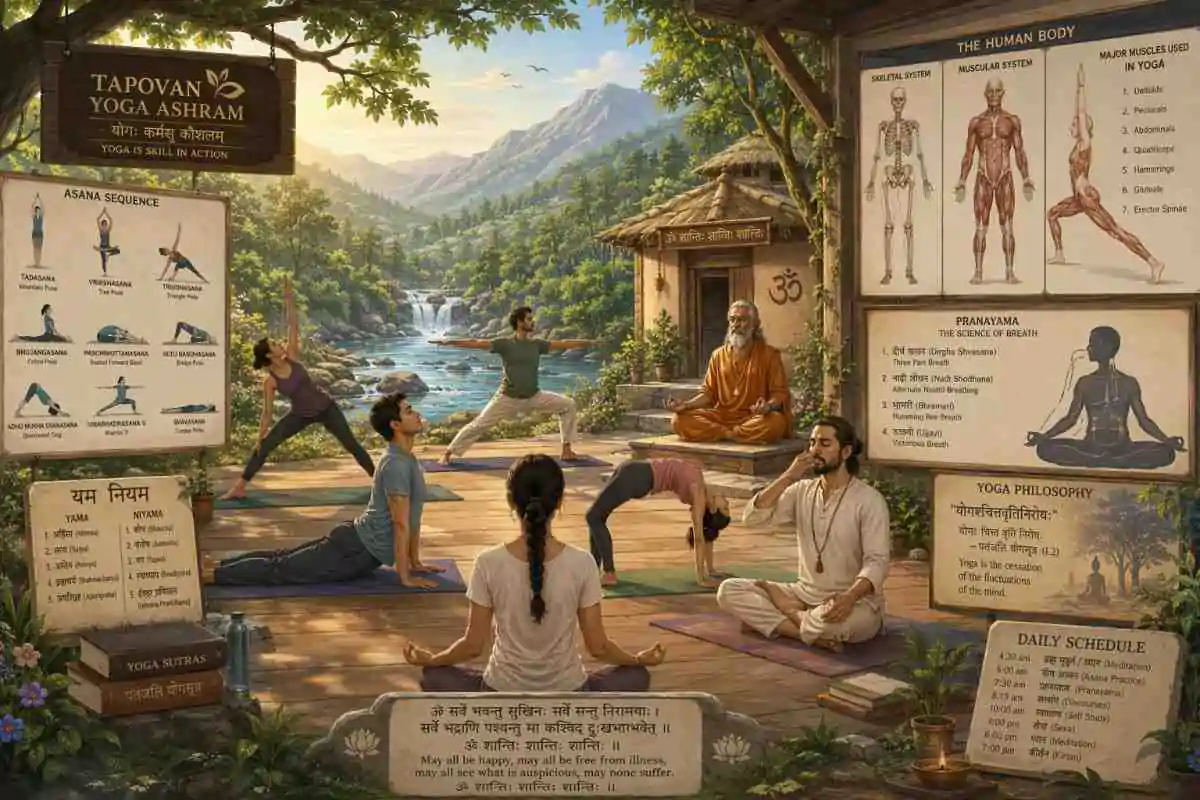
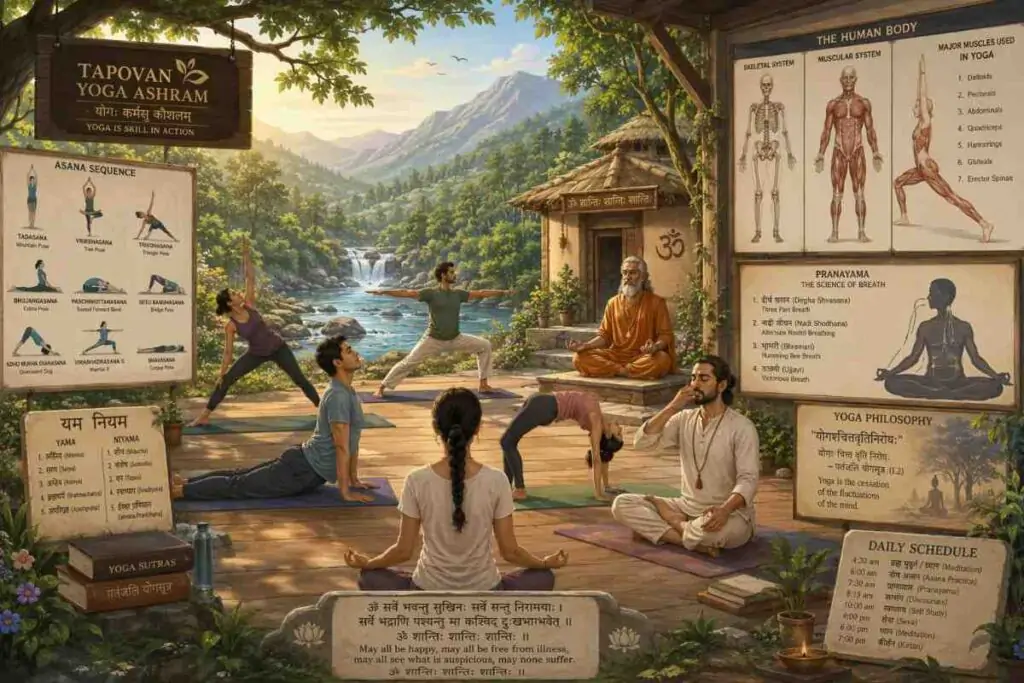
A solid Tapovan program usually covers far more than posture drills. Expect yoga philosophy, asana practice, pranayama, meditation, anatomy & physiology, and teaching methods. This wider approach is what turns yoga training into a meaningful education rather than a fitness course.
Yes, many schools do offer beginner-friendly pathways, especially at the 100-hour and 200-hour levels. The key is choosing a program that teaches clearly, builds step by step, and gives you support as your confidence grows across both practical and theory-based subjects.
Asana Practice and Teaching Techniques
Asana practice is the visible part of most training, but learning to teach it is a separate skill. A good yoga teacher training tapovan rishikesh program helps you understand not only the physical postures themselves, but also how to guide students into them safely and clearly.
That often includes demonstration, verbal cueing, alignment awareness, sequencing, and supervised practice teaching. You may begin by observing and copying. Over time, you start leading short sections of yoga classes yourself. This transition is what builds real teaching confidence.
For future work as a yoga teacher, this matters a lot. Students need more than someone who can perform poses well. They need instruction that is grounded, calm, and easy to follow. Strong schools keep returning to these basics until your delivery becomes natural.
Pranayama and Breathwork
Pranayama is one of the most important parts of serious yoga study. In teacher training, it helps you understand how breath shapes attention, energy, and emotional steadiness. Without it, yoga practice can stay limited to movement alone.
Breathwork sessions often include simple regulation techniques, awareness practices, and ways to connect breathing with postures or meditation. Over time, many students notice better focus, more balanced energy, and a stronger sense of inner peace. It is one of the quiet shifts that lasts.
In the Tapovan environment, pranayama often feels especially powerful because the routine supports it. Early mornings, clean food, nature, and reduced distraction create the right conditions. That is how breathwork begins moving from theory into lived spiritual energy and everyday stability.
Meditation and Mindfulness
Meditation is where many students meet the deeper side of their yoga journey. At first, it may feel difficult. You sit down, and the mind races. That is normal. With daily repetition, mindfulness starts to feel less forced and more like a steady return to yourself.
In training, meditation may include seated silence, guided awareness, mantra, Yoga Nidra, or reflective practices. Some schools also add sound healing to support relaxation and inward attention. These sessions can soften mental restlessness and help you absorb the rest of the curriculum more fully.
This matters for spiritual growth because teaching yoga is not only about directing movement. It is also about presence. When your own mind becomes a little steadier, you listen better, respond better, and bring a different quality into the room for others.
Yogic Philosophy, Anatomy & Physiology
Yoga philosophy gives your practice context. It introduces the ethical, mental, and spiritual side of yoga through teachings connected to Patanjali, the Bhagavad Gita, and broader yogic thought. This part of the teacher training course helps you see yoga as more than exercise.
Anatomy supports that by grounding learning in the body. You study joints, muscles, breath mechanics, and common movement patterns so you can teach more safely. Even basic anatomy can sharpen your eye and make your adjustments more intelligent.
Together, philosophy and anatomy build a fuller understanding of yoga. One side brings ancient wisdom. The other brings practical clarity. When both are taught well, your learning feels balanced. You become better prepared to guide students with both heart and informed awareness.
Daily Life During yoga teacher training tapovan rishikesh
Daily life during training is usually structured, simple, and focused. Your yoga practice becomes part of a routine that includes early starts, classes, meals, rest, and study. This rhythm can feel demanding at first, especially if you are used to a loose schedule.
Over time, many students begin to enjoy it. The steady pace supports your teacher training journey and helps you build your own practice with less mental clutter. In a residential setting, even small habits start reinforcing the larger shift toward ashram life.
Typical Daily Schedule
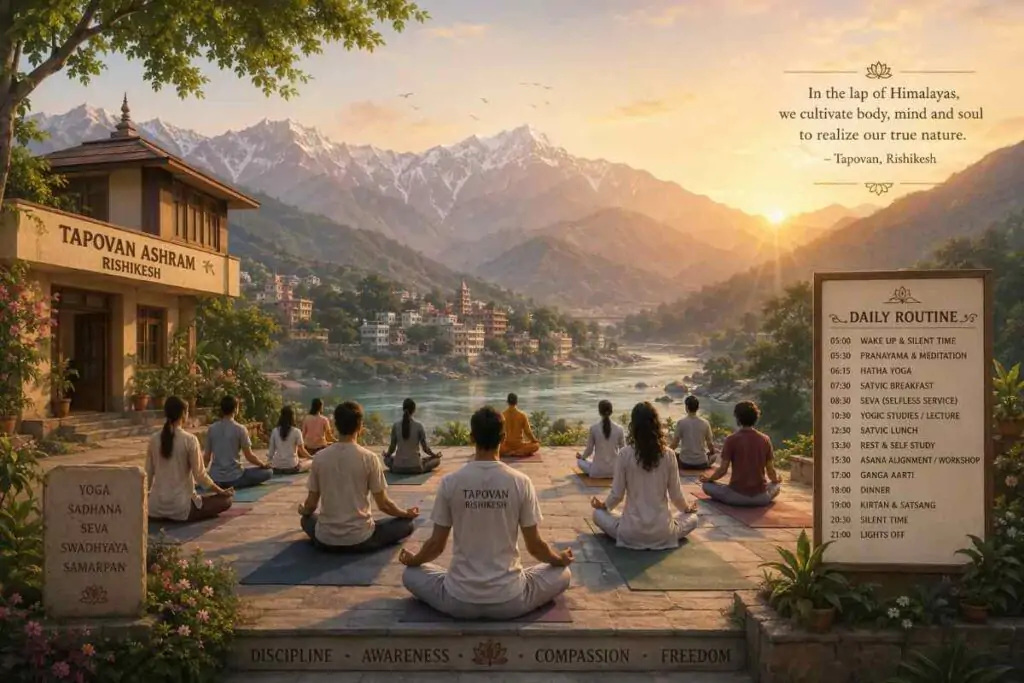
What is the daily schedule like? In most Tapovan trainings, days begin early and move through a clear sequence of practice, study, meals, and rest. The exact timings vary by school, but the structure usually stays consistent. That consistency is part of the learning.
You are not deciding every hour for yourself. Instead, the schedule carries you. This helps reduce distraction and builds discipline. The balance of asana, theory, meditation, and relaxation allows intensive study without feeling completely chaotic.
A typical daily schedule may include:
- Early morning meditation or pranayama
- Morning asana practice
- Midday theory or philosophy classes
- Afternoon anatomy, teaching practice, or yoga classes
- Evening relaxation, self-study, or quiet time
Meals, Nutrition, and Sattvic Diet
Food plays a real role in yoga training. Many residential schools serve a sattvic diet built around simple, fresh, vegetarian food. The aim is not only to fill you up, but to support clear energy, digestion, and steadiness throughout a demanding training schedule.
Students commonly receive three meals a day, and some programs also include herbal tea. Meals are usually prepared in-house and served as part of the residential experience. This removes one more daily decision and lets you stay focused on classes and recovery.
From a physical health perspective, this approach makes sense. Intensive training asks a lot from your body. Clean nutrition, regular mealtimes, and enough hydration help you keep going. If you are coming from a fast-paced lifestyle, this part alone can feel deeply grounding.
Free Time, Local Exploration, and Community Activities
Even in intensive training, you usually get some leisure time. That may be a break between classes, a day off, or part of the weekend. Students often use this space for rest, journaling, laundry, or a simple walk by the river. You do not need every moment packed.
Local exploration can also be part of the experience. Some schools organize weekly excursions, temple visits, riverside sessions, or Ganga Aarti outings. These community activities give your yoga journey more texture and help you connect with the wider culture around you.
There is a healthy balance here. You study hard, but you also step outside the classroom. Those cultural experiences often become some of the most memorable parts of training, especially when shared with fellow students in a supportive residential community.
Accommodations and Facilities for Trainees
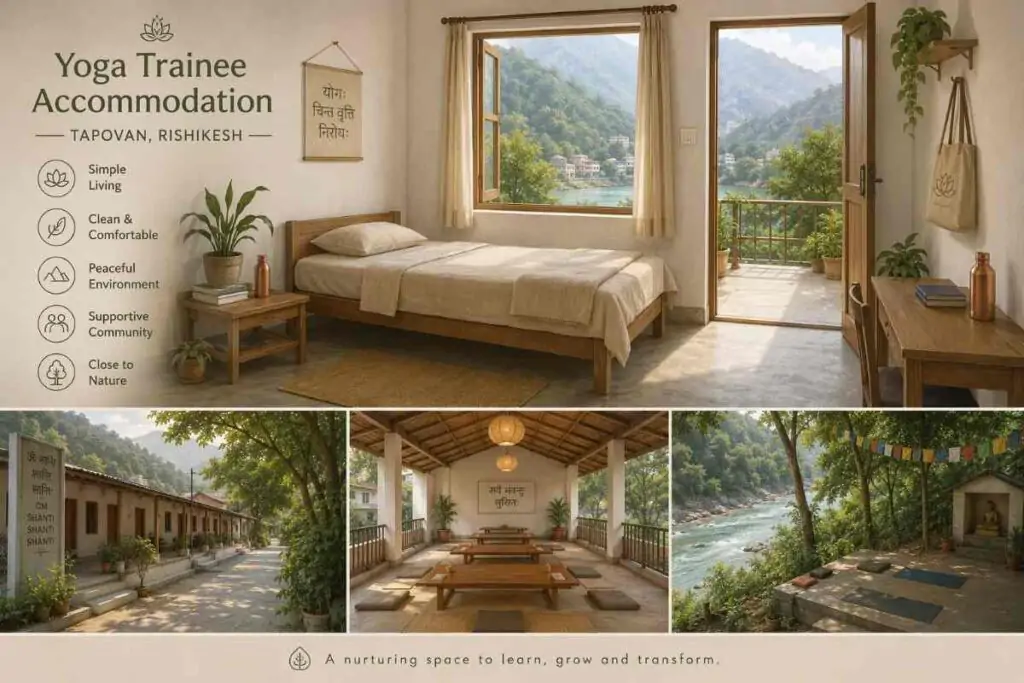
Accommodation options for yoga teacher trainees in and around Tapovan usually include residential ashram-style rooms, shared rooms, or private rooms depending on the school and fee level. The goal is usually simple comfort rather than luxury, with enough privacy and ease to support study.
The better facilities are clean, practical, and placed in peaceful surroundings. For many students, living standards matter because your room becomes part of recovery. After long practice days, quiet sleep, hot water, and basic convenience can shape the whole experience.
Types of Rooms and Living Standards
Room types vary by yoga school, but most residential programs keep things straightforward. You can usually expect either shared accommodation or a private room, with some schools offering budget-friendly non-AC options and others adding a few more comforts like balconies or larger beds.
If you are choosing based on price, shared rooms may help. If you know you need quiet sleep and personal space, a private room may be worth the extra cost. For best yoga teacher training tapovan rishikesh, comfort does not need to be fancy, but it does need to be reliable.
Common types of rooms and features include:
- Shared rooms for lower-cost accommodations
- Private rooms for more rest and privacy
- Attached bathrooms with hot water
- Basic essentials like WiFi, bed, storage, and sometimes a balcony
Amenities and Onsite Services
Amenities in a residential yoga school are usually simple but useful. You may find WiFi, hot water, a dining area, yoga shala access, laundry support, and staff who help with local needs. Some schools also assist with travel questions, check-in guidance, or basic daily concerns.
These onsite services matter more than many students expect. During a full training, you are tired, focused, and adjusting to a new place. Smooth practical support creates comfort and keeps small issues from draining your energy. That is especially valuable if this is your first time in India.
Ashram life is not about luxury, but it should still feel caring and workable. A school that maintains clean shared spaces, organized meals, and responsive staff often creates a better student experience than one that looks polished online but feels scattered in person.
Safety, Hygiene, and Comfort
Safety and hygiene should be part of your school decision, not an afterthought. Clean rooms, maintained bathrooms, reliable drinking water, and orderly food service all support your wellbeing during yoga teacher training tapovan rishikesh. When those basics are handled well, it is easier to settle in.
Comfortable living does not mean excess. It means your environment lets you sleep, wash, eat, and study without ongoing stress. Students often mention cleanliness, kind staff, and peaceful surroundings as major reasons a training feels supportive from start to finish.
A calmer location can help here too. Schools slightly away from main traffic often feel safer and more restful, especially at night. If you are choosing between a loud central stay and a quieter residential campus, the second option may give you a much stronger overall experience.
Costs and Inclusions of yoga teacher training tapovan rishikesh
Costs vary widely depending on course level, school type, room choice, and what is included. Based on the available school information, shorter yoga courses can start under a few hundred dollars, while longer residential yoga teacher training tapovan rishikesh programs range from moderate to higher price points.
This means you should compare more than tuition fees alone. Meals, accommodation, excursions, and certification can change the real value. Some schools also mention payment plans or different fee bands, so it is worth looking closely before you book.
Tuition Fees and What’s Covered
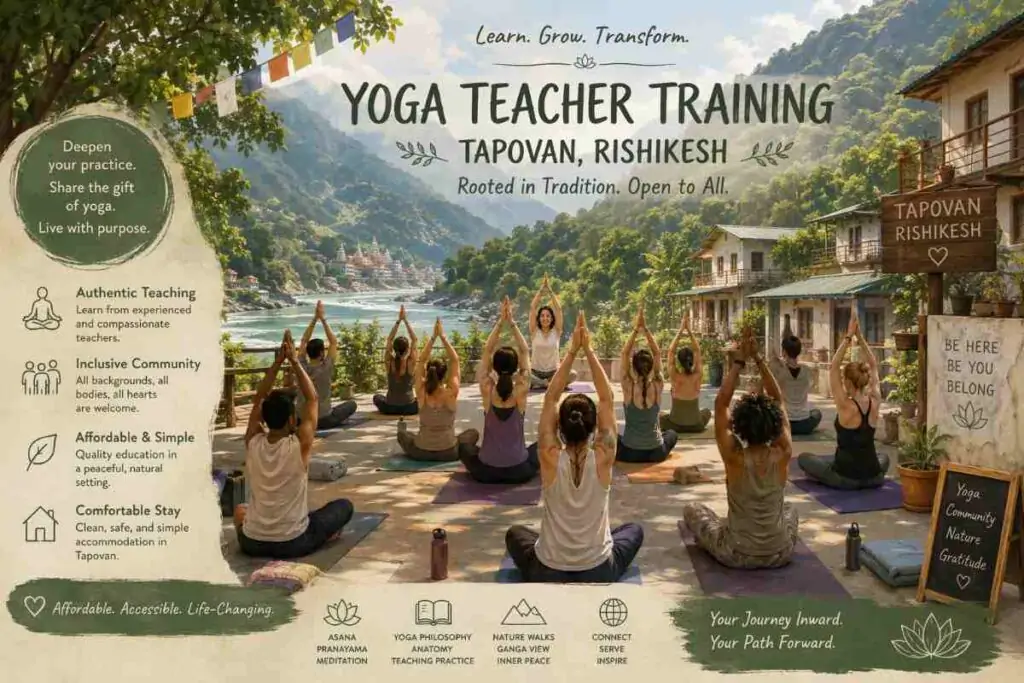
Published tuition fees in this space show a broad range. Some 200-hour programs are listed around $595 at one school, while others are listed from about $1000 to $1350. Advanced or combined programs can rise higher. That is why direct comparison matters.
Look at inclusions, not just the headline number. A residential yoga teacher training tapovan rishikesh course may include accommodation, meals, classes, excursions, herbal tea, and certification support. Another may quote a lower fee but leave out important items. Always check the full package.
| Program | Sample published fee | Common inclusions mentioned |
|---|---|---|
| 100-hour / short course | From about $249 to $950 | Classes, accommodation, food in some cases |
| 200-hour residential | About $595 to $1350 | Accommodation, meals, training, sometimes excursions |
| 300-hour residential | About $705 to $1400 | Training, stay, meals, certification pathway |
| 500-hour residential | About $1300 to $2700 | Longer immersion, accommodation, meals, full training |
Payment Plans and Scholarships
Some schools mention different fee options or discounted ranges, which suggests there may be flexibility around payment plans depending on the course. If you are budgeting carefully, ask the yoga school directly how deposits, remaining balances, and room upgrades are handled.
The compiled school details do not provide much direct information on scholarships, so you should not assume they are available everywhere. Still, affordable training does exist in Tapovan, especially when you compare shorter courses, shared accommodation, and schools with lower residential fees.
What matters most is clarity. Before you commit, confirm what supports your yoga certification process, what is refundable, and what extra charges may appear later. A school that answers these questions clearly often proves easier to work with throughout the whole training period.
Additional Expenses to Consider
Beyond tuition, your yoga journey will likely include a few extra costs. Some schools clearly state that airport transfers, local travel, rafting, and medical expenses are not included. Even if the base fee looks manageable, these details can shape your total budget.
It helps to plan ahead so money stress does not distract you during training. Ask yourself what you will need before arrival and during your stay. A realistic budget gives you more freedom to enjoy the experience and say yes to meaningful excursions if they arise.
Common additional expenses include:
- Travel costs such as flights, taxis, or airport transfer
- Study materials, notebooks, or small gear needs
- Personal outings, cafes, and optional excursions
- Medical expenses or wellness treatments outside the course
Eligibility and Entry Requirements
Eligibility for yoga teacher training tapovan rishikesh is usually broad, especially at the beginner level. Many schools welcome students who want deeper personal study, not only future teachers. That makes entry requirements more accessible than many people expect.
Even so, you should be ready for a structured routine and regular physical health demands. The application process may be simple, but the course itself asks for commitment, openness, and the ability to participate steadily in practice, study, and community life.
Who Can Apply for Yoga Teacher Training Tapovan Rishikesh
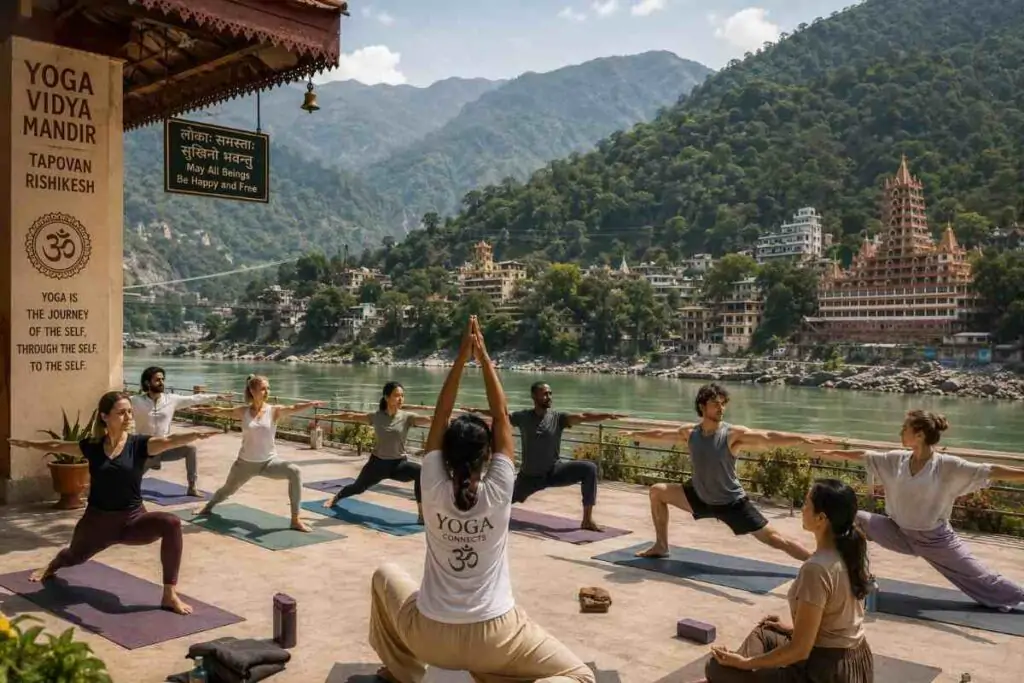
Who can apply? In most cases, beginners, regular practitioners, and serious learners are all welcome. Schools often say their programs are open to those who want spiritual growth, a stronger own practice, or a future in teaching. You do not always need years of experience.
That said, your reasons matter. A teacher training course asks for more than curiosity. You should be ready to follow a routine, learn in a group, and stay engaged for the full program. If that feels right, you are likely a good fit.
Common applicants include:
- Beginners seeking a structured first immersion
- Practitioners wanting to deepen their own practice
- Future teachers aiming for yoga teacher training tapovan rishikesh certification
- Spiritual seekers interested in disciplined inner work
Language Proficiency and Physical Health Needs
Language proficiency matters because yoga courses include philosophy, anatomy, teaching method, and discussion, not only movement. You do not need perfect English, but you should be able to follow instruction and ask questions. That helps you get much more from the training.
Physical health is also important. You do not need to be highly flexible or advanced, but you should be able to participate in regular classes, sit for study sessions, and manage a fairly active daily schedule. Intensive teacher training can be tiring even for experienced students.
The good news is that many schools emphasize inclusivity. They often welcome different ages, backgrounds, and experience levels. What matters most is honesty about your condition and a willingness to practice consistently within your present capacity rather than forcing progress.
Required Documents and Application Deadlines
Most schools present an online inquiry or booking process first, then guide you through the next steps. Exact required documents are not always listed in detail, so it is best to ask the registered school directly before making travel plans. Clear communication helps avoid stress.
In general, you should expect to provide basic personal details and course preference, and you may need travel or identification information later. If you are aiming to become a yoga teacher through an accredited pathway, make sure your name and records match the certification process correctly.
Application deadlines vary by intake and season. Because residential spots can be limited, especially in smaller schools, it is wise to apply early. Waiting too long can reduce your room choices or push you into a busier batch than you originally wanted.
Unique Cultural Experiences in Tapovan, Rishikesh
Training here is not only about classes. Students often experience cultural experiences tied to the river Ganga, temple visits, local rituals, and the everyday rhythm of a city shaped by spiritual heritage. That adds texture to your time in the yoga capital of the world.
These moments matter because they help feel lived, not just studied. When your course includes local excursions or evening ceremonies, you begin to understand why so many people come here searching for something deeper than technique alone.
Spiritual Ceremonies and River Ganga Rituals
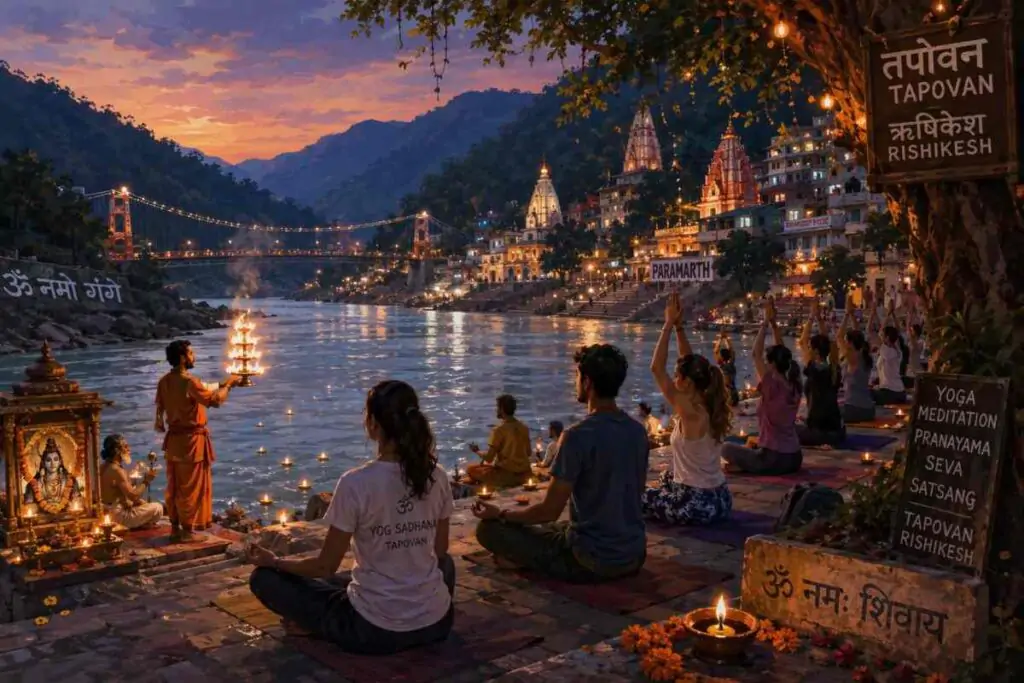
One of the most memorable parts of training can be the spiritual ceremonies linked to the river Ganga. Many schools include or recommend attending Ganga Aarti, where chanting, lamps, and collective devotion create a strong atmosphere by the water. For many students, it stays with them.
These rituals are not just sightseeing moments. They often become emotional markers in the yoga journey. You may arrive as an observer and leave feeling unexpectedly moved. The combination of sound, light, prayer, and place can carry a real sense of spiritual energy.
If your school also offers riverside classes or temple visits, the experience becomes even richer. Such ceremonies help connect your training to the land and culture around you. That can make feel less abstract and more rooted in daily spiritual life.
Local Markets, Cafes, and Cultural Tours
Tapovan is known for its local markets, cafes, and walkable spots where students spend breaks or days off. These areas add convenience and a social side to life in the yoga capital of the world. You can step out for tea, simple shopping, or a quiet meal.
At the same time, this is where the “noisy and touristy” side of Tapovan becomes more obvious. Busy roads, foot traffic, and crowded corners can feel lively or draining depending on your mood. That is why many students prefer a school set a little away from the center.
Cultural tours help balance this out. When organized well, local exploration gives you context without overwhelming your routine. You get to enjoy the area’s character while returning to a calmer base that supports study, sleep, and the deeper aim of your training.
Weekend Excursions and Nature Walks
Weekend excursions can be a highlight of residential training. Schools often include short outings that give your body and mind a break from the regular timetable. You may visit temples, caves, waterfalls, or scenic points near the river Ganga and the Himalayan foothills.
These trips are more than free time. They often deepen your bond with the place and with your classmates. Shared walks and outdoor practice sessions let you experience the natural beauty that makes this region special. That freshens your energy for the week ahead.
Common examples include:
- Nature walks in green hillside areas
- Visits to Himalayan temples or caves
- Waterfall or village outings
- Riverside practice or quiet time near the Ganga
Beginner’s Guide to Starting Yoga Teacher Training Tapovan Rishikesh
If this is your first serious immersion, keep it simple. The first step is choosing a teacher training course that matches your current level, energy, and reasons for coming. You do not need to arrive as an expert to begin well.
A useful beginner’s guide is to focus on fit, not pressure. Ask whether the environment feels calm, the teaching feels clear, and the daily structure feels realistic for you. These basics matter more to a new teacher than promises that sound impressive but feel vague.
Essentials to Bring and Prepare
Packing for training does not need to be complicated. Bring what helps you practice, rest, and stay comfortable. Since many programs are residential and fairly simple, practical items are better than overpacking. You will appreciate this once your daily routine begins.
Travel preparation also includes mental readiness. Expect a different rhythm, shared spaces, and a stronger focus on discipline than a normal trip. If you arrive open and organized, your journey begins more smoothly and leaves more room for personal growth.
Helpful essentials include:
- Comfortable yoga gear for daily practice
- A notebook for class notes and reflection
- Basic toiletries, any medicines, and simple layers
- Copies of important travel and booking details
Resources for Pre-Course Preparation
A little pre-course preparation can make your first week much easier. You do not need to master everything in advance, but it helps to review basic asana practice, simple breath awareness, and common yoga terms. That way, the schedule feels less overwhelming.
If your school shares reading lists or orientation notes, use them. Good resources often include introductory philosophy, basic anatomy ideas, and reminders about routine, food, and conduct. Even a small amount of preparation helps you arrive with more confidence.
Yoga books can also support your mindset. Choose accessible texts that introduce core ideas without making you feel overloaded. The aim is not to study obsessively before arrival. It is to show up with enough familiarity that you can listen, absorb, and participate with ease.
Step-by-Step Guide: How to Begin Your yoga teacher training tapovan rishikesh Journey
Starting can feel big, so take it one stage at a time. A clear step-by-step guide helps turn a vague wish into a real plan. Your first step is not flying to India. It is understanding what kind of learning environment will actually support you.
From there, each next step becomes easier: choose a school, apply, prepare, arrive, and settle into the process. When approached this way, your yoga teacher training tapovan rishikesh journey feels less intimidating and more like a grounded path toward a transformative experience.
Step 1: Research and Choose the Right Yoga School
Start with research that goes beyond price and photos. Look at course level, teaching focus, location, residential setup, and whether the school explains its teacher training program clearly. A good match on paper usually points to a better experience on the ground.
Pay close attention to setting. In Tapovan, this matters a lot. If you want quiet study, the best yoga school for you may be one that sits slightly outside the busiest market zone. That way, your journey gets both access and calm.
Also ask what the school values. Does it emphasize authentic teaching, supportive community, and a balanced curriculum? Or does it mainly push certification? The right choice is usually the place that helps you grow steadily, not the one making the loudest promises.
Step 2: Complete the Application and Secure Your Spot
Once you choose a school, move to the application stage without waiting too long. Residential batches can fill up, and earlier registration usually gives you better room options and more time to organize travel. This is where your step-by-step guide becomes real.
Read the booking terms carefully. Check the deposit amount, balance schedule, what is included, and what supports your certification pathway. If anything is unclear, ask before you pay. Good schools respond directly and help you understand the process.
This part may seem administrative, but it matters. A smooth application reduces stress and gives you confidence that the yoga teacher training tapovan rishikesh course is well organized. That peace of mind helps you arrive ready to learn instead of arriving already frustrated.
Step 3: Prepare for Your Arrival and Adjust to Local Life
After booking, focus on arrival logistics and mindset. Confirm how you will reach the school, what time check-in happens, and whether airport transfer is included or separate. Small details like this can make your first day much easier.
Then prepare for local life. Tapovan and the wider Rishikesh area have a distinct rhythm shaped by ashram culture, spiritual seekers, simple food, and early mornings. If you expect this and welcome it, the adjustment feels smoother. If you fight it, the first week can feel harder.
Try to arrive with a little softness. Your yoga journey begins before the first class. It starts in how you observe, adapt, and settle into a new place. Give yourself a few days of patience, and the environment often starts to support you naturally.
Step 4: Embrace the Experience and Grow as a Yogi
Once the course begins, your job is simple: show up fully. You do not need to be the strongest student in the room. You need consistency, honesty, and willingness. That is what carries most people through a demanding teacher training journey.
Growth often happens quietly. Your yoga practice gets steadier. Your reactions soften. Your breath becomes more reliable. Over time, these shifts create both personal growth and spiritual growth. You may not notice them every day, but others often do.
If you chose a calmer school setting, this process can deepen even more. Less outside noise means more room to listen inwardly. That is where inner peace starts becoming something practical, not abstract. You leave with more than information. You leave changed by the experience.
Yoga Teacher Training Reviews and Testimonials
yoga teacher training tapovan rishikesh reviews and testimonials provide valuable insights into the experiences of former students who have immersed themselves in programs in Tapovan. Many share transformative stories, highlighting the supportive community, knowledgeable instructors, and enriching environment that characterize their training. Alumni often emphasize how the serene backdrop of the Himalayan foothills and the sacred Ganges river contributed to their personal growth and deepened spiritual connection. Beyond the skills acquired in asana and teaching techniques, students frequently express gratitude for the sense of belonging and camaraderie fostered among peers during intensive study. These testimonials help prospective trainees gauge the authenticity of each school’s offerings and inspire confidence in embarking on their own journey. Reading first-hand accounts can be a compelling motivator, allowing future teachers to envision their potential path in the heart of Rishikesh.
Ayurveda and Sound Healing Integration in Teacher Training
Integrating Ayurveda and sound healing into yoga teacher training tapovan rishikesh offers a holistic approach that enriches both personal practice and teaching methodologies. Ayurveda, the ancient system of natural healing from India, complements yoga by fostering an understanding of individual body types, dietary needs, and lifestyle adjustments. This knowledge allows trainees to connect practices with Ayurvedic principles, enhancing their approach to health and wellness. Alongside Ayurveda, sound healing techniques, such as using singing bowls and mantra chanting, can deepen the meditative experience and facilitate emotional release. This integration is not merely supplementary; it provides depth to the training by inviting students to explore the vibrational aspects of healing and their impacts on the body and mind. In this supportive environment, practitioners learn to cultivate a more profound sense of awareness and balance, which they can later share with their students, creating a comprehensive and nurturing framework for yogic education.
Prenatal, Postnatal, and Aerial Yoga Teacher Training Courses
Prenatal, postnatal, and aerial yoga teacher training tapovan rishikesh courses in Tapovan Rishikesh have gained significant popularity as they cater to specialized needs within the yoga community. Prenatal training introduces future instructors to the transformative journey of pregnancy, equipping them with the knowledge to support expectant mothers through safe asana practice, breathwork, and relaxation techniques. Courses emphasize the importance of body awareness, the physiological changes during pregnancy, and how to create a nurturing environment for women to connect with their bodies and babies. Postnatal training builds upon this foundation, focusing on recovery, healing, and bonding for new mothers. It covers techniques to address common postnatal challenges such as diastasis recti and pelvic floor support, ensuring that instructors can offer tailored guidance for safe practices during this delicate phase. Aerial yoga training complements these offerings by introducing a dynamic approach to traditional, using hammocks to enhance strength, flexibility, and mindfulness. This innovative practice can help students break free from conventional limitations while fostering a sense of freedom and exploration. Together, these courses provide a well-rounded toolkit for aspiring teachers, enhancing their ability to support diverse populations within the yoga sphere, and promoting holistic well-being for students of all backgrounds.
Yin Yoga Teacher Training and Modern Variations of Yoga
Yin yoga teacher training tapovan rishikesh has emerged as a transformative offering within the landscape of yoga education in Tapovan, Rishikesh. This style focuses on deep relaxation and emotional release through long-held passive postures, which allows practitioners to access deeper layers of fascia and promote joint health. In a Yin Yoga Teacher Training program, students learn the importance of stillness, breath awareness, and mindfulness as they explore the capacity to hold poses for extended periods. This deeper connection with the body fosters a greater sense of inner peace and introspection, making it a valuable addition to any yoga teacher’s toolkit. Additionally, many schools in Tapovan also incorporate modern variations into their curricula, such as restorative practices and therapeutics, which focus on gentle and supportive movements. These modern adaptations not only enhance physical health but also emphasize emotional well-being, reflecting the evolving nature of instruction today. As practitioners engage with both traditional and contemporary approaches, they cultivate a well-rounded understanding of how to integrate these styles into their teaching and personal practice, preparing them to support a diverse range of students in their yoga journeys.
Profiles of Yoga Teachers and Their Credentials
The profiles of yoga teachers in Tapovan Rishikesh are diverse and highly qualified, each bringing unique backgrounds and experiences that enrich the training environment. Most instructors possess certifications from recognized institutions, often including Yoga Alliance registrations at various levels, such as RYS 200, RYS 300, or RYS 500. This ensures that they adhere to standardized teaching methodologies and maintain a commitment to the integrity. In addition to their formal training, many teachers have backgrounds in related fields, including Ayurveda, wellness coaching, or holistic health, allowing them to offer a more integrative approach to education. Their teaching styles are often shaped by personal practice, philosophical studies, and practical experiences gained through years of practice in various yogic disciplines. The combination of extensive training and a passion for sharing knowledge creates a supportive atmosphere where students feel encouraged to explore their own potential and deepen their understanding. This strong foundation not only enhances the learning experience but also prepares aspiring teachers to thrive in their future careers.
Quality Management and AYUSH Wellness Registration
Quality management and AYUSH wellness registration play critical roles in ensuring that yoga teacher training tapovan rishikesh programs in Tapovan meet the highest standards of safety, ethics, and professionalism. AYUSH, which encompasses Ayurveda, Yoga, Unani, Siddha, and Homeopathy, has established comprehensive guidelines to promote and regulate traditional wellness practices within India. Schools offering yoga teacher training tapovan rishikesh must adhere to these regulations to operate legitimately, confirming that they provide credible instruction and maintain a safe learning environment for students. Quality management encompasses internal audits, consistent monitoring of educational practices, and continuous improvement initiatives that ensure each program meets the evolving needs of students and the expectations of regulatory bodies. By aligning with AYUSH wellness registration, schools not only enhance their credibility but also contribute to the preservation and promotion of authentic and holistic practices that respect the roots. Students can feel more secure knowing they are pursuing their education in institutions that prioritize quality and adhere to recognized standards, which ultimately enriches their learning experience and supports their development as future yoga teachers.
Vinyasa Yoga: Key Benefits and School Focus
Vinyasa Yoga has gained immense popularity in Tapovan, Rishikesh, primarily due to its dynamic flow and emphasis on synchronizing breath with movement. This style offers numerous benefits that extend beyond physical fitness. One of the main advantages of Vinyasa is its ability to enhance cardiovascular health, as the continuous flow of postures elevates the heart rate and improves overall endurance. Additionally, practitioners often experience increased flexibility and strength, particularly in the core and lower body, making it an excellent choice for those looking to deepen their physical practice. Schools in Tapovan typically highlight the importance of creative sequencing in Vinyasa Yoga, allowing teachers to craft unique classes that challenge students while also keeping them engaged. Furthermore, the meditative qualities of linking breath with movement cultivate a state of mindfulness, helping students to develop mental clarity and reduce stress. By encouraging a flow of movement that is both energetic and meditative, Vinyasa provides a comprehensive approach to wellness that aligns with the holistic teachings found in the region’s yoga tradition.
Yoga Retreats and Weekly Excursion Opportunities
Yoga retreats and weekly excursion opportunities in Tapovan Rishikesh enhance the overall experience of yoga teacher training tapovan rishikesh by providing a balanced blend of practice, cultural immersion, and relaxation. Many yoga schools offer retreat-style weekends where students can deepen their practice in serene surroundings, allowing them to disconnect from daily distractions and fully engage with their journey. These retreats may include guided meditation sessions, restorative yoga classes, and workshops focused on specific aspects of philosophy and lifestyle. In addition to retreat experiences, schools often organize weekly excursions to local sights such as sacred temples, breathtaking waterfalls, or scenic hikes along the Himalayan foothills. These outings not only promote community bonding among trainees but also foster a deeper understanding of the rich cultural heritage of Rishikesh. Engaging in these excursions helps students integrate their learning and connect more meaningfully with the spiritual environment, creating a holistic experience that supports both their personal growth and teaching development.
Post-Graduation Support and Global Career Pathways
Upon completing your yoga teacher training tapovan rishikesh, the journey does not end; rather, it opens up a treasure trove of possibilities for your global career. The extensive post-graduation support provided by our seasoned mentors plays a crucial role in helping you navigate the various paths available in the yoga industry. From personalized guidance on building your unique brand to workshops that enhance teaching skills and business acumen, you will receive the resources necessary to flourish. Additionally, our network of global connections—from studios to wellness centers—will be at your disposal, ensuring that wherever you choose to go, opportunities abound. Dive into the vibrant community of international practitioners and instructors and explore the diverse avenues you can pursue, whether it’s teaching abroad, starting your own studio, or venturing into yoga therapy. Your training here equips you not just with skills, but also with the confidence to carve out your niche in the expansive world of yoga.
Customizable and Flexible Course Schedules for International Students
At Tapovan Rishikesh, we understand that international students often have diverse schedules and commitments. That’s why we offer customizable and flexible course schedules that cater to your individual needs. Whether you’re looking to immerse yourself in daily classes, or prefer a more laid-back approach with fewer sessions per week, our training programs can be tailored to fit your lifestyle. Our experienced instructors work closely with each student to create a personalized timetable that aligns with your personal or travel commitments, ensuring you get the most out of your yoga teacher training tapovan rishikesh experience. With options that range from intensive courses to part-time study, discovering the true essence of yoga has never been more accessible for students from around the globe.
Navigating Cultural Immersion and Overcoming Culture Shock
Navigating cultural immersion during your yoga teacher training tapovan rishikesh, offers a profound opportunity to embrace the rich heritage of India. While the initial experiences may be exhilarating, adjusting to new customs, languages, and social norms can also present challenges that lead to culture shock. It’s important to approach these moments with an open mind and heart; engage with locals, participate in traditional activities, and practice patience as you learn to adapt. By seeking connections and understanding, you not only enhance your training experience but also cultivate a deeper respect for the diverse tapestry of cultures that make up this beautiful region. Reflecting on your experiences and sharing them with fellow trainees can create a supportive community where everyone navigates the highs and lows of immersion together, transforming potential discomfort into enriching life lessons.
Deep Dive into Yogic Scriptures Beyond the Basics
As we embark on this journey through the yogic scriptures, it’s essential to recognize that these texts are not merely ancient manuscripts—they are the lifeblood of yoga philosophy and practice. In the context of yoga teacher training in Tapovan Rishikesh, understanding these scriptures elevates our practice from physical postures to a profound spiritual path. Delving into texts like the Bhagavad Gita, the Sutras of Patanjali, and the Hatha Pradipika, we uncover insights that guide not only our teaching but also our personal growth. These ancient teachings encompass metaphysical concepts, ethical guidelines, and meditative practices that lay the foundation for a holistic lifestyle rooted in mindfulness and compassion. By immersing ourselves in these scriptures, we learn to weave their timeless wisdom into our daily lives, fostering a deeper connection with ourselves and the world around us, enriching our journey as practitioners and teachers alike.
Language Accessibility and Multilingual Support
In our yoga teacher training program at Tapovan Rishikesh, we recognize the diverse backgrounds of our participants and strive to make the experience accessible to everyone, regardless of their linguistic abilities. To facilitate this, we offer multilingual support, ensuring that core concepts and teachings are presented in various languages, catering to both native and non-native English speakers. Our experienced instructors are equipped to provide instructions and feedback in multiple languages, fostering an inclusive learning environment. Additionally, training materials and resources are available in several languages, allowing students to grasp the essence of comfortably. We believe that language should never be a barrier to learning, and through our commitment to accessibility, we aim to empower every student on their journey to becoming a skilled yoga teacher.
Discipline and Traditions in Daily Practice (e.g., Mantra Chanting Etiquette)
Discipline in yoga practice is not merely about adherence to schedules; it encompasses a deep respect for the traditions that have been passed down through generations. In places like Tapovan, Rishikesh, where the sacred art of thrives, students are encouraged to engage in daily rituals such as mantra chanting. This practice acts as a grounding force, fostering concentration and nurturing a sense of community among practitioners. It is essential to understand the etiquette surrounding these traditions—such as the pronunciation of mantras, the intention behind each chant, and the time allocated for these sacred practices. By embracing these principles, individuals not only enhance their personal practice but also pay homage to the rich tapestry of heritage, ultimately cultivating a more profound connection to the self and the world around them.
Graduates’ Real-Life Success Stories and Global Impact
The impact of the Yoga Teacher Training program at Tapovan Rishikesh can be seen through the inspiring success stories of its graduates, who have taken their transformative experiences and blossomed into passionate educators. Many have established thriving studios in cities across the globe, fostering communities that embrace wellness and mindfulness. Others have integrated their teachings into health retreats or corporate wellness programs, showcasing the versatility and relevance in various contexts. Not only have these individuals enriched their own lives, but they have also touched countless others by promoting holistic health and well-being. Their journeys remind us that the teachings learned at Tapovan Rishikesh extend far beyond the walls of the training center, creating a ripple effect of positive change and awareness that resonates worldwide. Through these stories, we see the powerful ability to unify people, cultures, and practices, inspiring a global movement towards a healthier, more connected existence.
Conclusion
In conclusion, embarking on a yoga teacher training tapovan rishikesh journey in Tapovan, Rishikesh, offers not just an opportunity to deepen your practice but also to immerse yourself in a unique spiritual atmosphere. With a variety of accredited schools and courses tailored to different levels, you can find the perfect fit for your yoga aspirations. The rich cultural experiences, combined with a supportive community, make this an ideal location for personal growth and transformation. Whether you are a beginner or looking to advance your skills, Tapovan provides a nurturing environment to thrive. Take the first step towards your journey today and unlock the potential within you!
Frequently Asked Questions
Prior yoga experience is not mandatory for joining a course in Tapovan. The programs cater to all levels, including beginners. Enthusiasm and commitment to learning are key, allowing instructors to tailor the experience according to individual needs and skills.
The average group size in Tapovan yoga teacher training tapovan rishikesh typically ranges from 10 to 20 participants. This intimate setting fosters personalized attention from instructors, facilitating deeper connections and enhancing the overall learning experience for aspiring teachers.
Yes, courses in Tapovan are highly suitable for international students. The programs accommodate diverse backgrounds and provide comprehensive training in practices, philosophy, and teaching methodologies. With a welcoming environment and experienced instructors, students can thrive while gaining invaluable skills and knowledge.
Upon completing the yoga teacher training tapovan rishikesh course, participants typically undergo a certification process that includes submitting practice teaching hours, passing written and practical exams, and fulfilling any additional requirements set by the training institution. This ensures they are fully prepared to teach effectively.