Key Highlights
- Restorative yoga poses help your body settle into deep relaxation with very little effort.
- One of the main benefits of restorative yoga is support for your nervous system through stillness and slow breathing.
- The use of props like bolsters, blankets, and blocks makes each pose feel safer and more comfortable.
- You only need a yoga mat and a few supports to begin at home.
- Long holds can ease tension, improve sleep, and help your mind slow down.
Introduction
If you want a gentler way to move and unwind, a restorative yoga practice can be a great place to start. This calming approach uses simple yoga poses, long holds, and steady breathing to help you release tension without strain. Instead of pushing your body, you support it and let it rest. That quiet stillness can help settle your nervous system, making restorative yoga a useful practice when stress, fatigue, or physical discomfort start to build.
Understanding Restorative Yoga
Restorative yoga is a style of yoga built around stillness, support, and comfort. You stay in a small number of poses for longer periods, often with bolsters, blankets, or blocks under the body. That support helps you soften muscular effort and focus on deep breathing.
What makes it different from other forms of yoga is its goal. Rather than building heat or intensity, restorative yoga is meant to trigger the relaxation response. The key differences come down to pace, effort, and how fully the body is supported in each pose.
Origins and Philosophy of Restorative Yoga
At its heart, restorative yoga is a form of yoga centered on rest as a meaningful part of well-being. Its philosophy is simple: when your body feels supported, it can let go of unnecessary effort. That makes space for quiet, ease, and healing.
This restorative practice follows a very slow pace. Instead of moving through many shapes, you stay with one position for several minutes. The aim is not to stretch as far as possible. The aim is to create comfort so the body and mind can settle.
That approach is one reason restorative yoga stands apart from more active methods. It can be especially helpful for people dealing with stress, fatigue, injury recovery, or chronic health conditions. Because the poses are supported, the practice feels accessible without asking you to push beyond what feels safe.
How Restorative Yoga Differs from Other Forms of Yoga
Many people ask how restorative yoga compares with yin yoga or more active yoga styles. The answer is in the level of effort. Restorative yoga uses more support and asks less from your muscles, so you can fully rest while practicing slow breathing.
By contrast, yin yoga also uses long holds, but it focuses more on stretching deep connective tissue with less support. Active yoga styles, such as flowing classes, involve more movement, strength, and heat. The key differences are easy to spot:
- Restorative yoga emphasizes comfort, stillness, and complete support.
- Yin yoga emphasizes tissue stretch and passive intensity.
- Active yoga styles emphasize movement, effort, and physical activity.
Because of that, the benefits of restorative yoga often relate more directly to calm, recovery, and nervous system support than to fitness or endurance.
Core Principles of Restorative Yoga Practice
A restorative yoga practice works best when you stop trying to achieve the pose and instead let the pose hold you. The body is arranged with support, then left in stillness. That is how yoga poses become restful instead of demanding.
Another core principle is time. Longer holds give your body a chance to move past guarding and into deep relaxation. When you stay comfortable and breathe steadily, the relaxation response has room to emerge. These ideas shape every beginner-friendly session, and the next sections explain them more clearly.
The Role of Deep Relaxation
Deep relaxation is the center of this yoga practice. In restorative work, you are not trying to strengthen, balance, or move quickly. You are giving your body enough support that it can soften without effort. That change matters.
When you rest this way, the relaxation response can begin. This is linked to your parasympathetic nervous system, often called the body’s rest and digest mode. As that system becomes more active, your breathing may slow, your muscles may release, and your mind may feel less crowded.
Over time, that shift can support both mind and body. Many people notice less stress, better rest, and a steadier mood after a session. In simple terms, deep relaxation helps your nervous system move away from constant alertness and back toward recovery.
Importance of Breath Awareness
Breath awareness gives restorative yoga much of its calming effect. Once you are supported in a pose, your attention often turns to deep breathing. You do not need to force the breath. You simply notice it and allow it to become softer and slower.
That gentle shift can influence the nervous system in a helpful way. Slow breathing supports relaxation and may help reduce the sense of urgency that stress creates. In a quiet yoga practice, even a few steady breaths can make the body feel safer and more settled.
There is also a physical side to this. A calmer breath pattern is tied to a slower pace in the body and may help reduce blood pressure. Just as important, breath awareness keeps your mind anchored, so the practice feels less like doing and more like unwinding.
Key Benefits of Restorative Yoga
The benefits of restorative yoga reach beyond flexibility. This practice can guide you into a deeper state of relaxation, helping your body shift away from stress and into rest. Many people use it to quiet mental noise and recover from daily strain.
It can also support emotional relaxation while easing physical discomfort. The compiled guidance notes help for chronic pain, tired muscles, sleep, and overall well-being. To understand these changes better, it helps to look at the mental and physical effects separately.
Mental and Emotional Well-being
One of the clearest benefits of restorative yoga is what it does for your inner state. Because the practice supports the nervous system, it can help reduce stress and anxiety while creating a sense of emotional relaxation. You are not being asked to perform. You are being asked to rest.
That change in demand can feel powerful. With regular practice, some people notice better sleep quality, less fatigue, and a calmer mood. The practice gives your mind fewer things to manage, which can make it easier to settle.
You may notice benefits like these:
- A stronger sense of stress relief after busy or demanding days
- Better sleep quality when practiced in the evening
- More ease in your mood through stillness and supported breathing
These shifts are subtle at first, but they often build with consistency.
Physical Health Advantages
Physically, restorative yoga offers a gentle option when your body needs care rather than challenge. It may help ease chronic pain, including discomfort in the lower back, by reducing strain and allowing supported release. Because the poses are passive, the body can rest while still receiving benefit.
This yoga practice is also described as useful for people with chronic health conditions, injuries, pregnancy, and periods of fatigue. The support from props helps make the poses more accessible, which is important when standard exercise feels too demanding.
There are broader effects as well. Restorative work may help lower blood pressure, improve sleep, and support recovery from stress. While it is not intense physical activity, it still plays an important role in overall wellness by helping your body recover, regulate, and restore balance.
Essential Props for a Restorative Yoga Session
The use of props is what makes restorative yoga feel truly supportive. Instead of holding yourself up, you let tools do the work. That allows longer, easier holds with less tension in the muscles and joints.
For a typical session, start with a yoga mat and a few basic supports. Yoga bolsters, a folded blanket, and yoga blocks are the most common choices. Pillows, cushions, towels, and straps can also help. The next two sections show how these props support both the poses and your home setup.
Yoga Bolsters, Blankets, and Blocks
Props help meet your body where it is. In restorative yoga, the use of props is not extra. It is part of the method. Yoga bolsters support the spine or torso, a folded blanket cushions sensitive areas, and yoga blocks bring the floor closer when needed.
These tools make poses feel safer and more restful. They reduce pressure on the knees, hips, lower back, and neck, while helping you stay longer without strain. If you do not own traditional props, firm pillows, towels, and stacked books can work in many cases.
| Prop | How it helps in restorative yoga |
|---|---|
| Yoga bolsters | Support the torso, spine, hips, or legs for comfort in long holds |
| Folded blanket | Cushions knees, head, shoulders, or neck and adds warmth |
| Yoga blocks | Raise the floor for the forehead, thighs, or sacrum |
| Pillows or cushions | Useful substitutes for bolsters in home practice |
| Towels | Can be rolled or folded for padding and light support |
Setting Up a Comfortable Space at Home
Yes, you can practice at home without a teacher if you keep things simple and comfortable. Start with a yoga mat in a quiet spot where you are less likely to be interrupted. The goal is not a perfect room. The goal is a space that helps you soften and stay still.
Then gather what you need before you begin. Place your props nearby so you can settle into restorative yoga poses without getting up repeatedly. A calm setup makes it easier for your body to feel supported right away.
A few easy ways to prepare:
- Choose a quiet spot with enough wall space for legs-up-the-wall
- Keep yoga blocks, blankets, or pillows within reach
- Add a folded towel or light cover if your body cools down during stillness
That is often enough for a steady home session.
Getting Started with Restorative Yoga
Beginning a restorative yoga practice does not require advanced skill or flexibility. In fact, beginners often do well because the method is built around support, not performance. You only need a few poses, some props, and a willingness to move at a slow pace.
If you prefer guidance, a yoga class can help you learn basic setup and prop placement. If not, a short home practice also works. The next sections cover practical steps for beginners and a few important do’s and don’ts before you start.
Practical Steps for Beginners
If you are new, keep your first sessions short and simple. A restorative yoga practice does not need many poses to work well. Two or three supported shapes on a yoga mat can be enough to help you reach a calmer state of relaxation.
You can begin at home or join a yoga class for extra support. Either way, focus on comfort first. If a pose feels strained, add more support or come out sooner. The practice should feel steady, not demanding.
Try these practical steps:
- Set up your mat, props, and a quiet space before you begin
- Choose two beginner-friendly poses such as child’s pose and legs up the wall
- Hold each shape only as long as you can stay comfortable
- Let your breathing slow naturally instead of forcing it
That approach keeps the practice accessible from day one.
Common Do’s and Don’ts
A few do’s and don’ts can make restorative yoga safer and more useful. The basic rule is simple: support your body well and avoid forcing any shape. This yoga practice should feel nourishing, not intense.
That matters even more if you have injuries or chronic health conditions. In that case, it is wise to speak with a doctor or physical therapist before starting. The compiled material specifically notes that restorative work is gentle, but personal guidance may still be helpful.
Keep these points in mind:
- Do use props generously so your yoga poses feel easy to hold
- Do come out of a pose if you feel strain, numbness, or discomfort
- Don’t treat restorative yoga like a stretching challenge or workout
When you respect those do’s and don’ts, the practice stays calm and supportive.
Foundational Restorative Yoga Poses
A few restorative poses appear again and again because they are simple, supportive, and effective. These yoga poses are often held for several minutes, giving your body time to settle into deep relaxation without effort.
Among the most common options are child’s pose, legs up the wall, and bridge pose variations with support. They are popular because they calm the body while easing tension in areas like the hips, chest, and lower back. Let’s start with two foundational choices.
Supported Child’s Pose (Balasana)
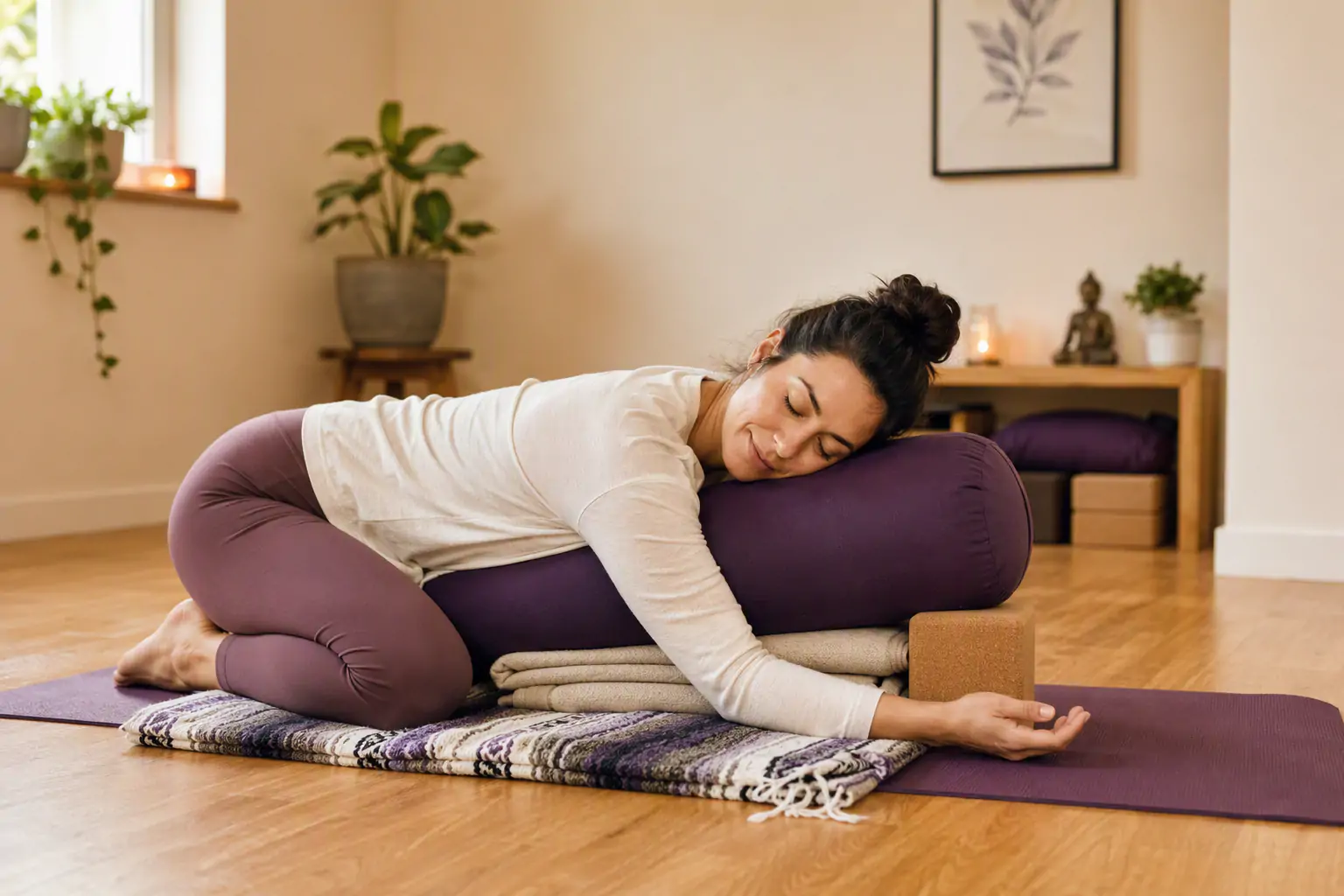
Supported child’s pose is a steady, grounding posture that gently stretches the back and hips. Begin in a kneeling position on your mat. Place a bolster lengthwise in front of you, then lower your torso onto it. Let the tops of your feet rest on the mat and soften your hips toward your heels.
To make the pose easier, slide a blanket under your knees. If your forehead or cheek needs more height, yoga blocks can help support the head comfortably. Your arms can rest beside the bolster, with palms turned up or down.
Once you are settled, take slow, deep breaths and let your body grow heavier. This version of child’s pose can help calm the nervous system and reduce effort through the back, knees, and hips. Many people stay here for three to five minutes.
Legs Up the Wall Pose (Viparita Karani)
Legs up the wall is one of the most soothing yoga poses for tired legs and a busy mind. Place a bolster or folded blanket a few inches from a wall, then sit sideways next to it. As you recline, swing your legs up the wall and let your hips rest near the support.
Try to position the support under your sacrum rather than the lower back. If your head needs comfort, add another blanket underneath. Your arms can relax by your sides with palms facing upward. Once you are in place, close your eyes and let the breath slow.
This pose supports circulation, encourages stillness, and helps the nervous system shift toward the relaxation response. It can also feel relieving when the lower back is tired, especially when the pelvis is well supported. A hold of five to ten minutes is common.
Additional Calming Restorative Poses
Once you are comfortable with the basics, you can add more restorative yoga poses for variety and support. The best ones continue the same theme: full support, slow breathing, and long, easy holds that invite emotional relaxation.
Supported bridge and reclining bound angle pose are especially useful when you want gentle opening through the chest, hips, and belly. Both can help the body settle more fully, which supports the relaxation response. Here is how each pose is commonly set up.
Supported Bridge Pose (Setu Bandha Sarvangasana)
Supported bridge pose offers a mild backbend without much effort. Start by lying on your back with your knees bent and feet flat, about hip-width apart. You can place a folded blanket under your upper back and shoulders so the shoulder blades feel more comfortable on the floor.
On an inhale, lift your hips slightly and slide one of your yoga blocks under the sacrum, then lower the pelvis onto it. This is what makes it a supported bridge pose rather than an active bridge pose. Let your arms rest by your sides and soften your jaw.
With the block carrying the weight, the chest opens and the lower back can release instead of work. The pose is often held for three to five minutes. When you come out, press into your feet, lift the hips gently, remove the block, and lower down slowly.
Reclining Bound Angle Pose (Supta Baddha Konasana)
Reclining bound angle pose is a restful way to open the hips and chest. Sit with a bolster placed along your spine, then slowly lean back onto it so your head and back are supported. Bend your knees and bring the soles of your feet together, allowing the legs to fall outward.
If the hips or inner thighs feel strained, place yoga blocks, cushions, or folded blankets under the outer legs. Some people lightly hold the feet near the big toes, but there is no need to pull. The pose should feel passive, not active.
Once you settle in, rest your arms at your sides or place your hands on your belly. This bound angle pose supports soft breathing and can help trigger the relaxation response. It is often held for five to ten minutes before gently bringing the knees back together.
Tips for Building an Effective Restorative Yoga Routine
A helpful restorative practice does not need to be long or complicated. What matters most is choosing a few yoga poses you can hold comfortably and arranging them in a slow pace that feels steady from start to finish.
Many people build a simple yoga routine around two to four supported poses and end with rest. This can work well in the evening, especially if your goal is better sleep quality. Two questions matter most when shaping that routine: how long to hold each pose and how often to practice.
How Long to Hold Each Pose
In restorative yoga practice, long holds are part of what makes the method effective. The compiled material describes many poses being held for three to five minutes, while some, such as legs up the wall or reclining shapes, may stay for five to ten minutes.
That does not mean you must start there. The best hold is one that still feels comfortable and supported. If you leave a pose feeling strained, you stayed too long or needed more props. The benefits of the practice come from ease, not endurance.
A simple guide can help:
- Start with 3 to 5 minutes for most yoga poses
- Use 5 to 10 minutes for deeply restful shapes if you are fully supported
- Come out sooner if your breath tightens or your body feels tense
Comfort is the real timer in restorative work.
How Often to Practice for Best Results
For best results, consistency matters more than intensity. The compiled information does not set a strict weekly number, but it does show that regular yoga practice can support sleep quality, reduce stress, and improve well-being over time. That suggests a steady restorative practice is more useful than an occasional long session.
You do not need to replace all other physical activity with restorative work. Instead, think of it as a balancing tool. It fits well alongside a busy life, active training, or times of recovery when your body needs less effort and more support.
A simple rhythm is often enough. Even brief sessions done regularly can help you unwind and reset. If evening stress affects your rest, a short practice before bed may be especially helpful for sleep quality and overall recovery.
Conclusion
In conclusion, restorative yoga offers a gentle yet powerful approach to enhance your mental and physical well-being. By focusing on deep relaxation and breath awareness, you create a nurturing environment for your body and mind to heal. Incorporating essential props and understanding foundational poses can make your practice more accessible and enjoyable. Whether you are a beginner or looking to deepen your existing practice, consistent practice will yield significant benefits. Remember that self-care is crucial, and restorative yoga is an excellent way to prioritize your health. If you’re ready to start your journey towards tranquility, don’t hesitate to get a free trial of a restorative yoga class today!
Frequently Asked Questions
Yes, you can do restorative yoga poses at home by yourself. Set up a yoga mat in a quiet spot, gather simple props like pillows or blankets, and choose a few supported shapes. This kind of yoga practice can still offer many benefits of restorative yoga, especially calm and better rest.
After your first restorative yoga practice, you may feel quieter, heavier, or more settled than usual. Some people notice deep relaxation right away, while others simply feel less tense. In either case, your nervous system may be shifting into a relaxation response and a calmer state of relaxation.
Yes, restorative yoga is suitable for beginners because the slow pace makes it easy to follow. The poses are simple, and yoga blocks or other supports help reduce strain. You can start in a yoga class or at home with a few basic restorative yoga poses and plenty of comfort.