
If you’ve spent any time researching yoga teacher training in India, you already know one name comes up more than any other: Rishikesh. It’s called the “Yoga Capital of the World,” it sits on the banks of the Ganga, and it’s home to more 200 hour yoga teacher training programs than any other town on earth.
But here’s the honest question nobody in the yoga marketing world wants to ask out loud: is more schools the same thing as better training?
We don’t think so. And after digging into what a typical 200 hour yoga teacher training Rishikesh program actually looks like on the ground, we think there’s a strong case for looking a little further north, to the quieter hills of Dharamshala.
This isn’t a takedown of Rishikesh. It’s a real, balanced look at what you’re actually signing up for — and why a smaller, mountain-based school might give you something Rishikesh has quietly lost.
Why Rishikesh Became the Default Choice
There’s a reason so many students still choose Rishikesh, and it’s not a bad reason. The town has genuine spiritual roots. It sits where the Ganga leaves the Himalayas and enters the plains, and generations of sadhus, swamis, and seekers have walked its ghats long before yoga became an export industry.
Ashrams here still hold real history. Some schools maintain disciplined daily routines, close ties to the Ganga, and teachers who’ve spent decades in traditional practice. If you land in the right school, Rishikesh can absolutely deliver a powerful, transformative month.
The problem isn’t Rishikesh’s roots. It’s what’s grown up around them.
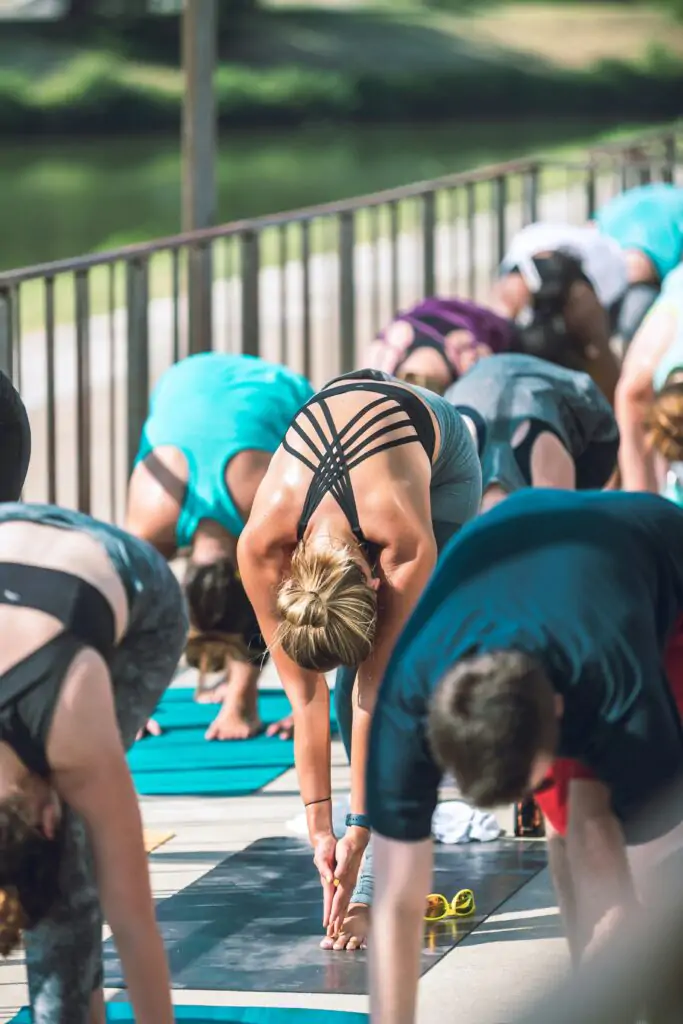
The Side of Rishikesh Most Websites Don’t Mention
Search “200 hour yoga teacher training Rishikesh” and you’ll find dozens of near-identical listings promising the same things: RYT-200 certification, daily asana and pranayama, philosophy sessions, a certificate at the end. Scroll past the marketing copy, though, and a few patterns show up again and again.
1. Crowded Dorms, Not Personal Space
A lot of mid-range and budget schools pack four to eight students into a single room. That might sound fine on paper — you’re there to train, not to lounge in your room — but 200 hours is a lot of early mornings, late nights, sore muscles, and emotional processing. Without a quiet corner to actually rest and reflect, the personal growth side of the training gets squeezed out. Yoga teacher training isn’t just physical repetition; it asks you to sit with yourself, and that’s hard to do when you’re one of eight people sharing a single space.
2. Concrete, Not Nature
Say “Rishikesh” and most people picture riverside ashrams surrounded by forest. The reality, for a growing number of schools, is closer to a guesthouse wedged between other guesthouses. Rapid growth in the yoga tourism industry has meant more buildings, more construction, and less breathing room. There are still a handful of schools genuinely close to the Ganga or tucked into quieter forest patches — but they’re the exception now, not the rule.
3. A Business Model Wearing a Spiritual Costume
This is the one that stings a little, but it needs saying. Yoga teacher training used to mean sitting under a teacher who held you to a standard — someone strict enough that you learned not just the postures, but the respect and discipline that come with the tradition. That model still exists in pockets. But in a town with hundreds of competing schools, many trainings have quietly turned into a product: fast enrollment, glossy photos, an assembly-line certificate. The depth that used to come from a real teacher-student relationship is often replaced by a transaction.
None of this means every Rishikesh school is like this. It means the odds of landing in one have gone up as the town has scaled.
Enter Dharamshala: The Quieter Alternative
Dharamshala sits in the Kangra Valley, in the foothills of the Dhauladhar range, a few hours further into the mountains than Rishikesh. It’s known as the home of the Dalai Lama and the Tibetan community in exile — which already tells you something about the atmosphere here. This is a town built around contemplation, not tourism traffic.
Here’s why it’s worth serious consideration for your 200 hour yoga teacher training Rishikesh search, even though the town in the search bar isn’t the town you’ll actually train in.
| Factor | Rishikesh (typical) | Dharamshala (typical) |
|---|---|---|
| Climate | Hot, humid plains air for much of the year | Cooler mountain climate, more comfortable for practice |
| Surroundings | Dense guesthouses, heavy tourist traffic | Pine forest, tea gardens, mountain trails |
| School density | Hundreds of competing schools | A small, more selective number of schools |
| Pace | Fast turnover, high student volume | Slower, more personal, smaller cohorts |
| Cultural backdrop | Ganga-side pilgrimage town, now heavily commercialized | Tibetan Buddhist community, contemplative and quiet |
Climate That Actually Supports Practice
Asana practice at 6 a.m. is a very different experience in cool mountain air than in Rishikesh’s building summer heat. Dharamshala’s elevation keeps temperatures milder for most of the training season, which makes the physically demanding parts of a 200-hour course — hours of asana, pranayama, and kriya each day — genuinely easier on the body.
Nature That’s Actually There
Instead of concrete walls on either side, Dharamshala schools tend to back onto pine forest, tea estates, or mountain trails. You can walk out after an intense afternoon session and actually be somewhere quiet. That matters more than it sounds like it should — a big part of what makes yoga training transformative is the environment holding space for it.
Fewer Schools, More Accountability
Because Dharamshala hasn’t been flooded with training centers the way Rishikesh has, the schools that do operate here tend to rely more on reputation and word of mouth than on sheer volume. That usually translates into smaller class sizes, more one-on-one correction, and teachers who actually know your name by week two.
Why Mahiyoga School Stands Out in Dharamshala
If you’re weighing a 200 hour yoga teacher training Rishikesh listing against something in Dharamshala, Mahiyoga School is one of the strongest arguments for making the switch.
Based in Upper Bhagsu, in the Dharamshala hills, Mahiyoga is registered with Yoga Alliance USA at the RYT-200 and RYT-300 level, and its senior teachers hold ERYT-500 status — meaning they’ve logged significant teaching experience beyond the baseline certification. The school has trained thousands of students over the years, covering Hatha, Vinyasa, and Ashtanga styles alongside meditation and breathwork.
What comes through most clearly in student reviews isn’t the facilities — it’s the atmosphere. Students consistently describe waking up to birdsong, feeling genuinely looked after by teachers, and forming close bonds with a small cohort of fellow trainees. That’s the personal, teacher-led experience that’s getting harder to find in oversaturated training hubs.
A few things worth knowing before you book anywhere, Mahiyoga included:
- Ask directly about room-sharing arrangements and typical group size
- Confirm which senior teacher will be leading your specific batch, not just the school’s flagship instructor
- Check what’s included in the fee versus what counts as an add-on (laundry, excursions, single-room upgrades)
These are fair questions for any school, in any city — but they matter even more when you’re choosing based on intimacy and teacher access rather than brand size.
Rishikesh vs. Dharamshala: The Honest Verdict
Rishikesh isn’t a bad choice. If you find one of the handful of schools that still holds to a genuinely traditional, small-group, riverside model, you can have an outstanding experience there. The town’s spiritual history is real, and for some students, training in the literal birthplace of modern yoga carries meaning nothing else can replace.
But if you’re going into your search open-minded, and you care more about depth than brand recognition, Dharamshala has quietly become the stronger bet for a lot of trainees. Cooler climate, closer nature, smaller schools, and a culture that hasn’t been fully absorbed into the yoga tourism machine — these aren’t small differences over 200 hours of intensive training.
Frequently Asked Questions
Yes, especially if you find a smaller school with a genuine teacher-led tradition and a location away from the busiest tourist strips. Just don’t assume every listed school offers that experience — vet each one individually.
Rishikesh sits at a lower elevation and gets noticeably hot and humid for much of the year. Dharamshala, higher in the Himalayan foothills, stays cooler and is generally more comfortable for a physically intensive training schedule.
Reputable schools, including Mahiyoga School, are registered with Yoga Alliance USA and issue RYT-200 and RYT-300 certification recognized internationally.
Generally, yes. Dharamshala has far fewer training schools overall, so most operate with smaller, more selective cohorts compared to the high-volume model common in Rishikesh.
No. Most 200-hour programs, in both Rishikesh and Dharamshala, are designed for beginners through intermediate practitioners. A few months of personal practice is recommended but rarely required.