If you’ve been dreaming of trading your desk for a beach shala, yoga teacher training in Goa might be exactly the reset you’re looking for. Every year, thousands of students fly into India’s smallest state to spend a month waking up before sunrise, practising asana on open-air platforms, and learning the philosophy behind the poses they’ve been doing for years.
Goa has quietly become one of the most popular places on earth to complete a yoga teacher training course (YTTC). It has the credibility of India, the comfort of a beach holiday, and enough schools now that you genuinely have options — which is both a blessing and, if you’re not sure where to start, a little overwhelming.
This guide breaks down everything you need to know: why Goa works so well for training, which beach areas suit different personalities, what a typical course actually covers, how much you should expect to pay, and how to avoid picking a school based on Instagram photos alone.
Why Do a Yoga Teacher Training in Goa?
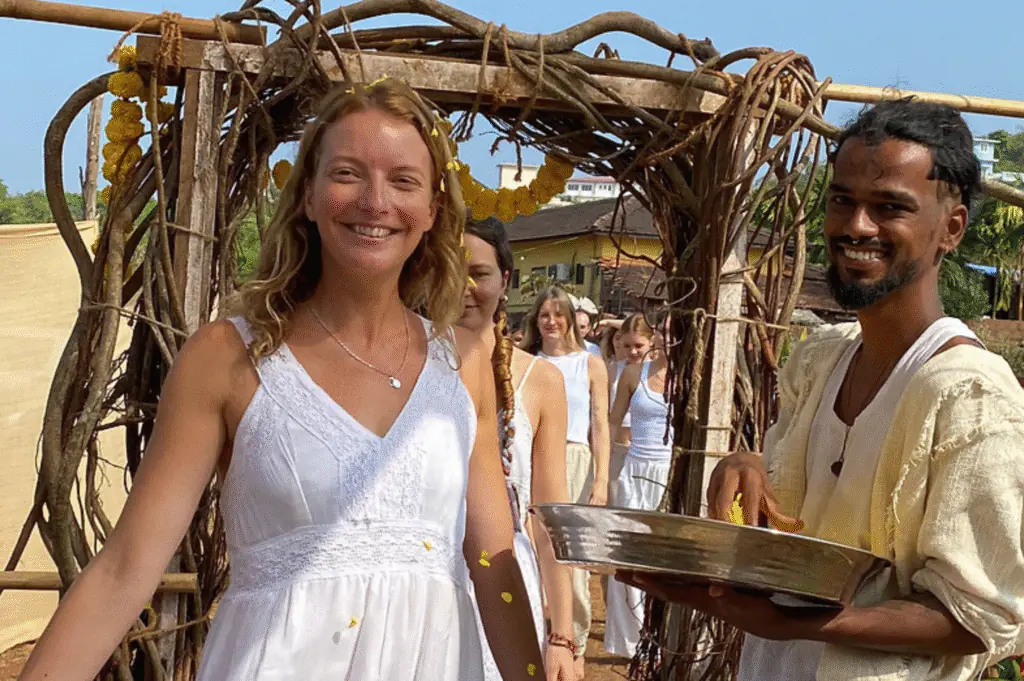
Yoga was born in India, and that heritage still shapes how it’s taught here. Unlike a studio-based course back home, a yoga teacher training in Goa typically means:
- Immersion – you live on or near the campus, so your entire routine (meals, rest, practice, study) supports the training instead of competing with it.
- Authentic teaching lineage – many lead teachers trained under Indian gurus and pass on traditional Hatha, Ashtanga, and Vinyasa methods alongside modern teaching techniques.
- Affordability – a full month-long, Yoga Alliance-registered course in Goa often costs less than a part-time certification back home, even after flights.
- Built-in community – small international cohorts create fast friendships, which is part of why so many graduates describe their YTTC as life-changing.
- A genuine holiday feel – warm weather, beaches, and fresh seafood mean your “hardest month” can still feel like a getaway.
Best Areas in Goa for Yoga Teacher Training
Not all of Goa suits a serious training. North Goa’s Baga and Calangute are built for nightlife, not 6 a.m. pranayama. Most reputable schools cluster in the quieter south, though a few gems remain in the north for students who want a livelier social scene between classes.
| Area | Vibe | Best For |
|---|---|---|
| Agonda Beach | Calm, palm-fringed, low-key | Most popular YTTC hub; ideal for focused training |
| Palolem Beach | Scenic, slightly busier | Students who want some nightlife balance |
| Patnem Beach | Quiet, small community | Long-standing schools, deep Ashtanga focus |
| Mandrem Beach | Serene, north Goa’s quiet corner | Women-led schools, healing-focused training |
| Arambol Beach | Bohemian, alternative | Free-spirited students, drum circles, live music |
If you’re unsure which beach to pick, ask a shortlisted school for their daily schedule — the surrounding energy of the beach usually matches the energy of the course.
Types of Yoga Teacher Training Courses in Goa
Goa’s schools generally offer three certification levels, all recognised internationally once registered with Yoga Alliance.
| Course | Typical Duration | Who It’s For | Approx. Cost |
|---|---|---|---|
| 100-Hour Foundation | 12–15 days | Beginners short on time; not a full certification alone | $700–$1,200 |
| 200-Hour YTTC | 21–28 days | Most popular; qualifies you as a certified yoga teacher | $800–$2,300 |
| 300-Hour Advanced | 25–30 days | Requires an existing 200-hour certificate; leads to RYT-500 | $1,200–$3,200 |
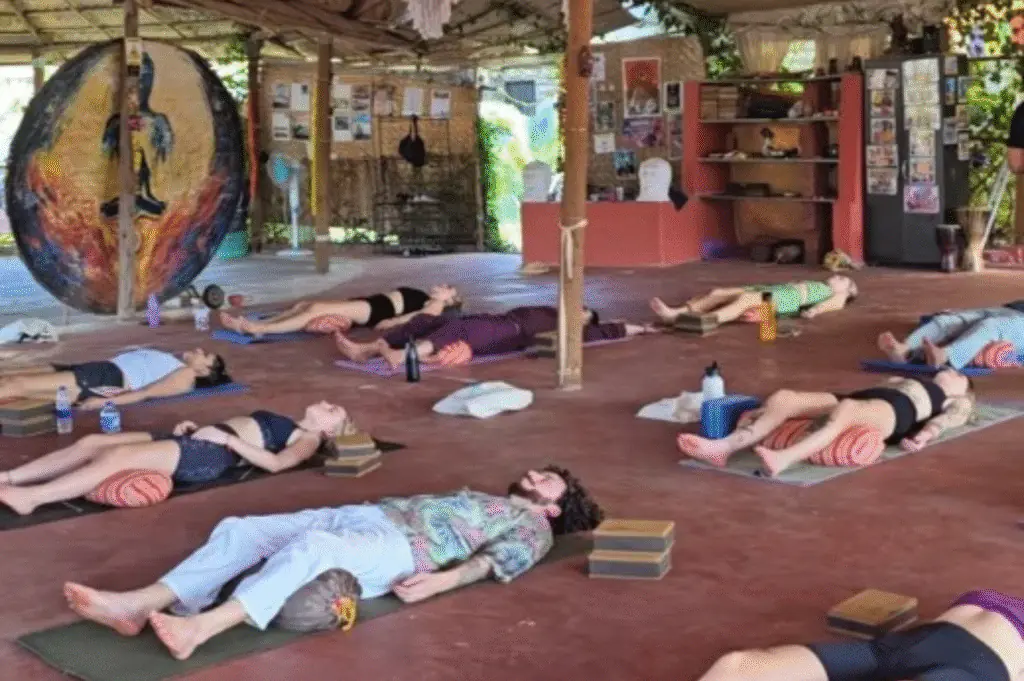
Most schools run their 200-hour yoga teacher training in goa as a multi-style course, blending Hatha, Ashtanga, and Vinyasa, with Yin and restorative sessions woven in. If you already know you love a specific style, look for schools that specialise — some focus heavily on Ashtanga Vinyasa, others lean toward a gentler Hatha-Yin combination.
Prices usually include shared or private accommodation, three vegetarian meals a day, study materials, and the final certificate. Airport transfers, excursions, and single-room upgrades often cost extra.
What You’ll Actually Learn
A Yoga Alliance-approved curriculum has to cover a fixed set of subjects, so no matter which school you choose, expect a version of the following:
- Asana practice – twice-daily classes covering alignment, sequencing, and adjustments
- Pranayama – breathing techniques that regulate the nervous system
- Meditation and Yoga Nidra – tools for stillness and deep rest
- Yoga philosophy – the Yamas, Niyamas, and classical texts behind the practice
- Anatomy and physiology – how the body moves safely through postures
- Teaching methodology – how to cue, demonstrate, observe, and adjust students
- Practicum – supervised practice teaching, usually starting in week one or two
Many schools also fold in extras like Ayurveda basics, hands-on adjustment workshops, or a yoga retreat in Goa add-on for students who want to extend their stay before or after the intensive.
How to Choose the Right Yoga School in Goa
With dozens of schools now competing for students, a bit of due diligence goes a long way. Here’s a practical checklist:
- Confirm Yoga Alliance registration. Look up the school’s RYS number directly on the Yoga Alliance website rather than trusting a logo on their homepage.
- Read recent, verified reviews. Google and TripAdvisor reviews are harder to fake than testimonials pasted onto a website.
- Check class size. Smaller batches (10–15 students) generally mean more individual attention and adjustment.
- Ask about the lead teacher’s experience. Years of teaching, style specialisation, and whether they’ll personally lead most sessions all matter.
- Look at the daily schedule. A packed but balanced day (practice, theory, rest, free time) beats an overly rigid or overly loose one.
- Understand the cancellation policy before you pay a deposit — most Goa schools require a non-refundable booking amount, so read the fine print.
- Be extra cautious as a solo traveller. Prioritise schools with strong, verifiable safety records, especially if you’re travelling alone.
It’s worth comparing at least three schools side by side before committing. A course that looks cheaper on the surface may not include meals or transfers, while a pricier one might bundle in excursions and a private room.
Best Time of Year to Train in Goa
The sweet spot for a yoga teacher training in Goa is November through March, when the weather is warm but not oppressive, and most schools run their full course calendar. April and May get uncomfortably hot and humid, and many schools pause or relocate during the monsoon season from June to October. If you’re booking outside the November–March window, always confirm directly with the school that your dates are active.
Budgeting for Your Trip
Beyond the course fee itself, factor in:
- International flights to Goa (via Mumbai or Delhi if there’s no direct route)
- Indian e-visa costs and processing time — apply well ahead of your travel dates
- Travel insurance that covers the full duration of your stay
- Spending money for laundry, extra excursions, massages, or souvenirs
- A buffer for extending your trip, since many students end up staying longer once they arrive
Compared with, Goa tends to be slightly more budget-friendly for the core course, though flights from Europe or North America may cost more.
Frequently Asked Questions
No. Most 100-hour and 200-hour courses welcome beginners, though a few months of regular home practice will make the intensive pace easier on your body.
Yes. A Yoga Alliance-registered 200-hour certificate qualifies you as an RYT-200, which is enough to teach group classes, private sessions, and most studio roles worldwide.
South Goa — particularly Agonda, Palolem, and Patnem beaches — is the most popular choice thanks to its quieter atmosphere, established schools, and easy beach access.
Many solo women complete trainings in Goa every year safely and happily. Choose a well-reviewed, established school, read recent testimonials from other solo travellers, and trust your instincts during your research.
Final Thoughts
A yoga teacher training in Goa is more than a certification — it’s a genuine reset for your body, breath, and headspace, wrapped in the ease of beach life. Whether you choose a lively 200-hour multi-style course or a deeper, teacher-focused small-batch program, the key is doing your homework before you book: check accreditation, read real reviews, and pick a school whose values match your own.
Ready to take the next step? Browse our comparison of top-rated schools, read student reviews, or reach out with your questions — we’re happy to help you find the training that fits your goals, budget, and travel dates. If this guide helped, share it with a fellow yoga lover who’s dreaming of their own Goa adventure!