If you have ever rolled out your mat on a quiet morning and felt a pull toward something deeper than a workout, a 100 hour yoga teacher training goa program might be exactly the bridge you are looking for. It is short enough to fit into a two-week holiday, yet substantial enough to give you real teaching skills, a Yoga Alliance-recognised certificate, and a completely different relationship with your practice.
Goa has become one of India’s most popular destinations for yoga education, and it is easy to see why. Warm sea air, flexible daily rhythms, and a community of like-minded travellers make it a natural place to slow down and study. This guide walks you through everything you need to know before signing up — the curriculum, the daily schedule, the cost, and how to choose a school that genuinely supports your growth.
What Is a 100-Hour Yoga Teacher Training?
A 100-hour YTTC is a foundation-level course recognised by Yoga Alliance under the RYT-100 category. Unlike the standard 200-hour certification, it is designed as a stepping stone — ideal for people who want to test the waters of teacher training without committing several weeks at once, or who simply want to deepen their personal practice in a structured way.
Most schools offering a 100 hour yoga teacher training goa program allow students to complete the course in two halves, usually spread across two visits. Once both halves are finished, many schools let you upgrade to a full 200-hour certificate, so nothing you learn goes to waste even if you decide to pursue teaching later.
Who Should Join?
- Beginners with at least six months to a year of consistent practice who want a gentle introduction to teacher training
- Working professionals who cannot take a full month off but still want certification
- Travellers looking for a meaningful, immersive experience in India
- Existing practitioners who want to refine alignment, anatomy knowledge, and confidence before committing to a longer course
No prior teaching experience is required. Schools generally ask only that you arrive with an open mind and a reasonably regular practice history.
Why Choose Goa for Your Yoga Training?
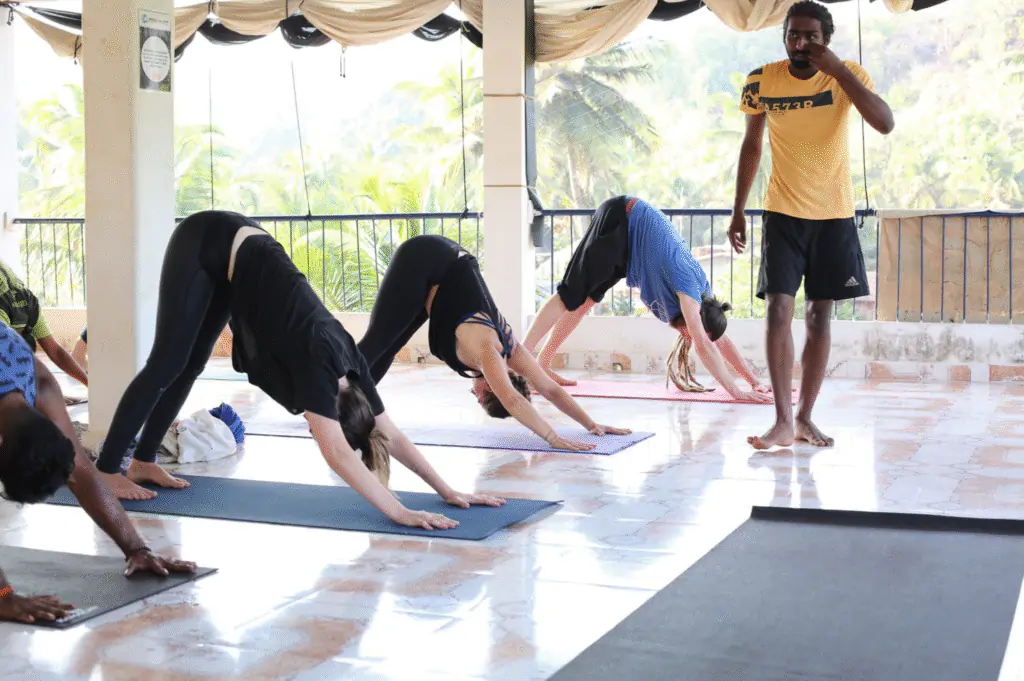
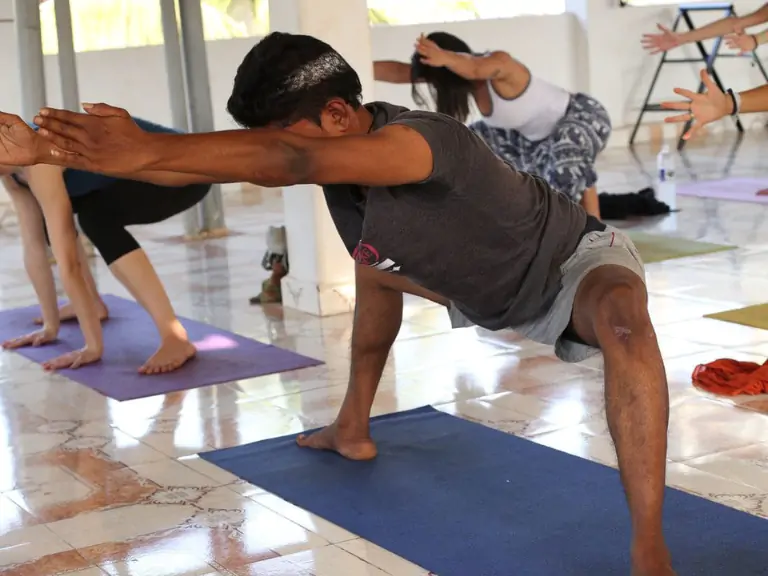
Goa isn’t just a beach destination — it has quietly become one of India’s leading yoga education hubs, especially in the northern belt around Arambol, Mandrem, and Ashwem. Here is what makes it stand out:
- Coastal calm – Ocean air and beach sunsets create a natural rhythm for meditation and pranayama practice.
- Established yoga culture – Decades of resident teachers and long-term practitioners have built a genuine, non-touristy yoga community.
- Easy accessibility – Goa has an international airport with regular domestic and international connections.
- Affordable living – Compared to Rishikesh or international retreat destinations, Goa offers strong value on accommodation and food.
- Variety of styles – From Hatha and Ashtanga Vinyasa to Yin and aerial yoga, schools across Goa cater to almost every interest.
Anyone researching a best yoga teacher training in goa program will notice that most reputable schools cluster around Arambol Beach, largely because of its laid-back, spiritually inclined atmosphere.
Core Curriculum of a 100-Hour YTTC
While the exact structure varies from school to school, Yoga Alliance requires a fixed distribution of hours across five broad categories. Here is a general breakdown you can expect:
| Category | Approx. Hours | What You Learn |
|---|---|---|
| Techniques, Training & Practice | 35–40 hrs | Asana alignment, pranayama, kriyas, meditation, mantra |
| Teaching Methodology | 10–15 hrs | Cueing, class planning, communication, group management |
| Anatomy & Physiology | 8–12 hrs | Skeletal and muscular systems, energy anatomy, chakras |
| Yoga Philosophy, Lifestyle & Ethics | 12–15 hrs | Patanjali’s Yoga Sutras, the eight limbs, ethical conduct |
| Practicum | 5–8 hrs | Supervised teaching practice with peer feedback |
By the end of the course, most students walk away confident in leading a beginner-to-intermediate level Hatha or Vinyasa class, with a working knowledge of anatomy, breathwork, and sequencing.
A Typical Day on Campus
Every school runs its own timetable, but the general rhythm of an 11 to 14-day residential program looks something like this:
- Early morning: Meditation, pranayama, or a cleansing kriya practice
- Mid-morning: Asana class (Hatha or Ashtanga-based)
- Breakfast break
- Late morning: Philosophy or anatomy lecture
- Midday: Teaching methodology or alignment workshop
- Afternoon: Rest, self-study, or karma yoga (seva)
- Evening: Second asana session, often Vinyasa or Ashtanga-style
- Night: Dinner, followed by chanting, kirtan, or reflection circles
The pace is intentionally full, but most schools build in enough downtime to explore the beach, journal, or simply rest — something worth checking before you enrol in any yoga course in goa.
What It Typically Costs
Prices vary depending on accommodation type, meal plans, and the season. As a general guide for 2026:
- With Food Accommodation: Private Room – 700 USD | Couple Room – 1200 USD
- Without Food Accommodation: Private Room – 450 USD | Couple Room – 900 USD
Most schools request a non-refundable deposit to secure your spot, with the balance payable on arrival. Indian residents can often find domestic depending on room type. Always confirm exactly what’s included — tuition, meals, accommodation, and study materials are standard, but airport transfers and air conditioning are usually charged separately.
How to Choose the Right School
With dozens of schools competing for attention, it helps to filter your options using a short checklist:
- Yoga Alliance registration – Confirm the school is a Registered Yoga School (RYS) so your certificate is internationally recognised.
- Class size – Smaller batches (under 15–20 students) mean more individual attention and feedback.
- Teacher experience – Look up lead trainers’ backgrounds and student reviews before booking.
- Location and facilities – Proximity to the beach, room hygiene, and food quality all affect your overall experience.
- Course structure – Ask for a detailed daily schedule and syllabus breakdown before paying a deposit.
Doing this homework upfront is the single best way to avoid disappointment and actually find a program that matches the reputation of a best yoga teacher training in goa.
Life After the Course
Completing a 100-hour training does not automatically make you a full-time yoga teacher, but it does open several doors:
- Assisting classes or co-teaching at your home studio
- Leading small group or private sessions
- Continuing toward a full 200-hour RYT certification
- Deepening your personal practice with far greater confidence and knowledge
Many students describe the experience as less about the certificate and more about the internal shift — a clearer mind, a steadier breath, and a genuine sense of purpose that carries well beyond the mat.
Frequently Asked Questions
No formal teaching experience is required, though most schools recommend six months to a year of regular personal practice so you can keep up with the physical intensity of daily classes.
Yes. Most schools allow you to complete a second 100-hour module (often at the same or a partner school) to combine into a full RYT-200 certification.
October to March is the most popular window due to pleasant weather, though many schools run batches year-round, including the monsoon season for those who prefer quieter campuses.
Most residential programs include accommodation and meals in their package, but pricing varies by room type — dormitory, shared, or private. Always confirm inclusions before booking.
Absolutely. A large percentage of students join purely for personal growth, philosophy, and a structured practice — teaching is optional, not mandatory.
Final Thoughts
A 100 hour yoga teacher training goa program is a genuinely accessible way to step into the world of yoga education without upending your entire schedule. Whether you’re chasing certification, a personal reset, or simply eleven days of sea air and self-discovery, Goa offers a setting that makes the learning stick.
If this guide has helped clarify your next step, explore our other resources on choosing a yoga course in goa, compare training durations, or reach out directly to ask questions about upcoming batches. Your mat — and your next chapter — is waiting.