
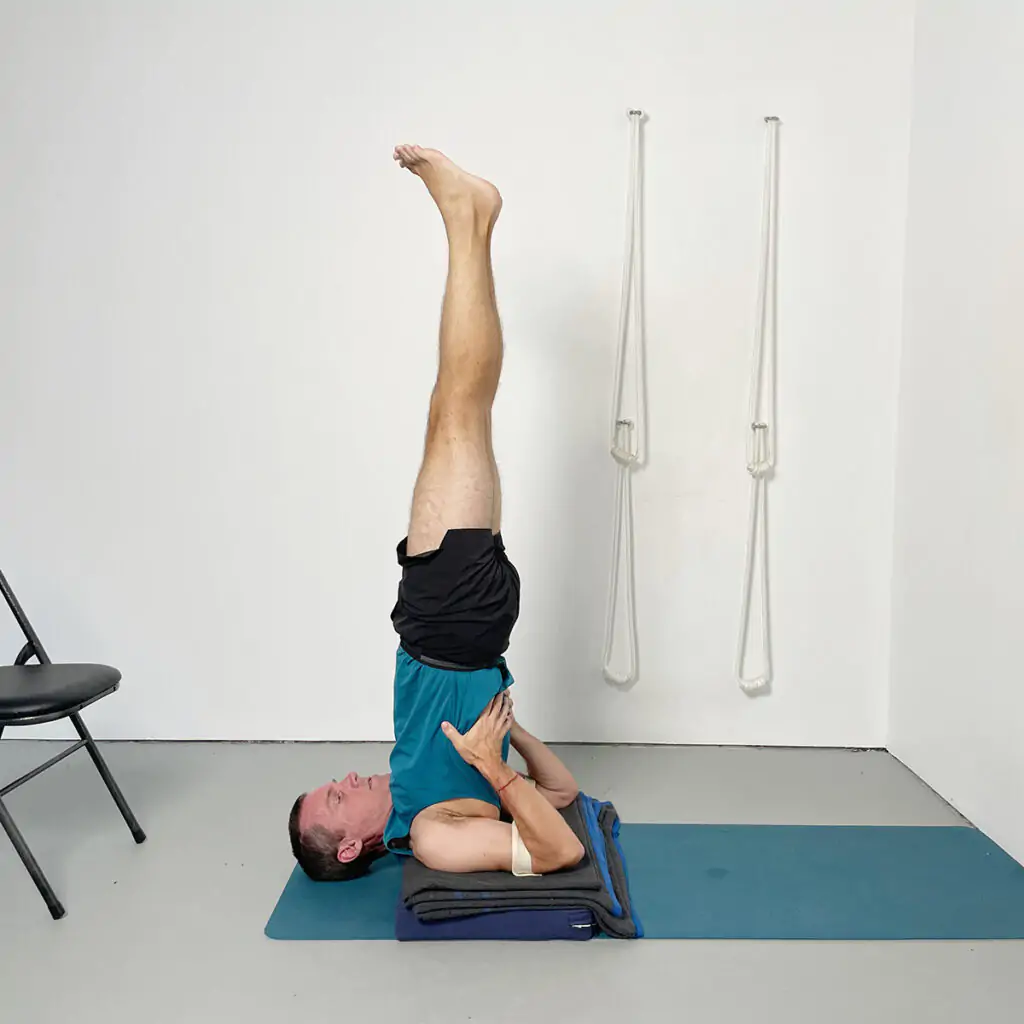
Few poses in the world of yoga carry as much reverence as the Shoulderstand, known in Sanskrit as Sarvangasana. Translated as “pose of all limbs,” this inverted posture has earned its title as the Queen of asanas in classical yoga traditions — and for very good reason. Whether you are stepping onto the mat for the first time or deepening an established practice, understanding Sarvangasana can transform the way you approach both your physical health and your inner stillness.
In this guide, we explore everything you need to know about the Shoulderstand: its roots, physical and therapeutic benefits, the muscles it works, how to practise it safely, modifications for beginners, and who should avoid it. Read on to discover why this single pose might just be the most wholesome addition to your yoga routine.
What Is Shoulderstand (Sarvangasana)?
Sarvangasana (sarva = all; anga = limb or body part; asana = pose) is a supported inversion in which the practitioner balances the weight of the entire body on the shoulders, upper arms, and the back of the neck. Unlike the Headstand, where the crown of the head bears the body’s weight, the Shoulderstand keeps pressure away from the skull and redirects blood flow specifically toward the thyroid and parathyroid glands in the throat — making it one of the most therapeutically rich postures in all of yoga.
The pose is part of the classical Sivananda sequence of twelve basic asanas and has been practised for centuries as a tool for rejuvenating the entire body from the inside out.
The Anatomy of Shoulderstand: What Happens Inside Your Body
A deeper look at the Anatomy of this posture reveals why it is so powerfully effective. When you go upside down in Sarvangasana, gravity reverses its usual influence on your circulatory and lymphatic systems. Here is what is happening beneath the surface:
| Body System | Effect of the Shoulderstand |
| Endocrine System | Rich blood supply to the thyroid and parathyroid glands helps regulate metabolism, heart rate, calcium levels, and hormonal balance. |
| Circulatory System | Inverted position promotes venous blood drainage from the legs and pelvic region, reducing the workload on the heart. |
| Nervous System | Chin-to-chest lock (Jalandhara Bandha) activates the vagus nerve, calming the stress response and promoting relaxation. |
| Musculoskeletal | Trunk flexors, wrist extensors, neck extensors, erector spinae, and hip and knee flexors all engage to stabilise the posture. |
| Digestive System | Gentle compression and gravity reversal ease constipation and stimulate digestive organ function. |
Benefits of Sarvangasana: Why This Pose Deserves a Place in Your Practice
The breadth of benefits that Sarvangasana offers is genuinely remarkable. These benefits span the physical, therapeutic, and psychological domains.
Physical Benefits
- Strengthens the arms, shoulders, and upper back, building the foundation for other arm-balancing postures.
- Keeps the cervical and thoracic spine flexible and healthy over time.
- Improves leg circulation and helps relieve the discomfort of varicose veins.
- Massages the heart by gently reversing blood flow and reducing cardiac workload.
- Tones the legs and core through the sustained engagement required to hold the position.
Therapeutic Benefits
- Regulates the thyroid gland, which influences metabolism, weight, body temperature, and energy levels.
- Provides relief from constipation, indigestion, and sluggish digestive function.
- Helps manage symptoms of insomnia by calming the nervous system before sleep.
- Supports relief from painful menstruation and certain gynaecological imbalances.
- Nourishes the brain with improved blood supply, sharpening concentration and mental clarity.
- Assists in the prevention and management of varicose veins through venous drainage.
Psychological Benefits
- Relieves anxiety and mild depression by activating the parasympathetic nervous system.
- Cultivates a sense of confidence and self-reliance as the practitioner masters an inversion.
- Calms emotional agitation and promotes mood stability throughout the day.
- Stimulates a feeling of cheerfulness and mental freshness post-practice.
How to Do Shoulderstand: Step-by-Step Instructions
Learning Shoulderstand correctly is essential for both safety and effectiveness. Follow these steps carefully, especially if you are new to Inversions.
Step 1 — Prepare Your Space and Starting Position
Lie flat on your back on a non-slip yoga mat. Place a folded blanket under your shoulders (leaving your head on the mat) to protect the neck — this is especially important for beginners. Keep your feet together and arms relaxed by your sides. Inhale slowly and deeply to prepare.
Step 2 — Legs Up
On an inhalation, engage your abdominal muscles and lift both legs together until they form a right angle with the floor. Keep your knees straight and toes pointed toward the ceiling. Pause here and breathe normally for a few counts.
Step 3 — Lift the Hips and Lower Back
On an exhalation, press your palms firmly into the mat and swing your legs overhead, lifting your hips and lower back off the floor. Bring your hands to your lower back, fingers pointing toward the spine, for support.
Step 4 — Walk the Hands Up
Continue walking your hands up along your back, moving them higher toward the shoulder blades. Your elbows should be drawing toward each other to create a stable base. The weight of the body rests on the outer upper arms, shoulders, and the base of the neck — not on the head.
Step 5 — Find Your Balance
Extend the legs fully toward the ceiling so your body forms one straight line from shoulders to toes. Engage the thighs and inner legs, keep the feet together, and breathe steadily. Begin by holding for 30 seconds. As comfort and strength build, gradually extend the hold up to 3 minutes.
Step 6 — Coming Down Safely
To exit the pose, lower your feet halfway toward the floor behind your head. Release your hands to the mat and slowly unroll the spine, vertebra by vertebra, back down to the floor. Rest in Savasana (Corpse Pose) for at least 30 seconds to allow the body to readjust.
Shoulderstand and the Inversions Family
Sarvangasana belongs to the family of Inversions — postures where the hips are positioned above the heart and the heart above the head. While the Headstand (Sirsasana) is often considered its counterpart and called the King of poses, the Shoulderstand is frequently taught first because it places less direct pressure on the head and neck when set up correctly with props.
The two poses share many benefits and are traditionally practised together in Sivananda yoga sequences, with the Shoulderstand immediately following the Headstand. Practising them as a pair creates a beautiful balance in the body — the Headstand stimulates and energises while the Shoulderstand soothes and restores.
Shoulderstand Variations and Modifications
For Beginners: Supported Shoulderstand at the Wall
Practise with your back near a wall, using it for support as you lift. You can also keep your knees slightly bent as you build core and shoulder strength. A folded blanket under the shoulders is strongly recommended to relieve pressure on the cervical spine.
Intermediate Variation: Single Leg Extension
From the full pose, inhale and lower one leg behind your head toward the floor (as in Plough Pose), then inhale to lift it back up. Repeat on the other side. This challenges balance and deepens hip flexor engagement.
Restorative Alternative: Legs-Up-the-Wall (Viparita Karani)
If you are new to yoga, recovering from injury, or simply looking for a gentler inversion experience, Restorative Yoga offers an excellent alternative: Viparita Karani (Legs-Up-the-Wall). This posture provides many of the circulatory and nervous system benefits of the Shoulderstand without the muscular demand of a full inversion, making it accessible to almost everyone.
Contraindications: Who Should Avoid or Modify Sarvangasana
Like all yoga postures, the Shoulderstand is not appropriate for everyone at all times. Always consult a qualified yoga teacher or healthcare provider if you are uncertain.
- Neck injuries, cervical spondylosis, or chronic neck pain — The pose places weight on the neck region and must be avoided if there is structural vulnerability.
- High blood pressure (hypertension) or cardiac conditions — If you have these conditions, hold for no longer than 30 seconds and always seek medical advice first.
- Menstruation — Consider shortening the hold to 15–30 seconds or skipping the pose during your cycle, as inversions may interfere with natural downward flow.
- Pregnancy — Avoid all inversions during pregnancy unless you have an established practice and guidance from a prenatal yoga teacher.
- High myopia, glaucoma, or serious eye disorders — Inversions increase intraocular pressure and should be avoided in these cases.
- Respiratory disorders or ear conditions — Seek advice before attempting any inversion.
Note: Never attempt the Shoulderstand immediately after vigorous exercise or gymnastics. Allow the body to settle before going into this pose to avoid an unhealthy rush of blood to the upper body.
Tips for a Safe and Effective Shoulderstand Practice
- Always warm up the shoulders, upper back, and neck before attempting Sarvangasana. Poses such as Cat-Cow, Shoulder Rolls, and Bridge Pose are ideal preparatory movements.
- Use a folded blanket under your shoulders every time — this small adjustment makes a significant difference in protecting the cervical spine.
- Resist the urge to turn your head while in the pose. The neck must remain still and aligned with the spine throughout.
- Draw the elbows toward each other behind your back. Wider elbows reduce stability and put more strain on the neck.
- Start with 30 seconds and increase the duration gradually over weeks, not days. Patience is key with inversions.
- Always come out of the pose slowly and mindfully. Abrupt exits can cause dizziness or strain.
Shoulderstand in the Context of the Four Paths of Yoga
While Sarvangasana is primarily a physical posture (an element of Karma Yoga’s path of right action and Raja Yoga’s discipline), its effects reach far beyond the body. The mental calm it cultivates, the hormonal balance it supports, and the inward focus it demands connect directly to the broader yogic goal of integrating body, mind, and spirit. Practitioners often report that regular inversion practice — including the Shoulderstand — deepens their meditative states and strengthens the quality of their overall sadhana (spiritual practice).
Frequently Asked Questions (FAQ)
Beginners should aim to hold Sarvangasana for 30 seconds initially. With consistent practice over several weeks, you can gradually build up to 3 minutes. Quality and safety always take priority over duration.
Yes, the Shoulderstand can be practised daily as part of a balanced yoga sequence. However, listen to your body — if you experience neck discomfort, fatigue, or dizziness, take a rest day and revisit your alignment with a qualified teacher.
Many yoga therapists recommend Sarvangasana specifically for thyroid support because of its direct stimulating effect on the gland. However, if you have a diagnosed thyroid condition (whether hyperthyroid or hypothyroid), consult your doctor and a qualified yoga therapist before beginning inversions.
After coming down from Sarvangasana, always rest in Savasana (Corpse Pose) for at least 30 seconds. Fish Pose (Matsyasana) is the classical counter-pose and is traditionally practised immediately after the Shoulderstand to release the neck and open the throat and chest.
Conclusion: Make Sarvangasana Your Daily Ritual
The Shoulderstand (Sarvangasana) is far more than an impressive inversion. It is a comprehensive wellness tool — one that nourishes the endocrine system, supports mental health, strengthens the spine, and brings a deep sense of balance to the entire body. Whether you are a beginner taking your first tentative steps toward lifting your legs overhead or an experienced practitioner refining the subtle details of your technique, this pose has something profound to offer at every stage of the journey.
Start small, be consistent, and honour your body’s boundaries. With patience and the right guidance, Sarvangasana can become one of the most rewarding pillars of your yoga practice.