
Have you ever wondered why some days you feel clear, focused, and peaceful, while other days you’re restless, anxious, or completely drained of energy? The answer may lie in an ancient yogic concept that has guided spiritual seekers for thousands of years: the three gunas.
The Sattva Rajas Tamas gunas are fundamental qualities of nature that influence every aspect of our existence—from our thoughts and emotions to our physical health and spiritual evolution. Understanding these three forces can transform how you approach daily life, make decisions, and cultivate inner peace.
In this comprehensive guide, we’ll explore what the three gunas are, how they manifest in your life, and practical ways to balance these energies for greater well-being and spiritual growth.
What Are the Three Gunas?
The word “guna” comes from Sanskrit and means “quality,” “strand,” or “attribute.” According to Yoga Philosophy and Ayurveda, the three gunas are the essential building blocks of all creation. They represent the primary forces that shape material nature (Prakriti) and influence everything in the manifest world.
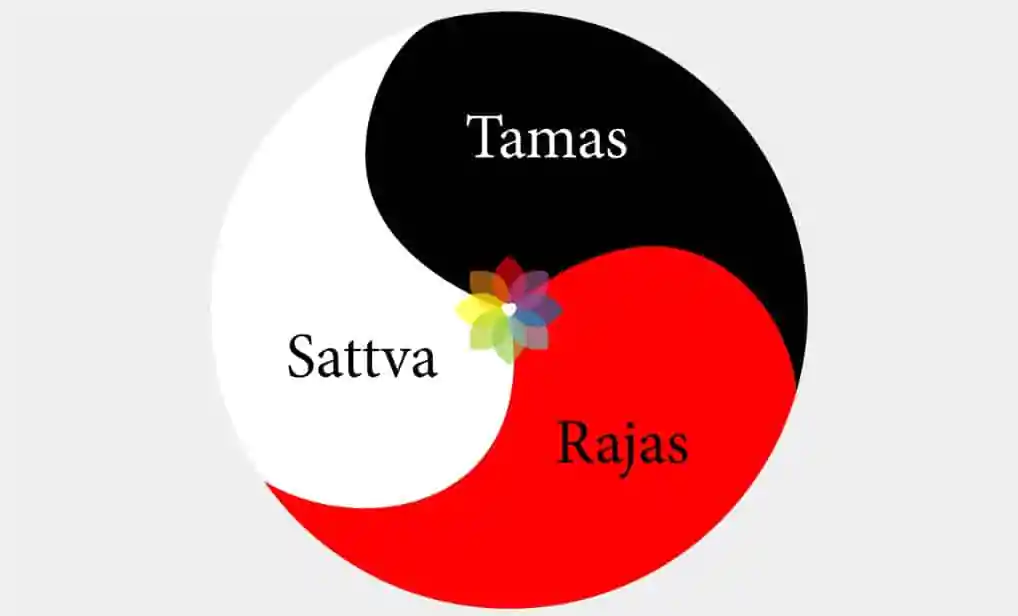
The three gunas are:
- Sattva – The quality of purity, harmony, and knowledge
- Rajas – The quality of activity, passion, and transformation
- Tamas – The quality of inertia, darkness, and heaviness
These three forces exist in everything and everyone, constantly interacting and fluctuating in different proportions. While all three gunas are present at all times, one typically dominates at any given moment, coloring our experiences, thoughts, and behaviors.
The Origin of the Three Gunas
The concept of Sattva Rajas Tamas gunas originates from the ancient Indian philosophical system called Samkhya, which later became integral to yogic teachings. The Bhagavad Gita, one of the most revered spiritual texts, dedicates an entire chapter (Chapter 14) to explaining these three fundamental qualities and their influence on human consciousness.
According to Samkhya philosophy, the universe consists of two primary elements: Purusha (pure consciousness or the Self) and Prakriti (material nature). The three gunas are the essential constituents of Prakriti, and they govern all phenomena in the physical and mental realms.
Understanding Each Guna: Characteristics and Manifestations
Sattva: The Light of Clarity and Wisdom
Sattva guna represents the highest of the three qualities. It embodies purity, balance, harmony, and enlightenment. When sattva predominates in your consciousness, you experience clarity of mind, inner peace, contentment, and spiritual awareness.
Characteristics of Sattva Guna:
- Mental clarity and sharp intellect
- Emotional stability and contentment
- Compassion, kindness, and forgiveness
- Natural inclination toward meditation and spiritual practices
- Love for knowledge and wisdom
- Healthy, balanced lifestyle choices
- Selfless service and genuine care for others
- Inner joy independent of external circumstances
When you operate from a sattvic state, your actions arise from a place of wisdom rather than impulsiveness. You’re able to see situations clearly, make thoughtful decisions, and maintain equanimity even during challenging times.
According to the teachings found in Patanjali’s Mind States, cultivating sattva guna helps quiet the fluctuations of the mind (chitta vritti) and prepares the consciousness for deeper meditation and self-realization.
Examples of Sattvic Lifestyle:
- Rising early in the morning during the sattvic hours (around sunrise)
- Practicing yoga, meditation, or pranayama daily
- Consuming fresh, wholesome, plant-based foods
- Spending time in nature
- Engaging in meaningful conversations and spiritual study
- Maintaining cleanliness in your environment
- Cultivating gratitude and positive thinking
Rajas: The Force of Action and Desire
Rajas guna represents the dynamic, active principle in nature. It’s the energy that drives movement, change, ambition, and passion. While rajas provides the necessary momentum for action and achievement, when excessive, it can lead to restlessness, anxiety, and attachment to outcomes.
Characteristics of Rajas Guna:
- High energy and constant activity
- Ambition and goal-oriented behavior
- Desire for sensory pleasures and material success
- Competitive nature and drive to excel
- Restlessness and difficulty sitting still
- Emotional volatility and mood swings
- Attachment to results and recognition
- Tendency toward overwork and burnout
Rajas is not inherently negative—it’s the energy that allows us to accomplish tasks, pursue goals, and create change in the world. The challenge arises when rajas becomes excessive, leading to stress, anxiety, and an endless pursuit of external gratification.
In the context of the Eight Limbs of yoga, rajas represents the outward-moving energy that must be balanced and eventually transcended for spiritual progress.
Examples of Rajasic Lifestyle:
- Constant busyness with packed schedules
- Engaging in competitive sports or activities
- Strong focus on career advancement and material success
- Consuming stimulating foods and beverages (coffee, spicy foods)
- Frequent social engagement and entertainment
- Multi-tasking and difficulty with stillness
- Emotional reactions and impulsive decision-making
Tamas: The Energy of Inertia and Rest
Tamas guna represents the principle of darkness, inertia, and heaviness. It’s the force of dissolution and rest. While tamas has its place in providing necessary rest and grounding, excess tamas manifests as ignorance, laziness, confusion, and depression.
Characteristics of Tamas Guna:
- Lethargy and lack of motivation
- Confusion and mental fog
- Resistance to change and growth
- Tendency toward oversleeping or excessive rest
- Procrastination and avoidance behaviors
- Negative thinking and pessimism
- Attachment to unhealthy habits
- Difficulty making decisions
- Feelings of helplessness or victimhood
Tamas serves an important function in nature—it allows for rest, digestion, and the necessary breakdown that precedes transformation. However, when tamas dominates, it keeps us stuck in patterns of ignorance and prevents spiritual growth.
Examples of Tamasic Lifestyle:
- Irregular sleep patterns or excessive sleeping
- Consuming heavy, processed, or stale foods
- Substance abuse or addictive behaviors
- Prolonged periods of inactivity
- Avoiding responsibilities and challenges
- Indulging in mindless entertainment for hours
- Negative self-talk and destructive thought patterns
- Isolation and withdrawal from life
How the Three Gunas Influence Your Daily Life
The Sattva Rajas Tamas gunas don’t just exist as abstract philosophical concepts—they actively shape every moment of your existence. Understanding how these forces operate in your daily life empowers you to make conscious choices that support your well-being and spiritual evolution.
Mental and Emotional States
Your predominant guna directly influences your mental and emotional landscape:
- Sattvic mind: Clear thinking, emotional balance, optimism, and inner peace
- Rajasic mind: Active thinking, emotional reactivity, anxiety, and desire-driven behavior
- Tamasic mind: Clouded judgment, depression, apathy, and confusion
Notice how your mental state fluctuates throughout the day. Morning hours tend to be more sattvic, afternoon becomes rajasic with peak activity, and evening transitions toward tamas as the body prepares for rest.
Physical Health and Energy
According to Ayurveda, the three gunas influence your physical body and health:
- Sattva supports vitality, strong immunity, balanced digestion, and natural healing
- Rajas creates excessive heat, inflammation, digestive issues from stress, and depleted energy reserves
- Tamas manifests as sluggishness, weight gain, chronic illness, and reduced metabolic function
Food and Nutrition
Holistic Nutrition recognizes that different foods carry different gunic qualities and influence your consciousness accordingly.
Sattvic Foods:
- Fresh fruits and vegetables
- Whole grains (rice, quinoa, oats)
- Legumes and lentils
- Nuts and seeds in moderation
- Fresh dairy products (milk, ghee)
- Natural sweeteners (honey, dates)
- Herbal teas
Rajasic Foods
- Spicy and pungent foods
- Garlic and onions
- Coffee and caffeinated beverages
- Fermented foods
- Refined sugars
- Chocolate
- Eggs
Tamasic Foods:
- Meat, especially red meat
- Alcohol and intoxicants
- Processed and packaged foods
- Leftovers and stale food
- Fried and greasy foods
- Foods with artificial additives
- Mushrooms and certain root vegetables
By choosing more sattvic foods, you naturally elevate your consciousness and support your spiritual practice.
Relationships and Interactions
The gunas also influence how you relate to others:
- Sattvic relationships: Based on mutual respect, unconditional love, spiritual support, and authentic connection
- Rajasic relationships: Driven by passion, attachment, control, and emotional drama
- Tamasic relationships: Characterized by codependency, manipulation, abuse, or apathy
The Spiritual Purpose: Transcending the Three Gunas
While cultivating sattva is beneficial and necessary on the spiritual path, the ultimate goal in Yoga Philosophy is to transcend all three gunas entirely. This state is called “gunatita”—beyond the gunas.
Why Transcend Even Sattva?
Although sattva is the purest of the three gunas, it still binds the soul to material nature. As the Bhagavad Gita explains, sattva binds through attachment to happiness and knowledge. A person in sattva may become attached to feelings of peace, spiritual experiences, or the identity of being “spiritual.”
True liberation (moksha) comes when one rises above all three qualities and rests in pure consciousness—the unchanging Self that witnesses but is not affected by the play of the gunas.
Signs of Transcending the Gunas
According to ancient texts, a person who has transcended the three gunas exhibits these qualities:
- Remains unaffected by praise or criticism
- Experiences equanimity in pleasure and pain
- Maintains steady awareness regardless of circumstances
- Acts without attachment to results
- Sees the divine in all beings
- Lives in constant awareness of the Self
The Eight Limbs of yoga, particularly the practices of meditation (dhyana) and absorption (samadhi), guide practitioners toward this transcendent state.
Practical Strategies to Increase Sattva and Balance the Gunas
While the ultimate goal is transcendence, the practical path begins with cultivating sattva and reducing excessive rajas and tamas. Here are actionable strategies:
1. Establish a Morning Routine
The early morning hours (4-6 AM) are naturally sattvic. Wake during this time to:
- Practice meditation or pranayama
- Read spiritual texts
- Engage in gentle yoga
- Set positive intentions for the day
2. Mindful Eating Practices
Transform your relationship with food:
Fast periodically to reset your system
Choose fresh, sattvic foods
Eat in a calm, peaceful environment
Practice gratitude before meals
Avoid eating when stressed or emotional
3. Cultivate Sattvic Company
The company you keep significantly influences your gunic state:
Seek out teachers and mentors who embody sattvic qualities
Spend time with spiritually-minded individuals
Engage in meaningful, uplifting conversations
Limit exposure to negative or violent media
4. Regular Spiritual Practice
Consistency in practice gradually shifts your consciousness:
Cultivate devotion and surrender (bhakti yoga)
Establish a daily meditation practice
Study sacred texts and philosophical teachings
Practice self-inquiry and introspection
Engage in selfless service (karma yoga)
5. Create a Sattvic Environment
Your surroundings affect your inner state:
Create a dedicated space for spiritual practice
Keep your living space clean and organized
Bring natural elements into your home (plants, natural light)
Use calming colors and minimal clutter
Play uplifting music or maintain silence
6. Mindful Work and Activity
Balance action with awareness:
Balance work with rest and reflection
Take regular breaks during work
Practice single-tasking instead of multi-tasking
Engage in work that aligns with your values
Maintain awareness during activities
The Role of the Three Gunas in Different Yoga Paths
Understanding the Sattva Rajas Tamas gunas enhances your practice across various yoga traditions:
Hatha Yoga
In physical yoga practice, the gunas manifest through:
- Sattva: Balanced, mindful practice with proper alignment and breath awareness
- Rajas: Excessive striving, competition, or pushing beyond healthy limits
- Tamas: Laziness, skipping practice, or mechanical movements without awareness
Raja Yoga
The classical Eight Limbs path outlined by Patanjali addresses the gunas through:
- Yamas and Niyamas (ethical practices) cultivate sattva
- Asana and Pranayama balance the body’s gunic energies
- Pratyahara, Dharana, Dhyana, and Samadhi progressively transcend the gunas
Karma Yoga
The yoga of selfless action transforms the gunas:
Tamasic karma: Actions arising from ignorance, harm, or laziness
Sattvic karma: Actions performed without attachment, for the benefit of all
Rajasic karma: Actions motivated by desire for results and recognition
Bhakti Yoga
The path of devotion naturally elevates sattva:
- Pure love and devotion transcend all three gunas
- Surrender to the Divine dissolves ego-driven rajasic and tamasic tendencies
- Devotional practices purify the heart and mind
Integrating the Three Gunas Into Your Spiritual Journey
Understanding the Sattva Rajas Tamas gunas provides a practical framework for spiritual growth. Rather than viewing these qualities as fixed states, see them as dynamic energies that you can consciously work with and eventually transcend.
Begin where you are. If you recognize strong tamasic patterns, don’t despair—awareness is the first step toward transformation. Use rajasic energy to initiate change and establish new sattvic habits. As sattva increases, spiritual practices deepen naturally, and the path to transcendence unfolds.
Remember that this journey isn’t about perfection or rigid adherence to rules. It’s about gradual refinement, self-awareness, and ultimately, the recognition of your true nature beyond all qualities and limitations.
The ancient wisdom of the three gunas offers timeless guidance for navigating modern life with greater wisdom, balance, and spiritual awareness. By understanding these fundamental forces and consciously working with them, you create the conditions for lasting peace, genuine fulfillment, and spiritual awakening.
Frequently Asked Questions (FAQs)
The three gunas—Sattva, Rajas, and Tamas—are fundamental qualities that influence all of nature and human consciousness. Sattva represents purity and balance, Rajas represents activity and passion, and Tamas represents inertia and darkness. All three exist in everything and everyone in varying proportions.
Observe your thoughts, emotions, behaviors, and lifestyle choices. If you experience mental clarity, peace, and spiritual inclination, sattva dominates. If you’re constantly active, ambitious, and restless, rajas dominates. If you struggle with lethargy, confusion, and negative patterns, tamas dominates. Self-reflection and mindfulness reveal your predominant guna.
Yes, absolutely. The gunas are not fixed—they constantly fluctuate based on your choices, environment, diet, activities, and mental patterns. By consciously choosing sattvic foods, company, activities, and thoughts, you can shift your consciousness from tamas to rajas, and from rajas to sattva over time.
While cultivating sattva is essential and beneficial on the spiritual path, the ultimate goal in yoga is to transcend all three gunas, including sattva. This state, called gunatita, represents pure consciousness beyond all material qualities. However, developing sattva creates the necessary foundation for this transcendence.
Food directly influences your consciousness and energy. Fresh, wholesome, plant-based foods increase sattva and promote clarity. Spicy, stimulating foods increase rajas and create restlessness. Heavy, processed, stale foods increase tamas and cause lethargy. Choosing your diet mindfully is one of the most powerful ways to shift your gunic balance.
Understanding the three gunas is just the beginning of your journey toward greater balance and spiritual awareness. To deepen your knowledge of yogic principles and their practical application, explore our related articles on Patanjali’s Mind States, the Eight Limbs of yoga, and Holistic Nutrition. Start implementing these teachings today and experience the transformative power of conscious living.
Have questions or experiences to share about the three gunas? We’d love to hear from you in the comments below. Your insights might inspire others on their spiritual journey.