
If you’ve ever rolled out your mat and let your body melt gently into a deep fold, you already know the quiet magic of forward bends yoga. These poses are among the most widely practiced in the yoga world — and for good reason. Whether you’re looking to release tension after a long day, improve your flexibility, or build a stronger mind-body connection, forward folds offer something for everyone.
This guide walks you through everything you need to know — from the anatomy of a forward fold to step-by-step instructions for the five most effective beginner poses. By the end, you’ll feel confident incorporating forward bends into your daily or weekly practice.
What Are Forward Bends in Yoga?
Forward bends — or forward folds — are a category of yoga asanas in which the upper body bends toward the lower body, hinging from the hips. They appear in almost every yoga tradition, from
restorative yoga to dynamic Vinyasa flows.
In these poses, the spine moves into what anatomists call a primary curve — the natural rounded shape resembling the fetal position. This is why forward folds feel instinctively comforting. Yoga anatomy research suggests that forward folds make up approximately 40–50% of a typical asana practice, making them the most common category of yoga poses overall.
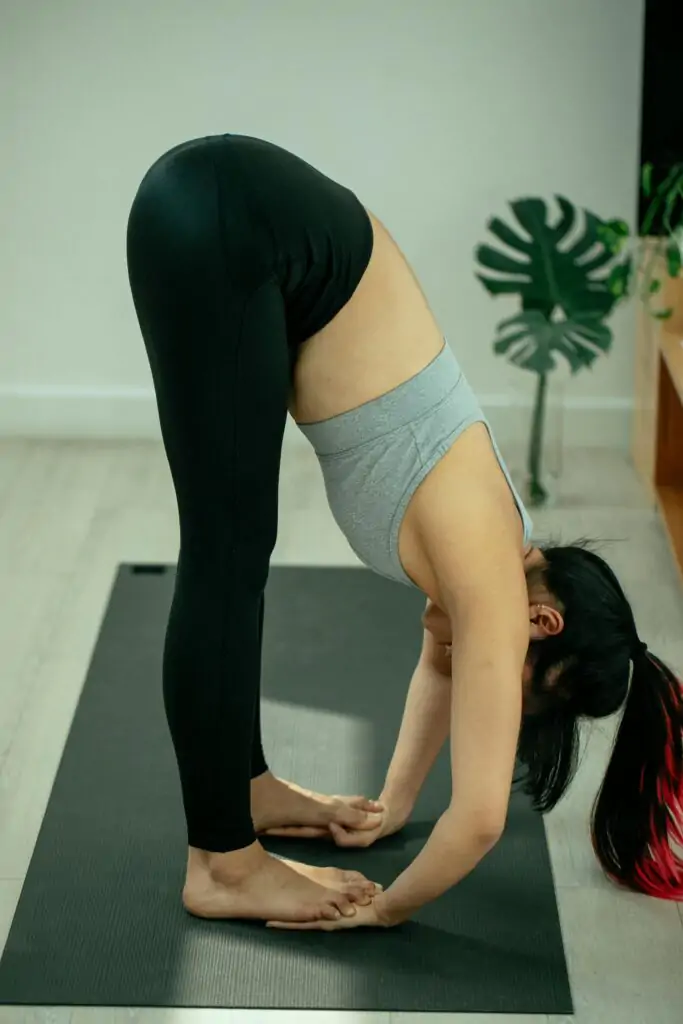
The Anatomy of Forward Bends: What’s Really Happening in Your Body
Understanding the anatomy behind a forward fold transforms how you practice. When you hinge forward correctly, you rotate your pelvis over the top of the femur (thigh bone) — a movement called an anterior pelvic tilt. This movement, not a rounding of the spine, is the foundation of a safe and
effective forward bend.
The key muscles and structures involved include:
- Hamstrings: Located at the back of the thighs, crossing both the hip and knee joints — the primary target in most forward folds and often the main limiting factor for depth.
- Erector spinae: The muscles running alongside the spine that must gradually lengthen as you fold forward.
- Gluteus maximus: Assists hip extension and supports the return to upright.
- Gastrocnemius & soleus (calves): Stretched in standing forward folds, especially when heels are grounded.
- Intervertebral ligaments: These soft tissue structures along the spine receive a gentle, beneficial stretch when the pose is performed correctly.
■ Common mistake: Rounding from the waist rather than hinging from the hips compresses the front of
the intervertebral discs and can over-stretch the lumbar ligaments. Always lead with the chest and
lengthen the spine before deepening the fold.
Key Benefits of Practicing Forward Bends Yoga
Activates the Parasympathetic Nervous System
As you fold forward and let your head drop, your body naturally shifts into rest-and-digest mode. Heart rate slows, breath deepens, and stress hormones like cortisol decrease. This is why forward bends are a cornerstone of restorative yoga — they are among the most effective poses for nervous system recovery.
Supports Healthy Digestion
Forward bends apply gentle compression to the abdominal region, giving the internal organs — stomach, intestines, and liver — a therapeutic massage-like effect. This stimulates blood flow and encourages digestion. Poses like Paschimottanasana are long associated with improved gut motility.
Stretches and Strengthens the Posterior Chain
From the soles of the feet to the back of the skull, forward folds lengthen the entire posterior chain. Regular practice improves hamstring flexibility, eases chronic lower-back tension, and reduces stiffness caused by prolonged sitting.
Calms the Mind and Encourages Introspection
In yoga philosophy, forward bends relate to pratyahara — the withdrawal of the senses. As you fold inward, gaze drops, sounds fade, and focus turns inward. This meditative quality helps quiet mental chatter, making forward bends powerful for anxiety and mild depression.
May Help Regulate Blood Pressure
Poses such as Paschimottanasana have been studied for their role in balancing the autonomic nervous system. Consistent practice is associated with reductions in resting heart rate and blood pressure in some practitioners.
Top 5 Forward Bend Yoga Poses at a Glance
| Pose | Sanskrit Name | Target Area | Pose |
| Child’s Pose | Balasana | Hips, thighs, ankles | Stress relief, rest |
| Head-to-Knee Pose | Janu Sirsasana | Hamstrings, groin, back | Fatigue, depression |
| Seated Forward Bend | Paschimottanasana | Spine, hamstrings, shoulders | Blood pressure, nerves |
| Standing Forward Fold | Uttanasana | Back, legs, calves | Blood flow, energy |
| Downward-Facing Dog | Adho Mukha Svanasana | Full body | Strength + flexibility |
Step-by-Step Guide to the Top 5 Forward Bends
1. Child’s Pose (Balasana)
Child’s Pose is one of the most beloved restorative yoga postures, often used as a counter pose between intense asanas like backbends or inversions. It actively stretches the hips, thighs, and ankles while deeply calming the nervous system.
How to practice:
- Kneel on your mat with knees roughly hip-width apart and big toes touching.
- Exhale and walk your hands forward, lowering your forehead gently to the mat.
- Extend your arms in front of you or rest them alongside your body.
- Close your eyes. Take 5–10 slow, deep breaths, feeling your lower back expand on each inhale.
- To come up, press your palms into the mat and slowly rise on an inhale.
Tip: Place a folded blanket under your forehead or between your thighs and calves if you have tight hips or knee discomfort
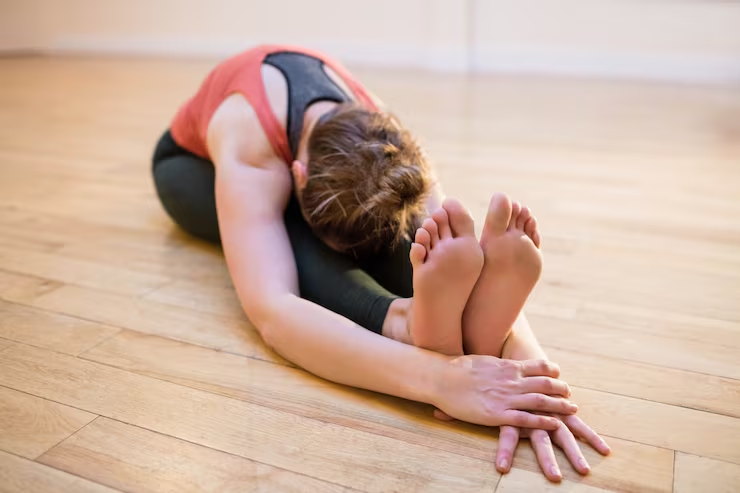
2. Head-to-Knee Pose (Janu Sirsasana)
This one-legged forward bend belongs to the family of seated poses. Janu Sirsasana simultaneously stretches the hamstring and groin of the extended leg while opening the hip of the bent leg. It is known to ease fatigue, relieve stress, and gently stimulate the kidneys and liver.
How to practice:
- Sit tall in Dandasana (Staff Pose) with both legs extended.
- Bend your left knee and place the sole of your left foot against the inner right thigh.
- Inhale and lengthen through the spine, raising your arms overhead.
- Exhale and hinge from your hips, reaching hands toward your right foot — hold wherever is accessible.
- Keep the spine as long as possible. Aim to bring your chest toward the knee, not your forehead.
- Hold for 5–8 breaths, then switch sides
Modification: Use a yoga strap around the foot if reaching is difficult. Never force the bent knee to the floor.
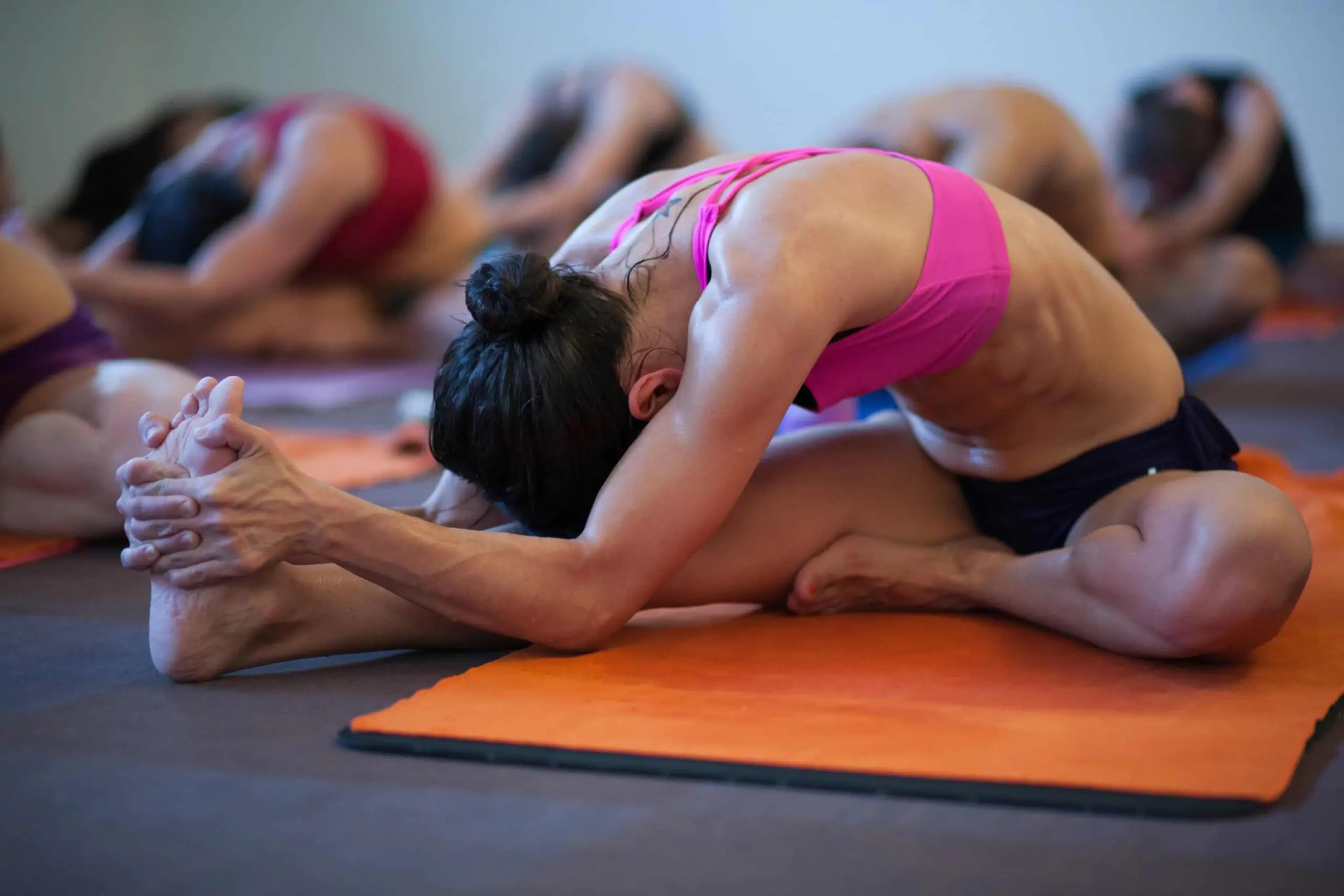
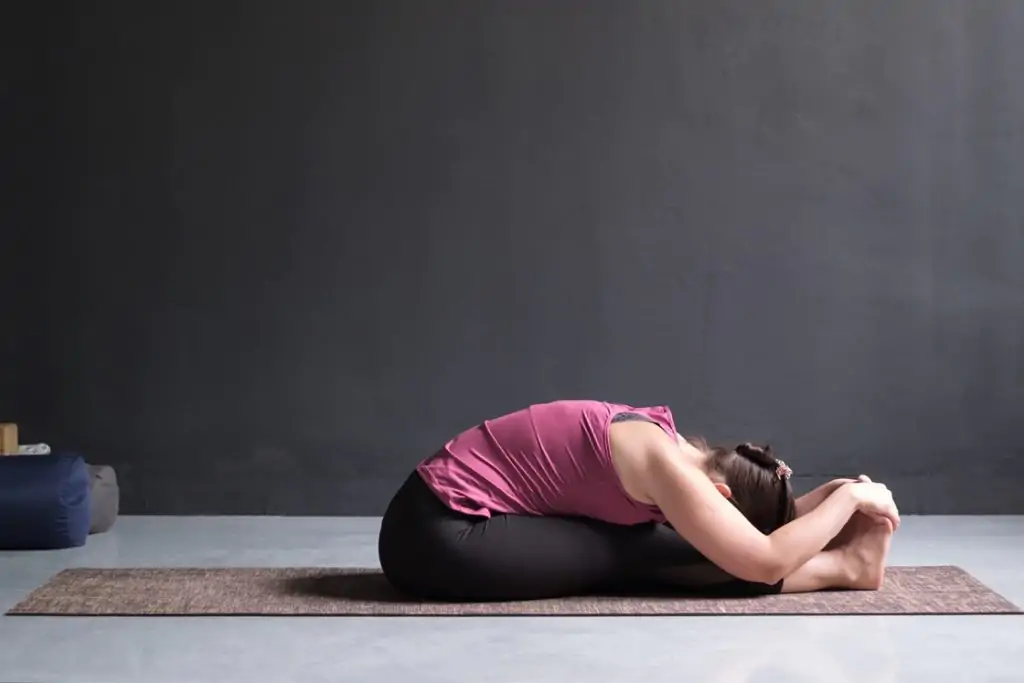
3. Seated Forward Bend (Paschimottanasana)
Paschimottanasana — ‘intense stretch of the west (back) side of the body’ — is one of the most discussed seated poses in yoga literature. Practiced with attention to alignment, this pose balances the autonomic nervous system, stretches the entire spine, and has been linked to improved management of mild hypertension.
How to practice:
- Sit in Dandasana with legs extended and spine tall.
- Inhale and raise both arms above your head.
- Exhale deeply and hinge from the hips — lead with your sternum as you fold forward.
- Place your hands on shins, ankles, or feet. Do not yank yourself forward.
- With each inhale, lengthen the spine. With each exhale, soften and deepen naturally.
- Hold for 8–10 slow breaths before gently returning to upright on an inhale.
Common mistake to avoid: Rounding the lower back by pulling too hard. Let gravity and your breath do the work
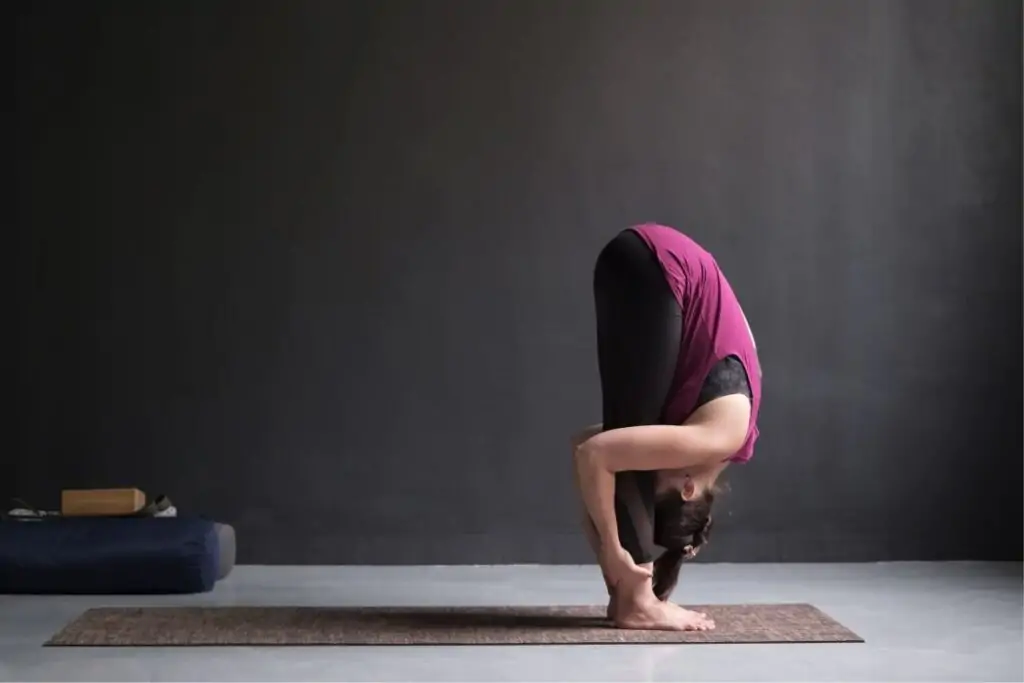
4. Standing Forward Fold (Uttanasana)
Uttanasana is a staple of most yoga sequences, including the classic Surya Namaskar (Sun Salutation). It stretches the back, hamstrings, calves, and quadriceps simultaneously while improving blood circulation to the brain. Many practitioners find this pose instantly grounding after a busy day.
How to practice:
- Stand with feet hip-width apart and engage your core gently.
- Inhale and lengthen tall through the crown of the head.
- Exhale and hinge forward from your hips, keeping the spine long as you descend.
- Let your hands rest on shins, ankles, or the floor. Micro-bend your knees if needed.
- Allow your head to fully relax and hang freely.
- Hold for up to 60 seconds, breathing smoothly.
Tip: For tight hamstrings, place yoga blocks under your hands to bring the floor closer to you
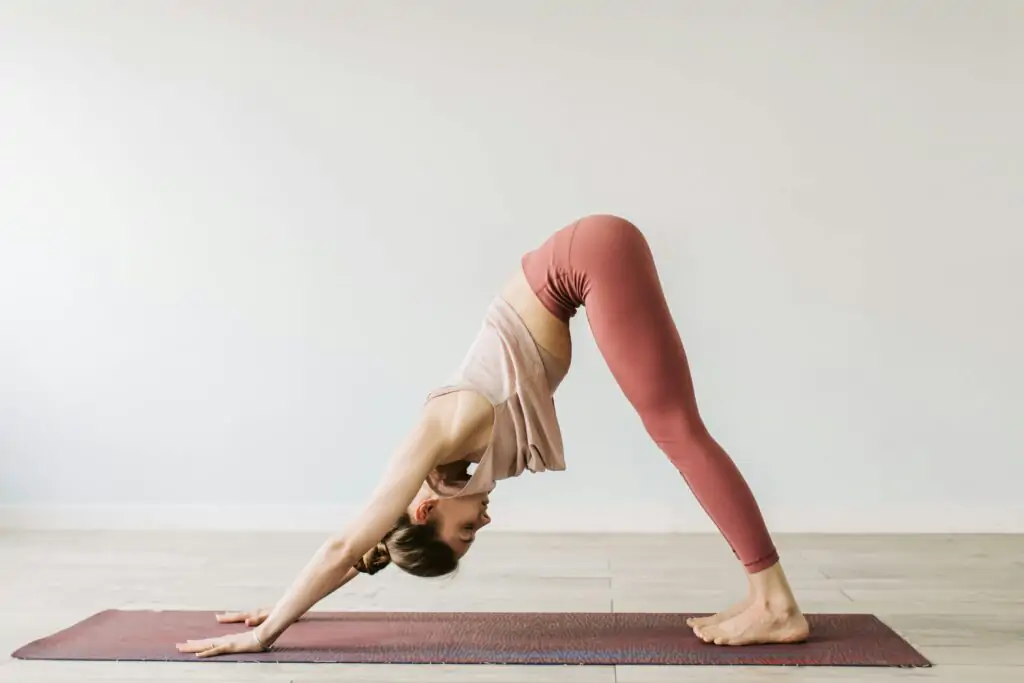
5. Downward-Facing Dog (Adho Mukha Svanasana)
Though technically an inverted pose, Downward Dog is classified as a forward bend because the torso folds toward the thighs as the hips lift upward. It is one of the most complete poses in yoga — stretching and strengthening the hamstrings, calves, spine, shoulders, and arms in a single shape.
How to practice:
- Begin on all fours in Tabletop Position with wrists under shoulders and knees under hips.
- Tuck your toes, exhale, and lift your hips up and back toward the ceiling.
- Straighten your arms and press your palms firmly into the mat, spreading fingers wide.
- Try to straighten your legs and press heels toward (not necessarily to) the floor.
- Keep your head between your upper arms, gaze toward your navel or thighs.
- Hold for 5–10 breaths. Release by lowering knees to the mat on an exhale.
Modification: Gently pedal the feet alternately to warm up tight calves and hamstrings
Safety Tips and Precautions
Forward bends are generally safe for most people, but technique matters. Keep the following in mind:
- Move slowly: Avoid jerking or bouncing into a fold. Ligaments and tendons need time to release.
- Prioritize spinal length over depth: A long, slightly bent-knee fold is far more beneficial than a collapsed deep fold with a rounded back.
- Breathe continuously: Never hold your breath in a forward bend. Breath is the tool that allows deeper release.
- Use props freely: Blocks, straps, blankets, and bolsters are tools for correct alignment — not signs of weakness.
- Avoid if: You have acute disc herniation, hamstring tears, or active sciatica. Always consult your healthcare provider first
When to Practice Forward Bends
Forward bends are versatile and can be woven into your practice at different times of day:
- Morning: Use standing forward folds like Uttanasana to gently warm up the spine and wake up the hamstrings before more dynamic movement.
- Evening: Restorative yoga poses like Child’s Pose and Paschimottanasana activate the parasympathetic nervous system — practicing them before bed can improve sleep quality.
- Post-workout: Forward folds are excellent cool-down poses after running, cycling, or any activity that tightens the posterior chain.
- During stress: Even a 60-second Standing Forward Fold mid-day can reset the nervous system and restore calm focus.
The Iyengar Approach: Precision in Forward Bends
The Iyengar tradition treats forward bends as a systematic science. B.K.S. Iyengar emphasized meticulous alignment, the use of props, and progressive stages — especially for practitioners with stiff hips or tight hamstrings. Rather than forcing depth, the method uses chairs, belts, and blocks to create structural integrity in the pose before deepening it.
This approach teaches practitioners to engage the spine’s natural elongation before folding, rather than collapsing forward. It also introduces dynamic spinal lifts within the fold — making the experience more energizing and balanced rather than passive or tiring.
Frequently Asked Questions (FAQ)
Absolutely. Many beginner-friendly forward bends, such as Child’s Pose and Standing Forward Fold, require no prior flexibility. With props and mindful alignment, anyone can begin practicing them safely from day one.
For active, warming forward folds, 5–10 breaths (roughly 30–60 seconds) is ideal. For restorative or passive holds, you can stay for 2–5 minutes while using props for support.
When practiced correctly — with a long spine and proper hip hinging — forward bends can relieve tension in the lower back muscles. However, they should be avoided or modified in cases of acute disc injury or nerve compression. Always consult a physiotherapist if you have chronic back pain.
Yes. The compression and release motion of folding forward massages the abdominal organs, stimulating digestive activity. Digestion benefits are best experienced from seated poses like Paschimottanasana, practiced on an empty or lightly filled stomach.
Tight hamstrings are the most common reason, but hip joint structure, pelvic mobility, and calf tightness also play a role. The anatomy of each person’s body is unique. With consistent practice and proper technique — rather than forcing — most people see meaningful improvement within a few weeks.
Conclusion: Let Forward Bends Transform Your Practice
Forward bends yoga is a gateway to a deeper, calmer, and more connected practice. Whether you’re sinking into a quiet Child’s Pose at the end of a hectic day or finding renewed energy in a Downward Dog, these poses work on multiple levels — physical, mental, and even emotional.
The key is to approach every fold with patience, curiosity, and respect for your body’s current edge. Use props, breathe intentionally, and honor where you are today. Flexibility follows in its own time.
Ready to go deeper? Explore our related articles on Restorative Yoga, the Anatomy of yoga poses, and how Seated Poses can transform your practice. Have a question or experience to share? Drop a comment below — we’d love to hear from you