
Your knees do a remarkable amount of work every single day. They carry your weight, absorb impact, and keep you moving through every step, climb, and squat. Yet knee pain is one of the most common complaints across all age groups — from teenagers and athletes to older adults navigating everyday life.
The good news? Most cases of knee pain and injury are preventable. With the right habits, exercises, and awareness, you can protect your knees for the long haul. This guide walks you through everything you need to know about how to avoid knee pain and injury — from understanding what causes it to practical, science-backed strategies you can start using today.
Why Knee Pain Is So Common
The knee is the largest joint in the body and one of the most complex. It connects the thigh bone to the shin bone and absorbs forces that are two to four times your body weight with every step you take. That’s a significant amount of stress — and over time, repeated strain, poor habits, and insufficient care can add up to real damage.
Common causes of knee pain include:
- Inflammation from overuse, improper lifting, or jumping into intense workouts too quickly
- Structural damage such as arthritis, torn cartilage, or ligament injuries
- Muscle imbalances — weak quadriceps and hamstrings leave the knee joint under-supported
- Poor posture and alignment, which shifts excess load onto the joint
- Worn-out or unsupportive footwear
Understanding whether your pain stems from inflammation or structural damage matters because the treatment path differs. Inflammatory issues often respond well to rest, stretching, and medication. Structural problems may require physical therapy or, in some cases, surgery. Either way, prevention is always the smarter first step.
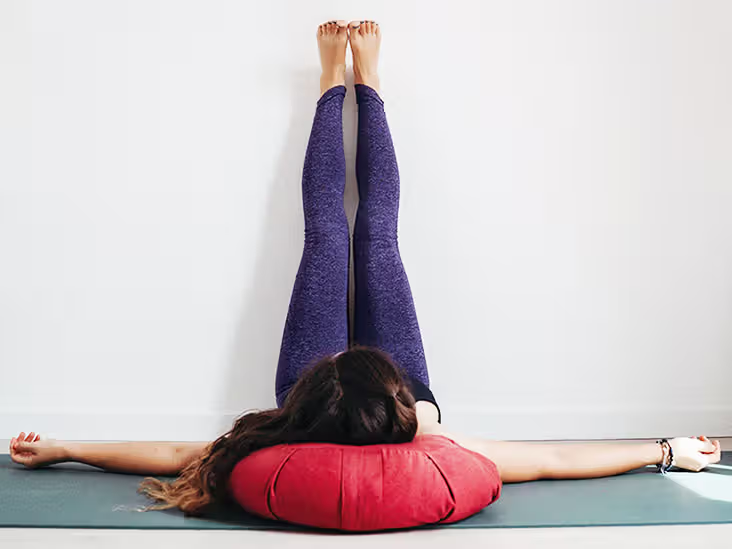
10 Proven Tips to Avoid Knee Pain & Injury
1. Keep Moving — But Choose Low-Impact Activities
It might seem counterintuitive, but staying sedentary is one of the worst things you can do for your knees. Regular movement keeps joint fluid circulating, reduces stiffness, and maintains the strength your knees need to stay healthy.
That said, not all exercise is equal when it comes to joint stress. High-impact activities like downhill running can accelerate cartilage wear over time, while low-impact alternatives protect the knee while still delivering cardiovascular and muscular benefits.
Best low-impact exercises for knee health:
- Swimming and water aerobics
- Cycling or stationary biking
- Walking on flat, even surfaces
- Elliptical training
If you love running, you don’t have to give it up — just ensure your form is correct, your shoes are supportive, and you build intensity gradually.
2. Strengthen the Muscles Around Your Knees
Weak muscles are a leading cause of knee injuries. The quadriceps, hamstrings, glutes, and calf muscles all play a role in stabilising the knee joint. When these muscles are strong, your knee has support from all sides. When they’re weak, the joint itself absorbs forces it was never designed to handle alone.
Focus on exercises that target:
- Quadriceps: Straight-leg raises, step-ups, wall sits
- Hamstrings: Hamstring curls, deadlifts
- Glutes: Bridges, clamshells
- Calves: Calf raises
Consistent strength training — even two to three sessions per week — can dramatically reduce your risk of developing knee problems and may ease existing pain if structural conditions like arthritis are present.
3. Never Skip the Warm-Up
Jumping straight into intense exercise without warming up is one of the most reliable ways to end up with a knee injury. Cold muscles are tight, less elastic, and far more prone to strain. A warm-up gradually increases blood flow to your muscles and prepares the joint for the demands ahead.
If you’re pressed for time and can’t stretch before exercise, at the very least walk or jog slowly for 10–15 minutes before ramping up to full speed. This simple step can significantly reduce your risk of overuse injuries.
4. Stretch Regularly — Your Knees Will Thank You
Flexibility is often overlooked, but it’s a cornerstone of knee health. When the muscles surrounding the knee — particularly the calves, hamstrings, quadriceps, and hip flexors — are tight, they create extra tension on the joint. Stretching these muscle groups releases that tension and keeps the knee tracking correctly.
Effective stretches for knee protection:
| Stretch | Target Area | Duration |
|---|---|---|
| Hamstring stretch (lying or standing) | Back of thigh | 30–60 seconds |
| Quadriceps stretch (standing) | Front of thigh | 30–60 seconds |
| Calf stretch (wall lean) | Lower leg | 30–60 seconds |
| Butterfly stretch | Inner thighs and hips | 30–60 seconds |
| Standing hip flexor stretch | Hip and knee | 30–60 seconds |
Tight hips, in particular, are a hidden contributor to Knee Pain because misalignment at the hip shifts loading patterns at the knee. Yoga practices that include Balance Poses can be particularly effective here — poses that require single-leg stability activate the stabilising muscles around the knee while also improving hip mobility and body awareness.
5. Watch Your Weight
There’s no way around it — body weight has a direct and measurable impact on knee health. Each kilogram of extra weight translates to several additional kilograms of pressure on the knee joint with every step. Over years, that cumulative load accelerates cartilage wear and increases the risk of developing osteoarthritis.
Research suggests that people with arthritic knees can reduce their pain by approximately 20 percent for every 10 pounds (around 4.5 kg) of weight lost. Even modest weight loss paired with regular stretching can result in a noticeable reduction in discomfort.
Maintaining a healthy weight is not about perfection — it’s about reducing unnecessary strain on one of your most hardworking joints.
6. Wear the Right Shoes
Your footwear is the foundation of your entire kinetic chain. Shoes that lack proper support or that alter your natural gait can place undue stress on the knee, hip, and lower back. High heels are a particularly common offender — they tilt the pelvis forward, force the quadriceps to work overtime, and push the knee out of its natural alignment.
Tips for choosing knee-friendly footwear:
- Opt for low-heeled, well-cushioned shoes for daily wear
- Get professionally fitted for athletic shoes, particularly for running
- Replace worn-out trainers regularly — most experts recommend every 500–800 km
- Consider insoles or orthotics if you have flat feet or pronation issues
If you do wear heels occasionally, counterbalance with targeted strengthening and stretching of the muscles around the knee.
7. Pay Attention to Your Posture
Poor posture doesn’t just affect your back — it travels all the way down to your knees. When you lean forward or slouch, your body’s centre of gravity shifts, forcing your leg muscles to work harder to compensate. Eventually, this muscular fatigue leads to increased pressure on the knee joint.
Good posture means your head sits over your shoulders, your shoulders sit over your hips, and your weight is evenly distributed through your feet. Core strength is the engine behind good posture — strong abdominal and lower back muscles keep your spine aligned, which in turn keeps your knees in their optimal position.
Exercises like planks, back extensions, Pilates, and yoga can meaningfully improve core strength and postural awareness.
8. Use Yoga Strategically — With Care
Yoga can be a wonderful complement to a knee-health routine. It builds strength, flexibility, and body awareness all at once. However, not all yoga poses are created equal for the knees — some require modifications to be safe for people with existing sensitivity.
Balance Poses like Tree Pose and Warrior III challenge the stabilising muscles around the knee in a controlled, mindful environment. Twists done correctly (with the twist initiating from the torso, not the knee) can improve spinal and hip mobility without placing rotational stress on the joint.
One pose that deserves particular attention is Virasana (Hero Pose), a kneeling posture that places the knee in deep flexion. While it can improve flexibility in the quads and knees over time, it should be approached with caution by anyone with existing Knee Pain. Using a folded blanket or block under the hips significantly reduces the load on the joint and makes the pose more accessible.
If you’re new to yoga or recovering from a knee issue, always inform your instructor and be willing to modify postures as needed.
9. Treat Injuries Early — Don’t Push Through Pain
One of the most common mistakes people make is dismissing knee pain as something that will resolve on its own and continuing to exercise through it. While mild muscle soreness is normal, persistent joint pain, swelling, or instability are signals that your body needs attention.
Ignoring an acute injury can turn a manageable problem into a chronic one. If your knee is visibly swollen, warm to the touch, gives way unexpectedly, or doesn’t improve within seven to ten days of rest and home care (ice, elevation, anti-inflammatories), it’s time to see a healthcare provider.
Early intervention — whether that’s physical therapy, imaging, or appropriate medication — almost always leads to faster and more complete recovery.
10. Build Smart Recovery Into Your Routine
Rest is not weakness. Adequate recovery between workouts gives your joint cartilage, tendons, and surrounding muscles time to repair and rebuild. Without it, the cumulative stress of repeated training can break down tissue faster than the body can restore it.
Smart recovery includes:
- Scheduling rest days between high-intensity sessions
- Using ice or heat strategically after exercise
- Getting enough sleep — this is when most tissue repair occurs
- Staying hydrated, which supports joint lubrication
- Considering low-intensity active recovery like gentle walking or swimming
Common Knee Pain Warning Signs You Shouldn’t Ignore
| Symptom | What It May Indicate |
|---|---|
| Visible, persistent swelling | Possible ligament tear or severe inflammation |
| Inability to fully straighten or bend the knee | Structural damage or significant inflammation |
| Knee giving way during activity | Ligament instability |
| Popping or clicking with pain | Possible cartilage damage |
| Pain worsening at night | Advanced arthritis or overuse injury |
The Role of Nutrition in Knee Health
What you eat can influence the health of your joints just as much as how you move. A diet rich in anti-inflammatory foods supports cartilage health and can reduce joint inflammation from within.
Foods that support knee health:
- Fatty fish (salmon, mackerel) — rich in omega-3 fatty acids
- Leafy greens — packed with antioxidants and vitamin K
- Berries — high in polyphenols that combat inflammation
- Nuts and seeds — provide healthy fats and magnesium
- Bone broth — contains collagen and glycosaminoglycans
On the flip side, a diet heavy in ultra-processed foods, refined sugar, and excess alcohol can promote systemic inflammation, which worsens joint conditions over time.
Frequently Asked Questions (FAQ)
Arthritis — particularly osteoarthritis — is the most prevalent cause of chronic knee pain in adults. Overuse injuries, ligament strains, and meniscus tears are also very common, especially in physically active people.
Yes, when practised mindfully. Yoga improves flexibility, builds the stabilising muscles around the knee, and promotes body awareness. Poses such as those in a Balance Poses sequence or gentle Twists can be beneficial. However, deep-flexion poses like Virasana should be modified if you have existing knee sensitivity.
In most cases, yes — but the type of exercise matters greatly. Low-impact activities like swimming, cycling, and walking are generally safe and even therapeutic. Avoid high-impact movements, deep squats, and kneeling on hard surfaces until your pain is assessed by a professional.
Most people begin noticing improved stability and reduced discomfort within four to six weeks of consistent strengthening and stretching. Significant improvements in cartilage health and joint function may take three to six months of dedicated effort.
See a doctor if your knee pain has lasted more than seven to ten days without improvement, if the knee is visibly swollen, if you can’t fully extend or bend it, if it buckles under you, or if the pain followed a specific injury or accident.
Conclusion
Your knees are with you for life — and the habits you build today will determine how well they serve you tomorrow. Whether you’re a regular exerciser, a desk worker, or somewhere in between, the strategies in this guide give you a solid foundation for keeping knee pain and injury at bay.
Start with the basics: move regularly, stretch daily, choose supportive footwear, and manage your weight. If you practice yoga, explore Balance Poses, mindful Twists, and approach Virasana with care. And if Knee Pain does arise, take it seriously rather than pushing through.
Healthy knees don’t happen by accident — they’re the result of consistent, informed choices. The best time to start protecting them is now.