
Have you ever felt like there’s more to you than meets the eye? Ancient yoga philosophy confirms this intuition, teaching that human existence extends far beyond our physical form. Understanding the 5 Koshas and 3 bodies can transform how you view yourself and unlock deeper levels of awareness, health, and spiritual growth.
In this comprehensive guide, we’ll explore these fascinating layers of existence that make up who you truly are.
What Are the 5 Koshas and 3 Bodies?
According to yogic wisdom, humans exist in multiple dimensions simultaneously. The term “kosha” literally means “sheath” or “covering” in Sanskrit—imagine layers like an onion, each one revealing something deeper about your true nature.
These five sheaths are organized within three distinct bodies:
- The Physical (Gross) Body
- The Subtle (Astral) Body
- The Causal (Spiritual) Body
Together, these layers form a complete map of human consciousness, from our tangible physical experience to our deepest spiritual essence.
Understanding the 3 Bodies in Yoga Philosophy
1. The Physical Body (Sthula Sharira)
Your physical body is what you see in the mirror every morning. It comprises bones, muscles, organs, blood, and all the tangible matter that makes up your form.
This gross body is composed of the five great elements:
- Earth (Prithvi) – providing structure and solidity
- Water (Jal) – governing fluidity and circulation
- Fire (Agni) – managing metabolism and transformation
- Air (Vayu) – facilitating movement and breath
- Ether (Akasha) – creating space within
The physical body undergoes six inevitable changes throughout life: birth, growth, maturation, decline, decay, and death. Ayurveda, the ancient science of life, teaches that maintaining balance among these five elements is essential for optimal health.
2. The Subtle Body (Sukshma Sharira)
Beyond your physical form lies the subtle body—an energetic blueprint that connects your physical and spiritual dimensions. This astral body is invisible to the naked eye yet profoundly influences your daily experience.
The subtle body contains 19 essential components:
Five Organs of Knowledge (Jnana Indriyas):
- Eyes (sight)
- Ears (hearing)
- Nose (smell)
- Tongue (taste)
- Skin (touch)
Five Organs of Action (Karma Indriyas):
- Speech
- Hands (grasping)
- Feet (movement)
- Reproductive organs
- Excretory organs
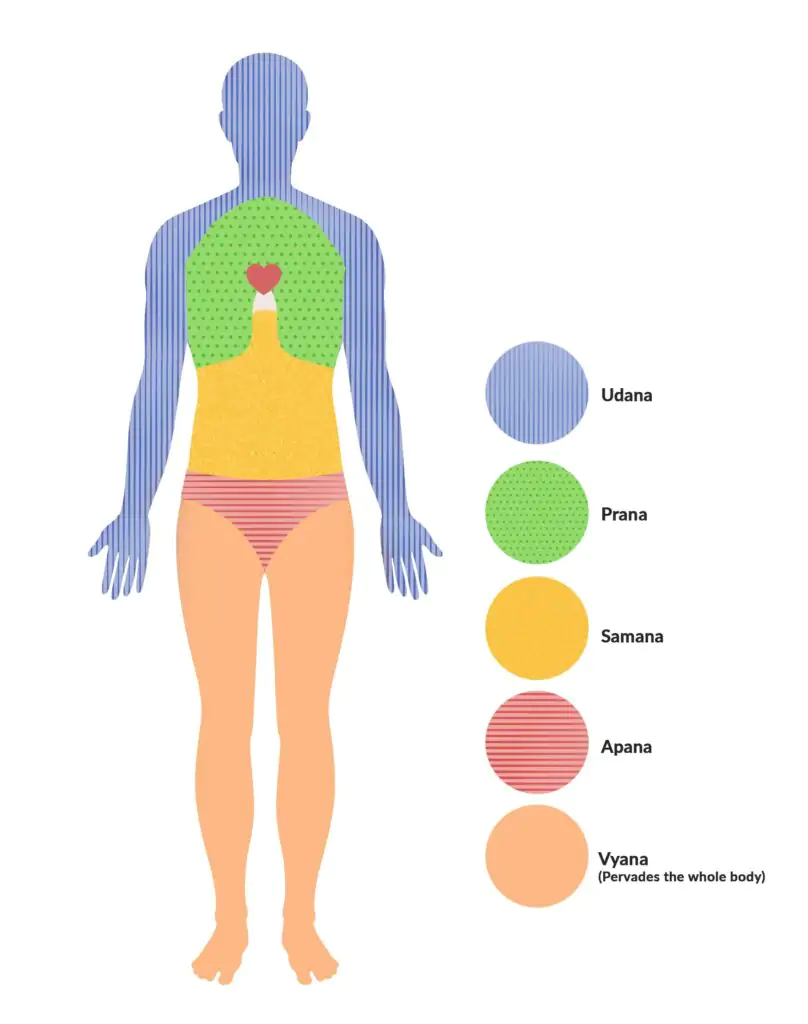
**Five Vital Energies (Pancha **Pranas):
- Prana (heart and respiratory function)
- Apana (elimination and downward movement)
- Samana (digestion and assimilation)
- Udana (upward movement and expression)
- Vyana (circulation throughout the body)
Four Aspects of Mind (Antahkarana):
- Manas (thinking mind)
- Buddhi (intellect and discrimination)
- Chitta (memory and subconscious)
- Ahamkara (ego and sense of “I”)
This subtle body houses the energy channels (nadis) and 7 chakras that regulate your vital force. When you feel someone’s “vibe” or sense danger without seeing it, you’re experiencing your subtle body’s perception.
3. The Causal Body (Karana Sharira)
The causal body is your deepest layer—the seed from which your other bodies grow. It contains the accumulated impressions (samskaras) from all your experiences, including those from past lives according to yogic philosophy.
This spiritual body:
- Stores your karmic patterns
- Holds the blueprint for your current incarnation
- Connects you to universal consciousness
- Continues beyond physical death until liberation (moksha)
Understanding the causal body helps explain why people have different tendencies, talents, and life circumstances from birth.
The 5 Koshas Explained in Detail
1. Annamaya Kosha: The Food Sheath
Translation: Anna (food) + Maya (made of)
This outermost layer is your physical body, literally created from and sustained by the food you eat. Every cell, tissue, and organ belongs to this sheath.
How to nurture it:
- Consume wholesome, sattvic (pure) foods
- Practice yoga asanas (physical postures)
- Maintain proper sleep and rest
- Engage in regular physical activity
The food sheath is where you experience basic survival needs—hunger, thirst, shelter, and physical comfort. While essential, it represents only the surface of your being.
2. Pranamaya Kosha: The Energy Sheath
Translation: Prana (life force) + Maya (made of)
This second layer is your vital energy body, the bridge between physical matter and mental experience. It contains the five major pranas that keep you alive and energized.
Characteristics:
- Regulates breathing and circulation
- Influences your vitality and stamina
- Connects physical and mental health
- Responds to pranayama (breathing exercises)
When you feel exhausted despite adequate sleep, or energized without explanation, you’re experiencing fluctuations in your pranamaya kosha. This sheath also houses your aura—the energetic field that sensitive individuals can perceive.
3. Manomaya Kosha: The Mental Sheath
Translation: Manas (mind) + Maya (made of)
Your mental sheath is the realm of thoughts, emotions, memories, and imagination. This is where you process daily experiences and react to your environment.
Functions include:
- Processing sensory information
- Generating thoughts and feelings
- Storing memories and experiences
- Creating emotional responses
This layer operates largely on autopilot, producing an estimated 60,000-80,000 thoughts daily. Most people identify primarily with this sheath, believing “I am my thoughts and feelings.”
4. Vijnanamaya Kosha: The Wisdom Sheath
Translation: Vijnana (higher knowledge) + Maya (made of)
This fourth layer represents your higher mind—the seat of intuition, wisdom, and discernment. Unlike the reactive mental sheath, this layer observes without judgment.
Qualities:
- Witnesses thoughts without attachment
- Accesses intuitive knowledge
- Discriminates between real and illusory
- Recognizes interconnectedness
When you experience a flash of insight or “just know” something without logical reasoning, you’re tapping into vijnanamaya kosha. This sheath develops through meditation, self-inquiry, and spiritual study.
5. Anandamaya Kosha: The Bliss Sheath
Translation: Ananda (bliss) + Maya (made of)
The innermost layer is the bliss body, the finest veil covering your true Self (Atman). This sheath experiences profound peace, joy, and spiritual contentment.
Characteristics:
- Experiences causeless joy and serenity
- Transcends intellectual understanding
- Connects to universal consciousness
- Remains closest to pure awareness
Even the bliss sheath is still a covering—beyond it lies your essential nature: pure, unchanging consciousness. Accessing this layer requires dedicated spiritual practice and often occurs in deep meditation or samadhi (absorption).
How to Transcend the 5 Koshas: Practical Methods
Understanding the koshas is just the beginning. The real transformation happens when you learn to transcend these layers and discover your true nature.
Transcending Annamaya Kosha
Practice: Hatha Yoga and Conscious Nutrition
- Establish a regular asana practice
- Choose organic, plant-based foods when possible
- Practice mindful eating
- Recognize you are more than your physical body
Transcending Pranamaya Kosha
Practice: Pranayama (Breath Control)
- Begin with simple breath awareness
- Practice alternate nostril breathing (Nadi Shodhana)
- Explore retention techniques (Kumbhaka)
- Understand that you are not your energy, but the awareness of it
Transcending Manomaya Kosha
Practice: Yamas, Niyamas, and Selfless Service
- Cultivate ethical living through the Yamas (restraints)
- Develop positive habits through Niyamas (observances)
- Engage in karma yoga (selfless action)
- Observe thoughts without identification
Transcending Vijnanamaya Kosha
Practice: Self-Inquiry and Scriptural Study
- Ask “Who am I?” repeatedly
- Study sacred texts like the Upanishads
- Practice witness consciousness
- Develop detachment from intellectual certainty
Transcending Anandamaya Kosha
Practice: Deep Meditation and Samadhi
- Establish consistent meditation practice
- Seek guidance from an experienced teacher
- Practice surrender and devotion
- Recognize even bliss as a temporary state
The Connection Between Koshas, Chakras, and Gunas
While koshas describe the layers of your being, chakras represent energy centers within the subtle body. These systems work together:
Key Differences:
- Koshas are sheaths or coverings over consciousness
- Chakras are spinning energy vortexes along the spine
- Koshas describe what you’re made of
- Chakras describe energy regulation points
The three gunas—sattva (purity), rajas (activity), and tamas (inertia)—influence all five koshas. Spiritual practice aims to increase sattva in each layer, creating clarity and peace throughout your being.
Modern Applications: Living the 5 Koshas in Daily Life
Ancient wisdom becomes truly powerful when applied to modern challenges:
For Physical Health (Annamaya Kosha)
- Choose anti-inflammatory foods
- Practice yoga or gentle movement daily
- Prioritize quality sleep
- Reduce exposure to toxins
For Emotional Wellbeing (Pranamaya & Manomaya Koshas)
- Practice 5-10 minutes of pranayama daily
- Use breathwork during stressful moments
- Journal to process emotions
- Set healthy boundaries
For Mental Clarity (Vijnanamaya Kosha)
- Establish a meditation practice
- Limit information overload
- Practice discernment in decisions
- Study wisdom traditions
For Spiritual Growth (Anandamaya Kosha)
- Cultivate gratitude daily
- Spend time in nature
- Practice loving-kindness meditation
- Connect with spiritual community
Frequently Asked Questions (FAQ)
The 5 koshas are five layers of your being: the physical body (food), energy body (breath/vitality), mental body (thoughts/emotions), wisdom body (intuition/intellect), and bliss body (joy/spirit). They range from gross to subtle, with each layer revealing something deeper about who you are.
The three bodies organize the five koshas: The physical body contains the food sheath; the subtle body contains the energy, mental, and wisdom sheaths; the causal body contains the bliss sheath. Think of bodies as containers and koshas as the specific layers within them.
Yes, through dedicated practice. Most people easily experience the first three koshas (physical, energetic, mental). The wisdom and bliss bodies require deeper meditation and spiritual practice to access consistently, though glimpses can occur naturally during peak experiences.
Understanding the koshas helps you address problems at their root level. Physical symptoms might originate in energy imbalances (pranamaya), mental patterns (manomaya), or deeper karmic tendencies (anandamaya). This knowledge enables more holistic healing and personal growth.
While a qualified teacher accelerates progress and prevents mistakes, you can begin exploring the koshas independently through yoga, meditation, and self-study. However, deep work on the subtler koshas traditionally benefits from personal guidance, especially when working with kundalini energy.
Conclusion: Your Journey Through the Layers
Understanding the 5 koshas and 3 bodies offers a profound framework for self-discovery and spiritual growth. You’re not just a physical body moving through space—you’re a multidimensional being with layers ranging from gross matter to pure consciousness.
This ancient wisdom provides practical guidance for modern life. By consciously working with each kosha through appropriate practices, you can:
- Enhance physical health and vitality
- Balance emotional and mental wellbeing
- Develop wisdom and clear discernment
- Access states of profound peace and joy
- Ultimately discover your true nature beyond all layers
Your journey through the koshas is a journey home to yourself. Start wherever you are—with your breath, your body, your thoughts—and gradually peel away the layers. Beneath them all, pure awareness awaits.
Ready to Deepen Your Practice?
Explore our related articles on the 7 chakras, understanding prana, and Ayurvedic principles to expand your understanding of yogic wisdom. Share this article with fellow seekers on your spiritual path, and let us know in the comments which kosha you’d like to explore more deeply.